
Boating and Cruise Injuries in Miami: What Victims Need to Know
Boating and cruise injuries in Miami follow different rules than car accidents, deadlines can be as short as six months for written notice and one year to file suit under a cruise ticket contract, while Florida boating negligence claims are generally subject to a two-year deadline under Florida Statute 95.11. Federal maritime law often applies instead of, or alongside, Florida law, which changes who can be sued, how fault is shared, and which court hears the case. Because the wrong assumption about which deadline controls can permanently end a valid claim, anyone hurt on Biscayne Bay, at PortMiami, or aboard a cruise ship should speak with a personal injury lawyer immediately.
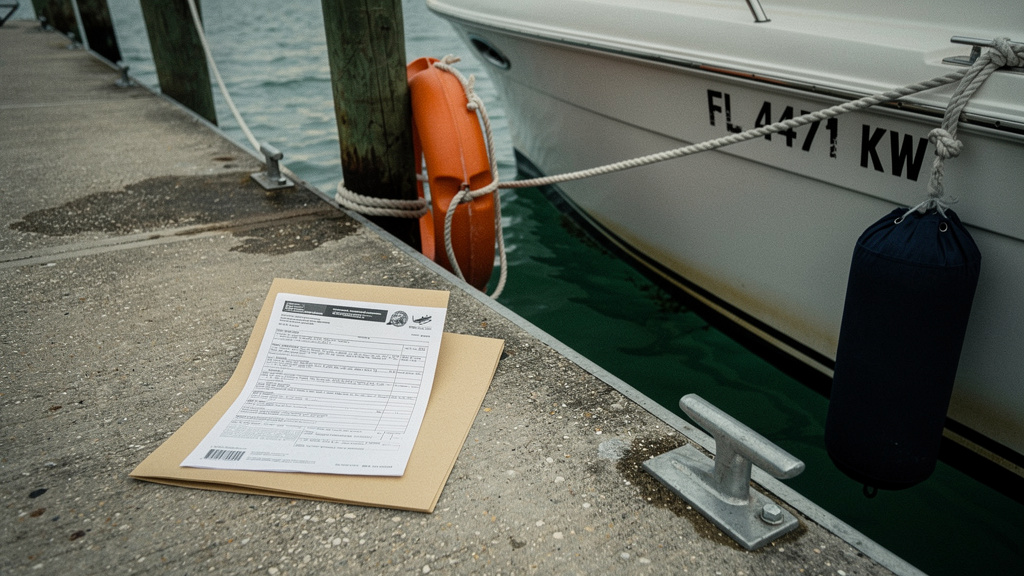
Boating and cruise injuries in Miami follow different rules than car accidents, and the deadlines can be far shorter than most people expect. A cruise ticket contract may require written notice of your claim within about six months and a lawsuit filed within one year, while Florida’s general negligence deadline is two years from the date of injury under Florida Statute 95.11. Federal maritime law often applies alongside or instead of Florida law, which changes who can be sued, how fault is calculated, and which court hears the case. Anyone hurt on Biscayne Bay, at PortMiami, or aboard a cruise ship should speak with a personal injury lawyer as soon as possible.
With Biscayne Bay and PortMiami, Miami-Dade sees heavy boat and cruise traffic, and boating accidents here are not rare. If you were hurt in one, the steps you take in the first 72 hours matter enormously.
What should I do immediately after a boating accident on Biscayne Bay?
The first priority is safety. After that, every action you take protects your legal claim.
Call the U.S. Coast Guard on VHF Channel 16 or dial 911 if anyone is injured. Florida Statute 327.30 requires the vessel operator to render reasonable aid and remain at the scene. Leaving a scene that involves injury or death is a felony under Florida law. Do not leave.
Once everyone is safe, photograph vessel damage, water conditions, and any visible injuries. Collect names and contact information from every witness. If you rented the boat, preserve the rental agreement and any waiver you signed before leaving the dock.
Serious boating crashes are typically investigated by the Florida Fish and Wildlife Conservation Commission, sometimes along with other agencies such as the Coast Guard, rather than by local traffic police. Mandatory FWC reporting is triggered when an accident involves a death, a disappearance, an injury requiring treatment beyond basic first aid, or property damage at or above the statutory threshold. That FWC report becomes a central document in any legal case.
Before you give a recorded statement to any insurer, rental company, or charter operator, speak with a Miami-Dade boating accident attorney. What you say in those first calls can be used against you.
Who is responsible for paying, the boat owner, the operator, or the rental company?
Liability in a Miami boating accident is rarely limited to the person at the wheel. Several parties may share responsibility, and identifying all of them matters because it directly affects how much you can recover.
The operator carries the primary duty of care for passengers and nearby vessels. Operating a vessel in Florida with a blood alcohol concentration of 0.08 percent or higher is illegal under Florida Statute 327.35 and constitutes strong evidence of negligence in a civil claim.
The boat owner is also potentially liable. Florida law holds owners responsible for damages caused by anyone operating their vessel with permission.
Rental and charter companies face liability when they rent unsafe equipment, provide inadequate instruction, or allow an intoxicated or underage operator to take the helm. Tour operators running commercial vessels must comply with U.S. Coast Guard safety regulations, and a failure to do so supports a negligence claim. Marinas and maintenance companies can be responsible when negligent repairs cause mechanical failure. Equipment manufacturers face product liability claims when a defective component causes the crash.
Nearly every rental company requires a liability waiver. That document does not automatically bar your claim, especially when gross negligence is involved. A lawyer must review the specific language before any conclusions are drawn.
Under Florida’s modified comparative negligence rule (FS 768.81(6)), your recovery is reduced by your share of fault. It is barred only if you are found to be more than 50 percent at fault. If your waiver situation involves a jet ski or boat rental injury in Miami, the analysis of who bears liability can be complex.
How do cruise ticket contracts affect my injury claim, and what are the real deadlines?
A cruise ticket is a maritime contract, not an event ticket. It contains two deadlines that most passengers never read, and missing either one can permanently end a valid claim.
Under 46 U.S.C. 30526, cruise lines operating seagoing vessels cannot contractually require written notice of a claim in less than six months after the injury, and they cannot shorten the time to file suit to less than one year from the injury date. In practice, most major cruise lines set those minimums as the actual deadlines. That means passengers hurt on a Royal Caribbean, Carnival, or Norwegian voyage departing from Miami typically have approximately six months to give written notice and approximately one year to file suit, far less time than Florida’s standard two-year window under FS 95.11.
These deadlines vary by cruise line. Read your ticket contract immediately and call a lawyer before assuming any particular timeline applies to your situation.
Cruise tickets also commonly include a forum-selection clause. For lines based in Miami, that clause often requires any lawsuit to be filed in the U.S. District Court for the Southern District of Florida, not in a Florida state court.
Preserve your full ticket contract, any communications with the cruise line, and all medical records. If the cruise line’s claims department contacts you before you have spoken with a lawyer, do not give a recorded statement. More detail on these deadlines is available at cruise ship injury notice and filing deadlines.
When does federal maritime law apply instead of Florida law, and why does it matter?
Whether maritime law governs your case is a legal determination that depends on the specific facts. It is not something to assume either way.
Federal maritime, or admiralty, law generally applies when an injury occurs on navigable waters, including Biscayne Bay, the Intracoastal Waterway, and coastal ocean areas, and when the incident has a sufficient connection to traditional maritime activity. When it does apply, several things change in ways that directly affect your claim.
Fault standard. Florida’s modified comparative fault rule bars recovery only if you are more than 50 percent at fault. Federal maritime law uses pure comparative negligence, meaning you can recover even if you were more than 50 percent responsible for the accident, with your award reduced proportionally by your share of fault.
Unseaworthiness. Maritime law gives crew members (seamen) a separate claim against a vessel owner based on the vessel being in an unsafe condition, without requiring proof of negligence. Passengers and guests generally must prove negligence instead.
Limitation of liability. A vessel owner may attempt to limit their total financial exposure under federal law. A lawyer can challenge that effort.
Death on the High Seas Act (DOHSA). When a death occurs beyond three nautical miles from U.S. shore, DOHSA applies. The general filing deadline under DOHSA is three years, but the types of recoverable damages are limited.
General maritime personal injury claims not governed by a cruise ticket contract carry a three-year deadline under 46 U.S.C. 30106.
The interaction between federal maritime law and Florida law in a single case is something a lawyer must sort through on your specific facts. Do not assume.
What if I was injured at PortMiami or on a cruise shore excursion?
These two scenarios look similar but involve different legal questions.
Injuries at the port. PortMiami is a busy facility, and accidents happen on gangways, in terminals, and in embarkation areas. The responsible party may be the cruise line, the port authority, or a contractor managing that specific area of the terminal. Investigation is required to identify who controlled the space where you were hurt. Details on PortMiami terminal injuries and port worker and passenger rights can help you understand the framework.
Shore excursion injuries. Cruise lines regularly argue they do not own or control the third-party tour operator and therefore bear no responsibility for what happens on an excursion. Courts have pushed back. When a cruise line markets, sells, and profits from an excursion, it assumes a duty to reasonably select and vet the operator. That argument can support a claim even when the tour company itself is based in another country.
The cruise ticket’s deadlines often apply to shore excursion claims as well, commonly written notice within about six months and a lawsuit within about one year, so check your ticket. Evidence in these cases disappears quickly. Conditions at the excursion site change, foreign operators are hard to serve, and documentation held by the cruise line may become harder to obtain over time. Contact a lawyer before the cruise line’s claims department reaches you. The shore excursion injury liability analysis is worth reviewing while you wait for your consultation.
How do I choose the right lawyer for a boating or cruise injury case in Miami?
Not every personal injury lawyer handles these cases. The combination of Florida law, federal maritime law, FWC investigations, and cruise ticket contracts requires someone familiar with all of them.
Here is what to look for when you evaluate a lawyer:
Familiarity with both Florida personal injury law and federal maritime law. These cases routinely involve both bodies of law, sometimes in the same claim.
Experience with FWC investigations and Coast Guard reports. Those documents are structured differently from standard police traffic crash reports, and the distinctions matter when building a case.
The ability to identify quickly which deadline controls. The wrong assumption permanently ends a valid claim. A lawyer must look at your specific ticket, rental agreement, and the location of the incident before giving you a deadline.
Willingness to review waivers and ticket contracts before drawing conclusions. A waiver that looks absolute sometimes is not.
A contingency fee structure. You pay no attorney’s fee unless the case resolves in your favor.
At your first consultation, ask: Which body of law applies to my case? What is my actual filing deadline? Who are all the potentially liable parties? Have you handled FWC-investigated crashes or cruise line claims before?
Wolfson & Leon has represented injury victims in Hialeah and throughout Miami-Dade since 1963. The firm handles boating and cruise accident cases and can review your situation at no charge.
Frequently asked questions
Does signing a liability waiver at a jet ski or boat rental company mean I can’t sue if I get hurt?
No, not automatically. Waivers are a factor, not a final answer. Florida courts scrutinize waiver language carefully, and a waiver generally cannot shield a company from liability for gross negligence. A lawyer must read the specific document against the specific facts of your injury before concluding whether it holds.
I was hurt on a cruise that left from Miami. Do I file my case in Florida state court?
Probably not. Most cruise ticket contracts contain a forum-selection clause requiring any lawsuit to be filed in a specific federal court. For cruise lines based in Miami, such as Carnival, Royal Caribbean, and Norwegian, that clause commonly designates the U.S. District Court for the Southern District of Florida. Your ticket contract controls, and a lawyer must read it.
How long do these cases usually take to resolve?
The timeline depends on the facts of the case, the number of parties involved, whether maritime or Florida law governs, and whether litigation is required. Some cases resolve through negotiation before a lawsuit is filed. Others require discovery and can take a year or more. The outcome and timeline for any specific case depend entirely on the facts involved.
The FWC is investigating the crash. Does that mean the other boater will automatically be found liable in my civil case?
No. An FWC investigation and a civil injury claim are separate proceedings with different standards. An FWC report is one piece of evidence and can be valuable, but a civil case requires its own proof of negligence, causation, and damages. The FWC’s conclusions do not automatically determine civil liability.
What compensation can I recover after a boating accident in Miami?
What you may recover depends on the facts of your case. In general, Florida personal injury claims can include medical expenses, lost income, and compensation for pain and suffering. The permanent-injury requirement in FS 627.737(2) applies to motor vehicle claims, not boating accidents. Maritime law may allow additional categories of damages depending on how the case is classified. The specific amounts and categories available in your case depend on your injuries, the applicable law, and the facts as they develop.
- I Got Hurt on a Friend’s Boat, Can I Make a Claim Without Ruining the Friendship?
- Who Pays My Medical Bills After a Boating Accident on Biscayne Bay?
- Where Biscayne Bay Boating Accidents Happen and Why Those Spots Are Dangerous
- Just Had a Boating Accident on Biscayne Bay: What to Do Right Now
- How Long Do You Have to Sue After a Boating Accident in Florida?
- Boat Owner Filed a Federal Limitation Case Against Me: What Happens Now?
- Who Is Liable When Someone Gets Hurt in a Cruise Ship Accident at PortMiami?
- How Long Will My Boating Accident Case Take in Miami?
Hurt in an accident in Hialeah? Call Wolfson & Leon at 305-965-3766 for a free consultation. We speak Spanish, and there is no fee unless we win.
Key facts
- Federal maritime law often applies to injuries on navigable waters such as Biscayne Bay, and it uses pure comparative negligence rather than Florida's more-than-50-percent bar. Source: General maritime law
- Most cruise ticket contracts require written notice of a claim within about six months of the injury and require a lawsuit to be filed within one year, far shorter than Florida's standard two-year negligence deadline. Source: 46 U.S.C. § 30526
- Florida's general negligence deadline is two years from the date of injury for incidents on or after March 24, 2023. Source: Florida Statute § 95.11
- Under Florida's modified comparative negligence rule, an injured person's recovery is reduced by their share of fault and is completely barred only if they are found more than 50 percent at fault. Source: Florida Statute § 768.81(6)
- Operating a vessel in Florida with a blood alcohol concentration of 0.08 percent or higher is illegal under Florida law and constitutes strong evidence of negligence in a civil injury claim. Source: Florida Statute § 327.35
Frequently asked questions
Does signing a liability waiver at a jet ski or boat rental company mean I can't sue if I get hurt?
Not necessarily. Liability waivers are common in Florida rental operations, but they do not automatically bar a personal injury claim. Courts can decline to enforce a waiver when the rental company was grossly negligent, for example, renting equipment to a visibly intoxicated customer or sending someone out without any safety instruction. A lawyer must review the specific waiver and the facts of the accident before any conclusions can be drawn about whether a claim can proceed.
I was hurt on a cruise that left from Miami. Do I file my case in Florida state court?
Probably not. Cruise ticket contracts almost always include a forum-selection clause that requires lawsuits to be filed in a specific federal court. For major cruise lines based in Miami, including Carnival and Royal Caribbean, that court is commonly the U.S. District Court for the Southern District of Florida. Filing in the wrong court can result in dismissal, which is why reading the full ticket contract and confirming the correct venue with a lawyer is essential.
How long do these cases usually take to resolve?
There is no single answer, and anyone who promises a timeline is guessing. Straightforward boating injury claims with clear liability and documented injuries may resolve in months through negotiation. Cases involving disputed maritime jurisdiction, multiple liable parties, FWC or Coast Guard investigations, or a cruise line's legal team contesting fault can take a year or more. Federal court cases, which include most cruise injury claims, generally move on a different schedule than Florida state court civil cases.
The FWC is investigating the crash. Does that mean the other boater will automatically be found liable in my civil case?
No. An FWC investigation determines whether criminal or administrative violations occurred, it is separate from a civil personal injury claim. However, the FWC report and any citations or findings can be powerful evidence in your civil case. The criminal and civil standards are different: a boater can be cleared of criminal charges while still facing civil liability to injured parties. Your attorney will obtain the FWC report and any related records as part of building your claim.
What compensation can I recover after a boating accident in Miami?
Recoverable damages typically fall into two categories. Economic damages are quantifiable losses: past and future medical bills, lost wages, future loss of earning capacity, and property damage including vessel salvage costs. Non-economic damages compensate for intangible harms: pain and suffering, mental anguish, scarring and disfigurement, and loss of enjoyment of life. In cases involving conduct that was particularly reckless, such as extreme boating under the influence, punitive damages may also be available. Under Florida's modified comparative fault rule (§ 768.81(6)), your total recovery is reduced by your percentage of fault, and you recover nothing only if you are found more than 50 percent responsible.
This article is general information about Florida law, not legal advice, and reading it does not create an attorney-client relationship. Every case is different and past results do not guarantee a similar outcome. For advice about your situation, call Wolfson & Leon at 305-965-3766 for a free consultation.
Also available in: Versión en español
 Car accidents
Small Car Accident in Florida: Do You Actually Need a Lawyer?
Whether you need a lawyer after a small crash in Florida depends on whether anyone was hurt, not just how much metal was bent. If pain showed up…
 Car accidents
How Long Does a Car Accident Case Take in Florida?
Most Florida car accident cases settle in three to eighteen months, but serious injuries, disputed fault, or a lawsuit can push that to two years or…
 Car accidents
Minor Car Accident in Hialeah: When You Need a Lawyer and When You Don't
Not every minor crash in Hialeah requires a lawyer. If your accident caused property damage only, fault is not disputed, the other insurer has…