
Federal Maritime Law vs. Florida Law: Which Governs Your Miami Boating Accident?
Whether federal maritime law or Florida state law governs your Miami boating accident depends on two things: where the accident happened and what you were doing at the time. If the crash occurred on navigable waters, such as Biscayne Bay or Government Cut, and involved a traditional maritime activity, federal admiralty law likely applies, which changes your deadline to file, how fault is calculated, and potentially which court hears your case. Florida's boating statutes still control operator duties and accident reporting regardless of which body of law governs the underlying claim.
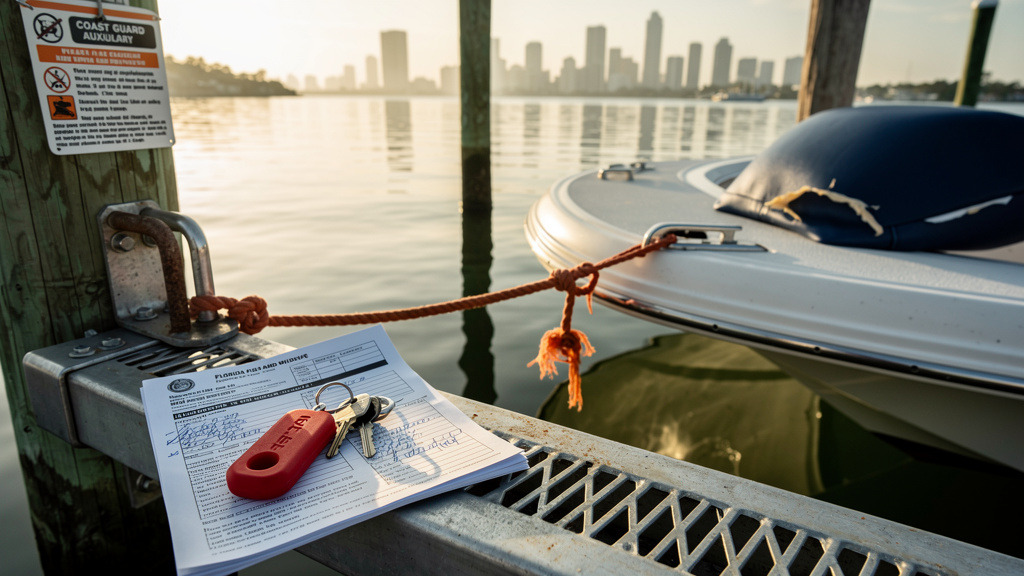
Whether federal maritime law or Florida state law governs your Miami boating accident depends on two things: where the crash happened and what you were doing at the time. If the incident occurred on navigable waters like Biscayne Bay or Government Cut and involved a traditional maritime activity, federal admiralty law likely applies, which changes your filing deadline, how fault is calculated, and potentially which court hears your case. Florida’s boating statutes still control operator duties and accident reporting regardless of which legal framework applies to your claim.
What is the two-part test that decides whether federal law takes over?
Federal admiralty jurisdiction usually requires both the locality test and the nexus test to be met. The locality test asks whether the accident occurred on navigable waters, those used or capable of being used for interstate or foreign commerce. Biscayne Bay and Government Cut are widely treated as navigable. The nexus test looks at whether the activity had a significant connection to traditional maritime commerce or navigation. A recreational collision in a busy shipping channel is more likely to meet this test than an isolated incident on a remote inland lake. Because this determination depends heavily on specific facts, it must be evaluated by legal counsel familiar with maritime claims.
Even if federal law governs, what do Florida’s boating statutes still require?
Florida’s boating laws apply to conduct on Florida waters no matter which legal system governs your injury claim. Under Fla. Stat. § 327.33, every boat operator must navigate with reasonable regard for other vessel traffic, posted restrictions, weather, water conditions, and anything else that could endanger people or property. After a crash, Fla. Stat. § 327.30 requires operators to stop, render assistance, and provide identifying information. Accidents involving death, disappearance, injuries needing more than first aid, or property damage of at least $2,000 must be reported to authorities. These reports, filed with the Florida Fish and Wildlife Conservation Commission (FWC) or U.S. Coast Guard, create a factual record that affects any negligence case, whether it ends up in state or federal court.
How does the choice of law change who wins the fault argument?
The fault rules differ sharply between Florida and federal maritime law. Under Florida’s modified comparative fault system (Fla. Stat. § 768.81(6)), you recover nothing if you’re found more than 50 percent at fault. Federal maritime law generally uses pure comparative fault, meaning you can still recover even if you bear most of the blame, as long as some fault lies with the other party. For example, if your total damages are $200,000 and you’re found 60 percent at fault, Florida law bars recovery entirely, but maritime law could allow you to collect $80,000. This difference makes the jurisdictional question critical to your financial outcome.
State court in Miami or the federal courthouse downtown, which one hears your case?
You may have a choice. While the U.S. Constitution gives federal courts original jurisdiction over admiralty cases, the “Saving to Suitors” clause in 28 U.S.C. § 1333 generally lets injured parties file maritime claims in Florida state court. The federal courthouse for the Southern District of Florida is in downtown Miami. Strategically, filing in federal court usually means a judge, not a jury, decides your case. Filing in Florida state court in Miami-Dade may preserve your right to a jury trial, but the underlying legal rules would still be federal maritime law if the accident occurred on navigable waters. The courthouse you choose affects procedure, not substance.
What about Hialeah-area canals and inland lakes, is it just Florida law there?
Not automatically. Whether federal law applies depends on whether the waterway is “navigable” under federal standards, which hinges on its use or susceptibility to use in interstate commerce in its ordinary condition. Man-made features like low bridges or water control gates may affect that status. Unlike Biscayne Bay, many Hialeah-area canals and lakes have not been definitively ruled navigable. If a court finds the water non-navigable, your claim proceeds entirely under Florida law: two-year deadline (Fla. Stat. § 95.11), 50 percent fault bar (Fla. Stat. § 768.81(6)), and operator duties under Fla. Stat. § 327.33. Do not assume your local canal is or isn’t navigable without legal analysis.
What deadline applies to your claim and why does it matter right now?
Under Florida law (Fla. Stat. § 95.11), you have two years from the date of injury to file a negligence lawsuit for accidents occurring on or after March 24, 2023. Under federal maritime law (46 U.S.C. § 30106), the deadline is generally three years. Missing either deadline almost always ends your right to sue. If you assume the two-year Florida rule applies but your case is actually maritime, you might unnecessarily rush, or worse, if you wait three years assuming maritime law applies but a court later rules Florida law controls, your claim could be thrown out. With Miami-Dade regularly among the Florida counties with the most reported boating accidents, getting this right early is essential.
Frequently asked questions
Can I file my maritime boating accident case in a regular Florida court instead of federal court?
Yes, usually. The Saving to Suitors clause allows maritime claims to be filed in Florida state court, though federal substantive law still applies if the accident occurred on navigable waters. Your choice of court may affect whether you get a jury trial.
I was hurt on a canal near Hialeah. Does federal maritime law apply to my accident?
It depends on whether the canal is considered “navigable” under federal law. Many inland canals and lakes in Hialeah have not been definitively classified. An attorney must review the specific waterway and circumstances to assess jurisdiction.
What happens to my claim if I was partly at fault for the boating accident?
Under Florida law, you recover nothing if you’re more than 50 percent at fault. Under federal maritime law, you can still recover a reduced amount based on the other party’s share of fault, even if you were mostly to blame.
Do I have to report my boating accident in Miami to anyone?
Yes, if the crash involved death, disappearance, injuries requiring more than first aid, or property damage of at least $2,000. Florida law (Fla. Stat. § 327.30) requires operators to report such accidents to the FWC or other law enforcement.
How long do I have to file a lawsuit after a Miami boating accident?
Two years if Florida law applies; three years if federal maritime law governs. Because the correct deadline depends on complex jurisdictional facts, consult a lawyer as soon as possible, do not rely on either deadline without legal advice.
Hurt in an accident in Hialeah? Call Wolfson & Leon at 305-965-3766 for a free consultation. We speak Spanish, and there is no fee unless we win.
Key facts
- Florida's two-year deadline to file a personal injury lawsuit applies to boating accidents governed by Florida state law; federal maritime law may provide a three-year window, making a jurisdictional determination urgent. Source: Fla. Stat. § 95.11; 46 U.S.C. § 30106
- Under Florida's modified comparative fault rule, an injured person who is found more than 50 percent at fault is completely barred from recovering damages. Source: Fla. Stat. § 768.81(6)
- Federal maritime law generally follows pure comparative fault, meaning a person who is partially at fault can still recover a proportionally reduced amount no matter how large their share of fault. Source: Wolfson & Leon
- A boat operator involved in a Florida accident must provide assistance and identifying information to injured persons; certain accidents must be reported to law enforcement, including those involving death, disappearance, injury requiring treatment beyond first aid, or property damage of at least $2,000. Source: Fla. Stat. § 327.30
- Miami-Dade County is regularly among the Florida counties with the most reported boating accidents. Source: Wolfson & Leon
Frequently asked questions
Can I file my maritime boating accident case in a regular Florida court instead of federal court?
In many situations, yes. A provision known as the Saving to Suitors clause generally allows injured people to bring maritime claims in Florida state court rather than federal admiralty court. The practical advantage is that Florida state court may allow a jury trial, whereas federal admiralty court typically uses a bench trial where a judge decides the outcome. However, even in state court, the judge generally applies federal maritime law to the substance of the claim if the accident occurred on navigable waters, so the choice of courthouse is not the same as a choice of which legal rules apply. Consult a maritime attorney before deciding where to file.
I was hurt on a canal near Hialeah. Does federal maritime law apply to my accident?
It depends on whether that specific canal qualifies as a navigable waterway under the federal standard, which generally requires that the water be used or capable of use for interstate or foreign commerce. Many inland canals in the Hialeah and Miami-Dade area may not meet that standard, particularly if man-made structures such as water control gates or low-clearance bridges block access to open water. If the canal is found non-navigable, Florida state law, including its two-year filing deadline under Fla. Stat. § 95.11 and its 50% comparative fault bar under Fla. Stat. § 768.81, would govern your claim. Because navigability is a fact-specific legal determination, do not assume the answer without speaking to an attorney.
What happens to my claim if I was partly at fault for the boating accident?
The answer depends on which law governs. Under Florida's modified comparative fault rule in Fla. Stat. § 768.81(6), your recovery is reduced by your percentage of fault, and you are completely barred from recovering anything if you are found more than 50 percent at fault. Under federal maritime law's pure comparative fault framework, you may still recover a reduced amount even if you bear a significant share of fault, though the exact application is fact-specific and should be verified with a maritime attorney. The difference between these two standards is one of the most concrete reasons why determining jurisdiction early in your case matters.
Do I have to report my boating accident in Miami to anyone?
Florida law requires the vessel operator, or the owner if the operator cannot do so, to report the accident when it involves death, the disappearance of a person under circumstances suggesting death or injury, injury requiring medical treatment beyond first aid, or property damage of at least $2,000. This reporting obligation comes from Fla. Stat. § 327.30 and applies on Florida waters regardless of whether federal or state law governs the underlying negligence claim. The operator must also render reasonably available assistance and provide identifying information to injured persons and property owners. Failing to report or render assistance may also become relevant evidence in a later claim.
How long do I have to file a lawsuit after a Miami boating accident?
If Florida state law applies, Fla. Stat. § 95.11 gives you two years from the date of your injury for accidents occurring on or after March 24, 2023. If federal maritime law applies, the deadline is generally three years from the date the cause of action arose under 46 U.S.C. § 30106. Because the two deadlines are different and determining which one applies requires a jurisdictional analysis, you should not assume you have the longer window without consulting an attorney. Missing the applicable deadline almost always ends your right to recover compensation permanently.
This article is general information about Florida law, not legal advice, and reading it does not create an attorney-client relationship. Every case is different and past results do not guarantee a similar outcome. For advice about your situation, call Wolfson & Leon at 305-965-3766 for a free consultation.
Also available in: Versión en español
 Personal injury
I Want to Hire Wolfson & Leon in Hialeah: What Happens When I Call?
When you call Wolfson & Leon at 305-965-3766, a real person answers around the clock, not a voicemail. Within that first call, the firm gathers…
 Personal injury
How Long Do You Have to Sue After a Boating Accident in Florida?
The deadline depends on which body of law governs your claim. For most Florida negligence claims arising from accidents on or after March 24, 2023,…
 Personal injury
Injury-Focused Lawyer or General Lawyer: Which One Do You Actually Need?
A general-practice lawyer can legally take your case, but Florida car-accident and slip-and-fall claims turn on a specific set of rules, PIP…