
Hurt at PortMiami: Passenger, Crew, or Port Worker, Your Legal Track Matters
Yes, it matters enormously. Passengers, crew members, longshore workers, and port-side visitors each fall under a different legal system, different courts, different deadlines, and different defendants, so the rules that protect a cruise passenger can actually work against a dockworker who tries to use them. Getting this classification right from the first phone call is the single most important step after a PortMiami injury.
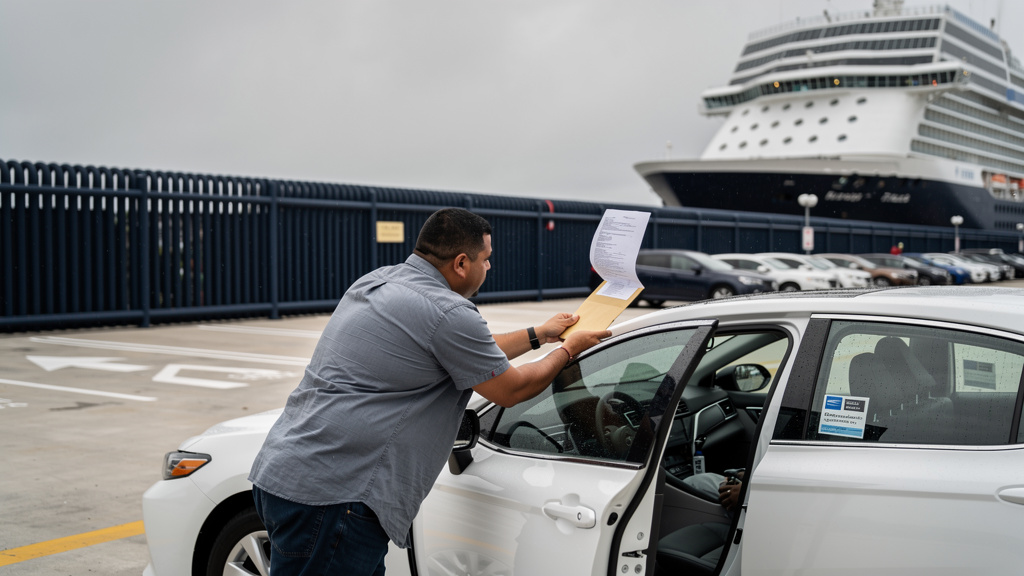
Yes, it matters enormously. Passengers, crew members, longshore workers, and port-side visitors each fall under a different legal system, different courts, different deadlines, and different defendants, so the rules that protect a cruise passenger can actually work against a dockworker who tries to use them. Getting this classification right from the first phone call is the single most important step after a PortMiami injury.
Were you a paying passenger? Here is the legal track you are actually on
If you were hurt as a cruise passenger at PortMiami, your claim falls under federal maritime law, not Florida tort law. That means Florida’s two-year negligence deadline under Fla. Stat. § 95.11 does not override the deadlines in your cruise ticket contract. Cruise ticket contracts often impose a one-year lawsuit deadline and require written notice of your claim within six months, so check your ticket. Courts generally enforce these terms, even though they shorten the time you have compared to typical Florida injury cases.
You must also prove the cruise line or terminal operator knew or should have known about the dangerous condition that caused your injury. More than one party, such as the cruise line and a terminal operator, can be responsible. The ticket contract often requires suit in federal court in Miami (the U.S. District Court for the Southern District of Florida) rather than state court. Federal law limits how short these ticket deadlines can be, but exact terms vary by cruise line, so check your ticket.
Are you a crew member? The Jones Act, unseaworthiness, and maintenance and cure are your three tools
Crew members who qualify as “seamen” under maritime law have access to three separate legal remedies that passengers cannot use. First, the Jones Act allows you to sue your employer for negligence if their fault caused your injury. Second, you can bring a claim for “unseaworthiness,” which holds the vessel owner liable if the ship or its equipment was not reasonably fit for its intended purpose, no proof of negligence required. Third, you are entitled to “maintenance and cure”: daily living expenses and full medical care until you reach maximum medical improvement, generally regardless of fault.
Job title alone does not determine seaman status. Housekeepers, entertainers, and kitchen staff aboard cruise ships often qualify because they spend significant time working on vessels in navigation. Employers sometimes dispute this status. Crew employment contracts often include an arbitration clause, which courts frequently enforce, so where your claim is heard depends on your contract and should be reviewed by a lawyer. Many crew-related cases that go to court end up in the Southern District of Florida due to the concentration of cruise companies in Miami-Dade.
Do you work the docks, terminals, or cranes? Federal longshore law, not Florida workers’ comp, may govern your claim
If you load cargo, operate cranes, or work in terminals at PortMiami, you may fall under the Longshore and Harbor Workers’ Compensation Act (LHWCA), not Florida workers’ compensation. The LHWCA is a federal program that covers injuries on navigable waters or in adjacent areas like docks and shipyards. It provides medical treatment, wage-loss benefits, and disability payments without requiring you to prove your employer was negligent.
Like Florida workers’ comp, the LHWCA also allows you to file third-party claims against vessel owners, equipment makers, or contractors whose negligence contributed to your injury. This is often the only way to recover for pain and suffering. Evidence disappears quickly at PortMiami, ships depart, containers move, machinery gets repaired, so acting fast is critical. Filing under Florida workers’ comp by mistake can delay or reduce your benefits. The LHWCA excludes masters and crew members, who instead rely on the Jones Act.
What if you are a county employee, contractor, or truck driver injured on port property?
PortMiami is run by Miami-Dade County, so county employees typically seek benefits through Florida workers’ compensation. Contractors working on port projects usually get coverage through their own employer’s policy. But both groups may also have third-party claims, against a negligent vessel operator, a defective crane manufacturer, or an at-fault commercial truck driver. The trucking company, a maintenance professional, or another outside party could potentially be responsible beyond just the driver who hit you.
If your injury involves negligence by Miami-Dade County itself, such as poor road maintenance or unsafe signage, you must follow Fla. Stat. § 768.28(6). This law requires written notice to the county before you can sue (claims against the state itself also go to the Department of Financial Services). Missing this notice requirement can bar your claim against the county, even if you file your lawsuit within the two-year window under Fla. Stat. § 95.11. Government liability claims have extra procedural steps that private claims do not.
What if you were visiting the port or driving through when you were hurt?
Visitors, including family dropping off passengers, rideshare drivers, food couriers, or anyone in publicly accessible terminal areas, bring standard Florida premises liability claims if hurt at PortMiami. Under Fla. Stat. § 768.0755, you must show the business knew or should have known about the dangerous condition, like a spill, and failed to fix it or warn you.
If Miami-Dade County controls the area where you were hurt, the government notice requirement under Fla. Stat. § 768.28(6) applies again. Truck traffic around the port creates ongoing risks for drivers and pedestrians near terminals. The general two-year deadline under Fla. Stat. § 95.11 still applies, but the government-notice rule has its own timing. Delay can cost you your right to sue.
Side-by-side: which law, which court, and how long do you have?
| Category | Who Pays / Legal System | Typical Court or Forum | Key Deadline | Must-Know Rule |
|---|---|---|---|---|
| Cruise Passenger | Cruise line and/or terminal operator under general maritime negligence | Often federal court in Miami (Southern District of Florida), as set by the ticket | Ticket contract often imposes one-year suit deadline and six-month written-notice requirement; Florida’s Fla. Stat. § 95.11 two-year window does not extend contractual deadlines | Passenger must prove the cruise line had notice of the hazard |
| Crew Member / Seaman | Employer (cruise line) under Jones Act negligence, unseaworthiness, and maintenance and cure | Often Southern District of Florida; employment contract may specify arbitration | Maritime injury claims generally have a three-year deadline under federal law (46 U.S.C. § 30106); contractual deadlines may differ | Seaman status is fact-specific; job title alone does not decide it |
| Longshore / Terminal Worker | Employer’s LHWCA insurer for benefits; third-party tortfeasors for negligence damages | U.S. Department of Labor / Office of Workers’ Compensation Programs for benefits; federal court for third-party claims | The LHWCA has its own filing deadlines; third-party claims follow federal or state limitations periods | Does not require proof of employer negligence for basic benefits; LHWCA excludes crew members |
| County / Contractor Employee | Florida workers’ compensation insurer; potentially third-party defendants | State circuit court for third-party claims; workers’ comp system for benefits | Fla. Stat. § 95.11 two years for third-party negligence claims; Fla. Stat. § 768.28(6) pre-suit notice to county required before suing Miami-Dade | Government pre-suit notice under § 768.28(6) has its own timing obligation, missing it can bar the suit |
| Visitor / Port Driver | Premises owner or operator (cruise line, terminal operator, or county) | Miami-Dade Circuit Court for state claims; Southern District if maritime nexus | Fla. Stat. § 95.11 two years; Fla. Stat. § 768.28(6) notice required if county is defendant | Fla. Stat. § 768.0755 requires proof business knew or should have known of hazard |
Missing a deadline almost always ends your chance to recover compensation permanently. Many PortMiami injuries involve multiple parties, a cruise line, terminal operator, county agency, and outside contractor, all potentially responsible. Identifying every possible defendant early helps ensure you pursue all available paths to recovery.
Frequently asked questions
I work at PortMiami loading cargo. My employer told me to file a regular Florida workers’ comp claim. Is that right?
Not necessarily. If your job involves cargo handling on docks, piers, or near vessels, you likely fall under the federal Longshore Act (LHWCA), not Florida workers’ compensation. Filing under the wrong system can delay your benefits or limit your recovery. Ask a lawyer familiar with maritime injury law before submitting any claim.
My cruise ticket says I have to sue within one year. But Florida gives me two years. Which deadline controls?
Often, the ticket contract deadline controls. Federal courts generally enforce the one-year lawsuit window and six-month notice requirement often found in cruise contracts, so check your ticket. Florida’s two-year statute does not override these terms, which may apply even if your injury happened on land at PortMiami.
I slipped in the terminal building at PortMiami, not on the ship. Can I still sue the cruise line?
Possibly, if the terminal was operated by or jointly controlled by the cruise line. A terminal operator may also be responsible. You must still prove they knew or should have known about the hazard.
As a crew member, do I get anything even if my injury was partly my own fault?
Yes. Maintenance and cure, your daily living allowance and medical care, are owed regardless of fault. Under the Jones Act, your recovery is generally reduced by your share of fault rather than barred, even if your share is more than 50 percent, which differs from Florida’s comparative negligence rule.
I was driving my truck into PortMiami for a delivery when another vehicle hit me. Do I sue the driver, the trucking company, or someone else?
You may have claims against multiple parties. The at-fault driver is liable, but their employer (the trucking company) can also be responsible under respondeat superior. If poor port maintenance, defective equipment, or a third contractor contributed, they too could share liability.
Hurt in an accident in Hialeah? Call Wolfson & Leon at 305-965-3766 for a free consultation. We speak Spanish, and there is no fee unless we win.
Key facts
- Florida's general negligence statute of limitations is two years for injuries occurring on or after March 24, 2023, but cruise ticket contracts, which are separate from Florida law, may impose a one-year suit deadline and a six-month written-notice requirement that courts strictly enforce. Source: Fla. Stat. § 95.11; federal maritime law (46 U.S.C.)
- PortMiami on Dodge Island is one of the busiest cruise and cargo hubs in the country, handling both passenger embarkations and constant commercial truck traffic, which means injuries can occur in at least four legally distinct zones on the same day. Source: Miami-Dade County Seaport Department (PortMiami)
- The Longshore and Harbor Workers' Compensation Act (LHWCA) is the federal workers' compensation system that may cover dockworkers, crane operators, longshoremen, and terminal workers at PortMiami, it is entirely separate from Florida workers' compensation. Source: 33 U.S.C. § 901 et seq.; U.S. Department of Labor, Office of Workers' Compensation Programs
- Florida's slip-and-fall statute requires proof that a business establishment had actual or constructive knowledge of a dangerous condition; however, premises liability at a government-controlled port facility may also trigger Florida's sovereign immunity notice requirements before a lawsuit can proceed. Source: Fla. Stat. § 768.0755; Fla. Stat. § 768.28(6)
- Seaman status under the Jones Act is a fact-specific legal determination, job title alone does not decide it, and disputes over seaman status can affect which benefits an injured maritime worker receives. Source: 46 U.S.C. § 30104 (Jones Act)
Frequently asked questions
I work at PortMiami loading cargo. My employer told me to file a regular Florida workers' comp claim. Is that right?
It may not be. Many dockworkers, longshoremen, crane operators, and terminal employees at PortMiami are covered by the federal Longshore and Harbor Workers' Compensation Act rather than, or in addition to, Florida's workers' compensation system. Filing under the wrong system can delay or reduce the benefits you are legally owed. An attorney experienced in maritime labor law can review your job duties and the location of your injury to determine which system applies.
My cruise ticket says I have to sue within one year. But Florida gives me two years. Which deadline controls?
The ticket contract's one-year deadline usually controls for claims against the cruise line, even though Florida's general negligence statute under Fla. Stat. § 95.11 allows two years. Federal courts in the Southern District of Florida routinely enforce contractual limitations in cruise tickets. Many cruise lines also require written notice within six months of the incident, missing that notice deadline can bar your entire claim before the one-year suit deadline even arrives. Check your ticket, and do not wait on the assumption that the Florida two-year rule protects you.
I slipped in the terminal building at PortMiami, not on the ship. Can I still sue the cruise line?
Possibly yes, and the terminal operator as well. Cruise lines can be liable for conditions in terminal areas they operate or control, even when the injury happens on dry land. Identifying every party that controlled the area where you fell is critical to a full recovery.
As a crew member, do I get anything even if my injury was partly my own fault?
Under maritime law, maintenance and cure, the no-fault obligation requiring your employer to pay a daily living allowance and medical care during recovery, is generally owed regardless of how the injury happened, including when the seaman shares some fault. Jones Act negligence claims also apply a form of comparative fault that does not automatically bar recovery for a partially at-fault seaman. These rules are meaningfully different from standard Florida negligence law, which bars recovery entirely only when a plaintiff is more than 50 percent at fault under Fla. Stat. § 768.81(6). A maritime attorney can explain how fault allocation works in your specific situation.
I was driving my truck into PortMiami for a delivery when another vehicle hit me. Do I sue the driver, the trucking company, or someone else?
Truck accident claims at PortMiami can involve more than just the individual driver, the trucking company, a maintenance contractor, a cargo loader, or even a port authority vehicle could all be responsible depending on what caused the crash. If the at-fault vehicle was operated by a Miami-Dade County employee or agency, you must serve a written pre-suit notice on the county under Fla. Stat. § 768.28(6) before you can file a lawsuit. The standard deadline to file a negligence lawsuit in Florida is two years under Fla. Stat. § 95.11, but the government-notice obligation has its own timing requirement, so acting quickly matters.
This article is general information about Florida law, not legal advice, and reading it does not create an attorney-client relationship. Every case is different and past results do not guarantee a similar outcome. For advice about your situation, call Wolfson & Leon at 305-965-3766 for a free consultation.
Also available in: Versión en español
 Personal injury
How to Check Any Florida Lawyer's Bar Record in Five Minutes
Go to floridabar.org, use the member directory search, type the lawyer's last name, and open their profile. The profile shows whether they are…
 Personal injury
Is Wolfson & Leon Good? Checkable Facts for Hialeah Injury Victims
Instead of trusting an ad or a star rating, judge Wolfson & Leon on facts you can verify yourself: the firm has operated since 1963, maintains a…
 Personal injury
Great Firm Reviews Don't Predict Your Case Outcome, Here's What Does
A law firm's star rating tells you how it treats people, not what your case is worth. In Florida, your outcome depends on four concrete things: what…