Where Biscayne Bay Boating Accidents Happen and Why Those Spots Are Dangerous
Biscayne Bay's deadliest boating accidents cluster around a handful of well-known spots: the Nixon Beach sandbar and Haulover Inlet corridor on weekends and holidays, Government Cut near PortMiami, and the narrow Miami River shared with commercial freighters and tugs. Miami-Dade County regularly reports among the most boating accidents in Florida, and each of these locations has a distinct mix of crowding, currents, operator inexperience, and alcohol that turns routine outings into emergencies.
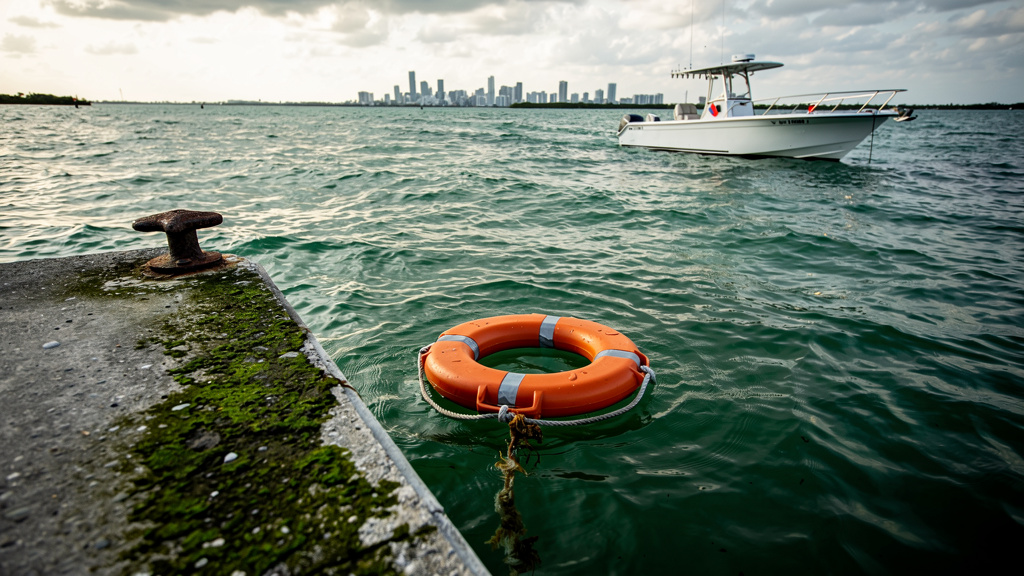
Biscayne Bay’s deadliest boating accidents cluster around a handful of well-known spots. The Nixon Beach sandbar and Haulover Inlet corridor see dangerous crowding on weekends and holidays. Government Cut near PortMiami and the narrow Miami River, shared with commercial freighters and tugs, add navigational hazards that amplify risk. Miami-Dade County regularly reports among the most boating accidents in Florida. Each location combines high traffic, strong currents, inexperience, or alcohol in ways that turn routine days on the water into emergencies.
Why are the Nixon Beach sandbar and Haulover area so dangerous on weekends?
Nixon Beach sandbar (west of West Point, Key Biscayne) and Haulover sandbar are Biscayne Bay’s top weekend and holiday anchoring zones for recreational boaters. Dozens to hundreds of vessels raft together or anchor tightly, with passengers swimming between boats, loud music playing, and heavy alcohol use reported by Miami-Dade officials. This setting creates a high risk of propeller strikes and collisions. People thrown from boats or swimming near running engines at local sandbars have been killed or badly hurt by propellers. Starting an engine with swimmers nearby is a known deadly error. Under Fla. Stat. § 327.33, failing to operate in a careful and prudent manner around people in the water can constitute careless operation, a key factor in civil injury claims.
What makes Haulover Inlet and Government Cut so hazardous for recreational boaters?
Haulover Inlet is a narrow ocean passage connecting Biscayne Bay to the Atlantic, subject to strong tidal currents that can make steering difficult, especially for inexperienced operators. Recreational boats, charter fishing vessels, and larger craft all share this confined space. Government Cut serves as the primary shipping channel into PortMiami, one of the world’s busiest cruise and cargo ports. Recreational boaters who cross or linger there may encounter large commercial ships that can need long distances to stop and may not be able to turn quickly. Operating at unsafe speeds or failing to maintain a proper lookout near these zones violates Fla. Stat. § 327.33. That statute defines careless operation as acting in a way that endangers life, limb, or property, an issue in many Bay crash investigations.
Why is the Miami River one of Miami-Dade’s most collision-prone waterways?
The Miami River is a narrow, working commercial channel that cuts through urban Miami, regularly used by freighters, tugboats, and barges alongside private and recreational vessels. Blind bends, low-clearance bridges, docks, and tight spacing leave little room for error. In July 2025, a tug pushing a construction barge struck a small sailboat carrying children from a summer sailing camp near Hibiscus Island, and children were killed. Crashes like this raise questions about visibility, lookouts and distraction. This tragedy shows how mixing large commercial traffic with small craft in cramped conditions leads to fatal outcomes. Cases here may involve both Florida state law and federal maritime jurisdiction.
How do no-wake zones and manatee zones factor into a boating injury claim?
Florida designates no-wake zones and slow-speed manatee protection areas throughout Biscayne Bay to reduce erosion and protect wildlife. Boundaries are marked by posted signs or buoys and set by state and local authorities. Boaters must slow down as posted in these zones. If a crash occurs while someone is speeding in a posted restricted zone, that violation becomes evidence of negligence. Under Fla. Stat. § 327.33, operating contrary to posted rules or conditions supports a finding of careless operation. In a personal injury lawsuit, proof of speeding in a no-wake zone can strongly support fault. But because water leaves no skid marks, establishing location and speed often depends on timely collection of GPS logs, witness statements, or FWC reports.
What is careless operation and boating under the influence, and how do they affect a claim?
Careless operation under Fla. Stat. § 327.33 means running a boat in a way that is unreasonable or imprudent given the situation, or at a speed that endangers people or property. It is the foundation of most civil boating injury claims in Florida. Boating under the influence (BUI) is also illegal: Florida law prohibits operating a vessel while impaired by alcohol or drugs. Alcohol is repeatedly cited by FWC officers as a major factor in sandbar crashes. Even without a BUI conviction, field sobriety notes or breath-test refusals in a police report can support a negligence claim. Officials have said patrol resources are limited compared with the number of boats in Miami-Dade.
Who investigates a Biscayne Bay boating accident, and what are the reporting requirements?
Serious crashes are primarily investigated by the Florida Fish and Wildlife Conservation Commission (FWC). The Miami-Dade Sheriff’s Office Marine Patrol covers county waters, while the U.S. Coast Guard has authority in federal channels like Government Cut and may investigate crashes involving commercial vessels. Local marine units (Miami, Miami Beach) may respond first. Under Fla. Stat. § 327.30, any operator involved in a crash causing injury, death, or significant damage must report it immediately to FWC, the sheriff, or local police. Leaving the scene of a crash involving injury or death can be a felony. Florida also requires anyone born on or after January 1, 1988 to complete a boater-safety course (Fla. Stat. § 327.395). Yet FWC data shows most operators in fatal accidents had no formal training. Victims have two years from the accident date to file a lawsuit under Fla. Stat. § 95.11 for incidents on or after March 24, 2023, but maritime cases may carry different deadlines. Prompt legal consultation is essential.
Frequently asked questions
Does Florida require boat operators to carry insurance?
No, Florida does not mandate liability insurance for most recreational boats. Some marinas or lenders may require it, but the state does not. This means injury victims often rely on the at-fault operator’s personal assets or their own insurance if available.
Who investigates a fatal boating accident in Miami-Dade, and can I get a copy of the report?
The FWC leads most investigations, sometimes with Coast Guard or local marine units. Parties involved, or their attorney, can request a copy of the report from FWC; some records may be withheld while an investigation is open.
If I was a passenger on the boat that caused the accident, can I still make a claim?
Yes. Passengers injured by the negligence of the boat’s operator, or another vessel, can pursue a claim against the responsible party. Your status as a guest does not bar recovery if someone else’s careless operation caused your injury.
How long do I have to file a lawsuit after a Biscayne Bay boating accident?
For accidents occurring on or after March 24, 2023, Florida’s statute of limitations is two years under FS 95.11. However, if federal maritime law applies, as it may near ports or in commercial zones, the deadline could be different. Consult an attorney right away to determine the correct timeline.
What does ‘careless operation’ mean under Florida law, and does it help my injury case?
Careless operation means running a boat in a way that is not careful or prudent given the conditions, or at a speed that endangers people or property (Fla. Stat. § 327.33). Evidence of this violation, like speeding in a no-wake zone or ignoring swimmers, can be powerful proof of fault in a civil injury claim.
Hurt in an accident in Hialeah? Call Wolfson & Leon at 305-965-3766 for a free consultation. We speak Spanish, and there is no fee unless we win.
Key facts
- Miami-Dade County is regularly among the Florida counties with the most reported boating accidents. Source: Wolfson & Leon
- Florida boat operators born on or after January 1, 1988 must complete an approved boater-safety course before operating a vessel. Source: Fla. Stat. § 327.395
- Careless operation of a vessel, failing to operate in a careful and prudent manner that could endanger life, limb, or property, is prohibited under Florida law. Source: Fla. Stat. § 327.33
- Operators involved in a boating accident resulting in death, injury, or significant property damage must immediately report to FWC, the county sheriff, or municipal police. Source: Fla. Stat. § 327.30
- FWC data shows that most boat operators involved in fatal Florida accidents had received no formal boating education. Source: Wolfson & Leon
Frequently asked questions
Does Florida require boat operators to carry insurance?
Florida does not require recreational boat operators to carry liability insurance, unlike motor vehicle owners. If an uninsured operator injures you on Biscayne Bay, you may still pursue compensation by suing the operator personally, pursuing claims against the vessel owner if different from the operator, or exploring whether the operator's homeowner's policy provides any watercraft coverage. A maritime or personal injury attorney can identify all available sources of recovery.
Who investigates a fatal boating accident in Miami-Dade, and can I get a copy of the report?
FWC is the lead agency for investigating serious and fatal boating crashes in Florida, including those on Biscayne Bay; the U.S. Coast Guard investigates accidents in federal navigable waters and those involving commercial vessels. The Miami-Dade Sheriff's Office Marine Patrol and municipal marine units may also respond and file reports. Under Fla. Stat. § 327.30, the operator is required to file an accident report; you or your attorney should request all agency reports as soon as possible because investigative records and physical evidence on the water can disappear quickly.
If I was a passenger on the boat that caused the accident, can I still make a claim?
Yes. Passengers injured in boating accidents can pursue claims against the operator of the vessel they were on if that operator was negligent, against the operator of another vessel involved, or against both. Florida follows a modified comparative-negligence rule under Fla. Stat. § 768.81(6), meaning your recovery is reduced by your percentage of fault but is not barred unless you are found to be more than 50 percent responsible. If federal maritime law applies, the fault-sharing rules can differ. A passenger who was simply riding along and not operating the vessel rarely bears significant fault.
How long do I have to file a lawsuit after a Biscayne Bay boating accident?
For accidents occurring on or after March 24, 2023, Florida's general personal injury statute of limitations under Fla. Stat. § 95.11 gives you two years from the date of injury to file suit. Federal maritime law may impose different deadlines depending on the type of vessel and waterway involved, and claims against commercial operators can carry shorter notice requirements. Because gathering water-based evidence, GPS records, vessel logs, witness statements, becomes harder with time, consulting an attorney as soon as possible after a crash is critical.
What does 'careless operation' mean under Florida law, and does it help my injury case?
Under Fla. Stat. § 327.33, careless operation means operating a vessel in a manner that is unreasonable or imprudent given the conditions, surrounding circumstances, and posted regulations, or at a speed that endangers life, limb, or property. In a civil injury case, a finding or charge of careless operation against the other boat's operator can support a negligence claim. Proof that the operator was speeding in a posted no-wake zone, failed to watch for swimmers, or operated while impaired all support a careless-operation theory.
This article is general information about Florida law, not legal advice, and reading it does not create an attorney-client relationship. Every case is different and past results do not guarantee a similar outcome. For advice about your situation, call Wolfson & Leon at 305-965-3766 for a free consultation.
Also available in: Versión en español