
Boat Owner Filed a Federal Limitation Case Against Me: What Happens Now?
When a boat owner files a federal limitation-of-liability petition, they are asking a federal court to cap everything they owe every injured person combined at the post-accident value of the boat, which can be close to zero after a serious crash. The court will set a firm deadline by which you must file your claim in that federal case or risk losing it entirely. Missing that deadline, or filing incorrectly, can permanently bar your recovery even if the owner was clearly at fault.
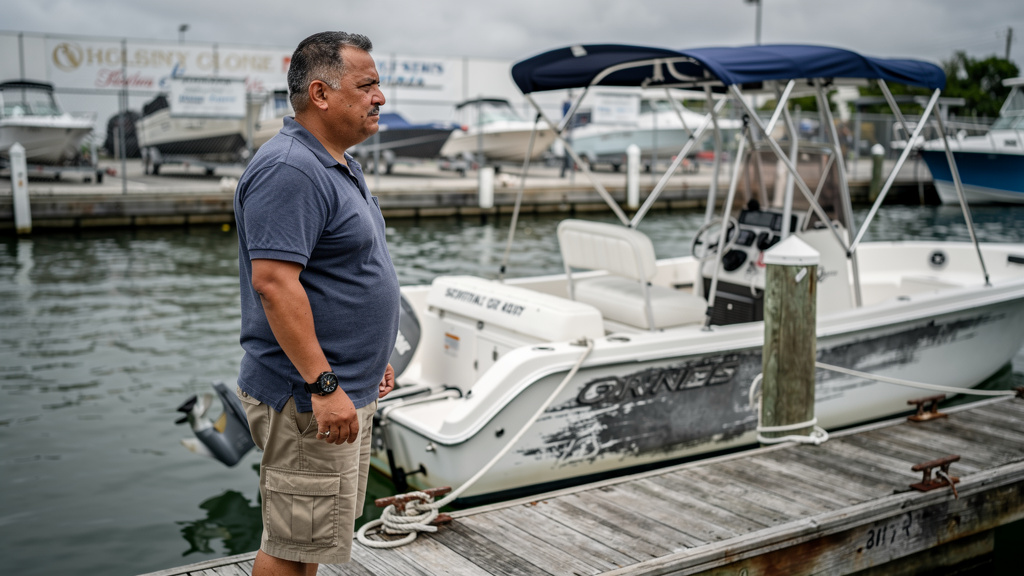
When a boat owner files a federal limitation-of-liability petition, they are asking a U.S. district court to cap their total financial responsibility to all injured people at the post-accident value of the vessel itself. That value can be almost nothing if the boat sank, burned, or was destroyed in the crash. The court will then issue a notice with a strict deadline for you to file your claim in that federal case. If you miss that deadline or file incorrectly, you may lose your right to recover anything, even if the owner caused the crash.
What exactly is the boat owner asking the federal court to do?
The boat owner filed what’s called a limitation-of-liability petition under the Shipowners’ Limitation of Liability Act (46 U.S.C. § 30501 et seq.). This law lets vessel owners ask a federal court to limit everything they owe, all medical bills, lost wages, and pain for every injured person combined, to the post-casualty value of the boat. Post-casualty means its worth after the crash. For example, a boat valued at $200,000 before the accident may be declared a total loss afterward, and the owner could claim its post-casualty value is near zero. The law dates to 1851 and was written for commercial shipping, but today it is routinely used against people hurt on recreational boats in Florida waters. The owner may also ask the court to find them not liable at all, called exoneration, within the same proceeding. These cases often end up in the U.S. District Court for the Southern District of Florida in Miami, especially after collisions on Biscayne Bay or near PortMiami.
Why is my other lawsuit being put on hold?
Once the boat owner files the petition and posts a bond or letter of undertaking, the federal court usually issues an injunction, a mandatory order, that legally blocks any state-court lawsuit against the vessel owner from moving forward. This is not optional. If you try to keep your state case going after this injunction, you risk harming or even losing your claim. Injury claims against the owner generally must now go through the federal limitation proceeding, which is typically decided by a judge alone, not a jury. This is a specialized federal procedure, and mistakes in it can be costly.
What is the claim deadline and why does missing it destroy my case?
If you do not file a correct claim in the federal case on time, your claim can be barred.
The court issues a notice, called a monition, that sets a specific deadline for all injured people to formally submit their claims in the federal limitation case. This date is not found in any statute book; it appears only in the notice you were served with. The amount of time is chosen by the judge in that specific case. Missing it, even by one day, or filing a claim that does not follow federal admiralty rules, can result in the court entering a default against you. That means you get nothing, no matter how severe your injuries or how clear the owner’s fault. Do not assume your insurance coverage or strong medical evidence protects you, this deadline overrides everything else. Note that the boat owner generally has six months from receiving written notice of your claim to file their petition, which is why these actions often appear quickly after a crash.
How can the owner lose the right to limit liability, and where does Florida’s careless-operation law fit in?
The owner can only limit liability if they lacked “privity or knowledge” of the negligence that caused the crash. That means if the owner knew the operator was reckless, ignored mechanical problems, or was personally operating the boat, the court may deny the limitation request. Florida Statute § 327.33 defines careless vessel operation as failing to act with reasonable regard for other boats, posted restrictions, weather, water conditions, or other dangers. Evidence of such conduct, like repeated speeding, ignoring warnings, or using a boat with known engine issues, can show the owner had the very knowledge that defeats limitation. Courts look at FWC accident reports, maintenance logs, and witness statements to evaluate this. And yes, if the boat had obvious mechanical problems the owner knew about, that is precisely the kind of evidence that can block limitation. Keep in mind that even if limitation is denied, the owner can still argue they were not at fault at all.
How does this change the timeline and any settlement talks?
A limitation case adds months or years to your claim. First, you must file in federal court. Then, the parties litigate whether the owner can limit liability. Only after that do you reach the question of who caused the crash and how much you should recover. If multiple people were hurt, as often happens on crowded waterways like the Intracoastal, the limited fund gets split among all approved claimants. For example, if the fund is small and five people file valid claims, each receives a share, not the full value of their claim. These petitions are filed in the owner’s name, often by lawyers hired by the owner’s insurer. Settlement talks may move more slowly while the limitation question is pending.
What should I do this week, before that deadline passes?
- Call a lawyer who handles federal maritime limitation cases immediately. This is a specialized federal procedure, and mistakes can be hard to undo.
- Find the court notice you were served with and write down the exact deadline listed for filing a claim. Treat this date as absolute.
- Do not file anything in federal court yourself. An improperly drafted claim can be rejected.
- Do not dismiss or settle any state case without legal advice. The federal injunction may already block it.
- Gather all evidence now: FWC accident reports, photos of both vessels, witness names and numbers, medical records, and any messages from the boat owner or their insurer.
- Do not give a recorded statement to the other side’s insurance company. Anything you say can be used to argue you were partly at fault or that your injuries are minor.
Wolfson & Leon serves injury victims throughout Miami-Dade County, including Hialeah, and offers a free consultation to review your situation.
Frequently asked questions
The boat was totaled in the crash. Does that mean the owner owes us nothing?
Not necessarily. If the court denies the owner’s request to limit liability, because they knew about unsafe conditions or were operating the boat, you may still pursue full compensation. But if limitation is granted and the boat has no post-casualty value, the available recovery could be extremely small or zero.
The owner has a big insurance policy. Does that mean I am protected even without filing in federal court?
No. The insurance policy is separate from the limitation proceeding. If you do not file a timely claim in the federal case, you may be barred from recovering anything, even if the owner carries ample coverage. The insurer will likely argue that your failure to comply with the court’s deadline waives your rights.
Can I still sue the boat operator separately if the owner filed this limitation case?
Possibly. The federal injunction typically applies only to claims against the vessel owner, not necessarily the individual operator if they are a different person. However, suing the operator may still be affected by the ongoing federal case, so you need legal guidance before taking any action.
Would privity or knowledge apply if the boat had obvious mechanical problems the owner knew about?
Yes. Known mechanical defects, especially if documented or previously reported, are strong evidence that the owner had the “privity or knowledge” needed to defeat limitation. Courts often deny limitation when the owner ignored dangerous conditions they were aware of.
There were several people hurt in the crash. Do we all file separately or together?
Each injured person must file their own claim in the federal limitation case by the court’s deadline. Claims are not automatically grouped. If the limitation fund is small, all approved claimants share it proportionally based on the court’s assessment of each claim’s value.
Hurt in an accident in Hialeah? Call Wolfson & Leon at 305-965-3766 for a free consultation. We speak Spanish, and there is no fee unless we win.
Key facts
- A limitation petition asks the court to cap the owner's total exposure to all claimants at the post-accident, post-casualty value of the vessel, not its pre-accident value and not the amount of insurance carried. Source: Shipowners' Limitation of Liability Act, 46 U.S.C. § 30501 et seq.
- Once the court issues its notice (called a monition), a court-ordered deadline is set for all claimants to file in the federal case; claimants who miss that deadline may be defaulted and permanently barred from any recovery. Source: Wolfson & Leon
- The federal court will typically enjoin, meaning legally pause or block, any parallel state-court lawsuit against the vessel owner while the limitation proceeding is pending. Source: Wolfson & Leon
- Florida Statute § 327.33 addresses careless vessel operation, including operating without reasonable regard for other vessel traffic, weather, water conditions, and other circumstances that could endanger people or property; evidence of such conduct may be relevant to whether the owner had knowledge of the unsafe operation. Source: Fla. Stat. § 327.33
- Limitation petitions arising from collisions in Miami-area waters are often filed in the United States District Court for the Southern District of Florida. Source: Wolfson & Leon
Frequently asked questions
The boat was totaled in the crash. Does that mean the owner owes us nothing?
Not automatically, but it is a serious risk the limitation proceeding is designed to create. The owner is arguing that their total exposure to all injured claimants combined is capped at the post-accident value of the vessel, which can be very low or near zero if the boat was destroyed. Whether that cap actually applies depends on whether you and other claimants successfully challenge the owner's claim that they lacked knowledge of the unsafe operation. Filing a timely and correct claim in the federal case is the essential first step to preserving any recovery at all.
The owner has a big insurance policy. Does that mean I am protected even without filing in federal court?
No. The existence of insurance does not replace the requirement to file a timely and correct claim in the federal limitation proceeding. The federal court can default your claim, meaning bar it permanently, if you miss the court-ordered deadline, regardless of how much insurance the owner carries. The limitation cap is tied to the vessel's post-accident value, not the policy limit, so the insurer's involvement does not guarantee you access to the full policy amount either.
Can I still sue the boat operator separately if the owner filed this limitation case?
The federal court's injunction typically blocks new lawsuits against the vessel owner while the limitation proceeding is pending, but the scope of that injunction and whether it reaches operators or other parties depends on the specific case. Do not file or continue any related lawsuit without first confirming with a maritime attorney how the injunction affects your particular claims. Acting without that guidance can put your position in the federal case at risk.
Would privity or knowledge apply if the boat had obvious mechanical problems the owner knew about?
Yes, known mechanical defects are precisely the kind of evidence that can defeat a limitation claim. The owner can only limit liability if they lacked privity or knowledge of the negligent act or unsafe condition that caused the accident. If the owner knew the vessel had mechanical problems, failed to maintain it properly, or was aware of the operator's careless habits, a court may find that privity or knowledge existed and deny limitation. Evidence of careless vessel operation, as described in Florida Statute § 327.33, may be relevant to what the owner knew or should have known about how their vessel was being operated.
There were several people hurt in the crash. Do we all file separately or together?
Each injured person must file their own individual claim in the federal limitation proceeding by the court-set deadline. The purpose of the limitation action is to consolidate all claims into one federal proceeding so the court can determine whether the owner's liability is capped and, if so, how the limitation fund is divided among all claimants. If the total approved claims exceed the limitation fund, each claimant receives a proportional share, not the full value of their injuries. This makes it critical for each injured person to have their own counsel protecting their individual claim.
This article is general information about Florida law, not legal advice, and reading it does not create an attorney-client relationship. Every case is different and past results do not guarantee a similar outcome. For advice about your situation, call Wolfson & Leon at 305-965-3766 for a free consultation.
Also available in: Versión en español
 Personal injury
Where Can I Read Real Wolfson & Leon Reviews From Past Clients?
Independent reviews of Wolfson & Leon live on Google Business Profile, Avvo, the Better Business Bureau, and Yelp, read them there, not here, so you…
 Personal injury
What Does It Cost to Hire Wolfson & Leon for an Accident Case?
Hiring Wolfson & Leon for an accident case costs you nothing upfront and nothing at all unless the firm recovers money for you. The fee is a…
 Personal injury
Federal Maritime Law vs. Florida Law: Which Governs Your Miami Boating Accident?
Whether federal maritime law or Florida state law governs your Miami boating accident depends on two things: where the accident happened and what…