
Hurt on a Cruise Excursion Booked Through the Line? Here Is Who Pays
Yes, in many cases you can hold the cruise line responsible even though a local operator ran the excursion. Courts look at whether the cruise line negligently selected or supervised the operator, failed to warn you of known dangers, or marketed the excursion in a way that made you reasonably believe the cruise line itself was running it. The ticket contract, however, controls the deadlines and the court where you must sue, so you need to act faster than you would in a standard Florida injury case.
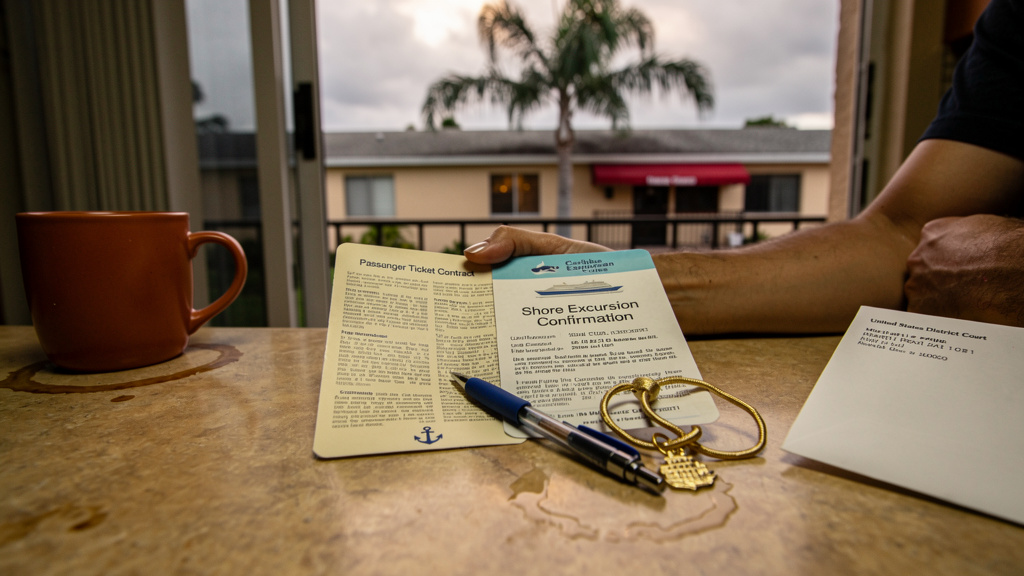
Yes, you can often hold the cruise line responsible for injuries on a shore excursion it sold you, even though a local third party actually ran the tour. Courts examine whether the cruise line negligently chose or supervised that operator, failed to warn you of known dangers, or marketed the excursion in a way that made you reasonably believe the cruise line itself was providing the activity. Your passenger ticket contract often sets strict deadlines and often requires lawsuits to be filed in federal court in Miami, so Florida’s standard two-year injury deadline may not be the one that controls; check your ticket.
Who actually runs the excursion I bought at the cruise desk?
The cruise line usually does not operate the excursion itself. Instead, it sells tours run by independent local contractors, often foreign companies with no U.S. presence. Cruise line websites and ticket contracts commonly state that excursion operators are independent companies solely responsible for their tours, and passengers may see similar disclaimers both in the ticket contract and on the excursion ticket handed out onboard. This structure is common, and these disclaimers are routine, not exceptional.
When can the cruise line still be held responsible despite that defense?
Even with disclaimers, courts may allow claims against the cruise line under three theories: negligent selection of an unsafe operator, failure to warn of known dangers, or apparent agency based on how the excursion was marketed. Disclaimers can be powerful, and layered written warnings can defeat an apparent agency claim, but they do not automatically block all claims. Evidence of prior incidents involving the same operator may be used to argue the cruise line knew or should have known the operator was unsafe, and a failure to warn passengers of known hazards at a port or excursion site can support a separate claim. Federal law (46 USC §30527(a)) may even void clauses that try to waive liability for the cruise line’s own negligence. Each case turns on its facts: what the cruise line knew, what it said, and what the passenger reasonably believed.
What about injuries getting to or from the excursion, tender boats and port transfers?
Your injury does not need to occur at the main activity site. Many passengers are hurt during transport to or from the excursion. A boat or vehicle crash, collapsing seating, or missing safety equipment during a transfer can raise the same questions as an injury at the activity itself. When the cruise line arranges or sells this transport as part of the excursion package, the same liability theories may apply: negligent selection, failure to warn, or apparent agency. Tender operations, where the ship uses its own small boats, may involve direct cruise line control, but this depends heavily on the facts. Regardless of the vehicle type, if it was included in your booked excursion, it is generally analyzed under the same legal theories.
Why is it so hard to sue the local tour operator directly?
Suing the local operator alone is often impractical. Federal courts in Miami often find they lack jurisdiction over foreign excursion companies, and some vendors may be outside the court’s reach, which complicates suing the operator and the cruise line together. Even if you win a judgment, collecting from a small foreign company with no U.S. assets may be impossible. That is one reason many injured passengers pursue the cruise line instead. Cruise lines may also require their vendors to carry liability insurance, which can matter when negotiating a resolution. In practice, recovery often hinges on the cruise line’s role.
What deadlines does my ticket create, and where must I file?
Your cruise ticket contract, not Florida law, sets the deadlines. Many cruise tickets require written notice of your claim, often within six months, and a lawsuit filed, often within one year. This is much shorter than Florida’s two-year negligence deadline under FS 95.11 for injuries after March 24, 2023. Federal maritime law allows this shortening within limits: under 46 USC §30526(b), a ticket cannot give less than six months for notice or less than one year to sue. Additionally, forum selection clauses often require filing in the U.S. District Court for the Southern District of Florida in Miami. For Hialeah residents, this courthouse is geographically close, but you must check your specific ticket to confirm. While 46 USC §30527(a) voids clauses limiting liability for the cruise line’s own negligence, it does not override valid forum clauses. Miss the notice or filing deadline, and your claim is likely barred.
What evidence should I collect before the ship leaves port?
Right after an injury, confusion is normal. Go to the ship’s medical center immediately, even for minor pain. Documentation matters. Photograph the scene, broken equipment, and visible injuries before leaving port. Get names and contact info from fellow passengers and crew who saw what happened. Keep every paper: excursion ticket, boarding stub, waiver, receipt. Write down exactly what occurred, who spoke to you, and what they said. Do not give a recorded statement to the cruise line’s claims team without first talking to a lawyer. Request a copy of the ship’s incident report. Onboard medical records and the written tickets can both become key evidence. And remember: if your ticket has a six-month notice requirement, that clock may start the day you’re hurt.
Frequently asked questions
The cruise line’s website says it is not responsible for shore excursion injuries. Does that mean I have no case?
No. Website disclaimers are common, but they do not automatically end your claim. Courts look at what the cruise line actually did, such as selecting a dangerous operator or failing to warn of known risks, and whether its marketing created reasonable belief that it ran the tour. Written disclaimers are strong evidence, but not absolute.
I was hurt getting on a small boat to reach the excursion. Does that count?
Yes. Injuries during transport to or from the excursion, including tender boats, shuttles, or pickup trucks, may be treated as part of the excursion if the cruise line sold or arranged the transfer. The same liability theories can apply.
Can I just sue the local tour company instead of the cruise line?
You can try, but it is often impractical. Most local operators have no U.S. presence, making service of process difficult and collection unlikely. Federal courts in Miami often find they lack jurisdiction over them. Pursuing the cruise line is often the more practical path.
How long do I have to file a claim after a cruise excursion injury?
Many cruise tickets require written notice, often within six months, and a lawsuit, often within one year. These deadlines are shorter than Florida’s standard two-year limit and courts generally enforce them, so check your ticket.
I am from Hialeah. Do I really have to sue in Miami federal court?
Often, yes. Many cruise tickets include forum selection clauses requiring injury lawsuits to be filed in the U.S. District Court for the Southern District of Florida, which sits in Miami. Check your own ticket contract, which controls this requirement.
Hurt in an accident in Hialeah? Call Wolfson & Leon at 305-965-3766 for a free consultation. We speak Spanish, and there is no fee unless we win.
Key facts
- Cruise ticket contracts often require written notice of an injury claim within six months and a lawsuit filed within one year, both shorter than Florida's standard two-year negligence deadline under FS 95.11. Source: 46 USC §30526(b); FS 95.11
- Federal law does not allow a passenger ticket to set less than six months for written notice of a personal injury claim or less than one year to file suit. Source: Wolfson & Leon
- Forum selection clauses in cruise ticket contracts often require injury lawsuits to be filed in the U.S. District Court for the Southern District of Florida, which sits in Miami, potentially close to home for Hialeah residents. Passengers should verify the exact language in their own ticket. Source: 28 U.S.C. § 89(c) (U.S. District Court for the Southern District of Florida)
- Federal maritime law may void contract clauses that try to limit a cruise line's liability for personal injury or death caused by its own negligence. Source: Wolfson & Leon
- Under federal maritime law, cruise lines owe passengers reasonable care under the circumstances, which federal courts have held can include a duty to warn of known dangers at places passengers are invited or reasonably expected to visit, even when a third party operates the excursion. Source: Wolfson & Leon
Frequently asked questions
The cruise line's website says it is not responsible for shore excursion injuries. Does that mean I have no case?
Not necessarily. Disclaimers can be powerful, and courts have found that layered written disclaimers can defeat some claims. But disclaimers do not automatically shield the cruise line from liability for its own separate negligent acts, such as failing to warn passengers of a known danger or retaining an operator it knew was unsafe. Federal law under 46 USC §30527(a) may void clauses that purport to waive the cruise line's liability for personal injury caused by its own negligence. A maritime attorney can review your specific ticket language and the facts of your injury.
I was hurt getting on a small boat to reach the excursion. Does that count?
Yes. Courts have addressed injuries that occurred in transport to or from an excursion activity, not just at the activity itself. The same legal theories, negligent selection of the transport operator, failure to warn, and apparent agency, can apply to the transfer portion of a cruise-sold excursion. The analysis is fact-specific, so consult a maritime attorney about the particular circumstances of your injury.
Can I just sue the local tour company instead of the cruise line?
You may have the right to pursue the tour operator, but doing so as a practical matter can be extremely difficult. The operator may be a small local company in a foreign country with no meaningful presence in the United States, making it hard for a federal court in Miami to assert jurisdiction. Even a judgment against a foreign operator can be difficult to collect. Because cruise lines may require their excursion contractors to carry liability insurance, and because the cruise line has commercial leverage over its vendors, pursuing the cruise line, or using that leverage to negotiate with the operator's insurer, is often the more practical path.
How long do I have to file a claim after a cruise excursion injury?
Your cruise ticket contract often shortens the deadlines that would otherwise apply under Florida law. Many cruise ticket contracts require written notice of a claim, often within six months of the injury, and a lawsuit filed, often within one year, compared to Florida's two-year negligence deadline under FS 95.11 for injuries on or after March 24, 2023. Missing either deadline can result in your entire claim being dismissed. Because the ticket contract controls and the exact language varies by cruise line, you should consult a maritime attorney as soon as possible after your injury.
I am from Hialeah. Do I really have to sue in Miami federal court?
Many cruise ticket contracts include a forum selection clause requiring injury lawsuits to be filed in the U.S. District Court for the Southern District of Florida, which is located in Miami. Passengers should verify the exact language of their own ticket, as terms vary. If that clause applies to your case, the Miami courthouse may be relatively accessible for Hialeah residents compared to passengers from other states who must also litigate there. Forum selection clauses in cruise contracts are generally enforceable, though an attorney can review whether any exception applies to your facts.
This article is general information about Florida law, not legal advice, and reading it does not create an attorney-client relationship. Every case is different and past results do not guarantee a similar outcome. For advice about your situation, call Wolfson & Leon at 305-965-3766 for a free consultation.
Also available in: Versión en español
 Slip and fall
I Slipped and Fell at PortMiami: Who Is Responsible for My Injuries?
Responsibility for a slip-and-fall at PortMiami depends on exactly where you fell and who controlled that space at the time: the cruise line, a…
 Slip and fall
Who Is Liable When Someone Gets Hurt in a Cruise Ship Accident at PortMiami?
The cruise line is usually the first party to look at, but liability at PortMiami often spreads across several defendants: the terminal operator,…
 Slip and fall
Yes, a Lawyer Can Come to You in the Hospital After a Fall
Yes. Wolfson & Leon sends attorneys to patients at Hialeah Hospital, Palmetto General, and other area facilities, no need to wait until discharge.…