
Minor Car Accident in Hialeah: When You Need a Lawyer and When You Don't
Not every minor crash in Hialeah requires a lawyer. If your accident caused property damage only, fault is not disputed, the other insurer has accepted liability in writing, and you have had zero symptoms for several weeks, you can likely resolve the claim yourself. The moment any injury symptom appears, fault is contested, or an insurer asks for a recorded statement, stop and talk to a lawyer before doing anything else.
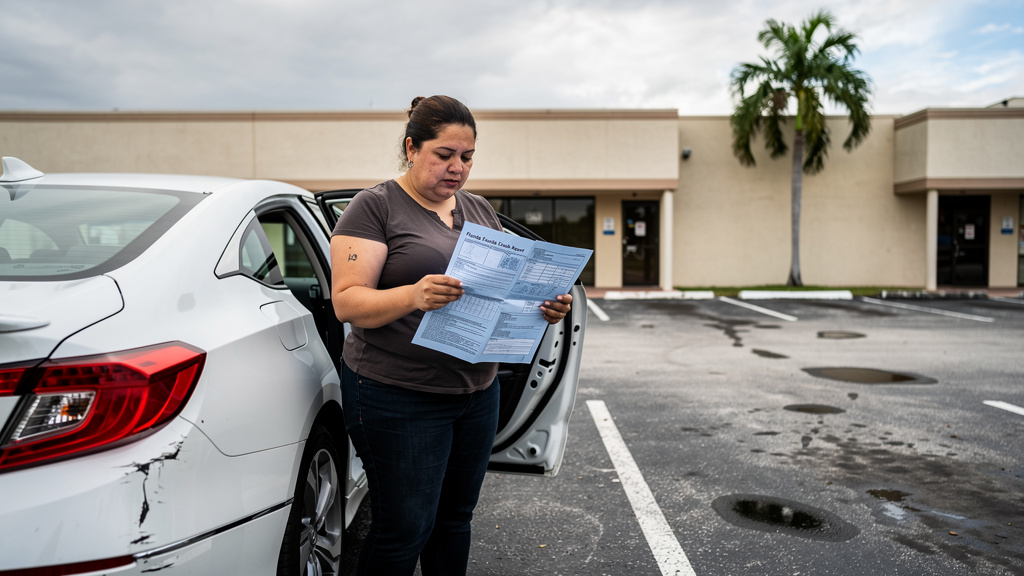
Not every minor crash in Hialeah requires a lawyer. If the accident caused property damage only, fault is not disputed, the other insurer has accepted liability in writing, and you have had zero symptoms for several weeks, you can likely resolve the claim yourself. The moment any injury symptom appears, fault is contested, or an insurer asks for a recorded statement, stop and talk to a lawyer before you do anything else.
When can I handle a minor Hialeah crash myself?
Self-handling a minor crash is a financially reasonable choice, but only when all five of the following conditions are true.
First, the crash caused property damage only. That means no injury symptoms of any kind, including soreness, headaches, stiffness, or brain fog, for at least two to three weeks after the crash. One day is not enough time to know.
Second, the other driver’s insurer has accepted liability in writing. A verbal acknowledgment is not acceptance of liability. Get it in writing before you proceed.
Third, the repair or total-loss offer matches independent estimates or comparable listings you have checked yourself. Do not rely only on the insurer’s number.
Fourth, no commercial truck, rideshare vehicle, government vehicle, or uninsured driver was involved. Each of those adds layered policies, separate rules, and different deadlines or notice requirements that make self-handling genuinely risky.
Fifth, no insurer has asked you for a recorded statement or offered a quick cash settlement. Either of those signals that the claim is being evaluated in ways you may not see yet.
When all five are true, a contingency-fee lawyer would take a percentage of money you could collect yourself. Self-handling is the right call. This narrow situation exists, and you should recognize it.
What are the signs I should talk to a lawyer, even if the crash seemed minor?
The following are concrete signals that the claim has grown beyond safe self-handling. If any one of them is true, stop and consult a lawyer before taking further action.
Any symptom appears, even a mild one. Neck stiffness, a headache, trouble sleeping, or soreness that begins on day two or three is significant. Adrenaline masks pain at the scene. What felt like nothing on the day of the crash is often different 48 hours later.
Fault is disputed or the insurer implies you share blame. Under Florida’s modified comparative negligence rule (Fla. Stat. § 768.81(6)), your recovery is reduced by your percentage of fault and cut off entirely if you are found more than 50 percent at fault. The percentage assigned to you is negotiable, and it matters.
An adjuster calls asking for a recorded statement. The phrase “just to document things” is common. A recorded statement is evidence-gathering for their side. Do not give one before you speak with a lawyer. This applies even to your own insurer. See what to know before giving a recorded statement to an insurance adjuster.
You are offered a quick cash settlement before treatment is finished. That offer likely comes with a release. A signed release is permanent. It ends the claim regardless of what symptoms appear the following month.
The at-fault driver had no insurance. Uninsured drivers are a real problem in Hialeah. A fault-based claim against a driver with no coverage may go nowhere. This is when your own uninsured motorist coverage under Fla. Stat. § 627.727 matters. It steps into the shoes of the driver who should have paid. Many people do not know they have it, or were talked out of it when they bought their policy.
The insurer argues that light vehicle damage means no real injury. That is a claims tactic, not a legal rule. Vehicle damage and human injury do not correlate the way adjusters imply.
Your PIP carrier schedules an examination under oath. You generally must comply, but consult a lawyer before you do.
What is the 14-day PIP rule and does it apply even to a minor fender-bender?
Yes, it applies to every crash, including fender-benders. Under Fla. Stat. § 627.736, the 14-day clock starts on the date of impact, not the date pain begins. Miss it by one day and your PIP benefits pay nothing, regardless of how real your injuries turn out to be.
When a qualified provider, including a licensed physician, physician assistant, or nurse practitioner, documents an emergency medical condition, PIP pays 80 percent of reasonable medical bills and 60 percent of lost wages up to $10,000. Without that finding, the cap drops to $2,500. Ask the provider directly whether they are documenting an emergency medical condition and confirm it appears in your records.
Your own PIP policy pays first after any crash under Fla. Stat. § 627.736(4)(e), regardless of who caused it. The at-fault driver’s PIP is not the starting point for your benefits. This is one of the most common misunderstandings about how Florida’s no-fault system works. “No-fault” means your own PIP covers your initial bills regardless of fault. It does not mean the other driver’s insurer covers everything, and it does not mean fault is irrelevant to larger claims.
If you need same-day care in Hialeah, Hialeah Hospital is at 651 E 25th St and Palmetto General Hospital is at 2001 W 68th St. Urgent care may also work if the provider is PIP-accepted for initial treatment. Call ahead and confirm before you go.
What injuries show up days later, and why does that change everything?
The most common delayed-onset injuries from car crashes are whiplash, concussion, herniated discs, and soft tissue injuries. None of them necessarily hurt at the scene. The mechanism is straightforward: adrenaline after a crash masks pain. What feels like nothing on the day of impact often becomes neck stiffness, headaches, difficulty concentrating, or trouble sleeping on day two or three.
Monitor yourself for the full two to three weeks after the crash, not just the first 24 hours. The safest approach is to be seen by a provider within 14 days even if you feel fine. Symptoms may still be developing, and waiting costs you PIP coverage if they surface after the deadline.
The release trap is real. If an adjuster offers quick cash before your symptoms have fully appeared and you sign a release, the claim is over. Permanently. It does not matter what a doctor finds the following month. An insurer’s urgency is a signal. It often means the claim is worth more than what they are offering.
To understand the serious injury threshold that determines whether you can recover pain and suffering from the at-fault driver, talk to a lawyer before you sign anything. That threshold under Fla. Stat. § 627.737(2) requires a permanent injury, significant and permanent scarring or disfigurement, or significant and permanent loss of an important bodily function. Only a doctor can make that determination, and it takes time.
What does a free consultation actually cost me, and what should I expect?
A free consultation costs nothing upfront and creates no obligation. Personal injury lawyers in Florida work on contingency. They are paid a percentage of the recovery, and only if the claim succeeds. There is no hourly bill, no retainer, and nothing owed if the case does not resolve in your favor.
For a small, clear property-damage-only claim where the insurer is paying fairly, an honest firm will tell you that you likely do not need a lawyer. A contingency fee on a number you could collect yourself does not benefit you, and a firm that tells you otherwise is not serving your interests. The consultation is worth taking precisely because it answers that question at no cost. You find out where your claim falls without committing to anything.
The relevant question is whether representation is likely to increase your net recovery by more than the fee. When injuries are involved, fault is disputed, or the insurer is contesting the claim, the answer is frequently yes. When all five self-handling conditions from the first section are met, the answer may be no.
Wolfson & Leon offers free consultations and handles car accident claims in Hialeah. There is no fee unless the firm recovers for you. If you want to know what to bring to that first meeting, you can prepare in about ten minutes.
What should I do at the scene of a minor Hialeah crash to protect yourself later?
Start with documentation before anything else moves. Photograph the point of contact, lane positions, skid marks, traffic signals, the other driver’s license plate, and their insurance card. A photo of the dent alone is not enough. You want to show where the vehicles were and what the conditions looked like.
Get the other driver’s full name, driver’s license number, insurer name, and policy number. Get names and phone numbers from any witnesses before they leave.
Florida law requires crashes involving injury or death, and certain other crashes, to be reported to police. Even when a report is not required, call police anyway. A report written by someone with no stake in the outcome carries weight with adjusters when two drivers tell different stories. An officer is also less likely to accept false insurance information than a private citizen is. If no officer investigates a crash that must be reported, Florida law generally requires the drivers involved to file a written crash report themselves within a short deadline; ask a lawyer or check with the Florida Department of Highway Safety and Motor Vehicles. Under Fla. Stat. § 316.066, crash reports are confidential for 60 days except to the parties, their insurers, and their lawyers.
Move your vehicle out of travel lanes promptly under Fla. Stat. § 316.061(1) when it is safe to do so.
Do not say “I’m fine” to anyone at the scene or on the phone afterward. Saying it to an adjuster the same day can be used to deny a later injury claim. Do not give a recorded statement to any insurer, including your own, before talking to a lawyer. For more on what to do in the hours after a Palmetto Expressway crash or any major Hialeah road collision, those steps apply here too.
Frequently asked questions
Do I still need to see a doctor within 14 days if I feel completely fine after the crash?
Seeing a provider within 14 days is the safest move even without symptoms, because adrenaline can mask injury and symptoms often surface on day two or three. Under Fla. Stat. § 627.736, the 14-day clock starts on the date of the crash, not when pain begins. If symptoms appear on day 15 and you have not been seen, your PIP pays nothing. A visit that confirms you are fine costs far less than losing $10,000 in coverage because you waited.
The other driver had no insurance. What are my options in Hialeah?
Your first source of coverage is your own PIP policy, which pays regardless of who caused the crash. If you carry uninsured motorist coverage under Fla. Stat. § 627.727, that coverage can pay for injuries the at-fault driver cannot. Many people do not know they have it or were not offered it clearly when they bought their policy. A direct lawsuit against an uninsured driver is legally available but practically difficult if that driver has no assets. Talk to a lawyer before assuming the case is over. See your options after being hit by an uninsured driver in Hialeah.
The insurer is saying the damage to my car was so small I couldn’t really be injured. Is that true?
No. Low vehicle damage does not rule out injury. The human body and a car frame absorb energy differently. This argument is a standard claims tactic used to minimize or deny injury claims, not a medical or legal conclusion. If you have symptoms, document them with a provider and do not let an adjuster’s assessment of the bumper determine your medical care.
Can I still recover pain and suffering damages if I was partly at fault for the Hialeah crash?
Yes, if your share of fault is 50 percent or less. Under Florida’s modified comparative negligence rule at Fla. Stat. § 768.81(6), your recovery is reduced by your percentage of fault. If you are found 20 percent at fault, you recover 80 percent of your damages. Recovery is barred only if you are found more than 50 percent at fault. The percentage assigned to you is not fixed; it is often negotiable, which is one reason fault disputes are worth taking seriously from the start.
How long do I have to file a lawsuit after a minor car accident in Florida?
For crashes on or after March 24, 2023, the deadline to file a personal injury lawsuit is two years from the date of the accident under Fla. Stat. § 95.11. Missing that deadline means losing the right to sue, regardless of how strong the claim is. Two years sounds like a long time, but evidence disappears, witnesses become unavailable, and treatment gaps can hurt a case. Waiting until the last month to consult a lawyer is not a strategy. See Florida’s personal injury statute of limitations for more detail.
Hurt in an accident in Hialeah? Call Wolfson & Leon at 305-965-3766 for a free consultation. We speak Spanish, and there is no fee unless we win.
Key facts
- You must receive initial medical treatment within 14 days of the crash or your PIP benefits pay nothing, regardless of how real your injuries turn out to be. Source: Fla. Stat. § 627.736
- PIP pays 80 percent of reasonable medical expenses and 60 percent of lost wages up to $10,000 when a doctor documents an emergency medical condition; without that finding, the cap drops to $2,500. Source: Fla. Stat. § 627.736
- Your own PIP policy pays first after any crash, regardless of who caused it. The at-fault driver's PIP is not the starting point for your benefits. Source: Fla. Stat. § 627.736(4)(e)
- To sue the at-fault driver for pain and suffering beyond PIP, Florida law requires a permanent injury, significant and permanent scarring or disfigurement, or significant and permanent loss of an important bodily function, a determination only a doctor can make. Source: Fla. Stat. § 627.737(2)
- For crashes on or after March 24, 2023, the deadline to file a personal injury lawsuit in Florida is two years from the date of the accident. Source: Fla. Stat. § 95.11
Frequently asked questions
Do I still need to see a doctor within 14 days if I feel completely fine after the crash?
Yes, if you have any doubt at all about how you feel, go within 14 days. The 14-day clock under Fla. Stat. § 627.736 starts on the date of impact, not when pain begins. Adrenaline routinely masks whiplash, concussion, and soft-tissue pain for one to three days. If you miss the deadline by even one day, your PIP benefits pay nothing, regardless of how real the injury turns out to be. Being seen within the window protects you; it does not obligate you to make a claim.
The other driver had no insurance. What are my options in Hialeah?
If the at-fault driver has no insurance, your own uninsured motorist (UM) coverage under Fla. Stat. § 627.727 may be your most important path to recovery, it steps in where the at-fault driver's coverage should have been. UM coverage is optional in Florida and must be rejected in writing, so check your declarations page to see if you have it. Your own PIP still pays your initial medical bills regardless of the other driver's coverage status. Because UM claims involve your own insurer and can be complex, talking to a lawyer before filing is advisable.
The insurer is saying the damage to my car was so small I couldn't really be injured. Is that true?
No. Florida law does not require visible vehicle damage to support a legitimate injury claim. What matters is whether a qualified medical provider documents your injury and connects it to the crash. Insurance adjusters routinely use the 'low damage equals no injury' argument as a claims tactic, but it is not a legal rule. Strong counter-evidence includes the repair estimate itself proving contact occurred, photos documenting the point of impact, and your medical records tying the diagnosis to the crash date.
Can I still recover pain and suffering damages if I was partly at fault for the Hialeah crash?
Possibly. Under Fla. Stat. § 768.81(6), Florida's modified comparative negligence rule, your recovery is reduced by your percentage of fault. If you are found 30 percent at fault, you recover 70 percent of your damages. Your right to recover is only cut off entirely if you are found more than 50 percent at fault. The percentage assigned to you is not fixed, it is negotiable with evidence, which is one reason fault disputes benefit from legal representation. To recover pain and suffering from the at-fault driver at all, your injuries must also meet the serious-injury threshold under Fla. Stat. § 627.737(2).
How long do I have to file a lawsuit after a minor car accident in Florida?
For crashes that happened on or after March 24, 2023, you have two years from the date of the accident to file a personal injury lawsuit under Fla. Stat. § 95.11. A signed release with an insurer waives that right immediately, no matter what symptoms appear afterward, which is why you should never sign a release while any symptom is unresolved or medically unevaluated. The statute of limitations runs independently of negotiations, so do not let an insurer's slow pace push you past the deadline.
This article is general information about Florida law, not legal advice, and reading it does not create an attorney-client relationship. Every case is different and past results do not guarantee a similar outcome. For advice about your situation, call Wolfson & Leon at 305-965-3766 for a free consultation.
Also available in: Versión en español
 Car accidents
Small Car Accident in Florida: Do You Actually Need a Lawyer?
Whether you need a lawyer after a small crash in Florida depends on whether anyone was hurt, not just how much metal was bent. If pain showed up…
 Car accidents
How Long Does a Car Accident Case Take in Florida?
Most Florida car accident cases settle in three to eighteen months, but serious injuries, disputed fault, or a lawsuit can push that to two years or…
 Car accidents
Rear-Ended on Okeechobee Road: What Is My Claim Actually Worth?
There is no flat number: the value of a rear-end claim on Okeechobee Road depends on your actual injuries, how much medical treatment you received,…