
Hurt on a Rented Jet Ski or Speedboat Tour in Miami: Who Pays?
Yes, you may still have a claim against the rental company even if you signed a waiver, because a waiver may not shield a company from its own negligence, such as renting defective equipment, skipping required safety instruction, or ignoring dangerous conditions. The rental operator, the tour company, the operator of another vessel, or all three may share liability depending on what caused the crash. Florida law imposes specific duties on personal watercraft rental operators, and a signed waiver does not erase those duties.
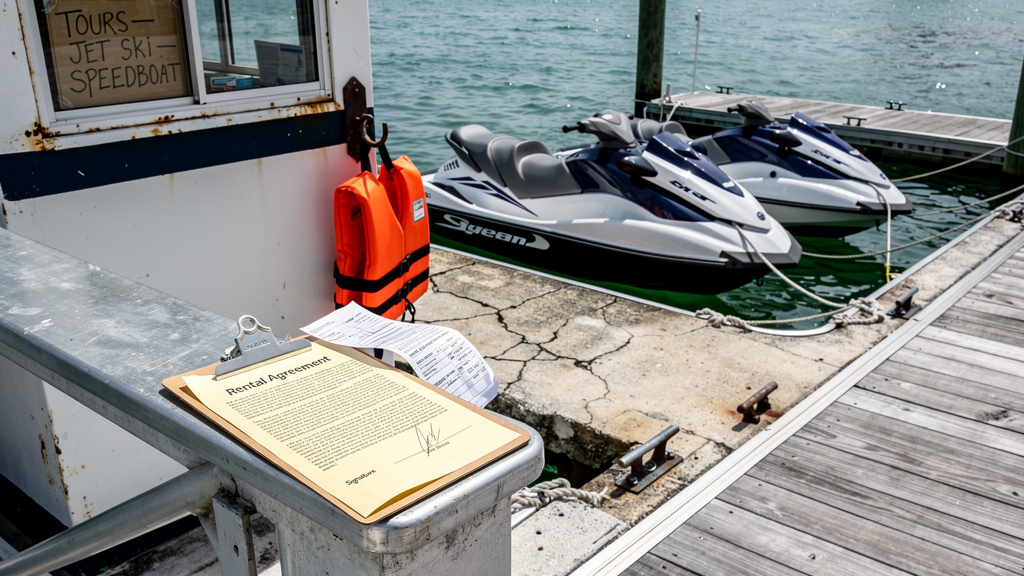
Yes, you may still have a claim against the rental company even if you signed a waiver. Waivers may not protect companies from their own negligence, such as renting defective equipment, skipping required safety instruction, or ignoring dangerous conditions. The jet ski rental operator, the tour company, another vessel’s operator, or all three could share legal responsibility depending on what caused your injury. Florida law places specific duties on personal watercraft rental businesses, and signing a form does not erase those obligations.
What are Florida’s age and life-jacket rules for jet skis, and did the rental company follow them?
Florida law sets clear safety standards that rental companies must follow. No one under age 14 may operate a personal watercraft anywhere in the state. Everyone on board, driver and passengers alike, must wear a U.S. Coast Guard-approved life jacket while the personal watercraft is being operated; storing one under a seat does not count. Additionally, anyone born on or after January 1, 1988 must hold a valid boater education card from an approved provider before operating a vessel of 10 horsepower or more, including jet skis. Rental operators around Miami Beach, Key Biscayne, and Biscayne Bay must verify these requirements before handing over keys. If they failed to check age, skip the life jacket, or rent to someone without the required card, they may have violated Florida law. Those violations can be evidence of negligence in a personal injury case.
What duties does a jet ski rental company owe me beyond handing me a key?
A rental company owes you more than just access to a machine. It has legal duties to provide meaningful safety instruction, not just hand you a laminated sheet, especially if you are a first-time rider. The company must inspect and maintain its jet skis so they are mechanically safe to operate. It also should refuse to rent to anyone who appears impaired or clearly unqualified. Under Florida’s negligent entrustment doctrine, a business that puts a dangerous instrument like a high-speed jet ski into the hands of an unqualified person shares responsibility for the harm that follows. Data from the Florida Fish and Wildlife Conservation Commission shows that most operators in fatal boating accidents had no formal boating education, a statistic that underscores why proper screening and instruction matter. A rushed orientation can leave a rider on the water without the instruction they needed.
If I was on a speedboat tour, is the tour company responsible for what the crew did?
Yes. Under the legal principle of respondeat superior, a tour company is generally liable for negligence by its captain or crew while they are working. This includes reckless speeding, failure to keep a proper lookout, or ignoring navigation rules, all violations of Fla. Stat. § 327.33, which prohibits careless or reckless vessel operation. The company also faces direct liability for its own failures, such as hiring unqualified captains, skipping maintenance, or overloading the boat. After a reported collision off PortMiami, WSVN noted that passengers sued the tour operator, highlighting real-world accountability in this industry. Because commercial tour companies often carry larger insurance policies than private boat owners, naming the company early is critical to securing fair compensation.
I signed a waiver before I got on, does that mean I have no case?
Not necessarily. Many people believe the waiver means the rental company cannot be liable. That is often wrong. A waiver may cover the ordinary risks of riding a jet ski, like falling off in calm water. But it may not shield a company from its own negligence, gross negligence, or violations of state law. If the jet ski had faulty brakes, the staff skipped safety instructions, or they sent you out in stormy conditions, the waiver may not block your claim. The enforceability of your specific waiver depends on its exact wording and the facts of your accident. Federal maritime law may also apply if the crash happened on navigable waters, and it evaluates waivers differently than Florida contract law. Have an attorney review the document before assuming you have no recourse.
What if another boat or jet ski hit me, and I didn’t rent from them?
You can still pursue a claim. The operator of the other vessel can be held personally liable for negligent operation under Fla. Stat. § 327.33, especially if they failed to keep watch, sped through crowded areas, or broke navigation rules. If that operator rented their craft, their rental company may also share fault under negligent entrustment for sending an untrained person onto the water. Florida uses a modified comparative negligence rule: your recovery is reduced by your percentage of fault, but you only lose the right to recover if you are found to be MORE THAN 50 percent at fault. If federal maritime law applies, the fault rules can differ. Expect the other party’s insurer to contact you quickly for a recorded statement and offer a low settlement. What you say in those early conversations can affect your case for months, having a lawyer before that call is essential.
What evidence should I request, and request right now, before it disappears?
Act fast. Under Fla. Stat. § 327.30, serious boating accidents must be reported to the Florida Fish and Wildlife Conservation Commission (FWC), and that report becomes key evidence. Note that FWC or Coast Guard investigations are separate from your civil claim, an agency’s conclusion does not determine whether you can recover damages. Immediately preserve or request: the signed rental agreement and waiver; GPS or onboard data showing speed and location; security footage from docks or nearby boats (it’s often deleted within days); maintenance records for the vessel; the boater education card the renter was required to show; and any pre-ride instruction logs. You have two years from the date of injury to file a negligence lawsuit if hurt on or after March 24, 2023, per Fla. Stat. § 95.11, but some maritime or contract claims have different, sometimes shorter, deadlines. Waiting can mean losing your right forever.
Frequently asked questions
Can I sue a Miami jet ski rental company if I was hurt by another renter, not by the rental company’s own staff?
Yes. If the other renter was unqualified or received no safety instruction, the rental company that put them on the water may share liability under negligent entrustment. Their failure to screen or train can make them partially responsible for your injuries.
Does Florida’s PIP insurance apply to jet ski and boat accidents?
No. Personal Injury Protection (PIP) covers injuries involving motor vehicles, not boats. Boat and jet ski crashes fall outside PIP, so medical bills and lost wages must be covered through health insurance, the at-fault party’s liability policy, or any uninsured boater coverage on your own boat policy, if you have it.
What if the speedboat tour company is now trying to cap what it pays me under a federal law?
Federal maritime law may limit liability for vessel owners in certain cases, but those limits are not automatic. An experienced attorney can challenge the applicability of those caps, especially if the company acted negligently or failed to maintain seaworthiness.
How long do I have to file a lawsuit after a jet ski or speedboat accident in Miami?
For injuries on or after March 24, 2023, Florida gives you two years under Fla. Stat. § 95.11. However, maritime claims or contract-based suits may have different deadlines, so consult a lawyer immediately.
I was partially at fault for the jet ski crash, can I still recover anything?
Yes, as long as you were not MORE THAN 50 percent at fault. Florida’s modified comparative negligence rule allows partial recovery, reduced by your share of responsibility; if federal maritime law applies, the fault rules can differ. Even if you made a mistake, others may bear greater blame.
Hurt in an accident in Hialeah? Call Wolfson & Leon at 305-965-3766 for a free consultation. We speak Spanish, and there is no fee unless we win.
Key facts
- Florida prohibits anyone born on or after January 1, 1988 from operating a personal watercraft without a boater education card issued by an approved provider. Source: Fla. Stat. § 327.395
- Personal watercraft operators and all passengers must wear a Coast Guard-approved personal flotation device while the personal watercraft is being operated. Source: Fla. Stat. § 327.39
- Miami-Dade County is regularly among the Florida counties with the most reported boating accidents, and personal watercraft are involved in many accidents statewide. Source: Wolfson & Leon
- No vessel operator may operate recklessly or carelessly in a manner likely to injure persons or property; this duty applies to commercial tour and speedboat operators as well as recreational boaters. Source: Fla. Stat. § 327.33
- Florida now gives injured persons two years from the date of injury to file a negligence lawsuit when the injury occurred on or after March 24, 2023. Source: Fla. Stat. § 95.11
Frequently asked questions
Can I sue a Miami jet ski rental company if I was hurt by another renter, not by the rental company's own staff?
Yes, potentially. If the rental company put an unqualified or improperly instructed renter on the water, Florida's negligent entrustment doctrine can make the company liable even though its own employee was not the one operating the craft. The individual operator can also be held personally responsible. In practice, pursuing both parties, the negligent operator and the rental company, often produces the best outcome because the company typically carries larger insurance coverage.
Does Florida's PIP insurance apply to jet ski and boat accidents?
Florida's Personal Injury Protection coverage under Fla. Stat. § 627.736 applies to motor vehicle accidents, not watercraft accidents, so PIP is generally not available for a jet ski or speedboat injury. The applicable coverage is the liability policy carried by the rental company, the tour operator, or the individual vessel owner, plus any maritime insurance. Because coverage gaps are common in rental scenarios, having an attorney identify every available insurance policy early is important.
What if the speedboat tour company is now trying to cap what it pays me under a federal law?
Some commercial vessel owners invoke the federal Shipowners Limitation of Liability Act, which, if the court allows it, can cap the company's financial exposure to the post-incident value of the vessel, sometimes a very small figure. If you receive notice of a federal limitation proceeding, you must file a claim in that case by the court's deadline or you may lose your right to any recovery, contact a maritime attorney immediately.
How long do I have to file a lawsuit after a jet ski or speedboat accident in Miami?
For injuries that occurred on or after March 24, 2023, Florida's general negligence statute of limitations is two years from the date of injury under Fla. Stat. § 95.11. However, if federal maritime law applies, which it may when the accident happened on navigable waters, different deadlines can govern, and some tour or cruise contracts contain their own notice and suit deadlines. Because the clock starts running immediately and evidence disappears quickly, speaking with a maritime personal injury attorney as soon as possible is essential.
I was partially at fault for the jet ski crash, can I still recover anything?
Florida follows a modified comparative negligence rule under Fla. Stat. § 768.81(6): your compensation is reduced by your percentage of fault, but you are only completely barred from recovering if you are found MORE THAN 50 percent responsible for the accident. If federal maritime law applies, the fault rules can differ. For example, if you were found 30 percent at fault and your damages are $100,000, you could still recover $70,000. Insurers may argue that the injured person's share of fault is higher, which is one reason having legal representation before giving any recorded statement matters.
This article is general information about Florida law, not legal advice, and reading it does not create an attorney-client relationship. Every case is different and past results do not guarantee a similar outcome. For advice about your situation, call Wolfson & Leon at 305-965-3766 for a free consultation.
Also available in: Versión en español
 Car accidents
Can a Lawyer Come to the Hospital Tonight After My Husband's Crash?
Yes. Wolfson & Leon answers the phone around the clock, and an attorney or intake professional can arrange a bedside visit at Hialeah Hospital or…
 Car accidents
Hurt in Hialeah on a Saturday Night: What to Do Before Monday
Several clocks start running the moment you are hurt in Hialeah, and none of them pause for the weekend: Florida law requires you to seek initial…
 Car accidents
I'm in the Hospital After a Crash, How Do I Get a Lawyer?
You do not have to go anywhere. A personal injury lawyer can come to your room at Hialeah Hospital, Palmetto General, or Ryder Trauma Center at…