
I Got Hurt on a Friend's Boat, Can I Make a Claim Without Ruining the Friendship?
Yes, injured boat passengers in Florida can pursue compensation, and in most cases the claim runs against the boat owner's insurance policy, not their personal savings. You are not suing your friend; you are making a claim through the coverage that exists precisely for situations like this. The relationship does not waive your legal rights, and ignoring serious injuries to protect the friendship usually helps no one.
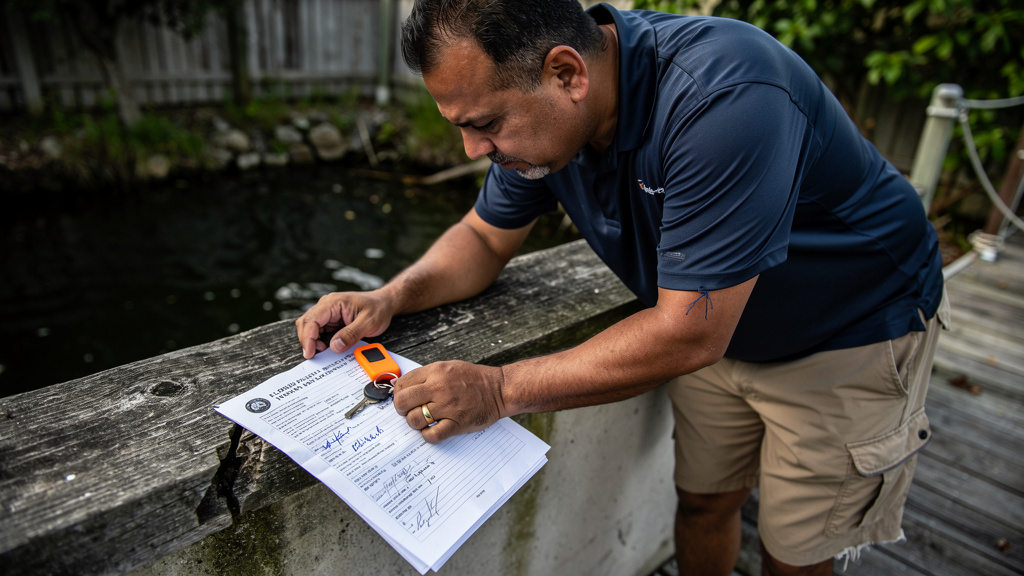
Yes. Injured boat passengers in Florida can pursue compensation, and in most cases the claim runs against the boat owner’s insurance policy, not their personal savings. You are not suing your friend. You are making a claim through coverage that exists precisely for situations like this. The relationship does not waive your legal rights, and ignoring serious injuries to protect the friendship usually helps no one.
Can a guest passenger actually make a claim against a friend or relative’s boat?
Many injured guests hesitate because they fear hurting someone they care about. They imagine their friend saying, “You’re suing me.” That fear is real, but it misstates what actually happens. A personal injury claim targets the boat owner’s liability insurance policy, not their bank account or personal assets. The policy is there to pay claims like yours, that is why premiums are paid. However, Florida does not require recreational boat owners to carry liability insurance. Coverage must be confirmed early. If it exists, your claim is handled between attorneys and insurers. Wolfson & Leon’s Spanish-speaking attorneys can meet with the entire family, which matters in Hialeah households where multiple relatives may have been on board or share concerns about next steps.
What does my lawyer have to prove, and what counts as careless boating under Florida law?
To recover compensation, your attorney must show four things: the boat operator owed you a duty of care, they breached that duty, their breach caused your injury, and you suffered real harm. Under Florida law, every boat operator must use a safe speed and operate in a way that does not endanger others, considering weather, water conditions, traffic, and visibility [Fla. Stat. § 327.33]. Common breaches include excessive speed near shorelines, failing to keep a proper lookout, making sudden turns without warning, operating while impaired, ignoring dangerous wakes, or letting an untrained person take the helm. If your accident happened during a routine family outing from Haulover Inlet or Crandon Marina, common launch points for Hialeah families, these rules still apply. The Florida Fish and Wildlife Conservation Commission investigates such crashes, and the resulting Boating Accident Report often becomes critical evidence in your case.
What if I was partly at fault for my own injury, does that kill my claim?
Insurance adjusters often argue that a passenger “contributed” to the accident to reduce or deny payment. Do not assume partial fault ends your claim. Florida uses modified comparative negligence [Fla. Stat. § 768.81(6)]. This means your compensation is reduced by your percentage of fault, but you can still recover as long as you are not more than 50 percent responsible. For example, if a court finds you 20 percent at fault, you receive 80 percent of the total damages. However, some boating accidents may fall under federal maritime law instead of Florida state law, and the rules on fault can differ depending on where the crash occurred. An attorney must determine which legal framework applies before accepting any fault assignment from an insurer.
What if the boat has no insurance, are there other ways to recover?
Florida does not require recreational boat owners to carry liability insurance, so many operate without a dedicated marine policy. But that does not mean no recovery is possible. Attorneys investigate alternative sources: first, the boat owner’s homeowner’s or renter’s insurance policy, which sometimes, but not always, includes limited watercraft liability coverage. Second, a personal umbrella policy, which may extend liability protection beyond standard limits. Third, if the boat was docked at a marina or yacht club, that facility’s own liability policy might apply. Fourth, your own insurance may include uninsured boater coverage specific to marine incidents, though this is distinct from auto uninsured motorist coverage under Florida law. PIP (personal injury protection) from auto policies does not apply to boats. Identifying every possible source early is essential, and coverage depends entirely on specific policy language.
How long do I have to file, and why does it matter whether the accident happened in state or federal waters?
For injuries occurring on or after March 24, 2023, Florida law gives you two years from the accident date to file a negligence lawsuit [Fla. Stat. § 95.11]. Missing this deadline generally bars any recovery. But complications arise if the crash happened in navigable waters and federal maritime law applies. Maritime claims may be subject to a different federal limitations period. Assuming a different window without confirmation can be fatal, if state law controls and you wait past two years, your claim is lost. Also, Florida requires reporting any boating accident that causes injuries needing more than first aid to the FWC or local law enforcement. That report creates an official record insurers and attorneys rely on, so prompt action protects both your legal rights and the evidence.
The lawyer deals with the insurance company, not with your friend
When Wolfson & Leon handles your claim, we communicate with the insurance adjuster, not your friend. The insurer has lawyers and professionals protecting its interests. You deserve the same. Filing a claim is not an accusation that your friend is reckless or untrustworthy. It is using the coverage they already pay for. Families in Hialeah know that even calm days on Biscayne Bay can turn dangerous in seconds, a wave, a wake, a momentary lapse. Medical bills, lost wages, and rehabilitation costs add up quickly. Loyalty should not mean financial ruin. Our Spanish-speaking attorneys can speak with the injured person, the boat owner, and concerned family members together, so no one faces this alone or in a language they don’t fully understand.
Frequently asked questions
Does my friend personally have to pay if I make a claim after getting hurt on their boat?
In most cases, no. If the boat owner has liability insurance, the claim is paid by the insurer up to policy limits. Your friend’s personal assets are generally at risk only if there is no applicable insurance or a judgment exceeds the available coverage.
What if the accident happened in federal waters, does Florida law still apply?
Not necessarily. If the crash occurred in navigable waters, federal maritime law may control instead of Florida state law. An attorney must evaluate location, vessel type, and activity to determine which legal rules apply.
I was partly responsible for what happened on the boat, can I still recover anything?
Yes, as long as you are found to be 50 percent or less at fault under Florida law. Your recovery will be reduced by your assigned percentage of fault. But if maritime law applies, different rules may govern, so legal review is essential.
Do I need to report the boating accident, and does that affect my claim?
Yes. Florida requires reporting any boating accident involving injuries beyond first aid to the FWC or local law enforcement. The resulting report becomes key evidence and supports your claim. Failure to report can weaken your case.
How long do I have to file a claim if I was injured on a friend’s boat in Florida?
Generally two years from the accident date for injuries on or after March 24, 2023, under Florida law. But if federal maritime law applies, a different deadline may control. Always act as if the shorter deadline applies until a lawyer confirms otherwise.
Hurt in an accident in Hialeah? Call Wolfson & Leon at 305-965-3766 for a free consultation. We speak Spanish, and there is no fee unless we win.
Key facts
- Florida law requires a boat operator to operate at a safe speed and in a manner that does not endanger other people on the water; violating that standard is the foundation of a negligence claim. Source: Fla. Stat. § 327.33
- Florida uses modified comparative negligence: a guest passenger's compensation is reduced by their own percentage of fault, but they can still recover as long as they are not more than 50 percent at fault. If federal maritime law applies, the fault rules can differ. Source: Fla. Stat. § 768.81(6)
- For injuries occurring on or after March 24, 2023, a Florida negligence lawsuit must be filed within two years of the accident date; missing that deadline generally bars any recovery. Source: Fla. Stat. § 95.11
- Florida does not require recreational boat owners to carry liability insurance, meaning some owners carry no dedicated marine policy; other coverage sources may exist and must be investigated. Source: Florida Fish and Wildlife Conservation Commission; Fla. Stat. ch. 327
- Under Florida's dangerous instrumentality doctrine, a boat owner who voluntarily allows another person to operate the vessel may be held vicariously liable for that operator's negligence even if the owner was not on board. Source: Fla. Stat. § 327.32; Florida common law
Frequently asked questions
Does my friend personally have to pay if I make a claim after getting hurt on their boat?
In most cases, no. When a boat owner carries liability insurance, whether a dedicated marine policy, a homeowner's policy that covers the vessel, or an umbrella policy, the claim is paid by the insurer, not out of your friend's personal savings. The coverage exists precisely for this situation. If no insurance applies at all, other options still exist, but that analysis requires an attorney to review every available policy before assuming there is nothing to recover.
What if the accident happened in federal waters, does Florida law still apply?
Not necessarily, and that question matters a great deal for deadlines and liability rules. Accidents in navigable waters may be governed by federal maritime law rather than Florida state law, which can affect both the limitations period and the standards that apply. Because getting the jurisdictional question wrong can ruin an otherwise valid claim, it is important to consult an attorney promptly rather than assume Florida's two-year deadline or Florida's comparative-fault rules automatically control.
I was partly responsible for what happened on the boat, can I still recover anything?
Possibly yes. Florida's modified comparative negligence rule under Fla. Stat. § 768.81(6) reduces your compensation by your percentage of fault but only bars your claim entirely if you are found more than 50 percent responsible. If federal maritime law applies, the fault rules can differ. For example, if you are found 25 percent at fault, you can still recover 75 percent of your damages. Insurance adjusters sometimes argue that a passenger contributed to an accident to reduce or deny the payout, an attorney can evaluate whether that argument has any real basis in the facts.
Do I need to report the boating accident, and does that affect my claim?
Yes. Florida law requires that boating accidents involving injury that needs medical treatment beyond first aid, among other thresholds, be reported to FWC or local law enforcement. The resulting Boating Accident Report becomes a key piece of evidence in any civil claim. Reporting promptly protects the record and is also a legal obligation, so do not skip that step while focusing on medical care.
How long do I have to file a claim if I was injured on a friend's boat in Florida?
For injuries that occurred on or after March 24, 2023, Florida law under Fla. Stat. § 95.11 generally gives you two years from the date of the accident to file a negligence lawsuit. If federal maritime law applies because the accident happened in navigable waters, a different deadline may govern, and counsel must determine which controls. Because assuming the wrong deadline can permanently bar your claim, contact an attorney as soon as possible rather than waiting to see how injuries develop.
This article is general information about Florida law, not legal advice, and reading it does not create an attorney-client relationship. Every case is different and past results do not guarantee a similar outcome. For advice about your situation, call Wolfson & Leon at 305-965-3766 for a free consultation.
Also available in: Versión en español
 Car accidents
Hurt on a Rented Jet Ski or Speedboat Tour in Miami: Who Pays?
Yes, you may still have a claim against the rental company even if you signed a waiver, because a waiver may not shield a company from its own…
 Car accidents
Can a Lawyer Come to the Hospital Tonight After My Husband's Crash?
Yes. Wolfson & Leon answers the phone around the clock, and an attorney or intake professional can arrange a bedside visit at Hialeah Hospital or…
 Car accidents
Hurt in Hialeah on a Saturday Night: What to Do Before Monday
Several clocks start running the moment you are hurt in Hialeah, and none of them pause for the weekend: Florida law requires you to seek initial…