
How Long Do You Have to Sue After a Boating Accident in Florida?
The deadline depends on which body of law governs your claim. For most Florida negligence claims arising from accidents on or after March 24, 2023, you have two years under Fla. Stat. § 95.11. If federal maritime law applies because the accident happened on navigable waters, the period is generally three years, but courts can disagree on which law controls, and assuming you have the longer window has ended valid claims. Treat two years as your real ceiling and act sooner.
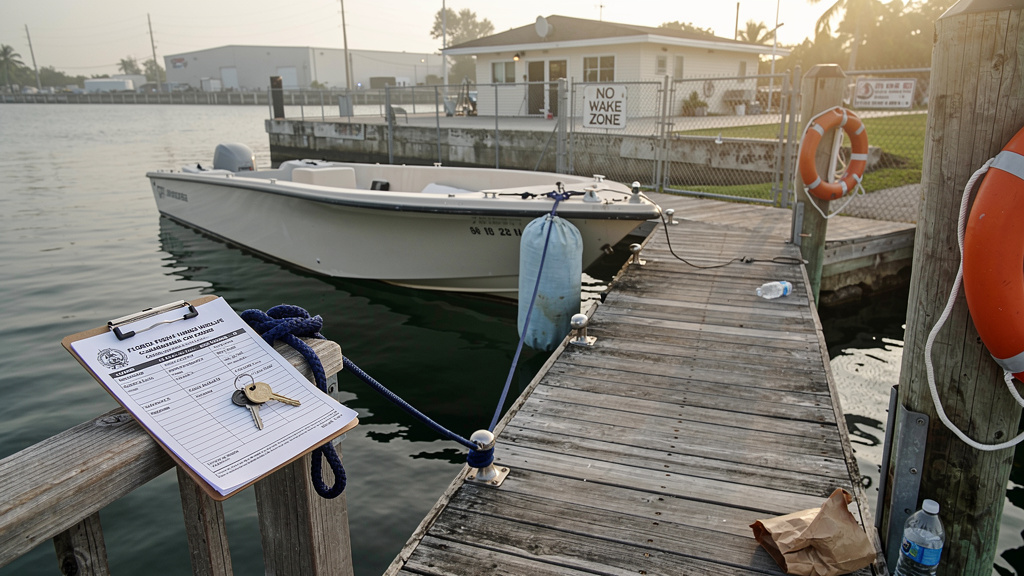
The deadline to sue after a boating accident in Florida depends on which law controls your case. For most negligence claims from accidents on or after March 24, 2023, you have two years under Florida law. If federal maritime law applies because the crash happened on navigable waters, the window may be three years, but courts decide which law governs, not you. Assuming you have the longer period when you actually have the shorter one is how valid claims quietly die. Treat two years as your real ceiling and act sooner.
Why do I see ‘2 years’ and ‘3 years’ in the same search?
You are seeing both numbers because two different legal systems can apply to the same accident. Florida state law gives you two years to sue for negligence if your injury happened on or after March 24, 2023. Before that date, the deadline was four years, so older websites still list the longer period. Federal maritime law, which covers injuries on navigable waters like Biscayne Bay or the Intracoastal, often uses a three-year limit. But a court must first decide whether maritime law even applies to your situation. That determination depends on where the accident happened and what you were doing, not your preference or what you read online. Assuming you have three years when you actually have two is how a valid claim quietly dies.
If Florida negligence law applies, what is the deadline?
If your boating accident falls under Florida negligence law, you have two years from the date of injury to file a lawsuit. This rule applies to crashes that occurred on or after March 24, 2023, under Fla. Stat. § 95.11. Accidents before that date still follow the old four-year period. This includes incidents on Miami-Dade waterways like the Miami River, Biscayne Bay, or the Intracoastal Waterway, places where it is not always clear whether state or federal law applies. Unlike car crashes, there is no PIP coverage on the water. You do not need to meet a serious-injury threshold to sue for pain and suffering, and Florida’s modified comparative negligence rule applies: if you are more than 50 percent at fault, you cannot recover anything. Wrongful death claims also carry a strict two-year deadline under state law.
If federal maritime law applies, does the deadline change?
General maritime law typically allows three years to file a personal injury or wrongful death claim from a boating accident on navigable waters. But that longer window only matters if a court first confirms maritime law governs your case. Location matters, Biscayne Bay, the Miami River, and parts of the Intracoastal are often considered navigable, but so does the nature of the activity. Even recreational boating on navigable waters can fall under maritime law, depending on the facts. There is another risk: once you notify a vessel owner of a claim in writing, they may have a short window to file a separate federal action limiting their liability. That process moves fast and affects your options. Until a lawyer reviews your facts, treat two years as your real deadline.
What if I was on a charter boat, a rental, or a cruise ship?
Charter companies, livery services, and cruise lines often write shortened deadlines directly into their contracts. These clauses can require you to give notice within months, or file suit within a year, and courts regularly enforce them. You must read your ticket or rental agreement immediately after an injury. Do not assume the statutory two- or three-year windows apply. Cruise ship cases are almost entirely governed by federal maritime law, and your ticket usually names the specific court where you must sue, often the federal court in Miami. Rental liveries in Florida may carry commercial liability insurance, which could be your main source of recovery. The safest assumption is that the deadline is shorter than you think.
What if the boat or dock belonged to a government agency or county marina?
If a government entity owns or operates the boat, dock, or marina involved in your crash, you must serve written notice of your claim before filing suit. This requirement comes from Fla. Stat. § 768.28(6) and applies to facilities like Crandon Park Marina, Haulover Marine Center, Matheson Hammock Marina, or Black Point Marina, if they are operated by a public agency. Missing this notice step kills your case, even if you file the lawsuit on time. The notice and lawsuit clocks run separately, but both are tight. You still must file your lawsuit on time; the notice does not extend the lawsuit deadline, and a lawyer should confirm which deadline applies. Confirming who operates the facility early can determine whether this extra step applies to you.
What if the injured person is a child, or someone died in the accident?
Florida law pauses the statute of limitations for children under Fla. Stat. § 95.051. That pause applies only in limited situations; the clock does not simply wait until the child turns 18. Do not wait until adulthood to act; evidence fades quickly. If someone died in the accident, the estate has two years from the date of death to file a wrongful death claim under Florida law. If the death occurred far offshore, federal maritime laws like the Death on the High Seas Act may apply instead, with different rules and remedies. In all cases, a mandatory report to the Florida Fish and Wildlife Conservation Commission under Fla. Stat. § 327.30 becomes critical evidence, and those reports, along with marina video and witness statements, disappear fast.
Frequently asked questions
Does Florida’s two-year deadline apply to accidents on Biscayne Bay?
It might. Biscayne Bay is navigable water, so maritime law could apply. But if your case is treated as a Florida negligence claim, the two-year state deadline likely controls. Only a lawyer can assess which law fits your facts.
What is the deadline if someone died in a boating accident in Florida?
Under Florida law, the estate has two years from the date of death to file a wrongful death lawsuit. If the death occurred in federal waters or involved a commercial vessel, maritime law may alter both the deadline and available damages.
Do I have to give written notice before suing a county marina in Miami-Dade?
Yes, if the marina is operated by a government entity. Fla. Stat. § 768.28(6) requires formal written notice as a condition before filing suit. Missing this step bars your claim, regardless of the two-year filing window.
Does my car insurance PIP cover injuries from a boating accident?
No. PIP coverage only applies to motor vehicle accidents on land. Boating injuries are not covered by auto PIP, regardless of how badly you are hurt.
My boat accident was on a charter trip, does the contract change my deadline?
Very likely. Charter agreements and cruise tickets often include clauses that shorten both notice and lawsuit deadlines, sometimes to as little as one year. Those terms are usually enforceable, so review your paperwork immediately.
Hurt in an accident in Hialeah? Call Wolfson & Leon at 305-965-3766 for a free consultation. We speak Spanish, and there is no fee unless we win.
Key facts
- Florida's general negligence statute of limitations is two years for injuries occurring on or after March 24, 2023, reduced from the prior four-year period by HB 837. Source: Fla. Stat. § 95.11
- General maritime personal injury claims are generally subject to a three-year federal limitations period, but a court must first determine that maritime law, not Florida negligence law, governs the claim. Source: 46 U.S.C. § 30106
- Before suing a government entity such as a county-operated marina, a claimant must serve written notice of the claim as a condition precedent to filing suit. Source: Fla. Stat. § 768.28(6)
- Florida law requires a vessel operator to report a boating accident involving death, disappearance, injury needing treatment beyond first aid, or property damage of $2,000 or more. Source: Fla. Stat. § 327.30
- Florida's tolling statute pauses the limitations period for a minor only in limited situations; it does not generally pause until the child turns 18. Source: Fla. Stat. § 95.051
Frequently asked questions
Does Florida's two-year deadline apply to accidents on Biscayne Bay?
Biscayne Bay is a navigable waterway, which means a boating accident there can fall under either Florida negligence law or federal maritime law, and that determination drives the deadline. Florida's two-year period under Fla. Stat. § 95.11 applies to negligence claims arising on or after March 24, 2023, while general maritime law carries a longer period. Because courts decide which law governs based on the specific facts, you should not assume you have extra time. Treat two years as your working deadline until an attorney reviews the accident location and circumstances.
What is the deadline if someone died in a boating accident in Florida?
Florida wrongful death claims generally must be filed within two years of the date of death. If maritime law governs, for example, because the death occurred on navigable open waters, additional federal rules may apply and could affect available remedies, so the analysis is not always straightforward. The FWC accident report, vessel records, and witness information needed to support the claim begin to disappear immediately after the accident, making early action critical regardless of which deadline controls.
Do I have to give written notice before suing a county marina in Miami-Dade?
If a marina is operated by a government entity, Florida law requires the claimant to serve written notice of the claim before filing suit, this is a condition precedent under Fla. Stat. § 768.28(6), and courts enforce it strictly. The notice requirement and the lawsuit deadline run on independent clocks, so waiting on the notice can eliminate a claim that would otherwise have been timely filed. Whether any specific Miami-Dade marina is government-operated should be confirmed with an attorney before assuming this rule applies.
Does my car insurance PIP cover injuries from a boating accident?
No. Florida's Personal Injury Protection statute applies to motor vehicle accidents on public roads and does not extend to boating injuries. There is no no-fault buffer on the water, which means an injured boater must pursue a liability claim against the at-fault party from the first dollar of loss. Additionally, Florida does not require most recreational boat owners to carry liability insurance, so identifying every available source of coverage, including homeowner's or umbrella policies, is one of the first tasks in a boating injury case.
My boat accident was on a charter trip, does the contract change my deadline?
Yes, and often dramatically. Charter and commercial vessel operators frequently print notice and lawsuit deadlines directly in the ticket or rental agreement, and those contractual deadlines are generally enforced by courts even when they are shorter than the statutory period. The specific deadlines vary by contract, so the paperwork from the trip must be reviewed immediately after an accident. The safest assumption is that a contractual deadline is shorter than you expect, do not wait to find out.
This article is general information about Florida law, not legal advice, and reading it does not create an attorney-client relationship. Every case is different and past results do not guarantee a similar outcome. For advice about your situation, call Wolfson & Leon at 305-965-3766 for a free consultation.
Also available in: Versión en español
 Personal injury
I Want to Hire Wolfson & Leon in Hialeah: What Happens When I Call?
When you call Wolfson & Leon at 305-965-3766, a real person answers around the clock, not a voicemail. Within that first call, the firm gathers…
 Personal injury
Injury-Focused Lawyer or General Lawyer: Which One Do You Actually Need?
A general-practice lawyer can legally take your case, but Florida car-accident and slip-and-fall claims turn on a specific set of rules, PIP…
 Personal injury
What Cases Does Wolfson & Leon Handle in Hialeah, and Who Are the Lawyers?
Wolfson & Leon's Hialeah office at 1840 W 49th St #734 handles personal injury cases: car, truck, motorcycle, rideshare, pedestrian, bicycle,…