
Wrongful Death in Florida: A Complete Guide for Hialeah Families
When someone in Florida dies because of another person's negligence, the family can pursue a wrongful death claim under Florida's Wrongful Death Act, but only the personal representative of the deceased's estate may file the lawsuit, not individual family members on their own. The personal representative then recovers on behalf of eligible survivors, which can include a spouse, children, and parents. Florida law gives families two years from the date of death to file, and that clock runs even while insurance negotiations, probate, or a criminal investigation is ongoing.
When someone in Florida dies because of another person’s negligence, the family can pursue a wrongful death claim under Florida’s Wrongful Death Act. Only the personal representative of the deceased’s estate may file the lawsuit under Fla. Stat. § 768.20, not individual family members on their own. The personal representative then recovers on behalf of eligible survivors, which can include a spouse, children, and parents. Florida law gives families two years from the date of death to file, and that clock runs even while insurance negotiations, probate, or a criminal investigation is ongoing.
What should our family do in the first weeks after a death caused by someone else?
The most common question families ask after a fatal crash is: what legal action can we take against the parties involved? Start by understanding that the civil process runs on its own timeline, separate from any criminal case and separate from whatever the insurance company is doing.
In the first 72 hours, evidence can disappear permanently. Camera footage along corridors like Okeechobee Road, the Palmetto Expressway, and W 49th Street can be overwritten within days. Vehicle event data recorders, sometimes called black boxes, can also be cleared or overwritten quickly. Ask a lawyer to send a preservation letter immediately.
Call 911, get the police to the scene, and request a copy of the crash report. Under Fla. Stat. § 316.066, that report is confidential for 60 days to the general public, but the parties, their insurers, and their lawyers can access it right away. If a business near the crash has surveillance cameras, send a written request that they preserve the footage before it is erased.
Save every bill: medical care provided before death, ambulance transport, and funeral expenses. Do not give a recorded statement to any insurance company before speaking with a lawyer. Insurers begin investigating within hours of a fatal crash, and a settlement offer made before a lawyer is involved may not account for every survivor’s claim.
Under Fla. Stat. § 627.736, PIP coverage pays a $5,000 death benefit regardless of who caused the crash. That money comes from the deceased’s own PIP policy first, then from a household relative’s policy if no individual policy exists. Motorcycle riders usually have no PIP, because Florida does not require motorcyclists to carry it. This benefit is separate from and far smaller than what a wrongful death claim can recover. Do not treat accepting it as settling the matter.
Who can actually file a wrongful death claim, and who receives the money?
One lawsuit, one plaintiff. Under Fla. Stat. § 768.20, the personal representative of the deceased’s estate is the only person who may bring a wrongful death action in Florida. Individual family members cannot each file their own separate case. The personal representative files on behalf of all eligible survivors, and the court distributes the recovery among them.
Who counts as a survivor? Fla. Stat. § 768.18 defines the eligible categories: a surviving spouse, children, parents, and blood relatives or adoptive siblings who were partly or wholly dependent on the deceased. For this Act specifically, a “minor child” is defined as any child under 25 years of age, which is different from Florida’s general age of majority. Living with the deceased does not automatically make someone a survivor. And children born outside of marriage may qualify, but specific rules under § 768.18(1) apply to those situations.
If no personal representative has been appointed yet, probate must begin before the civil case can move forward. A wrongful death attorney can help coordinate both processes so the legal deadline is not missed while the estate is being organized.
One more point worth clarifying: if your relative had already filed a personal injury lawsuit before dying, that case does not continue. Under the second sentence of § 768.20, it abates and must be replaced by a wrongful death action. The two claims cannot run simultaneously.
For more on how the personal representative role works in practice, see our article on Hialeah fatal crash insurance coverage for families.
What can the family and the estate actually recover?
Florida’s Wrongful Death Act, specifically Fla. Stat. § 768.21, organizes damages by who receives them. No dollar amounts are fixed in the statute; the facts of each case determine value.
Lost support and services are available to all survivors. This covers the financial contributions and household services the deceased provided, measured from the date of injury through the estimated remaining joint life expectancy, reduced to present value.
The surviving spouse can also recover for loss of companionship and protection, along with mental pain and suffering. These damages begin accruing from the date of injury, not the date of death.
Children can recover for lost parental companionship, instruction, and guidance, plus mental pain and suffering. All children may recover these damages when there is no surviving spouse. Remember that “minor child” under this Act means under 25.
Parents of a deceased child may recover for mental pain and suffering, but this depends on whether other survivors exist and on the child’s age.
The estate itself can recover the deceased’s lost earnings from the moment of injury through death, prospective net accumulations of the estate when the statutory conditions are met, and medical and funeral expenses paid from estate funds.
The medical malpractice exception. When death results from medical negligence rather than a crash or other cause, Fla. Stat. § 768.21(8) applies. Florida has a special rule for these cases that limits certain claims by adult children and by parents of adult children, and the law in this area has been the subject of recent legislative change. The rules for medical malpractice deaths differ, so families should ask a lawyer how they apply. This provision is sometimes called Florida’s “free kill” law.
Punitive damages are possible in some cases but require a heightened evidentiary showing under Fla. Stat. § 768.72 before the issue even reaches a jury.
Finally, the amount the family receives at the end is not the gross recovery. Attorney fees, case costs, medical liens, and any insurer subrogation claims are deducted from the total. A recovery is not the same as a check for that full amount.
How long does a Florida family have to file, and what can shorten that window?
The deadline is two years from the date of death. Fla. Stat. § 95.11 sets this rule, and the clock starts on the date of death, not the date of the crash, surgery, or other incident that caused the injury.
A concrete example: if your father was injured in a March crash and died from his injuries in November, the two-year window begins in November, not March.
Nothing pauses that clock automatically. Settlement negotiations with an insurer do not toll it. An open probate proceeding does not toll it. An ongoing police investigation or criminal case does not toll it. Families sometimes assume that because something else is happening, the legal deadline is also on hold. It is not.
Claims against government entities, such as a crash involving a Miami-Dade County vehicle or a City of Hialeah vehicle, may have separate pre-suit notice requirements that effectively shorten the time the family has to act before the civil window closes. Those requirements exist even within the two-year period.
And do not mistake the legal deadline for an evidence-preservation window. Traffic camera footage and vehicle event data recorder information can be gone within days of a crash. Waiting months to consult a lawyer may mean the evidence needed to prove the case no longer exists, even if the lawsuit is technically still timely.
For more on the timeline and steps involved, see wrongful death lawsuit steps in Miami-Dade County and our overview of how long families have to file a wrongful death lawsuit in Florida.
What types of deaths qualify, and what causes are covered?
Florida’s Wrongful Death Act applies to any death caused by a wrongful act, negligence, default, or breach of contract or warranty under Fla. Stat. § 768.19, as long as the deceased would have had the right to sue had they survived. The cause of death determines the specific rules that apply and which damages are available.
Traffic crashes are a common cause of wrongful death claims in Miami-Dade. Florida does not require most drivers to carry bodily injury liability insurance, which means many at-fault drivers have none. When the at-fault driver flees or has no coverage, uninsured motorist coverage under Fla. Stat. § 627.727 can fill that gap. UM coverage is optional and must be rejected in writing; many families do not realize they have it until a lawyer reviews the policy.
Medical malpractice deaths follow the same Act but with the § 768.21(8) limitation described in the damages section above. These cases also carry pre-suit procedural requirements that add steps before a lawsuit can be filed.
Trucking and commercial vehicle crashes involve additional layers of liability. Employers can be liable for their drivers, and federal safety regulations are incorporated under Fla. Stat. § 316.302. Cargo loading, vehicle maintenance, and hours-of-service violations all become relevant in these cases. See our overview of Miami-Dade truck accident wrongful death cases.
Rideshare crashes involving Uber or Lyft are covered too. Fla. Stat. § 627.748 requires at least $1 million in liability coverage once a trip is accepted, which changes the coverage analysis significantly. For premises liability deaths, the same Act applies.
On comparative fault: under Fla. Stat. § 768.81(6), recovery is barred only if the deceased was more than 50 percent at fault. Below that threshold, damages are reduced proportionally by the deceased’s share of fault. Insurers frequently blame the deceased as a tactic to reduce or eliminate the claim. Surveillance footage, witness statements, and vehicle data often contradict that allegation. A police report is one piece of evidence, not the final word on fault.
What does a wrongful death lawyer cost, and what should you ask before you hire one?
A common question after a loss is whether to deal with insurance directly or bring in a lawyer. Insurance companies begin protecting their own interests immediately after a death. A wrongful death lawyer evaluates all available coverage: PIP death benefits, bodily injury liability, uninsured motorist coverage, employer policies, and others. More importantly, the complaint must identify every eligible survivor’s claim as required by Fla. Stat. § 768.21, or those claims may be lost.
Virtually all Florida wrongful death lawyers handle these cases on a contingency fee basis. That means no fee is owed unless money is recovered. Case costs, including investigation, expert witnesses, and court filing fees, are typically advanced by the firm and deducted at resolution. The family pays nothing out of pocket to pursue the claim, but the net amount they receive at the end will reflect the fee, the costs, and any medical liens or insurer subrogation claims.
Before hiring a lawyer, ask these questions:
- Who in your firm handles my case day to day, and how do you communicate updates?
- What costs does the firm advance, and how are they handled at settlement?
- Have you handled wrongful death cases involving this specific cause, whether a crash, a medical error, or a trucking collision?
- How do you coordinate the probate process and the personal representative appointment alongside the civil claim?
- What happens if the at-fault driver carried no bodily injury insurance?
The answers to those questions tell you more about how a firm operates than any rating or ranking. For a checklist approach to evaluating your options, see how to choose a wrongful death lawyer in Miami-Dade and our overview of what to expect at your first meeting with a wrongful death lawyer in Hialeah.
Wolfson & Leon has represented injury and wrongful death clients in Hialeah and across Miami-Dade since 1963. Our office is at 1840 W 49th St #734, Hialeah, FL.
Frequently asked questions
Can I file my own wrongful death lawsuit, or does it have to go through the estate?
You cannot file your own separate lawsuit. Fla. Stat. § 768.20 requires that one action be brought by the personal representative of the deceased’s estate. Individual family members, whether a spouse, child, or parent, cannot each file independently. If no personal representative has been appointed, the probate process must begin first.
Does the two-year deadline get paused while the insurance company is negotiating or while the police are still investigating?
No. The two-year deadline under Fla. Stat. § 95.11 runs from the date of death and is not paused by settlement negotiations, an open probate, or an active criminal investigation. Families sometimes assume that ongoing talks with an insurer extend their time to file. They do not.
The driver who killed my relative had no car insurance. Can we still recover anything?
Possibly, depending on the coverage available. Florida does not require most drivers to carry bodily injury liability insurance. If the at-fault driver had none, uninsured motorist coverage under Fla. Stat. § 627.727, if it exists on the deceased’s policy or a household relative’s policy, may provide a source of recovery. A lawyer can identify all available coverage sources before concluding that no options exist.
What is Florida’s “free kill” law and does it affect our case?
Florida’s “free kill” provision is the informal name for Fla. Stat. § 768.21(8). It applies only when death results from medical negligence, not from a traffic crash or other cause. Florida has a special rule for these cases that limits certain claims by adult children and by parents of adult children, and the law in this area has been the subject of recent legislative change. The rules for medical malpractice deaths differ, so families should ask a lawyer how they apply.
The insurance adjuster told us our relative was mostly at fault for the crash. Does that end our case?
Not necessarily. Under Florida’s modified comparative negligence rule, Fla. Stat. § 768.81(6), recovery is barred only if the deceased was more than 50 percent at fault. Below that threshold, damages are reduced by the deceased’s share of fault but are not eliminated. The adjuster’s statement about fault is not a legal finding. Surveillance footage, witness accounts, and vehicle data often tell a different story than an insurer’s initial position.
How does the PIP death benefit relate to a wrongful death claim?
PIP pays a $5,000 death benefit under Fla. Stat. § 627.736, regardless of who caused the crash. That money comes from the deceased’s own PIP policy first, then from a household relative’s policy if no individual policy exists. It is separate from a wrongful death recovery and does not settle a wrongful death claim, though PIP payments can affect how some losses are calculated. Motorcycle riders usually have no PIP, because Florida does not require motorcyclists to carry it.
- Where Biscayne Bay Boating Accidents Happen and Why Those Spots Are Dangerous
- Which Family Members Can Recover Money in a Florida Wrongful Death Case?
- Someone Told Us We Can’t Sue After Our Relative Died in a Crash, Is That True?
- Our Family Member Died in a Crash: Can We Sue in Florida?
- Can You Sue Miami-Dade County or Hialeah After a Wrongful Death?
- After a Wrongful Death, Does Our Family Need a Separate Probate Attorney?
- A Relative Died in a Hialeah Crash: What to Do in the First Weeks
- Who Files the Wrongful Death Claim When a Family Member Dies in Florida?
Hurt in an accident in Hialeah? Call Wolfson & Leon at 305-965-3766 for a free consultation. We speak Spanish, and there is no fee unless we win.
Key facts
- Only the personal representative of the deceased's estate may bring a wrongful death lawsuit in Florida; individual survivors cannot each file their own separate case. Source: Fla. Stat. § 768.20
- The deadline to file a wrongful death action in Florida is two years from the date of death, not the date of the crash or incident. Source: Fla. Stat. § 95.11
- Florida's modified comparative negligence rule bars recovery entirely only if the deceased was more than 50 percent at fault; otherwise damages are reduced proportionally. Source: Fla. Stat. § 768.81(6)
- In a medical malpractice wrongful death case, Florida has a special rule, sometimes called the 'free kill' provision, that limits certain claims by adult children and by parents of adult children; families should ask a lawyer how it applies. Source: Fla. Stat. § 768.21(8)
- Florida does not require most drivers to carry bodily injury liability insurance, so many at-fault drivers in fatal crashes have none. Source: Florida Insurance Code
Frequently asked questions
Can I file my own wrongful death lawsuit, or does it have to go through the estate?
Under Florida law, only the personal representative of the deceased's estate may file the wrongful death lawsuit, individual family members cannot each bring their own separate case. The personal representative acts on behalf of all eligible survivors and the estate in a single consolidated action. If no personal representative has been appointed yet, a probate filing is needed first, and a wrongful death attorney can help coordinate both processes.
Does the two-year deadline get paused while the insurance company is negotiating or while the police are still investigating?
No. Florida's two-year filing deadline under Fla. Stat. § 95.11 runs from the date of death regardless of ongoing insurance negotiations, a probate proceeding, or an active criminal investigation. Families sometimes assume that talking with an adjuster or waiting for a police report stops the clock, it does not. An attorney should review the specific dates in your case rather than relying on any general statement about the deadline.
The driver who killed my relative had no car insurance. Can we still recover anything?
Possibly yes. Florida does not require most drivers to carry bodily injury liability insurance, so many at-fault drivers carry none. However, uninsured motorist coverage on your relative's own auto policy, or on a household member's policy, may pay for losses including lost income and emotional damages when the at-fault driver has no coverage, under Fla. Stat. § 627.727. Other sources, such as a vehicle owner's policy under Florida's dangerous instrumentality doctrine or an employer's commercial policy, may also apply depending on the facts.
What is Florida's 'free kill' law and does it affect our case?
Florida Statutes § 768.21(8) limits damages in wrongful death cases caused by medical negligence. Florida has a special rule for these cases that limits certain claims by adult children and by parents of adult children, and the law in this area has been the subject of recent legislative change. The rules for medical malpractice deaths differ, so families should ask a lawyer how they apply.
The insurance adjuster told us our relative was mostly at fault for the crash. Does that end our case?
An adjuster's statement about fault is not a court determination. Under Florida's modified comparative negligence rule, recovery is barred only if the deceased was more than 50 percent at fault; below that threshold, damages are reduced by their percentage of fault, not eliminated entirely. Evidence such as traffic camera footage, vehicle event data recorder information, and witness accounts may contradict the insurer's version of events, and that evidence needs to be preserved and analyzed before accepting any fault allocation.
How does the PIP death benefit relate to a wrongful death claim?
Florida's Personal Injury Protection law provides a $5,000 death benefit payable to the estate or qualifying relatives after a fatal crash, regardless of who caused it. Coverage applies first through the deceased's own auto policy; if none exists, through a household relative's PIP policy; and only if neither applies, through the striking vehicle's PIP for a Florida-resident pedestrian or cyclist. Motorcycle riders usually have no PIP. This $5,000 benefit is entirely separate from a wrongful death claim and is not a substitute for it; receiving PIP proceeds does not prevent the family from pursuing a full wrongful death recovery, though PIP payments can affect how some losses are calculated.
This article is general information about Florida law, not legal advice, and reading it does not create an attorney-client relationship. Every case is different and past results do not guarantee a similar outcome. For advice about your situation, call Wolfson & Leon at 305-965-3766 for a free consultation.
Also available in: Versión en español
 Wrongful death
What Kinds of Wrongful Death Cases Do Miami-Dade Attorneys Handle?
Miami-Dade attorneys handle wrongful death cases arising from car, truck, and motorcycle crashes, pedestrian and bicycle fatalities, Uber and Lyft…
 Wrongful death
What a Wrongful Death Lawyer in Miami-Dade Will Actually Charge Your Family
A wrongful death lawyer in Miami-Dade charges nothing up front. The attorney is paid a percentage of whatever is recovered, and only if something is…
 Wrongful death
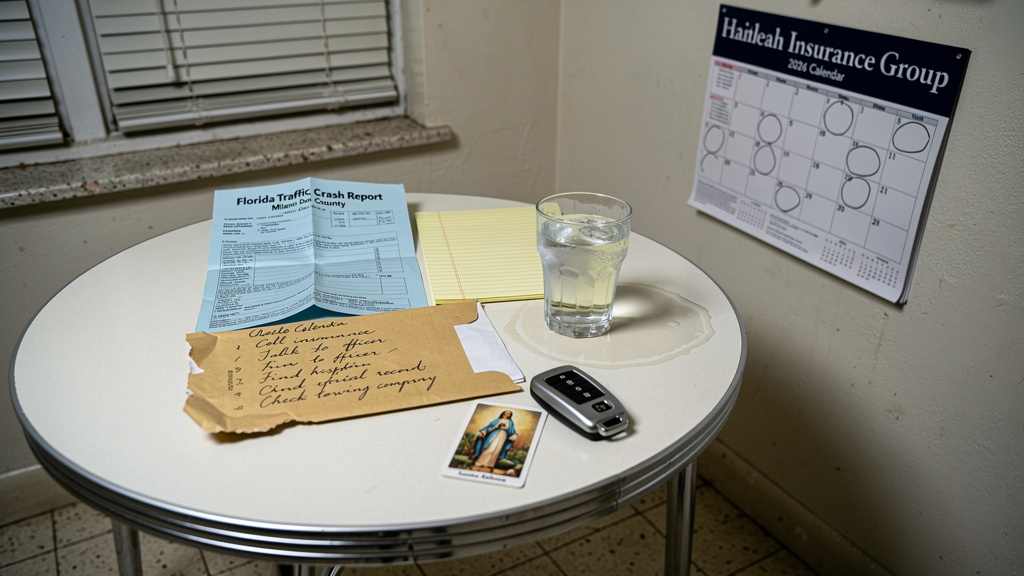
My Family Member Died in a Hialeah Car Crash: What Do We Do Now?
In the first weeks after a fatal crash in Hialeah, your family needs to do four things: secure the official crash report, preserve every bill and…