
Our Relative Was Killed in a Hialeah Crash: Which Insurance Pays the Family?
After a fatal crash in Hialeah, your family may have claims against several insurance sources at once: your relative's own PIP policy (or another PIP policy that applies), the at-fault driver's bodily-injury liability coverage (if they carried any), and the uninsured/underinsured motorist coverage on your household's own policy. Because a large share of Miami-Dade drivers carry no bodily-injury coverage at all, stopping at the at-fault driver's policy often means leaving substantial compensation unclaimed, the full map of coverage runs from your own household UM policy through the vehicle owner's insurer, the driver's employer, and, in some cases, a bar, a rideshare company, or a trucking carrier.
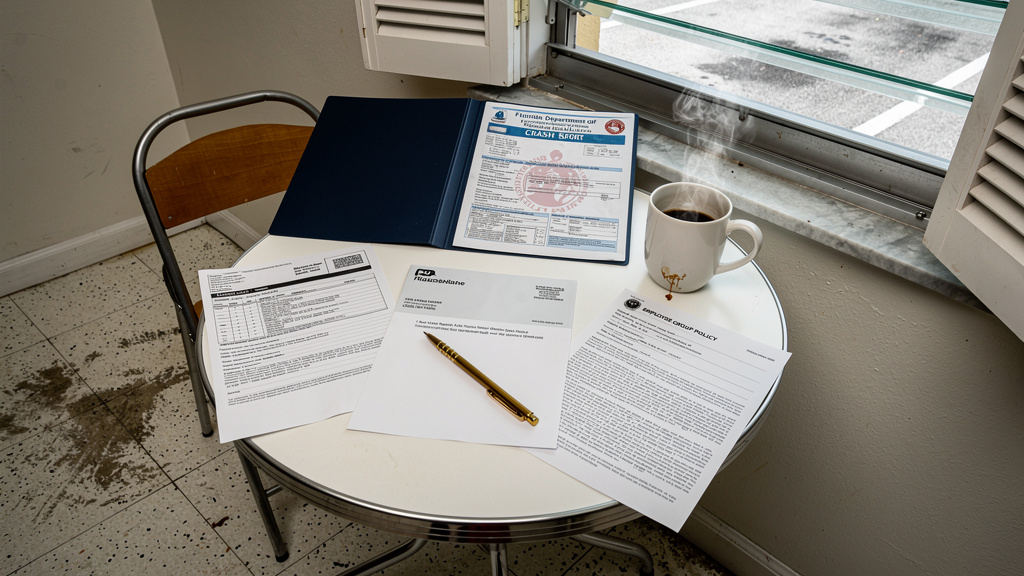
After a fatal crash in Hialeah, your family may have claims against several insurance sources at once. The first is the $5,000 PIP death benefit from your relative’s own auto policy. But that is rarely enough to cover even basic funeral costs in South Florida. Full compensation usually comes from other sources: the at-fault driver’s bodily-injury liability coverage (if any), your household’s uninsured/underinsured motorist (UM) policy, and possibly others like an employer, vehicle owner, or rideshare company. Because many Miami-Dade drivers carry no bodily-injury coverage, stopping at the at-fault driver’s insurer often means missing out on the largest available payments.
What does PIP actually pay when someone is killed, and whose PIP policy applies?
Florida’s Personal Injury Protection (PIP) law pays a $5,000 death benefit when a person is killed in a car crash, regardless of who caused it [Fla. Stat. § 627.736]. This money goes to the estate or qualifying relatives, and receiving it does not prevent a wrongful-death lawsuit, though PIP payments can affect what is recovered for the same losses. PIP applies in a strict order: first, the deceased’s own auto policy; if none exists, then the PIP of a relative who lived in the same household; only if neither applies does the striking vehicle’s PIP cover a Florida-resident pedestrian or cyclist. Motorcycle deaths are excluded entirely, no PIP death benefit is paid if your relative was riding a motorcycle [Fla. Stat. § 627.732(3)]. Do not confuse this $5,000 with your total recovery. A wrongful-death claim under Florida law is how most families obtain meaningful compensation for medical bills, lost income, and emotional loss.
Does the at-fault driver even have bodily-injury coverage, and what if they don’t?
Florida does not require most drivers to carry bodily-injury (BI) liability insurance [Fla. Stat. § 627.736]. A large share of Miami-Dade drivers carry none at all, which means their insurance may pay nothing toward a death claim. BI coverage is separate from PIP and property damage; it is the main source of payment for serious injuries or death caused by the driver’s negligence. On high-risk corridors like Okeechobee Road, the Palmetto Expressway, and W 49th Street, fatal crashes can involve drivers with lapsed, minimal, or no BI coverage. Even when BI exists, low limits are common, and that amount disappears quickly in a death case involving emergency response, hospitalization, and funeral expenses. Families must look beyond the at-fault driver’s policy to find full compensation.
What is uninsured/underinsured motorist coverage, and can our own household policy pay?
Uninsured/underinsured motorist (UM) coverage is optional in Florida but can be critical after a fatal crash [Fla. Stat. § 627.727]. It sits on your relative’s auto policy, or a household member’s policy, and pays when the at-fault driver has no BI coverage or not enough to cover your losses. Unlike PIP, UM covers damages like lost income, pain, and emotional suffering tied to death. The coverage only applies if it was purchased and not waived in writing. Florida law also allows stacking in certain cases: if your household policy covers multiple vehicles and stacking was not waived, the UM limits from each vehicle can be added together, potentially multiplying available funds [Fla. Stat. § 627.727(9)]. That benefit depends entirely on your specific policy documents, stacking cannot be assumed.
Who else can be held responsible, the vehicle’s owner, an employer, a bar, or a rideshare company?
Liability may extend beyond the driver. If someone lent their car to the at-fault driver, Florida’s dangerous-instrumentality doctrine may impose liability on the vehicle owner through their insurance policy. If the driver was working, such as a delivery driver or trucker, the employer’s commercial auto or general liability policy may apply, especially under federal safety rules incorporated into Florida law [Fla. Stat. § 316.302]. Bars or alcohol vendors are liable only in narrow cases: if they willfully and unlawfully served alcohol to someone under the legal drinking age of 21 or knowingly served someone habitually addicted [Fla. Stat. § 768.125]. For rideshare deaths, Florida law requires at least $1 million in liability coverage from the moment a trip is accepted until it ends [Fla. Stat. § 627.748]; coverage drops during the “app on, no ride” phase. Each of these paths opens a separate insurance source your family may access.
What about a motorcycle death or a hit-and-run on Okeechobee Road, are those different?
Yes. If your relative was killed while riding a motorcycle, no PIP death benefit is available, motorcycles are excluded from Florida’s PIP system [Fla. Stat. § 627.732(3)]. Recovery usually comes from the at-fault driver’s BI policy and your household’s UM coverage, and sometimes from health insurance or optional medical payments coverage. In hit-and-run deaths, which can happen on Okeechobee Road, the Palmetto, and W 49th Street, an unidentified fleeing driver is generally treated as uninsured for UM purposes [Fla. Stat. § 627.727], and leaving the scene is a crime [Fla. Stat. § 316.027]. That makes your UM policy the primary source of payment. Families without UM coverage, or who waived it, face severe financial risk in these situations. Police treat hit-and-run deaths as felonies, but criminal charges do not pay medical bills or funeral costs, that burden falls on insurance.
How does a wrongful-death claim actually work, and who files it?
“My father died this morning, what do I do next?” Many Hialeah families ask this in the first hours. Legally, a wrongful-death lawsuit must be filed by the personal representative of the decedent’s estate, not by individual survivors [Fla. Wrongful Death Act, §§ 768.16, 768.26]. Compensation flows through the estate to eligible survivors: spouse, children, parents, and dependent blood relatives. Damages include funeral and medical expenses, lost future income, loss of companionship, and the estate’s lost net accumulations. You generally have two years from the date of death to file [Fla. Stat. § 95.11]. Insurers begin investigating immediately. Evidence like traffic camera footage near Hialeah Hospital or skid marks on Okeechobee Road can vanish within days. Crash reports are confidential for 60 days [Fla. Stat. § 316.066], but your attorney and insurer can access them right away.
Frequently asked questions
Does ‘no-fault’ mean our family can’t sue the driver who killed our relative?
No. Florida’s “no-fault” system only limits claims for minor injuries covered by PIP. In a death case, your family can file a wrongful-death lawsuit against the at-fault driver or other liable parties.
The at-fault driver had no insurance. Does that mean our family gets nothing?
Not necessarily. Your household’s uninsured motorist (UM) coverage may pay. You may also have claims against the vehicle owner, an employer, or a rideshare company, depending on the facts.
Our relative was a passenger in an Uber. Which insurance pays if the driver caused the death?
If the Uber driver caused the crash while a passenger was in the vehicle or after accepting a trip, Uber’s $1 million liability policy applies. Coverage is lower if the app was on but no ride had been accepted.
Can we stack UM coverage from multiple vehicles to get more money?
Possibly. Florida law allows stacking if your policy covers more than one vehicle and you did not sign a written waiver of stacking at the time of purchase [Fla. Stat. § 627.727(9)].
A bar served the driver before the crash. Can we sue the bar?
Only in limited cases. Florida law allows dram shop claims if the bar willfully and unlawfully served alcohol to someone under the legal drinking age of 21 or knowingly served someone habitually addicted to alcohol [Fla. Stat. § 768.125].
Hurt in an accident in Hialeah? Call Wolfson & Leon at 305-965-3766 for a free consultation. We speak Spanish, and there is no fee unless we win.
Key facts
- Florida PIP pays a $5,000 death benefit to the estate or qualifying relatives of a person killed in a crash, regardless of who caused it. Source: Fla. Stat. § 627.736
- Florida does not require drivers to carry bodily-injury liability coverage, and a large share of Miami-Dade drivers carry none, meaning the at-fault driver's policy may pay nothing toward a death claim. Source: Fla. Stat. § 627.736; Fla. Stat. ch. 324
- Uninsured/underinsured motorist coverage is optional in Florida and must be rejected in writing; if the decedent or a household relative purchased it, it can pay when the at-fault driver had no or insufficient bodily-injury coverage. Source: Fla. Stat. § 627.727
- Florida's stacking option for UM coverage, available to policyholders who did not waive it in writing, allows the limits from multiple covered vehicles on the same policy to be combined. Source: Fla. Stat. § 627.727(9)
- Florida's dram shop statute makes a bar or other licensed alcohol vendor liable for a fatal crash only in narrow circumstances: the vendor knowingly served a person who was habitually addicted to alcohol, or willfully and unlawfully served someone under the legal drinking age of 21. Source: Fla. Stat. § 768.125
Frequently asked questions
Does 'no-fault' mean our family can't sue the driver who killed our relative?
No. Florida's no-fault system governs PIP claims for medical expenses during a person's lifetime, but it does not bar a wrongful-death lawsuit. Death is explicitly outside the no-fault limitation, a family can pursue the at-fault driver's bodily-injury liability coverage and file a wrongful-death claim without satisfying any injury-severity threshold. The $5,000 PIP death benefit and the wrongful-death claim are separate, and receiving the PIP benefit does not eliminate the wrongful-death claim, though PIP payments can affect what is recovered for the same losses.
The at-fault driver had no insurance. Does that mean our family gets nothing?
Not necessarily. If the decedent or a household relative carried uninsured motorist (UM) coverage under Fla. Stat. § 627.727, that policy can pay in place of the at-fault driver's missing bodily-injury coverage. In a hit-and-run, the fleeing driver is treated as uninsured for UM purposes. Other sources, the vehicle owner's policy, an employer's commercial policy, or a rideshare carrier's coverage, may also apply depending on the facts of the crash.
Our relative was a passenger in an Uber. Which insurance pays if the driver caused the death?
When a rideshare driver has accepted a trip or has a passenger in the vehicle, Florida law under Fla. Stat. § 627.748 requires the rideshare company's liability coverage, which Uber and Lyft maintain at substantial limits, to apply. Coverage amounts and which policy is primary depend on the exact phase of the trip, so identifying the precise moment of the crash in the app record matters. The family should preserve all app receipts, trip records, and notifications immediately.
Can we stack UM coverage from multiple vehicles to get more money?
Possibly. Florida's stacking option under Fla. Stat. § 627.727(9) allows the UM limits on each covered vehicle in a household policy to be combined, but only if the policyholder did not waive stacking in writing when purchasing the policy. Whether stacking applies depends entirely on the specific policy documents. An attorney can review the declarations page and the signed rejection forms to determine whether stacking is available in your family's case.
A bar served the driver before the crash. Can we sue the bar?
Florida's dram shop law under Fla. Stat. § 768.125 allows a claim against a licensed alcohol vendor only in two narrow situations: the vendor knowingly served a person habitually addicted to alcohol, or the vendor willfully and unlawfully served someone under the legal drinking age of 21. Florida does not allow broad social-host or general overservice liability. If the facts fit either narrow exception, the bar's commercial liability policy becomes a potential recovery source, but the bar's actual knowledge of the patron's condition is a contested factual issue that requires investigation.
This article is general information about Florida law, not legal advice, and reading it does not create an attorney-client relationship. Every case is different and past results do not guarantee a similar outcome. For advice about your situation, call Wolfson & Leon at 305-965-3766 for a free consultation.
Also available in: Versión en español
 Wrongful death
What Kinds of Wrongful Death Cases Do Miami-Dade Attorneys Handle?
Miami-Dade attorneys handle wrongful death cases arising from car, truck, and motorcycle crashes, pedestrian and bicycle fatalities, Uber and Lyft…
 Wrongful death
What a Wrongful Death Lawyer in Miami-Dade Will Actually Charge Your Family
A wrongful death lawyer in Miami-Dade charges nothing up front. The attorney is paid a percentage of whatever is recovered, and only if something is…
 Wrongful death
My Family Member Died in a Hialeah Car Crash: What Do We Do Now?
In the first weeks after a fatal crash in Hialeah, your family needs to do four things: secure the official crash report, preserve every bill and…