
Which Family Members Can Recover Money in a Florida Wrongful Death Case?
Florida law names exactly which relatives, called 'survivors', can recover money after a wrongful death, and what each can claim depends entirely on their relationship to the person who died. A surviving spouse has the broadest rights, minor children (defined as under 25) come next, and adult children, parents, and dependent relatives each have more limited and conditional claims. The estate files one lawsuit on behalf of everyone under Fla. Stat. § 768.20, and no family member can sue individually.
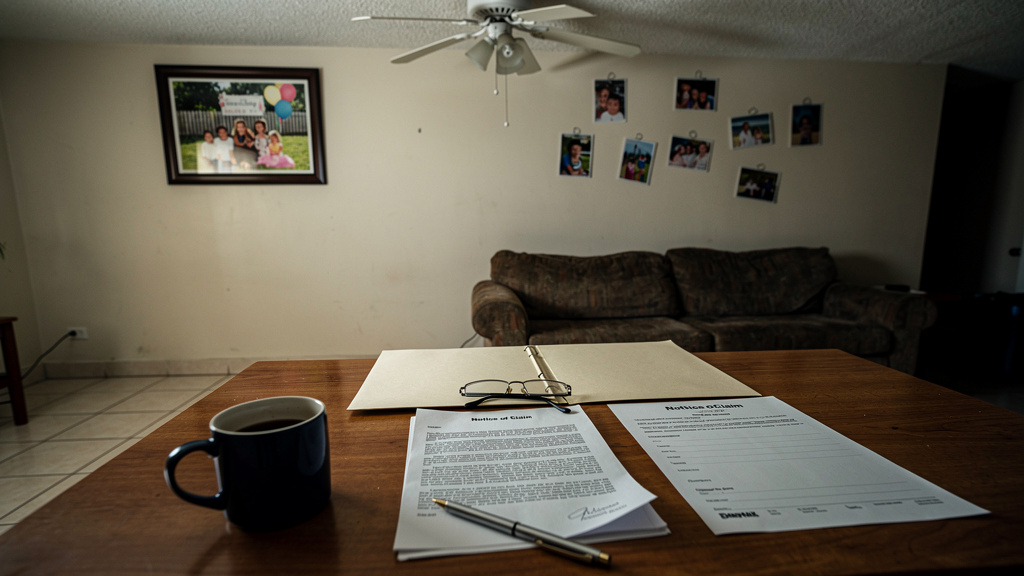
Florida law names exactly which relatives can recover money after a wrongful death, and what each person can claim depends entirely on their relationship to the deceased. Only those listed as “survivors” under state law have rights to compensation, and all claims must be brought in one lawsuit filed by the personal representative of the estate, not by individual family members.
Who legally counts as a ‘survivor’ under Florida’s Wrongful Death Act?
Under Fla. Stat. § 768.18, “survivors” are limited to four categories: (1) the surviving spouse; (2) children, whether minor or adult; (3) parents of the deceased; and (4) blood relatives or adoptive siblings who were partly or wholly dependent on the deceased for support or services. This means many grieving relatives do not qualify, grandparents cannot sue just because they are grandparents, unmarried partners and fiancés are excluded, and unadopted stepchildren generally do not qualify. In Hialeah’s multigenerational homes, this causes confusion: a grandmother may recover only if she can prove actual financial dependence on the deceased, not simply because she lived in the household. Crucially, Fla. Stat. § 768.20 requires that only the personal representative of the estate file the lawsuit. No sibling, child, or parent can file separately, even if five family members are eligible, they do not each bring their own case.
What can a surviving spouse recover?
A surviving spouse has the broadest right to recover damages under Fla. Stat. § 768.21(1) and (2). The spouse may claim lost support and services from the date of injury through death, plus future losses reduced to present value. Courts look at the deceased’s probable net income available for distribution and the value of household services they provided. The spouse may also recover for loss of companionship and protection, mental pain and suffering from the date of injury, and any medical or funeral expenses they personally paid. These non-economic rights exist even if there are surviving children, which matters in Hialeah households where one breadwinner supported a spouse and multiple dependents. Unlike adult children, the spouse never loses their right to pain and suffering damages based on another survivor’s existence.
What can children recover, and does the child’s age matter?
Florida treats children differently based on age and whether a spouse survived the deceased. Under current interpretation of Fla. Stat. § 768.21(3), “minor children” includes those under age 25, so a 23-year-old qualifies as a minor for non-economic damages. These younger children may recover for lost parental companionship, instruction, guidance, and mental pain and suffering from the date of injury. Adult children aged 25 or older may recover those non-economic damages only if there is no surviving spouse. However, all children, regardless of age, can claim lost support and services under § 768.21(1) if the deceased helped support them financially. In Hialeah families where adult children live with parents and share expenses, documenting the deceased parent’s contributions, groceries, rent, insurance, is key to proving economic loss, even if pain and suffering damages are barred.
What can parents of the deceased recover?
Parents’ recovery depends on two factors: the deceased child’s age and whether other survivors exist. Under Fla. Stat. § 768.21(4), parents of a deceased child under 25 may recover mental pain and suffering from the date of injury. Parents of an adult child (25 or older) may recover such damages only if there are no other survivors, such as a surviving spouse or children. In both cases, parents may claim lost support and services if the deceased provided financial help, such as paying for housing, utilities, or food. In Hialeah, where adult children often support aging parents living in the same home, this economic claim can be significant. However, these interpretations should be confirmed with a Florida wrongful death attorney, as court applications can vary.
What about grandparents, aunts, uncles, or other relatives who depended on the deceased?
Only one path exists for relatives outside the spouse-child-parent framework: Fla. Stat. § 768.18 allows “blood relatives and adoptive brothers and sisters who were partly or wholly dependent on the deceased for support or services” to qualify as survivors. Emotional closeness is not enough, the dependency must be financial or involve regular services like caregiving. A grandmother in a Hialeah household who relied on her grandchild for rent payments or grocery money may qualify, but she must prove it with records like bank transfers or shared bills. In-laws, unmarried partners, and non-dependent relatives such as grandparents or cousins do not qualify. Because the personal representative must list all potential beneficiaries in the initial complaint, gathering this proof early is essential.
What does the estate itself recover, and what is the medical malpractice exception?
The estate can recover four types of economic damages under Fla. Stat. § 768.21: (1) lost earnings from injury to death; (2) in some cases, lost prospective net accumulations, the present value of savings the deceased would likely have built and left behind; (3) medical expenses incurred before death; and (4) funeral and burial costs paid by the estate. These claims often form the largest part of the case when the deceased was a working-age provider. However, in medical malpractice deaths, Fla. Stat. § 768.21(8) contains a special rule, sometimes called the “Free Kill” provision, about whether adult children and parents of adult children can recover non-economic damages like pain and suffering. This special rule concerns only malpractice cases, not car crashes or slip-and-fall incidents. Because this law has been changing, a lawyer must check current law to see who can recover in a malpractice death. Generally, the deadline to file is two years from the date of death, per Fla. Stat. § 95.11; medical malpractice deaths follow different timing rules and presuit steps.
Frequently asked questions
Can all five of my siblings and I each file our own wrongful death lawsuit after our parent died?
No. Florida law requires one lawsuit filed by the personal representative of the estate. All eligible survivors must be included in that single case, you cannot each file separate claims.
My grandmother lived with us in Hialeah and my father paid all her bills. Can she recover money after he died?
Possibly, but only if she can show she was partly or wholly dependent on your father for financial support or services. Simply living in the home is not enough; documentation of payments or support is required.
My 23-year-old sister died in a car crash. Can our parents and I recover pain and suffering damages?
Your parents may. Because she was under 25, she is considered a “minor child” under the statute, and each parent of a deceased minor child may recover mental pain and suffering. A sibling is a survivor only if partly or wholly dependent on the deceased for support or services, and then the claim is for lost support and services, not pain and suffering.
Does the ‘Free Kill’ law mean our family gets nothing if a hospital’s mistake killed our relative?
No. The estate can still recover economic damages like lost earnings, medical bills, and funeral costs. The special rule in malpractice cases concerns certain non-economic damages for adult children and parents of adult children, and because that law has been changing a lawyer must check current law; it does not eliminate all recovery.
What is ‘lost net accumulations’ and who gets that money?
It is the value of the inheritance the deceased would likely have saved and left behind, calculated based on their expected earnings minus living expenses. This amount goes to the estate and is distributed according to the deceased’s will or Florida intestacy law.
Hurt in an accident in Hialeah? Call Wolfson & Leon at 305-965-3766 for a free consultation. We speak Spanish, and there is no fee unless we win.
Key facts
- Only the personal representative of the estate can file the lawsuit, not individual family members, even if the filer is the surviving spouse or an adult child. Source: Fla. Stat. § 768.20
- Florida defines 'minor children' as under age 25 for purposes of key wrongful death non-economic damages, broader than the standard age of majority. Source: Fla. Stat. § 768.18(2)
- Blood relatives and adoptive siblings who were partly or wholly dependent on the deceased for support or services qualify as survivors. Source: Fla. Stat. § 768.18
- Medical malpractice wrongful death cases have a special rule about non-economic damages for adult children and parents of an adult child; because this law has been changing, a lawyer must check current law. Source: Fla. Stat. § 768.21(8)
- Families generally have two years from the date of death to file a Florida wrongful death claim. Source: Fla. Stat. § 95.11
Frequently asked questions
Can all five of my siblings and I each file our own wrongful death lawsuit after our parent died?
No. Under Fla. Stat. § 768.20, only the personal representative of the deceased's estate can file the wrongful death lawsuit, not individual family members, even a surviving spouse or adult child. The personal representative files one case on behalf of all eligible survivors and the estate. If no personal representative has been named in a will, the probate court appoints one before the claim can proceed.
My grandmother lived with us in Hialeah and my father paid all her bills. Can she recover money after he died?
Possibly. Under Fla. Stat. § 768.18, blood relatives who were partly or wholly dependent on the deceased for support or services can qualify as survivors, even if they are not a spouse, child, or parent. A grandmother who relied on the deceased for rent, food, or household services may fall into this category. Documented evidence of financial dependency, bank transfers, utility payments, receipts, will be essential to support that claim.
My 23-year-old sister died in a car crash. Can our parents and I recover pain and suffering damages?
Because your sister was under 25, she counts as a 'minor child' under Fla. Stat. § 768.18(2), and each parent of a deceased minor child may recover mental pain and suffering under Fla. Stat. § 768.21(4). Siblings are not automatically survivors: a brother or sister qualifies only if partly or wholly dependent on the deceased for support or services under Fla. Stat. § 768.18, and then the claim is for lost support and services rather than pain and suffering. These rules should be confirmed with a Florida wrongful death attorney given the fact-specific nature of each claim.
Does the 'Free Kill' law mean our family gets nothing if a hospital's mistake killed our relative?
Not necessarily nothing. Fla. Stat. § 768.21(8) contains a special rule about non-economic damages (mental pain and suffering, lost companionship) for adult children and for parents of adult children in medical malpractice wrongful death cases, and because that law has been changing, a lawyer must check current law. Economic damages, lost earnings, net accumulations, medical and funeral expenses through the estate, are not barred by that provision. The surviving spouse, if there is one, retains full non-economic recovery rights regardless of the cause of death.
What is 'lost net accumulations' and who gets that money?
Lost net accumulations is the present value of the future savings, the wealth, that the deceased would have built and eventually left as an inheritance, had they lived a full life. It is calculated by projecting future earnings, subtracting what the deceased would have spent on their own living expenses, and reducing the remainder to today's value. This is the estate's claim under Fla. Stat. § 768.21, available only in certain situations, not an individual survivor's claim, and it is often the largest single component of a wrongful death recovery for a working-age person.
This article is general information about Florida law, not legal advice, and reading it does not create an attorney-client relationship. Every case is different and past results do not guarantee a similar outcome. For advice about your situation, call Wolfson & Leon at 305-965-3766 for a free consultation.
Also available in: Versión en español
 Wrongful death
Our Family Member Died in a Crash: Can We Sue in Florida?
Yes. When someone dies because of another party's negligence or wrongful act in Florida, surviving family members can pursue a wrongful death claim…
 Wrongful death
Where Biscayne Bay Boating Accidents Happen and Why Those Spots Are Dangerous
Biscayne Bay's deadliest boating accidents cluster around a handful of well-known spots: the Nixon Beach sandbar and Haulover Inlet corridor on…
 Wrongful death
My Family Member Died in a Miami Truck Crash: Who Can File and How?
In Florida, the lawsuit is not filed by grieving family members individually, it is filed by the personal representative of the deceased's estate,…