
When Your Fault Is Disputed After a Crash: Do You Need a Reconstruction Expert?
When fault is genuinely disputed after a serious crash, an accident reconstruction expert can use physical evidence, skid marks, vehicle damage, black box data, and video, to produce a science-based account of what actually happened. Under Florida's modified comparative negligence law, being found more than 50 percent at fault bars you from recovering anything, so a single-digit shift in blame percentage can decide your entire case. Securing that evidence and that expert early, before vehicles are repaired and surveillance footage is overwritten, is often the difference between a provable claim and a lost one.
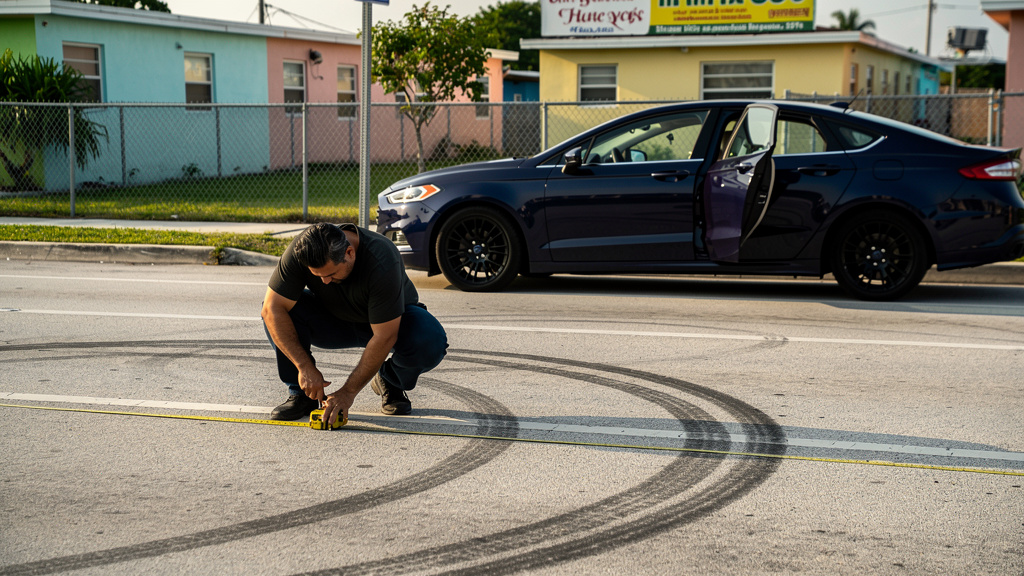
When fault is genuinely disputed after a serious crash, an accident reconstruction expert can use physical evidence, including skid marks, vehicle damage, black box data, and video, to produce a science-based account of what actually happened. Under Florida’s modified comparative negligence law, being found more than 50 percent at fault bars you from recovering anything, so a single-digit shift in blame percentage can decide your entire case. Securing that evidence and that expert early, before vehicles are repaired and surveillance footage is overwritten, is often the difference between a provable claim and a lost one.
What does an accident reconstruction expert actually do?
An accident reconstruction expert is a professional, usually a licensed engineer or someone with a background in physics or law enforcement, who applies scientific methodology to answer factual questions about a crash. They do not decide legal fault. Their job is to establish what the physical evidence shows happened, and then explain it in terms a jury can follow.
Their work typically covers four core tasks. First, scene analysis: road layout, signal timing, sight lines, and lane markings. Second, vehicle inspection: crush patterns, paint transfer, airbag deployment, and the point of impact. Third, data retrieval: pulling information from the vehicle’s event data recorder showing speed, braking, throttle position, seat-belt status, and steering inputs in the seconds before impact. Fourth, physics-based modeling: applying momentum, velocity, and energy transfer to reconstruct how fast each vehicle was traveling and at what angle they collided. The expert may also produce computer simulations or scaled diagrams to make those findings clear to a jury.
Florida courts generally treat speed-and-momentum analysis as specialized expert testimony under Florida Statute 90.702, which means a reconstruction built on flawed methodology can be excluded. The quality of the expert and the rigor of the method matter.
What kinds of cases actually need one, and which ones don’t?
Not every crash justifies the cost of reconstruction. A low-speed fender bender where the other driver admits fault and injuries are minor usually does not. But several fact patterns make reconstruction critical, and you should take an honest look at whether your case fits any of them.
Reconstruction becomes important when fault is disputed or the other driver changes their account of what happened. It is also important when a commercial truck is involved, because these cases often involve onboard truck data and federal recordkeeping rules, multiple potentially liable parties, and defense teams hired by carriers to limit payouts. Pedestrian and cyclist crashes are another category where reconstruction is especially valuable. Victims in these cases are routinely blamed because their injuries look severe compared to minor vehicle damage. Crossing signal data and scene measurements can establish who actually had the right of way.
High-speed crashes on the Palmetto Expressway, the Dolphin Expressway, or US-1 also warrant reconstruction because speed disputes directly affect the fault percentage assigned to each driver and the causation analysis for serious injuries. If no witness saw the full sequence of events, the police report is incomplete or ambiguous, or vehicles were moved before officers arrived, reconstruction may be the only way to piece together what happened. Finally, catastrophic or fatal crashes almost always require it, because insurers often argue the forces involved were not sufficient to cause the harm claimed, and reconstruction addresses impact severity directly.
What evidence does the expert actually analyze?
The strongest reconstructions combine multiple evidence sources, because each one has limits on its own.
Most modern passenger vehicles carry an event data recorder, commonly called a black box. For vehicles that have one, federal rules require data fields that include pre-crash speed, brake status, throttle position, seat-belt use, and airbag deployment timing. Some systems also capture steering angle, RPM, ABS activity, and the change in lateral velocity at impact. This data covers only a short window around the triggering event. It must be downloaded with certified equipment by a trained person to preserve the chain of custody. EDR data often needs an independent reconstruction to interpret what it means.
Skid marks and crush damage tell a separate story. Tire marks establish the braking point and travel path. Crush depth and direction show impact angle and force. Traffic camera and dashcam footage, when available, can provide a direct visual record. FDOT and municipal cameras cover many Miami-Dade intersections, but the footage disappears fast.
Scene measurements taken with laser scanning or drone mapping can document road geometry, sight lines, and final vehicle positions long after the vehicles are moved. Traffic and crossing signal data is especially important in pedestrian cases to show who had the legal right to be in the roadway. In rideshare crashes involving Uber or Lyft, attorneys can subpoena trip logs, driver status, and GPS records to determine which insurance policy applies and what the driver was doing at the moment of impact.
All of this must meet Florida’s standard for expert testimony under Florida Statute 90.702 before it can be presented in court.
Why does evidence have to be preserved immediately, and what disappears first?
Some evidence is gone within hours. Surveillance footage from private businesses and some municipal systems can be overwritten within days. A written preservation demand should go out as soon as possible, or that footage may be gone.
EDR data is at risk the moment a vehicle is repaired. If the restraint-control module is replaced during bodywork, the pre-crash record is destroyed. If the vehicle is totaled, it may reach a salvage auction within days. Leased vehicles return to fleets. Rental vehicles go back into service. Skid marks and road debris can be washed away by rain or erased by normal traffic within hours.
The at-fault driver’s insurer is not waiting. Adjusters are often on the scene or on the phone within hours of a crash. Their job is to limit the insurer’s liability, not to help you. Under Florida Statute 768.81(6), every percentage point of fault assigned to you reduces your recovery, and if your share exceeds 50 percent, you recover nothing at all. An attorney can send a spoliation letter demanding that the other vehicle’s EDR module, dashcam footage, surveillance recordings, and any telematics data be preserved before any of it disappears.
One more detail worth knowing: under Florida Statute 316.066, crash reports are confidential for 60 days after the crash, except to the parties involved, their insurers, and their attorneys. If you do not have counsel, you may not be seeing the same information the other side is already working with.
Who pays for the reconstruction expert when the firm takes the case on contingency?
Cost is a real concern, and it deserves a straight answer. In a contingency fee case, which is the standard arrangement for personal injury claims in Florida, the law firm typically advances the cost of the reconstruction expert as a case expense. You pay nothing out of pocket upfront.
If the case resolves in your favor, expert costs are repaid from the recovery. If the case does not resolve favorably, how costs are handled varies by firm, and you should confirm the specific arrangement in writing before you sign anything. Ask any firm you consult with to explain exactly how expert expenses are treated. That is not a rude question. It is the right question, and a firm that works on contingency should answer it clearly.
Do not let cost concerns cause you to wait. The two-year filing deadline under Florida Statute 95.11 applies to crashes on or after March 24, 2023. That clock runs regardless of whether evidence is still available or negotiations are still ongoing. Waiting does not pause it.
What should someone in Hialeah or Miami-Dade do right now if their fault is being disputed?
Take these steps in order, starting today.
Do not give a recorded statement to the other driver’s insurer before you speak with an attorney. Anything you say can be used to push your fault share higher. The adjuster may sound reasonable. That does not change what the recording will be used for.
Photograph everything before vehicles are moved: positions on the road, lane markings, skid marks, traffic signals, sight lines, and any debris. If you cannot do it yourself, ask someone at the scene. Then write down or record a voice memo of exactly what happened while the details are fresh: the road name, your direction of travel, weather, signal status, and what you saw in the seconds before impact.
Have an attorney send immediate written demands to preserve the other vehicle’s EDR module, any in-vehicle or dashcam footage, surveillance footage from nearby businesses and FDOT cameras, and rideshare records if an Uber or Lyft driver was involved.
Seek medical evaluation promptly. Gaps in treatment are used by insurers to argue that injuries were minor or unrelated to the crash. Under Florida’s 14-day PIP rule, you must receive initial treatment within 14 days of the crash or your own PIP coverage pays nothing, regardless of who caused the collision.
Contact an attorney as soon as you can. The two-year deadline under Florida Statute 95.11 is the outer limit. Evidence starts disappearing within hours. Those two problems compound each other. For more on how disputed fault in a Hialeah car accident affects your recovery, including how Florida’s more-than-50-percent bar applies in real cases, that page walks through the mechanics in detail.
If a commercial truck was involved, the analysis is different and the defense team on the other side is already moving. See what truck accident claims in Florida require in terms of evidence and timing. If you were on foot or a bike, pedestrian accident claims in Hialeah work differently from driver-to-driver crashes, and the right-of-way analysis matters more. For chain reaction crashes on the Palmetto Expressway, reconstruction is often the only way to sort out which driver is responsible for what.
Wolfson & Leon handles personal injury cases in Hialeah and throughout Miami-Dade County. The attorneys at the firm have represented injury victims since 1963.
Frequently asked questions
Does the police report prove who caused the crash?
No. A police report is one piece of evidence, and it is often incomplete. Officers typically arrive after the vehicles have moved, witnesses have left, and physical evidence has already changed. The report may note one driver’s account more prominently, or reflect an officer’s initial impression based on limited information. An accident reconstruction expert, working from physical evidence and data, can reach conclusions that directly contradict what the report says.
Can the insurance company access my car’s black box without my permission?
Generally, they need either your permission or a court order. If you own the vehicle, the EDR data belongs to you. However, if you give the other driver’s insurer access to your vehicle as part of the claims process, they may be able to retrieve it. An attorney can advise you on how to handle EDR data in your specific situation before you agree to anything in writing.
What happens to my case if I’m found partly at fault in Florida?
Under Florida Statute 768.81(6), your recovery is reduced by your percentage of fault. If you are found 30 percent at fault, you recover 70 percent of your damages. If you are found more than 50 percent at fault, you recover nothing. This is why fault disputes matter so much in Florida, and why reconstruction evidence that shifts even a few percentage points can change the outcome entirely.
My crash involved a semi-truck. Is reconstruction more important in those cases?
Yes, for several reasons. Commercial trucks often carry engine control modules, electronic logging devices, and telematics that can capture more data than a standard passenger vehicle EDR. Trucking companies and their insurers deploy defense teams quickly and begin their own investigation immediately. The potential damages in serious truck crashes are higher, which means the insurer’s incentive to dispute fault and causation is also higher. Reconstruction is frequently necessary to counter that defense. See what information to collect after a semi-truck crash in Hialeah for specifics on what matters in these cases.
How long do I have to decide whether to hire a lawyer or file a claim?
For crashes on or after March 24, 2023, Florida Statute 95.11 gives you two years from the crash date to file a negligence lawsuit. That is the legal deadline for filing, not the deadline for hiring a lawyer. In practice, the window that matters most is the first few days, because that is when surveillance footage can disappear, vehicles get repaired, and the other side’s adjuster is already building their version of events. The Florida statute of limitations for personal injury page explains how that deadline works and what happens if it passes.
Hurt in an accident in Hialeah? Call Wolfson & Leon at 305-965-3766 for a free consultation. We speak Spanish, and there is no fee unless we win.
Key facts
- Florida's modified comparative negligence rule bars recovery entirely if the injured person is found more than 50 percent at fault for the crash. Source: Florida Statute 768.81(6)
- A negligence-based personal injury lawsuit must be filed within two years of the crash date for crashes occurring on or after March 24, 2023. Source: Florida Statute 95.11
- Event data recorders (EDRs), found in most modern passenger vehicles, capture speed, brake status, throttle position, seat-belt use, and airbag deployment in the seconds before impact. Source: NHTSA, 49 CFR Part 563
- Florida's PIP coverage requires initial treatment within 14 days of the crash, or PIP pays nothing. Source: Florida Statute 627.736
- Florida crash reports are confidential for 60 days after the crash, except to the parties involved, their insurers, and their attorneys. Source: Florida Statute 316.066
Frequently asked questions
Does the police report prove who caused the crash?
No. A police report is evidence, not a legal determination of fault. Officers often arrive after the scene has changed, rely on driver and witness statements made under stress, and may note fault only as an initial impression. Florida courts do not treat a fault notation in a police report as conclusive, and the officer's opinion is sometimes inadmissible at trial. A reconstruction expert's findings, grounded in physical evidence and scientific methodology, can carry significantly more weight than a rushed field assessment.
Can the insurance company access my car's black box without my permission?
The EDR is part of the vehicle. If you own the car, the data belongs to you, and an insurer generally needs your authorization or a court order to access it independently. However, if you give the other party's insurer access to the vehicle, or if the car is sold, repaired, or salvaged, the data can be lost or accessed in ways that complicate your claim. Your attorney can issue a preservation demand and arrange for the download to be performed by a qualified professional whose chain-of-custody documentation will hold up in court.
What happens to my case if I'm found partly at fault in Florida?
Under Florida Statute 768.81(6), your compensation is reduced by your percentage of fault. If a jury finds you 20 percent at fault, you recover 80 percent of your damages. But if you are found more than 50 percent at fault, you recover nothing, not a reduced amount, but zero. This is exactly why insurers push to assign even small amounts of blame to the injured person, and why reconstruction evidence that refutes a false fault narrative can change the entire outcome of a case.
My crash involved a semi-truck. Is reconstruction more important in those cases?
Yes. Commercial truck crashes often involve multiple potentially liable parties, the driver, the trucking company, a cargo loader, a maintenance contractor, and carriers typically deploy their own investigators within hours of a serious crash. Many commercial trucks carry engine control modules that record data, federal rules require many to use electronic logging devices, and those trucks may also have forward-facing cameras and GPS telematics. An independent reconstruction expert helps ensure that evidence is preserved and analyzed before the carrier's team controls the narrative.
How long do I have to decide whether to hire a lawyer or file a claim?
For crashes that occurred on or after March 24, 2023, Florida Statute 95.11 gives you two years from the crash date to file a negligence lawsuit. Missing that deadline generally forfeits your right to compensation entirely. But the practical deadline for preserving critical evidence, surveillance footage, EDR data, physical scene evidence, is measured in hours and days, not years. Waiting even a week to consult an attorney can mean key evidence is already gone.
This article is general information about Florida law, not legal advice, and reading it does not create an attorney-client relationship. Every case is different and past results do not guarantee a similar outcome. For advice about your situation, call Wolfson & Leon at 305-965-3766 for a free consultation.
Also available in: Versión en español
 Car accidents
Small Car Accident in Florida: Do You Actually Need a Lawyer?
Whether you need a lawyer after a small crash in Florida depends on whether anyone was hurt, not just how much metal was bent. If pain showed up…
 Car accidents
How Long Does a Car Accident Case Take in Florida?
Most Florida car accident cases settle in three to eighteen months, but serious injuries, disputed fault, or a lawsuit can push that to two years or…
 Car accidents
Minor Car Accident in Hialeah: When You Need a Lawyer and When You Don't
Not every minor crash in Hialeah requires a lawyer. If your accident caused property damage only, fault is not disputed, the other insurer has…