
Truck Accident Claims in Florida: How They Differ From Car Accident Claims
A truck accident claim in Florida operates under an entirely different legal framework than a car accident claim: federal safety regulations apply, insurance coverage requirements are dramatically higher, and there are often multiple corporate defendants instead of one driver. The evidence, electronic logging device data, engine control module data, driver qualification files, can disappear within days if not preserved immediately. PIP and the permanent-injury threshold still apply the same way they do in any Florida crash, so the starting point for your own medical bills and the door to pain-and-suffering damages are unchanged.
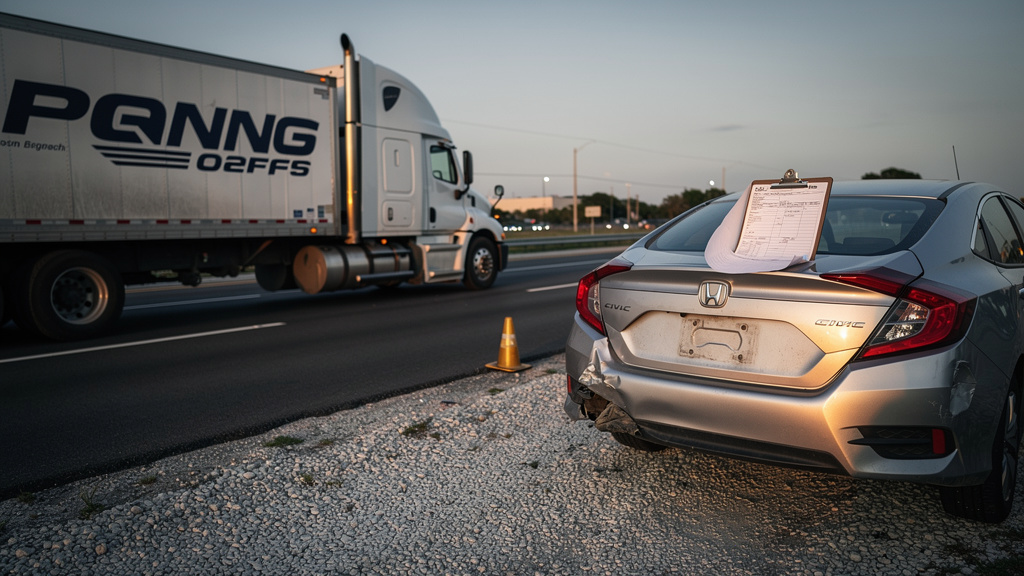
A truck accident claim in Florida follows a different legal path than a car crash claim. Federal safety rules apply, insurance limits are much higher, and multiple companies may share blame. Evidence like electronic logs and engine data can vanish within days if not preserved right away. But your own medical bills still start with your PIP coverage, and the same permanent-injury rule controls whether you can seek pain and suffering damages.
What stays the same, PIP, the injury threshold, and the filing deadline?
Your first source of help after a truck crash is the same as after any Florida crash: your own Personal Injury Protection (PIP) coverage. Under Florida Statute § 627.736(1), PIP pays 80 percent of reasonable medical bills and 60 percent of lost income, up to $10,000 if a doctor finds an emergency medical condition. If no emergency condition is found, the cap drops to $2,500. You must see a doctor within 14 days of the crash or PIP pays nothing. Your own policy pays first, not the truck driver’s insurer, per Florida Statute § 627.736(4)(e).
To sue for pain and suffering, your injury must meet the same threshold as in any car crash: it must be permanent, involve significant scarring, or cause a permanent loss of a bodily function (Fla. Stat. § 627.737(2)). Truck crashes often produce serious injuries that clear this bar, but you still need medical proof of permanency, it is not automatic. And the deadline to file a lawsuit is two years from the date of the crash if it happened on or after March 24, 2023 (Fla. Stat. § 95.11). Ignore older advice saying you have four years; that no longer applies.
What rules apply to a truck that never apply to a regular car?
Florida law adopts federal motor carrier safety regulations through Florida Statute § 316.302. These rules govern commercial trucks and do not apply to personal vehicles. They include strict hours-of-service limits, mandatory pre-trip and post-trip vehicle inspections, detailed driver qualification standards, and required drug and alcohol testing. Drivers of large commercial trucks generally must hold a Commercial Driver’s License (CDL) and meet the safety standards that come with it.
If a truck driver violated these federal rules, like driving too many hours without rest, that violation can be strong evidence of negligence. In a car accident case, there is no equivalent body of federal regulation. A demand letter in a truck case will often cite specific regulatory breaches; one in a car case usually focuses only on the facts of the crash.
Why is the insurance situation so different in a truck case?
Commercial trucking insurance policies carry far higher limits than standard auto policies. Federal law sets minimum liability coverage for interstate for-hire carriers, and those minimums are reported to begin at levels substantially above Florida’s state-mandated auto insurance floor. Carriers hauling hazardous materials may face even higher requirements.
Policies for many interstate carriers must include an MCS-90 endorsement, which can require the insurer to pay a final judgment against the carrier even if the policy would otherwise deny coverage due to a technical exclusion. Large carriers often carry layers of excess or umbrella coverage beyond their primary policy. Because more money is at stake, commercial insurers often send investigators quickly after a crash to gather evidence before you’ve even hired a lawyer.
What evidence exists in a truck case that never exists in a car case?
Truck cases involve unique electronic and paper records that disappear fast. Key evidence includes Electronic Logging Device (ELD) data showing driving hours, Engine Control Module (ECM) data recording speed and braking just before impact, dashcam footage, Driver Qualification Files (DQFs), maintenance logs, and GPS or dispatch records. ELD and ECM data can be overwritten or lost quickly, so a formal preservation letter is critical early on.
This urgency matters especially in Hialeah. Crashes on the Palmetto Expressway and Okeechobee Road are often written up by first responders as ordinary car accidents. The initial police report may miss the carrier name, DOT number, cargo type, or regulatory violations. Without quick action, that information may be lost forever.
Who can be a defendant in a truck case, and how does fault get divided?
Multiple parties can share responsibility in a truck crash: the driver, the motor carrier, the truck owner (if separate), the maintenance company, the cargo loader, or even a parts manufacturer. Each may have its own insurer and defense lawyer. Learn more about all the parties who may share responsibility.
Fault is still divided under Florida’s modified comparative negligence rule (Fla. Stat. § 768.81(6)). Your recovery is reduced by your percentage of fault, and you cannot recover anything only if you are found more than 50 percent at fault. Commercial defense teams often try to blame the injured driver to push past that 51 percent bar. ELD and ECM data are often your best tools to prove what really happened.
Why does a truck case take longer and cost more to resolve than a car case?
Truck cases require expert witnesses rarely needed in car crashes: accident reconstructionists, trucking safety specialists, vocational experts, and life-care planners for severe injuries. Multiple defendants mean more depositions, more discovery disputes, and a longer timeline, often a year or more versus a few months for a simple car case.
The two-year deadline (Fla. Stat. § 95.11) still applies, but the real clock starts ticking immediately. ELD data, maintenance records, and dashcam footage can be lost within days. Waiting, even if you’re well within the legal deadline, can destroy your case. The same complexity that makes these cases harder also means they often have greater value when built correctly.
Frequently asked questions
Does Florida’s no-fault PIP system still apply if a semi-truck hit me?
Yes. Your own PIP policy pays first, regardless of whether a car, SUV, or commercial truck caused the crash. You must get initial treatment within 14 days to qualify, and PIP covers up to $10,000 if an emergency medical condition is diagnosed.
Can I sue the trucking company, not just the truck driver?
Often, yes. The motor carrier can often be held liable for the driver’s actions while on the job. Other entities like maintenance contractors or cargo loaders may also share fault. Learn more about all the parties who may share responsibility.
What is the deadline to file a truck accident lawsuit in Florida?
Two years from the date of the crash if it occurred on or after March 24, 2023, per Florida Statute § 95.11. This deadline applies equally to car and truck crashes.
What if the first police report just lists it as a regular car accident and misses all the truck information?
That is common in Hialeah-area crashes on roads like the Palmetto Expressway or Okeechobee Road. The initial report may omit the carrier name, DOT number, or cargo details. An early investigation by a lawyer can uncover this information before it disappears.
Does Florida’s comparative fault rule apply the same way in a truck case as in a car case?
Yes. Your recovery is reduced by your percentage of fault, and you are barred from recovering only if you are found more than 50 percent at fault (Fla. Stat. § 768.81(6)). Commercial defendants often argue you were mostly at fault, so strong evidence is key.
Related reading: I was in a car accident in Hialeah. What do I do now? · The 14-day PIP rule in Florida: what happens if you wait to see a doctor after a Hialeah car accident · How long do I have to file an injury lawsuit in Florida? The two-year rule after HB 837 · A truck hit me in Hialeah. Is that different from a car accident? · I was in a car accident in Hialeah. What do I do now?
Hurt in an accident in Hialeah? Call Wolfson & Leon at 305-965-3766 for a free consultation. We speak Spanish, and there is no fee unless we win.
Key facts
- Florida's no-fault PIP system applies to truck crashes exactly as it does to car crashes: your own PIP pays first, covering 80 percent of reasonable medical bills and 60 percent of lost income up to $10,000 when an emergency medical condition is found, and you must seek initial treatment within 14 days or PIP pays nothing. Source: Fla. Stat. § 627.736(1)
- To pursue pain and suffering damages against the at-fault truck driver or carrier, your injury must be permanent, involve significant scarring, or involve a permanent loss of a bodily function, the same threshold that applies in any Florida car accident. Source: Fla. Stat. § 627.737(2)
- Florida adopts federal motor carrier safety regulations, including FMCSA hours-of-service rules, vehicle inspection requirements, and driver qualification standards, which apply to commercial vehicles operating in the state but have no equivalent in ordinary car accident cases. Source: Fla. Stat. § 316.302
- Florida uses modified comparative negligence: your recovery is reduced by your own share of fault and is completely barred only if you are found more than 50 percent at fault, a rule that applies equally in car and truck accident cases. Source: Fla. Stat. § 768.81(6)
- The deadline to file a personal injury lawsuit arising from a crash on or after March 24, 2023 is two years from the date of the accident, whether the at-fault vehicle was a car or a commercial truck. Source: Fla. Stat. § 95.11
Frequently asked questions
Does Florida's no-fault PIP system still apply if a semi-truck hit me?
Yes. PIP applies to any motor vehicle crash in Florida, including crashes involving commercial trucks. Your own PIP policy pays first, covering 80 percent of reasonable medical bills and 60 percent of lost income up to the policy limit, regardless of who caused the crash. You must seek initial medical treatment within 14 days of the accident or PIP pays nothing. Because truck crashes tend to cause severe injuries, PIP limits are usually exhausted quickly, which is why pursuing a liability claim against the carrier and its insurer matters so much.
Can I sue the trucking company, not just the truck driver?
In most cases, yes, and suing only the driver is often a mistake. A motor carrier can be held liable for the driver's on-duty negligence under respondeat superior, and it can also face direct claims for negligent hiring, negligent training, and negligent maintenance. Commercial carriers are typically required to carry far greater insurance coverage than individual drivers, so the carrier's policy is usually where meaningful compensation comes from. A full investigation of the carrier's relationship with the driver and the vehicle is a standard step in any truck accident case.
What is the deadline to file a truck accident lawsuit in Florida?
For crashes that happened on or after March 24, 2023, Florida law gives you two years from the date of the accident to file a personal injury lawsuit under Fla. Stat. § 95.11. Crashes before that date had a four-year window, so older information you find online may be wrong for a recent crash. The legal deadline and the practical deadline are different things, however: electronic data from the truck's logging device and engine recorder can be overwritten within days, so waiting, even well within two years, can cost you critical evidence.
What if the first police report just lists it as a regular car accident and misses all the truck information?
This is a common problem on busy corridors like the Palmetto Expressway and Okeechobee Road in Hialeah, where first responders sometimes write up commercial-vehicle crashes using standard car accident forms that omit the carrier's DOT number, cargo type, and regulatory history. The police report is not the only record that matters, an attorney can send a formal preservation letter to the carrier immediately, subpoena federal safety records, and obtain ELD and ECM data before it is overwritten. An incomplete initial report is a reason to act fast, not a reason to assume the case is simple.
Does Florida's comparative fault rule apply the same way in a truck case as in a car case?
Yes. Under Fla. Stat. § 768.81(6), a jury assigns a percentage of fault to every party, including you, and your recovery is reduced by your own share. If you are found more than 50 percent at fault, you recover nothing. Commercial trucking defense teams often try aggressively to shift blame onto the injured driver specifically to push past that 51 percent bar. Electronic data from the truck's logging device and black box is frequently the most effective evidence for pushing back against that strategy.
This article is general information about Florida law, not legal advice, and reading it does not create an attorney-client relationship. Every case is different and past results do not guarantee a similar outcome. For advice about your situation, call Wolfson & Leon at 305-965-3766 for a free consultation.
Also available in: Versión en español
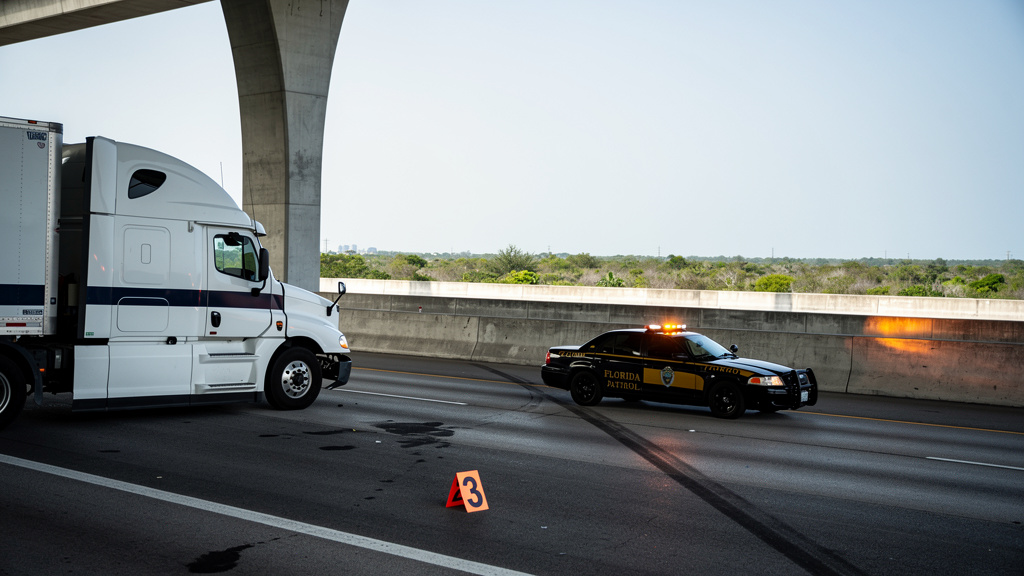 Truck accidents
 Truck Crash Near Hialeah: Who Investigates and What Happens Next
After a commercial truck crash near Hialeah, either the Florida Highway Patrol or a local police agency writes the official crash report depending…
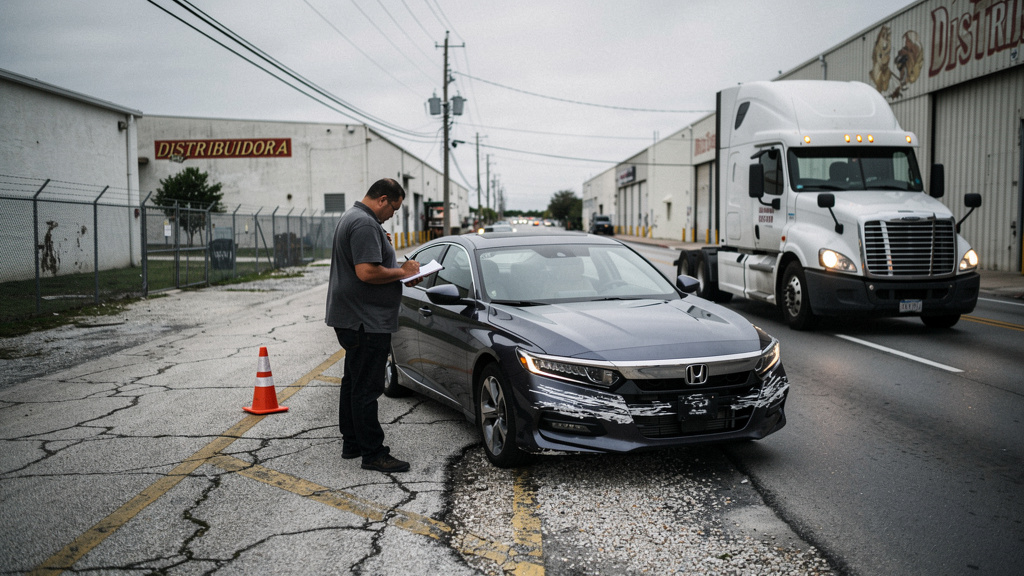 Truck accidents
 What Information Should I Collect After a Crash with a Semi-Truck?
A semi-truck crash requires a completely different checklist than a regular car accident. You need the truck's USDOT number, the carrier name…
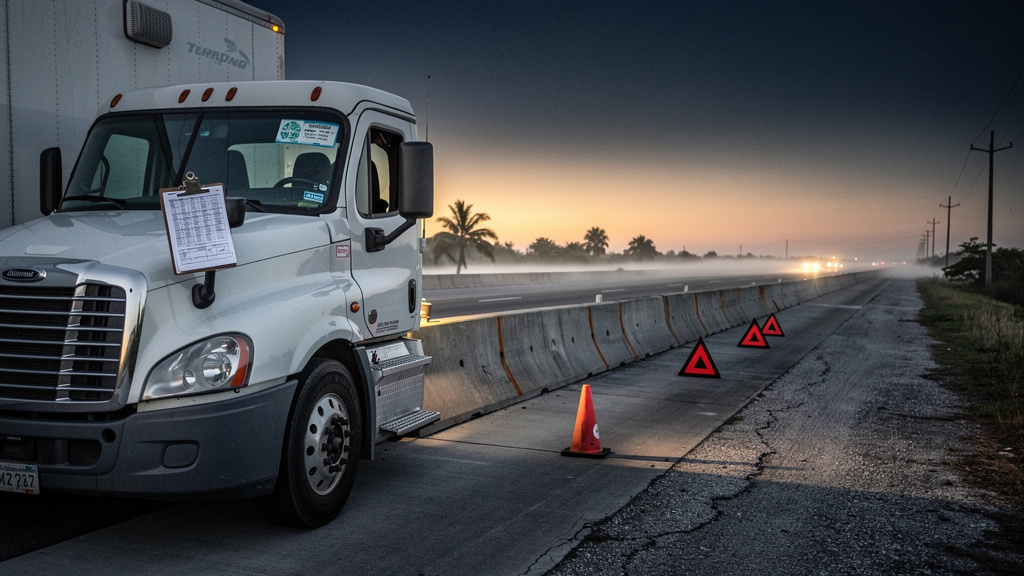 Truck accidents
 Federal Trucking Rules That Decide a Truck Accident Case in Florida
Florida law adopts federal commercial vehicle safety regulations under Fla. Stat. § 316.302, which means every tractor-trailer on the Florida…