
Partly at Fault for a Hialeah Crash? Here Is What You Can Still Recover
Yes, but only if your share of the fault is 50 percent or less. Under Florida's modified comparative negligence law (FL § 768.81), your compensation is reduced by your percentage of fault, so 30 percent fault on a $100,000 case leaves you with $70,000. The moment a jury or insurer pushes you to 51 percent, you recover zero, not a reduced amount, nothing.
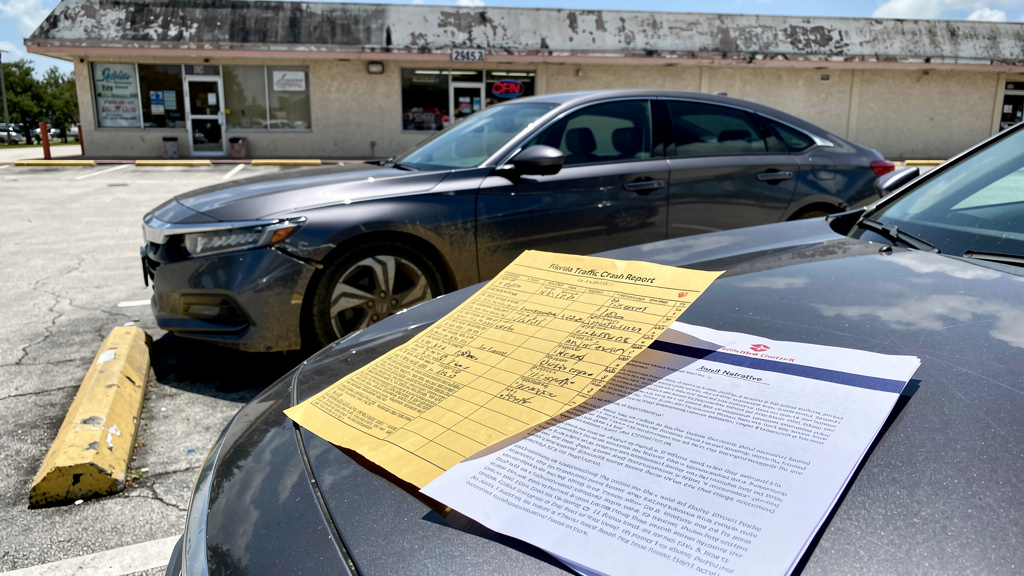
Yes. If you were partly at fault for a crash in Hialeah, you can still recover compensation as long as your share of the blame is 50 percent or less. Florida law reduces your recovery by your percentage of fault under modified comparative negligence (FL § 768.81). But if your fault reaches 51 percent, you get nothing, not a smaller amount, but zero.
What exactly did Florida’s 2023 law change, and why does one percentage point matter so much?
Before March 24, 2023, Florida used pure comparative negligence. That meant even if you were 99 percent at fault, you could still recover 1 percent of your damages. House Bill 837 changed that system for all crashes on or after that date. Now, under FL § 768.81, a single percentage point, 50 versus 51, is the line between a real recovery and nothing. At 50 percent fault, you recover half your damages. At 51 percent, you recover nothing. This cliff edge shifts how insurers evaluate claims and how attorneys build your case. The old safety net is gone for post-2023 accidents.
How does the math actually work when fault is shared?
Your total damages are reduced by your assigned percentage of fault, but only if that percentage is 50 or below. Using a $150,000 damages baseline:. 10% at fault: $150,000 × 90% = $135,000. 25% at fault: $150,000 × 75% = $112,500. 40% at fault: $150,000 × 60% = $90,000. 50% at fault: $150,000 × 50% = $75,000. 51% at fault: Barred, no recovery
This math comes directly from FL § 768.81. The moment your fault crosses 50 percent, the entire claim is barred, regardless of how severe your injuries are.
Why do insurers fight so hard to push your fault above 50 percent?
Because if they land you at 51 percent, they pay nothing. As one insurance insider noted: “The insurance company doesn’t have to win the whole case. They just have to get you to 51% at fault.” Adjusters in Hialeah use specific tactics to inflate your fault: they take recorded statements looking for contradictions, lean heavily on a police report that may be incomplete, cite pre-existing conditions, or highlight gaps in treatment. Remember, the police report itself usually cannot be shown to a jury in Florida court, it’s just one piece of evidence. And traffic camera footage along busy corridors like W 49th St, W 68th St, or Palm Ave often disappears within days. Speed matters.
What does PIP cover, and when does the fault fight actually start?
Florida’s no-fault system means your own auto policy pays first through Personal Injury Protection (PIP), regardless of who caused the crash. Under FL § 627.736, PIP covers 80 percent of reasonable medical bills and 60 percent of lost wages, up to $10,000. But you must see a doctor within 14 days of the crash or risk losing these benefits entirely. The fault battle begins only if you seek damages beyond PIP, like pain and suffering, future lost wages, or medical costs over $10,000. To do that, your injury must meet Florida’s serious-injury threshold under FL § 627.737: permanent loss of function, significant scarring, or death. Minor whiplash usually does not qualify. So yes, Florida is a no-fault state for initial medical bills, but fault still determines whether you can sue for full damages.
What steps protect your fault percentage from the moment of the crash?
Act quickly and precisely:
- Call police, let an officer document the scene. Do not say “I’m sorry” or “it was my fault.” Stick to facts.
- See a doctor within 14 days, this preserves your PIP benefits and creates a clear medical record.
- Take photos of vehicles, road conditions, skid marks, and nearby businesses that might have dashcams or security footage.
- Get witness names and phone numbers before they leave the scene.
- Do not give a recorded statement to the other driver’s insurer until you speak with a lawyer. As one legal analyst put it: “without solid proof, it’s your word against theirs.”
- Get a copy of the police report from FLHSMV within about 10 days, but remember it is not final proof of fault.
- Contact a Hialeah personal injury attorney before the two-year deadline under FL § 95.11(4)(a). Evidence fades. Cameras overwrite. Time counts.
How is fault percentage actually decided, and can the insurer’s first number be challenged?
Fault is not set by the police report or the insurer’s early assessment. It is determined in two ways: during settlement talks or by a jury at trial. In negotiations, your attorney uses evidence to challenge the insurer’s assigned percentage. At trial, the jury assigns fault percentages to all involved parties under FL § 768.81, and those must total 100 percent. Florida also allows fault to be allocated to non-parties under the Fabre doctrine, which insurers sometimes exploit to shift blame onto someone not in the lawsuit. Strong evidence can move your percentage: traffic or dashcam video, vehicle black box data, cell phone records showing distraction, timely witness statements, and expert accident reconstruction. Because the difference between 50 and 51 percent is everything, this fight defines your entire case.
Frequently asked questions
What if both drivers were equally at fault, 50/50, can either of us recover?
Yes. Under FL § 768.81, each driver can recover 50 percent of their damages if both are found 50 percent at fault. The 51 percent bar only applies when one party exceeds half the blame.
Does the 51 percent bar apply to slip-and-fall and other personal injury cases, or only car accidents?
It applies to most personal injury cases based on negligence, including slip-and-falls, dog bites, and truck crashes, as long as the incident happened on or after March 24, 2023. Medical malpractice claims are an exception and still use pure comparative negligence.
How long do I have to file a claim if I was partly at fault in a Hialeah crash?
You have two years from the date of the crash to file a lawsuit if your injury occurred on or after March 24, 2023, under FL § 95.11(4)(a). This deadline applies regardless of fault percentage.
If I was partly at fault, does my PIP coverage still pay my medical bills?
Yes. PIP pays regardless of fault, as long as you sought treatment within 14 days of the crash and meet other policy requirements under FL § 627.736.
The insurer already told me I was mostly at fault. Is that determination final?
No. The insurer’s initial fault assignment is not binding. It can be challenged with evidence during settlement discussions or decided by a jury at trial. Early adjuster conclusions are often based on limited information.
Hurt in an accident in Hialeah? Call Wolfson & Leon at (305) 285-7071 for a free consultation. We speak Spanish, and there is no fee unless we win.
Key facts
- Florida Statute § 768.81 bars any recovery if a party is found more than 50 percent at fault; at exactly 50 percent, reduced recovery is still allowed. Source: FL § 768.81 as amended by HB 837, effective March 24, 2023
- Before March 24, 2023, Florida used pure comparative negligence, meaning a plaintiff 99 percent at fault could still recover 1 percent of damages. That system no longer applies to post-2023 claims. Source: HB 837 / FL § 768.81
- Florida's PIP coverage (FL § 627.736) pays 80 percent of reasonable medical bills and 60 percent of lost wages up to $10,000 regardless of fault, but only if the injured person seeks treatment within 14 days of the crash. Source: FL § 627.736
- The statute of limitations for negligence-based personal injury claims arising on or after March 24, 2023 is two years from the date of the crash, cut from the prior four-year window. Source: FL § 95.11(4)(a)
- The 51 percent bar does not apply to medical malpractice claims; those cases still operate under the old pure comparative negligence standard. Source: FL § 768.81(6)
Frequently asked questions
What if both drivers were equally at fault, 50/50, can either of us recover?
Yes, both can still recover under Florida's current law. The bar kicks in at more than 50 percent, so a precisely even split still allows each driver to pursue a claim against the other. Each party's recovery would be reduced by 50 percent, but neither is completely barred. The cutoff is 51 percent, not 50.
Does the 51 percent bar apply to slip-and-fall and other personal injury cases, or only car accidents?
The 51 percent bar under FL § 768.81 applies to virtually all negligence-based personal injury claims in Florida, car accidents, truck accidents, motorcycle crashes, slip and falls, and premises liability. The one explicit exception is medical malpractice, which still follows the old pure comparative negligence standard under FL § 768.81(6).
How long do I have to file a claim if I was partly at fault in a Hialeah crash?
For crashes that occurred on or after March 24, 2023, Florida Statute § 95.11(4)(a) gives you two years from the date of the accident to file a negligence-based personal injury lawsuit. That deadline was cut from four years as part of the same 2023 tort reform that introduced the 51 percent bar. Missing it almost always means losing the right to sue entirely, regardless of how strong your case is.
If I was partly at fault, does my PIP coverage still pay my medical bills?
Yes. Florida's Personal Injury Protection coverage under FL § 627.736 is fault-neutral, it pays 80 percent of your reasonable medical bills and 60 percent of lost wages up to $10,000 no matter what percentage of fault is later assigned to you. The critical requirement is that you see a doctor within 14 days of the crash; missing that window can reduce or eliminate your PIP benefits entirely.
The insurer already told me I was mostly at fault. Is that determination final?
No. The insurer's initial fault assignment is a negotiating position, not a legal finding. The police report that often drives that first number is generally not admissible at a Florida trial and can be overcome with stronger evidence. An attorney can challenge the percentage using dashcam footage, traffic-camera video, black-box data, cell phone records, and witness statements, and even a small reduction in your assigned percentage can be the difference between a real recovery and nothing.
This article is general information about Florida law, not legal advice, and reading it does not create an attorney-client relationship. Every case is different and past results do not guarantee a similar outcome. For advice about your situation, call Wolfson & Leon at (305) 285-7071 for a free consultation.
Also available in: Versión en español
 Car accidents
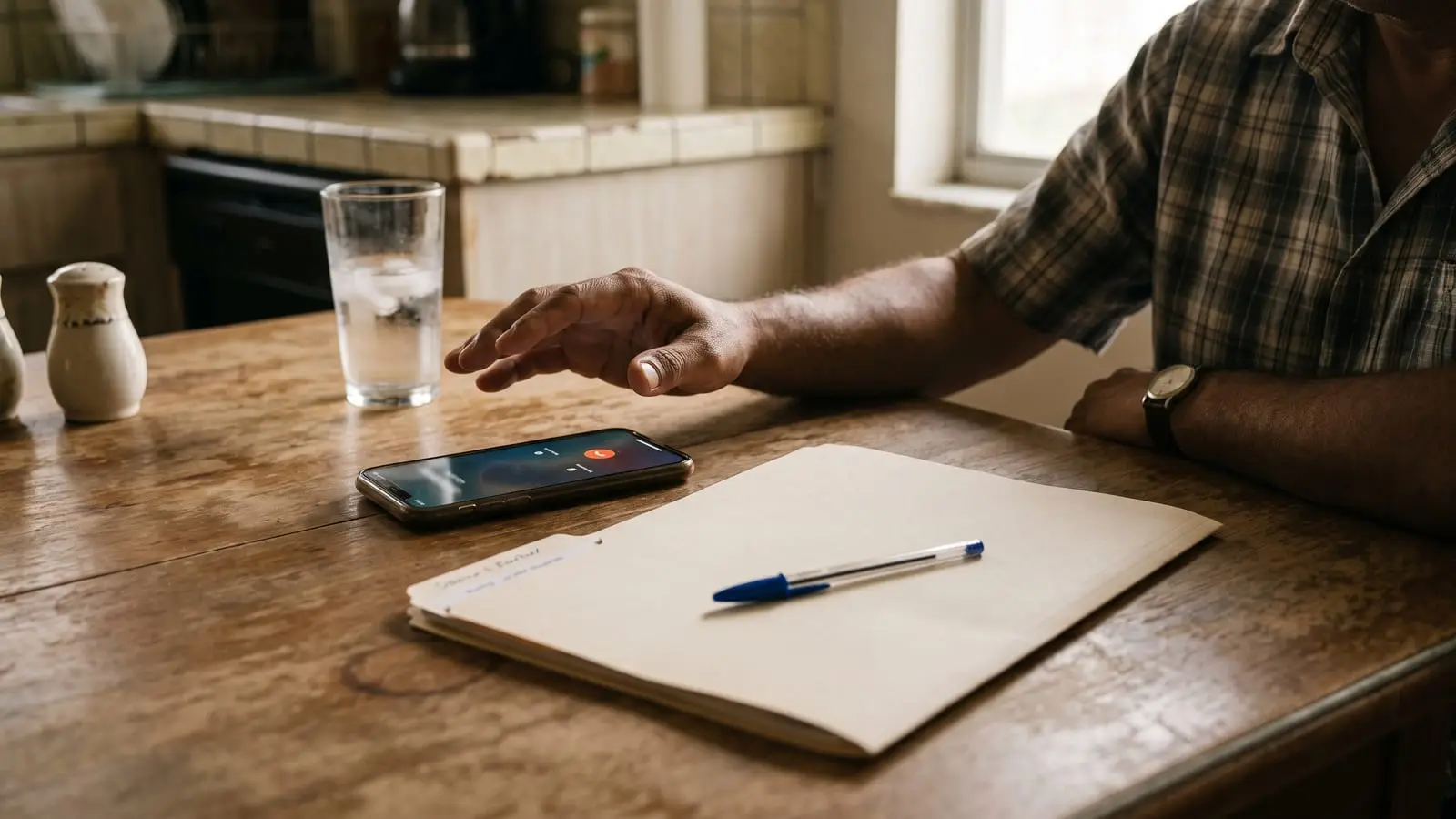
 The other driver's insurance adjuster wants a recorded statement. Do I have to give one?
No. After a car accident in Florida you have no legal duty to give a recorded statement to the other driver's insurance company, and their adjuster…
 Car accidents
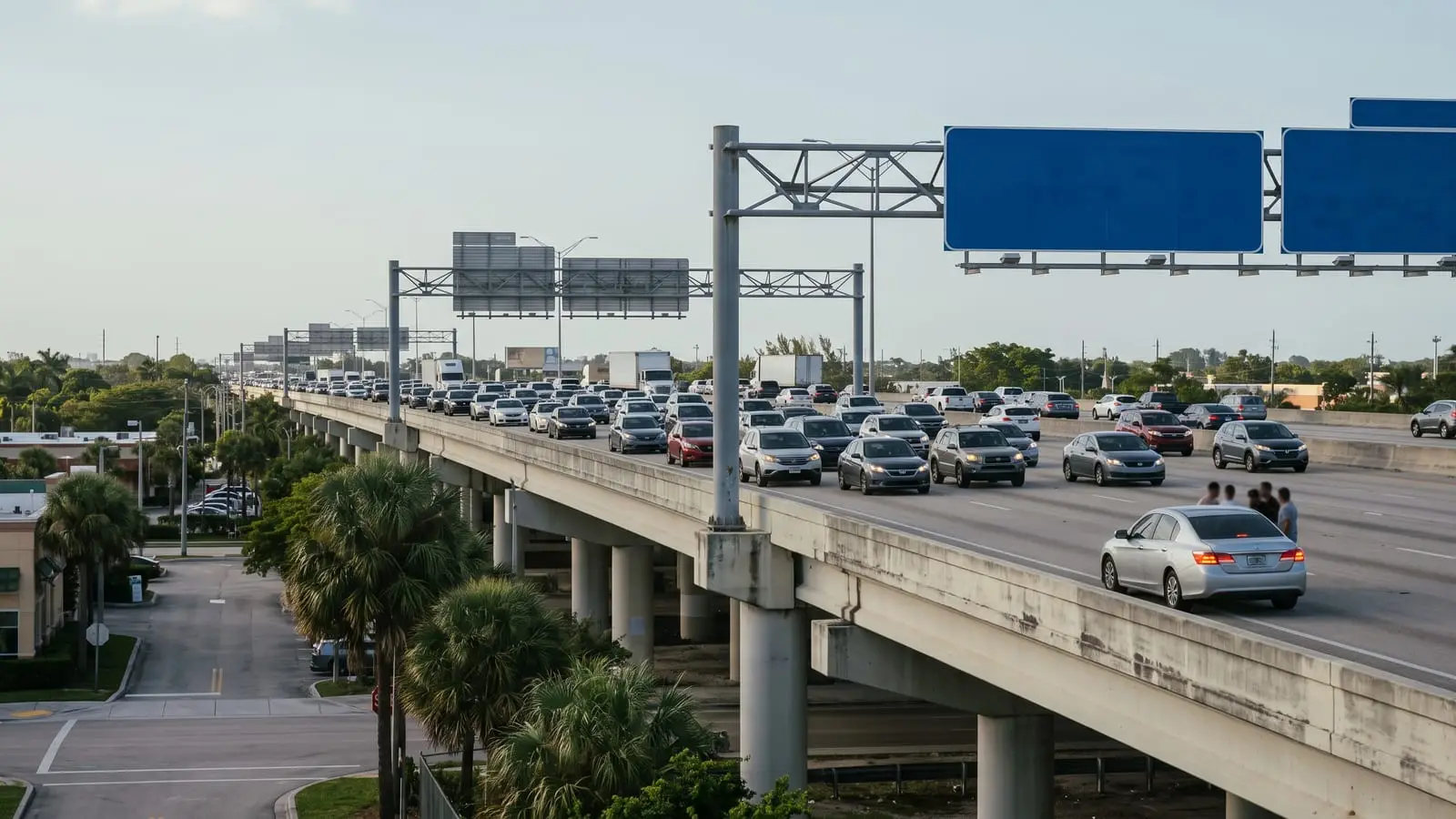
 Crashed on the Palmetto Expressway or Okeechobee Road: what to do in the first hour
After a crash on the Palmetto Expressway (SR 826) or Okeechobee Road near Hialeah, move to the shoulder if the cars can be driven and it is safe…
 Car accidents
 The 14-day PIP rule in Florida: what happens if you wait to see a doctor after a Hialeah car accident
Florida's 14-day PIP rule means you must receive initial medical treatment within 14 days of a car accident to be eligible for the $10,000 in…