
The Other Driver Only Has $10,000 in Coverage, Can I Get the Rest?
Yes, if you carry uninsured/underinsured motorist (UM) coverage on your own policy, you can claim the gap between the at-fault driver's limit and your actual damages from your own insurer, up to your UM limit. Florida's UM statute (Fla. Stat. § 627.727) covers both uninsured and underinsured drivers under the same policy. The catch is procedural: you must get your UM insurer's written consent before you accept and sign anything with the at-fault driver's insurer, or you risk losing your UM claim entirely.
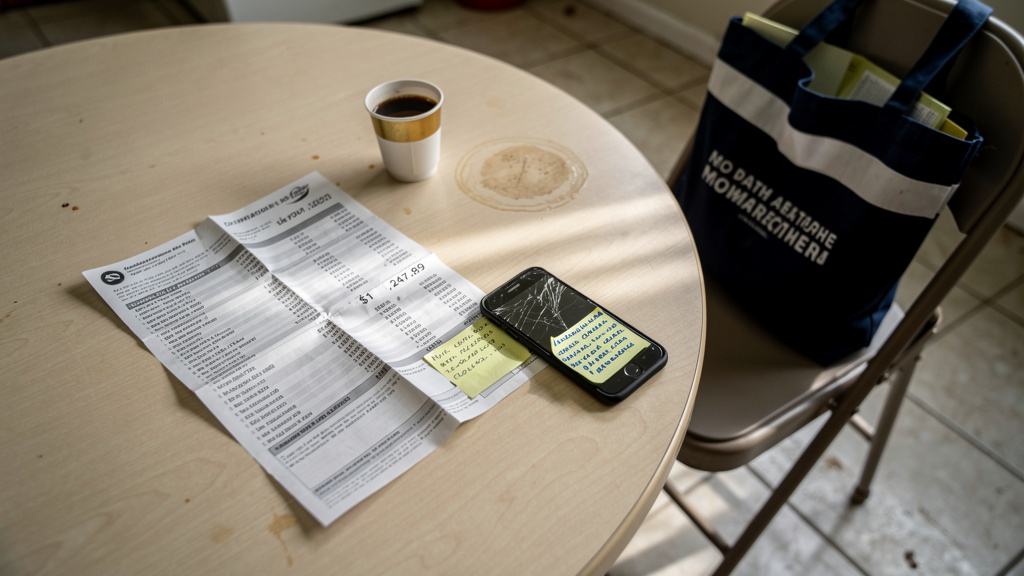
Yes. If your damages exceed the other driver’s $10,000 bodily injury limit, you can claim the difference through your own uninsured/underinsured motorist (UM) coverage, up to your policy’s limit. Florida law treats underinsured drivers the same as uninsured ones for UM purposes. But you must get your UM insurer’s written consent before accepting any settlement from the at-fault driver’s insurance, or you could lose your entire UM claim.
Isn’t UM just for when the other driver has zero insurance?
No. Under Florida Statute § 627.727, UM coverage applies whether the other driver has no bodily injury (BI) insurance or too little to cover your losses. Florida does not require drivers to carry BI coverage, so many Miami-Dade drivers either have none or only minimal limits like $10,000. If your medical bills and other damages total $75,000 and the at-fault driver’s BI pays only $10,000, your UM policy can cover the remaining $65,000, up to your UM limit. The moment your damages exceed the other driver’s BI, they are legally “underinsured,” and your UM kicks in.
Where do I even find all the coverage that might apply to my crash?
Start by checking three places: the at-fault driver’s BI limit, your own auto policy’s UM limit, and any resident relative’s policy. Your declarations page shows your stated UM limit, but it may not reflect the actual amount available. Florida law requires UM coverage on policies that carry bodily injury liability coverage unless you signed a written rejection on a state-approved form. Also, check whether your UM is stacked or non-stacked. A household policy with $50,000 of stacked UM on two vehicles provides $100,000 for one crash. If you signed a non-stacked election under § 627.727(9), that choice is binding. At Wolfson & Leon, we review both the declarations page and the UM election forms because the full picture affects what you can recover.
What is the consent-to-settle procedure and why does it matter so much?
Before you accept the $10,000 from the at-fault driver’s insurer and sign any release, you must get written consent from your own UM insurer. This requirement comes from Florida Statute § 627.727 and protects your UM carrier’s right to pursue the at-fault driver later (called subrogation). If you sign a release without consent, you can destroy that right and your UM insurer may be able to deny your claim. In practice, your attorney sends a demand to the at-fault insurer, copies your UM carrier, and requests consent to settle. Only after that consent arrives should you sign anything. Skipping this step can permanently kill a valid UM claim.
What can my own insurer argue to reduce or deny the UM claim?
Your UM insurer may challenge your claim in three main ways. First, for pain and suffering damages, your injury must meet Florida’s permanent-injury threshold under § 627.737(2): permanent injury within reasonable medical probability, significant and permanent loss of an important bodily function, significant permanent scarring or disfigurement, or death. Note that economic losses like medical bills beyond PIP or lost wages do not require meeting this threshold. Second, under modified comparative negligence (§ 768.81), if you were partly at fault, your recovery is reduced by your percentage, but it’s only barred if you are more than 50 percent at fault. Third, your insurer may claim late notice or lack of cooperation; most policies require prompt written notice of the crash.
What mistakes can kill a UM claim before it even starts?
Four specific errors can end your UM claim for good. First, signing a release with the at-fault driver’s insurer without your UM carrier’s written consent can destroy their subrogation rights and forfeit your claim. Second, failing to notify your UM insurer promptly, as required by your policy, gives them grounds to deny coverage. Third, giving a recorded statement to your own insurer without legal guidance can be used later to dispute your injuries or value. Fourth, letting deadlines pass. For crashes on or after March 24, 2023, a negligence lawsuit against the at-fault driver generally must be filed within two years of the crash (§ 95.11), and your UM policy has its own notice requirements. Settlement talks do not pause these clocks.
What deadlines am I racing against while the two insurers are talking?
You face four hard deadlines that do not wait for insurers to finish negotiating. First, you must seek initial medical treatment within 14 days of the crash under § 627.736 or lose all PIP benefits. Second, a negligence lawsuit against the at-fault driver must be filed within two years of the crash for injuries occurring on or after March 24, 2023 (§ 95.11); earlier crashes had a four-year window. Third, your policy likely requires you to give written notice of the claim soon after the crash, check your declarations page. Fourth, the consent-to-settle rule means you cannot finalize the at-fault driver’s offer until your UM insurer agrees. Wolfson & Leon reviews your policy documents immediately to identify which deadlines apply to your case.
Frequently asked questions
Can I just sue the at-fault driver personally for the amount their insurance won’t cover?
You can, but most at-fault drivers with only $10,000 in coverage have few assets to collect from. Suing them rarely results in real payment. That’s why UM coverage exists, to cover the gap when the other driver is judgment-proof.
Does stacked UM cost more than non-stacked UM?
Stacking typically costs a bit more in premiums, but it multiplies your coverage per vehicle. For example, $50,000 stacked UM on two cars gives $100,000 for one crash. Non-stacked keeps the limit at $50,000 regardless of how many cars you insure.
My own insurer says my injury doesn’t qualify, what does that mean?
They are saying your injury does not meet Florida’s “permanent injury” threshold needed for pain and suffering damages under § 627.737(2). You may still recover economic losses like excess medical bills or lost wages, which do not require meeting that threshold.
What if I was partly at fault for the crash? Does that wipe out my UM claim?
No. Florida uses modified comparative negligence. If you are 50 percent or less at fault, your recovery is reduced by your share. If you are more than 50 percent at fault, you cannot recover anything.
What if the at-fault driver has no bodily injury coverage at all, not just low limits?
Then they are fully uninsured, and your UM policy covers your damages up to your limit. The same rules apply: you must meet the permanent-injury threshold for pain and suffering, follow notice requirements, and avoid signing away your rights without consent.
Related reading: The driver who hit me in Hialeah has no insurance. What now? · Stacked vs. non-stacked uninsured motorist coverage in Florida: what the checkbox on your policy actually means · I was in a car accident in Hialeah. What do I do now? · The 14-day PIP rule in Florida: what happens if you wait to see a doctor after a Hialeah car accident
Hurt in an accident in Hialeah? Call Wolfson & Leon at 305-965-3766 for a free consultation. We speak Spanish, and there is no fee unless we win.
Key facts
- Florida does not require ordinary drivers to carry bodily injury liability coverage, which is why many Miami-Dade drivers have no BI coverage at all or carry only low limits. Source: Fla. Stat. § 627.736; Fla. Stat. ch. 324
- UM coverage under a Florida policy applies to both uninsured drivers (zero BI coverage) and underinsured drivers (BI limits too low to cover your damages). Source: Fla. Stat. § 627.727
- Stacking multiplies UM limits by the number of vehicles on the policy for one crash; a household policy with $50,000 of stacked UM on two vehicles provides $100,000 for a single accident. Source: Fla. Stat. § 627.727
- To recover pain and suffering from the at-fault driver, or through your UM policy, your injury must meet the permanent-injury threshold: permanent injury, significant permanent scarring or disfigurement, significant and permanent loss of an important bodily function, or death. Source: Fla. Stat. § 627.737(2)
- The statute of limitations for a negligence lawsuit against the at-fault driver in Florida is two years from the date of the crash for injuries occurring on or after March 24, 2023; that clock does not pause while insurers negotiate. Source: Fla. Stat. § 95.11
Frequently asked questions
Can I just sue the at-fault driver personally for the amount their insurance won't cover?
Yes, you can obtain a judgment against the at-fault driver for damages that exceed their policy limit, but collecting it is a separate problem. Florida law gives certain protections to individual debtors, and a driver who carries only a $10,000 policy often has few collectible assets. UM coverage on your own policy is usually the faster and more reliable source of recovery for the gap.
Does stacked UM cost more than non-stacked UM?
Yes. Under Fla. Stat. § 627.727(9), non-stacked UM is offered at a reduced premium compared to stacked coverage. Stacked coverage costs more but multiplies your available limit by the number of vehicles on the policy for a single crash, a significant difference if your damages are serious.
My own insurer says my injury doesn't qualify, what does that mean?
Your insurer is likely raising the permanent-injury threshold under Fla. Stat. § 627.737(2). For pain-and-suffering damages, your injury must be a permanent injury, significant and permanent scarring or disfigurement, significant and permanent loss of an important bodily function, or result in death. Economic damages, unpaid medical bills and lost wages above what PIP covered, do not require meeting this threshold and are recoverable regardless.
What if I was partly at fault for the crash? Does that wipe out my UM claim?
Not automatically. Under Fla. Stat. § 768.81, your damages are reduced by your percentage of fault, but you are only completely barred from recovering if you are found MORE THAN 50 percent at fault. If you are 30 percent at fault and your damages are $100,000, you can still recover $70,000. Your insurer may argue comparative fault because it reduces their payout, which is why how the claim is presented matters.
What if the at-fault driver has no bodily injury coverage at all, not just low limits?
Florida does not require ordinary drivers to carry bodily injury liability coverage, and many Miami-Dade drivers have none. In that case, the same UM policy that covers underinsured drivers also covers completely uninsured drivers under Fla. Stat. § 627.727. There is no separate 'uninsured' versus 'underinsured' claim, one policy and one procedure handles both situations.
This article is general information about Florida law, not legal advice, and reading it does not create an attorney-client relationship. Every case is different and past results do not guarantee a similar outcome. For advice about your situation, call Wolfson & Leon at 305-965-3766 for a free consultation.
Also available in: Versión en español
 Personal injury
 8 Questions to Ask Before You Sign With a Spanish-Speaking Lawyer in Hialeah
A 'Se habla español' sign on W 49th St or Okeechobee Road tells you someone in that office speaks Spanish, it does not tell you whether the attorney…
 Personal injury
 Hit by an Uninsured Driver in Hialeah: What PIP, UM, and a Lawsuit Actually Pay
Your own PIP pays first, covering 80 percent of your medical bills and 60 percent of your lost wages up to $10,000 (or only $2,500 if no doctor…
 Personal injury
 Hit by an Uninsured Driver in Miami-Dade: Every Source of Payment, In Order
When an uninsured driver hits you in Miami-Dade, money can come from up to five places: your own PIP coverage, your uninsured motorist (UM)…