
Hit by an Uninsured Driver in Miami-Dade: Every Source of Payment, In Order
When an uninsured driver hits you in Miami-Dade, money can come from up to five places: your own PIP coverage, your uninsured motorist (UM) coverage, a household relative's UM policy, claims against other responsible parties such as the car's owner or the driver's employer, and, as a last resort, a lawsuit directly against the driver. The order matters because PIP pays first regardless of fault, and UM coverage is often the largest source of real money for serious injuries. Florida does not require drivers to carry bodily injury liability coverage, so the uninsured driver often has no insurance or assets to pay you directly.
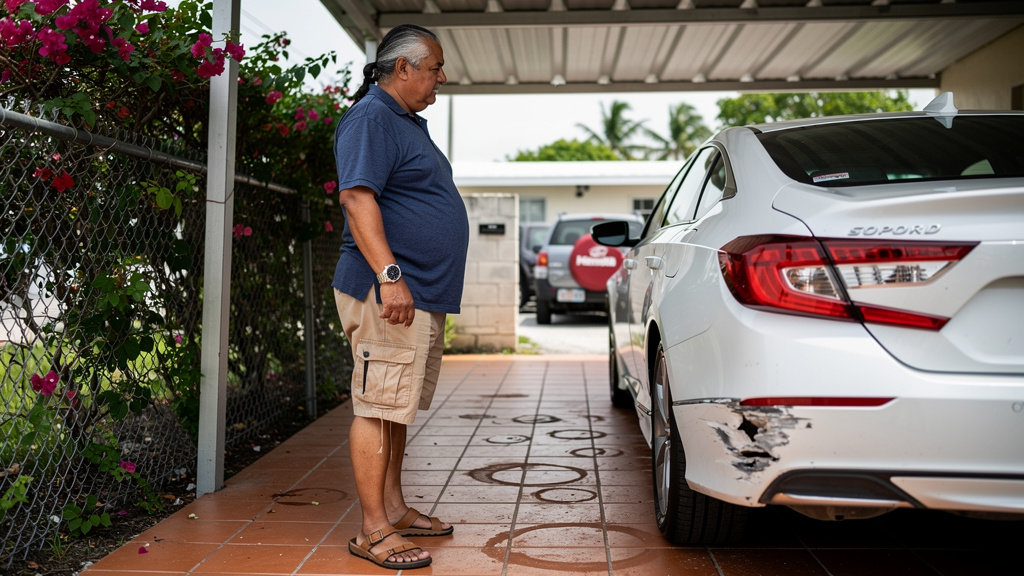
When an uninsured driver hits you in Miami-Dade, your bills can be paid from up to five sources, in this order: your own PIP coverage, your uninsured motorist (UM) coverage, a household relative’s UM policy, claims against other responsible parties like the vehicle’s owner or employer, and finally a lawsuit against the driver. The at-fault driver often has no insurance or assets to pay you directly, Florida does not require bodily injury liability coverage, so even a legally registered driver may carry zero coverage for your injuries.
Why does this keep happening, why do so many Miami-Dade drivers have no coverage for my injuries?
Florida law only requires drivers to carry $10,000 in personal injury protection (PIP) and $10,000 in property damage liability [Fla. Stat. § 324.022]. Bodily injury liability, the coverage that would pay your medical bills if someone else caused the crash, is optional. That means a driver who rear-ends you on Okeechobee Road near Hialeah can be fully compliant with state law yet offer you nothing for your injuries. Florida is often reported to have one of the higher rates of uninsured drivers in the country, and Hialeah has one of the higher uninsured motorist rates in Miami-Dade. Many victims wonder whether they can pursue the other driver or the car’s owner for their damages. The instinct is right, but the answer depends on whose insurance policies apply, not just the at-fault driver’s.
What pays first: how does my own PIP coverage work after a crash with an uninsured driver?
Your own PIP coverage always pays first, regardless of who caused the crash [Fla. Stat. § 627.736(1)]. If you have no policy, PIP may come from a resident relative’s auto insurance. Only if neither exists would a pedestrian or cyclist look to the striking vehicle’s PIP, but that never applies if you were driving your own car. You must get initial treatment within 14 days of the crash, or PIP pays nothing. A visit to Hialeah Hospital or Palmetto General counts. If a qualified provider diagnoses an emergency medical condition, PIP covers 80 percent of reasonable medical bills and 60 percent of lost wages, up to $10,000 total. Without that diagnosis, the limit drops to $2,500, which can leave you with surprise bills from follow-up care. PIP does not cover pain and suffering, emotional distress, or loss of enjoyment of life. And no, UM coverage does not fix your car, that’s collision coverage, which is separate.
What is UM coverage, do I have it, and how much can it actually pay?
Uninsured motorist (UM) coverage pays what the at-fault driver would have owed you if they had carried bodily injury liability insurance [Fla. Stat. § 627.727]. It is optional in Florida and must be rejected in writing, if you never signed a rejection form, you likely have it. Check your policy declarations page; do not rely on memory. UM can also function as underinsured motorist coverage if the at-fault driver’s limits are too low to cover your damages. If you live with relatives who have UM on their policies, you may be able to claim under those too. Stacking, adding together UM limits from multiple vehicles in the same household, is allowed unless you waived it in writing [Fla. Stat. § 627.727(9)]. But UM still requires proof that the other driver was at fault, and to recover pain and suffering through UM your injury must meet the same threshold: a permanent injury, significant and permanent scarring or disfigurement, or significant and permanent loss of an important bodily function [Fla. Stat. § 627.737(2)]. For example, someone struck on W 68th Street with $100,000 in stacked UM could recover up to that amount for medical costs and lost income PIP does not cover, depending on the damages proven, and for pain and suffering if the injury meets the threshold.
Who else might be responsible besides the driver who hit me?
Even if the driver has no insurance, others may share legal responsibility. First, under Florida’s dangerous instrumentality doctrine, the vehicle’s owner can be held responsible when someone drives the car with the owner’s permission, subject to the limits in [Fla. Stat. § 324.021(9)(b)]. Second, if the driver was working, like a delivery driver causing a crash on the Palmetto Expressway, their employer may be liable under respondeat superior, and commercial policies often carry real limits. Third, under Florida’s dram shop law [Fla. Stat. § 768.125], a bar or vendor may be liable only if they served alcohol to a minor or to someone they knew was habitually addicted. These claims matter because they open doors to insurance with actual paying power. But evidence fades fast: surveillance footage disappears, employment records get overwritten, witness memories blur. That is why identifying third parties early, before talking to insurers, is critical.
Is it worth suing the uninsured driver directly?
Winning a judgment and collecting money are not the same thing. Many uninsured drivers have no assets, wages, or property that can satisfy a court award. Still, a lawsuit may be worth pursuing if the driver was acting for an employer, if the vehicle owner is a separate party with resources, or if another liable entity (like a business liable under Florida’s dram shop law) is involved. You cannot sue for pain and suffering unless your injury meets Florida’s serious injury threshold [Fla. Stat. § 627.737(2)]. Fault still matters: Florida uses modified comparative negligence, so your recovery is reduced by your share of blame and blocked only if you are more than 50 percent at fault [Fla. Stat. § 768.81(6)]. The deadline to file is two years from the crash date for injuries on or after March 24, 2023 [Fla. Stat. § 95.11]. Do not assume suing is pointless, but do not expect quick cash from someone who has nothing.
What deadlines do I have to hit, and what happens if I miss one?
Three deadlines control your case. First, a crash report must be filed. Generally, Hialeah Police handle crashes on Hialeah city streets like W 49th or W 68th, Florida Highway Patrol handles expressways like the Palmetto (SR 826), and the Miami-Dade Sheriff’s Office handles unincorporated areas, though the responding agency can vary; when in doubt, call 911. Reports are confidential for 60 days except to the parties, their insurers and attorneys, and can be requested through the Florida Crash Portal. Second, you must begin medical treatment within 14 days or lose all PIP benefits [Fla. Stat. § 627.736(1)(a)]. Third, you have two years to file a lawsuit for negligence [Fla. Stat. § 95.11]. Missing the 14-day treatment window or the two-year filing deadline can cost you benefits or shut down your claim entirely. Also, your own insurer may ask for a recorded statement soon after the crash. Do not give one before speaking with a lawyer, UM claims are adversarial, and your words can be used to reduce what you recover.
Frequently asked questions
Does Florida PIP cover me if the driver who hit me had no insurance at all?
Yes. PIP is no-fault coverage, it pays from your own policy regardless of who caused the crash or whether the other driver had insurance.
What if I don’t have UM coverage on my policy, is there any other UM policy I can claim on?
Possibly. If you live with a relative who has UM coverage on their auto policy, you may be eligible to make a claim under their policy, depending on the terms and household status.
Can I get paid for pain and suffering if the driver who hit me was uninsured?
Only if your injury qualifies as permanent, causes significant and permanent scarring or disfigurement, or results in significant and permanent loss of an important bodily function [Fla. Stat. § 627.737(2)]. That rule applies whether you sue the driver or make a UM claim.
Which police agency do I call after a crash in Hialeah or Miami-Dade?
Call 911 after an injury crash. Generally, Hialeah Police handle crashes within Hialeah city limits, Florida Highway Patrol handles expressways like the Palmetto, and the Miami-Dade Sheriff’s Office handles unincorporated areas, but the responding agency can vary by location.
Is it worth suing an uninsured driver in Florida if they have no money?
Usually not for collection purposes, but if the driver was working, owned the car jointly, or another party shares blame, a lawsuit may uncover deeper pockets. Always investigate assets before deciding.
Related reading: The driver who hit me in Hialeah has no insurance. What now? · I was in a car accident in Hialeah. What do I do now? · Stacked vs. non-stacked uninsured motorist coverage in Florida: what the checkbox on your policy actually means · The 14-day PIP rule in Florida: what happens if you wait to see a doctor after a Hialeah car accident
Hurt in an accident in Hialeah? Call Wolfson & Leon at 305-965-3766 for a free consultation. We speak Spanish, and there is no fee unless we win.
Key facts
- Florida requires only $10,000 in PIP and $10,000 in property damage liability; bodily injury liability coverage is not required, meaning an 'insured' driver can still have nothing to pay your injury claim. Source: Fla. Stat. § 324.022
- PIP pays 80 percent of reasonable medical bills and 60 percent of lost wages up to a $10,000 combined limit when a qualified provider finds an emergency medical condition; the limit drops to $2,500 without that finding. Initial treatment must happen within 14 days of the crash or PIP pays nothing. Source: Fla. Stat. § 627.736(1)(a)
- UM coverage is optional in Florida and must be rejected in writing; if it was purchased, it can pay injury damages the at-fault uninsured driver would have owed you, up to the limit you bought. Source: Fla. Stat. § 627.727
- To recover pain and suffering damages from an at-fault driver, or through a UM claim measured against that driver, the injured person must have a permanent injury, significant and permanent scarring or disfigurement, or significant and permanent loss of an important bodily function. Source: Fla. Stat. § 627.737(2)
- The deadline to file a negligence lawsuit for injuries from a crash on or after March 24, 2023 is two years from the date of the crash. Source: Fla. Stat. § 95.11
Frequently asked questions
Does Florida PIP cover me if the driver who hit me had no insurance at all?
Yes. PIP pays regardless of who caused the crash, that is what 'no-fault' means. Your own PIP policy pays 80 percent of reasonable medical bills and 60 percent of lost wages up to $10,000 (or $2,500 if no emergency medical condition is found) whether or not the other driver had any insurance. The only condition you must meet is starting treatment within 14 days of the crash. Fla. Stat. § 627.736(1)(a).
What if I don't have UM coverage on my policy, is there any other UM policy I can claim on?
Possibly. Under Fla. Stat. § 627.727, UM coverage that belongs to a relative who lives in your household may cover you even if the policy is not in your name. Before assuming you have no UM coverage, check the declarations pages for every auto policy in your household. If a resident relative's policy includes UM coverage and you were injured in the crash, that policy may be available to you.
Can I get paid for pain and suffering if the driver who hit me was uninsured?
PIP never pays for pain and suffering under any circumstances. To recover pain and suffering from the at-fault driver, or through a UM claim measured against that driver, your injury must meet Florida's serious injury threshold: a permanent injury, significant and permanent scarring or disfigurement, or significant and permanent loss of an important bodily function. Fla. Stat. § 627.737(2). If your injuries meet that threshold, your UM coverage (if purchased) is generally the most realistic source of compensation for non-economic damages.
Which police agency do I call after a crash in Hialeah or Miami-Dade?
The reporting agency generally depends on where the crash happened. Crashes on city streets in Hialeah, such as W 49th St or W 68th St, are generally handled by the Hialeah Police Department. Crashes in unincorporated Miami-Dade areas are generally handled by the Miami-Dade Sheriff's Office, and crashes on expressways including the Palmetto (SR 826) are generally handled by Florida Highway Patrol. After any injury crash, call 911 immediately and request a report, you will need it for your insurance claim. Reports can be accessed through the Florida Crash Portal.
Is it worth suing an uninsured driver in Florida if they have no money?
Winning a lawsuit and collecting money are two entirely different problems. A court judgment in your favor does not automatically put money in your pocket if the driver has no assets, many uninsured drivers lack wages to garnish or property to lien. The better question is whether anyone else shares responsibility: the vehicle's owner, the driver's employer, or a business that served the driver alcohol. A lawyer can investigate those angles before you decide whether a direct lawsuit makes financial sense.
This article is general information about Florida law, not legal advice, and reading it does not create an attorney-client relationship. Every case is different and past results do not guarantee a similar outcome. For advice about your situation, call Wolfson & Leon at 305-965-3766 for a free consultation.
Also available in: Versión en español
 Personal injury
I Fell at Work in Hialeah: Do I Need Workers' Comp or a Personal Injury Lawyer?
Workers' compensation almost always covers a fall at work in Florida and is usually your only legal claim against your own employer. But if someone…
 Personal injury
Hit by a Driver With No Insurance in Florida: What Are Your Options?
Your own insurance is almost always the first place to look. Florida requires your PIP coverage to pay 80 percent of your reasonable medical bills…
 Personal injury
How Much Does an Accident Lawyer Charge in Hialeah, Florida?
Personal injury lawyers in Hialeah charge nothing upfront and no attorney fee at all unless they recover money for you. The fee is a percentage of…