
What to Bring to a Free Slip-and-Fall Consultation in Hialeah
You do not need every document before calling, bring what you have, and an attorney can identify what still needs to be gathered. The most useful items are photos of the hazard, the shoes and clothes you wore, any incident report, medical records or discharge papers, and insurance cards. The two-year filing clock under Fla. Stat. § 95.11 is already running, so calling sooner protects your right to sue even if your file is incomplete.
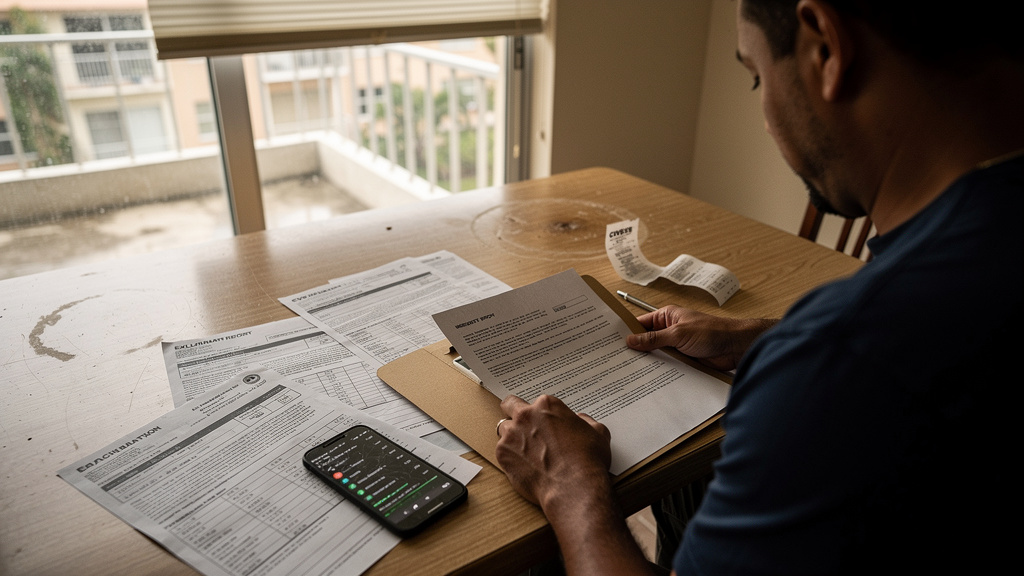
You do not need every document before calling, bring what you have, and an attorney can identify what still needs to be gathered. The most useful items are photos of the hazard, the shoes and clothes you wore, any incident report, medical records or discharge papers, and insurance cards. The two-year filing clock under Fla. Stat. § 95.11 is already running, so calling sooner protects your right to sue even if your file is incomplete.
What will the lawyer need to know about what happened?
The attorney will ask for precise details because Florida law requires proof that the business knew or should have known about the dangerous condition before your fall. They will want the exact location (store name, address, aisle number, or outdoor spot like a sidewalk near Okeechobee Road), the date and time, and a clear description of the hazard: wet floor, torn carpet, cracked tile, poor lighting, missing handrail, or lack of warning signs. They will also ask how long the hazard may have been there, whether employees were nearby, whether anyone was told, and if an incident report was filed. These facts connect directly to the “notice” requirement under Fla. Stat. § 768.0755. The lawyer will also ask if you made any statements, to a manager, an adjuster, or on social media, and whether you received calls or letters from the store or its insurer. Those details shape early legal strategy.
What documents and items should I bring with me?
Bring these items in this order:
- Photos or video of the hazard, close-ups showing the spill, crack, or object, plus wide shots showing lighting, warning signs (or lack thereof), and surrounding area.
- Incident report details, even if you don’t have a copy, note the date, time, store location, and name of the employee who took it.
- The shoes you wore, unwashed and exactly as they were after the fall; residue or sole wear may counter claims of improper footwear.
- The clothing you wore, especially if stained, torn, or damp, as it can support your account of the fall.
- Medical records, ER discharge papers, imaging reports (X-ray, MRI), follow-up notes, and prescriptions.
- Bills and receipts, out-of-pocket costs for meds, crutches, transportation, or co-pays.
- Insurance cards and EOBs, health insurance info and any explanation-of-benefits showing payments or denials.
- Written communications, emails, texts, letters, or settlement offers from the store, manager, or insurer.
- Witness contact info, names and phone numbers of anyone who saw the fall or the hazard beforehand.
A store receipt or parking ticket from that day helps confirm you were there.
What questions will the lawyer ask about notice and shared fault?
The lawyer must evaluate two legal hurdles: whether the business had “notice” of the hazard under Fla. Stat. § 768.0755, and whether you share any fault under Fla. Stat. § 768.81. On notice, they’ll ask if footprints ran through a spill, if liquid looked dried at the edges, or if the area was near a soda fountain or entrance where spills happen often. They’ll look for gaps in cleaning logs or missing inspections. On shared fault, they’ll ask if you were on your phone, wearing flip-flops, familiar with the store layout, or walked past warning cones. These questions aren’t blame, they’re about anticipating the defense. If you’re found more than 50 percent at fault, you recover nothing. If 50 percent or less, your recovery is reduced by that percentage.
How will the lawyer explain the contingency fee and case costs?
You pay no upfront fee. The attorney’s fee comes only if you get a settlement or verdict, as a percentage of what you recover. That percentage may be lower if the case settles early and higher if it goes to trial, but the exact numbers will be in a written agreement you review before signing. Separate from the fee are “case costs”: expenses like medical record fees under Fla. Stat. § 456.057, court filing fees, expert reports, or investigator charges. Ask three things before signing: (1) What is the fee percentage at each stage? (2) Who pays the costs up front, and are they taken from your share before or after the attorney’s cut? (3) Do you owe costs if the case loses? The consultation is free, and you owe nothing unless there’s a recovery.
What happens after the consultation if I hire the firm?
If you sign a retainer, Wolfson & Leon acts immediately. First, we send a preservation letter to the property owner and management company demanding they save surveillance footage, cleaning logs, incident reports, maintenance records, and employee statements. Footage can be erased within days, so timing matters. Second, we notify the property’s insurer that all communication must go through us, you stop talking to adjusters. Third, we request your full medical records; you’ll sign authorizations as required by Florida law. Fourth, we may send an investigator to photograph the scene before repairs or seasonal changes alter it. Fifth, we notify your health insurer or other lienholders. Remember: under Fla. Stat. § 95.11, you have two years to file suit for falls on or after March 24, 2023. Early evidence, before logs vanish or witnesses move, builds real leverage.
What if I don’t have everything, can I still call?
Yes. Missing documents are not a reason to delay. We can get records, send preservation letters, and start an investigation, but only after you call. What you cannot get back is time. Surveillance may be gone in days; witnesses forget; insurers gather their own evidence. At Wolfson & Leon, we offer free consultations in our Hialeah office at 1840 W 49th St #734, at your home, or even in the hospital if you’re still recovering. We speak Spanish and English. If you’re asking “how soon do you have to document the situation and contact a slip-and-fall lawyer,” the answer is: as soon as possible, and a phone call starts that process with no cost to you.
Frequently asked questions
Do I need to have the incident report before I call a slip-and-fall lawyer?
No. Even if you don’t have a copy, tell the lawyer when and where it was made. We can request it directly from the business once hired.
What if I already gave a recorded statement to the property owner’s insurance company?
Tell your lawyer exactly what you said. It doesn’t necessarily ruin your case, but we need to know what was recorded so we can address it early.
Can the property owner’s insurance company argue the fall was my fault?
Yes. Under Florida law, they can claim you were distracted, wearing unsafe shoes, or ignored warnings. That’s why your lawyer asks those questions upfront, to prepare.
How does the lawyer get my medical records, and do I have to do that myself?
You’ll sign a medical authorization under Florida law, and we handle the requests. You don’t need to collect them yourself.
What is the deadline to file a slip-and-fall lawsuit in Florida?
For falls on or after March 24, 2023, you have two years from the date of injury under Fla. Stat. § 95.11.
Related reading: I fell in a store in Hialeah. Can I make a claim? · The 14-day PIP rule in Florida: what happens if you wait to see a doctor after a Hialeah car accident · How long do I have to file an injury lawsuit in Florida? The two-year rule after HB 837
Hurt in an accident in Hialeah? Call Wolfson & Leon at 305-965-3766 for a free consultation. We speak Spanish, and there is no fee unless we win.
Key facts
- Florida's statute of limitations for most personal injury claims, including slip and fall, is two years from the date of injury for incidents occurring on or after March 24, 2023. Source: Fla. Stat. § 95.11
- In a business slip-and-fall case, the injured person must prove the business had actual or constructive knowledge of the dangerous condition and failed to correct it. Source: Fla. Stat. § 768.0755
- Under Florida's modified comparative negligence rule, a person who is more than 50 percent at fault for their own fall is barred from recovering any damages; those found 50 percent or less at fault have their recovery reduced by their share of fault. Source: Fla. Stat. § 768.81
- A lawyer who requests your medical records from a Florida provider must comply with state rules governing the release of those records. Source: Fla. Stat. § 456.057
- Surveillance footage at retail and commercial properties may be overwritten within days; preservation letters should be sent promptly after hiring an attorney. Source: Wolfson & Leon
Frequently asked questions
Do I need to have the incident report before I call a slip-and-fall lawyer?
No. If you do not have a copy, bring the date, location, time, and the name of any employee who was involved. Your attorney can send a formal request to the property owner or business for the report, as well as any internal investigation records. The incident report is helpful, but it is not a condition for scheduling a consultation.
What if I already gave a recorded statement to the property owner's insurance company?
Tell the attorney immediately. Recorded statements can be used by the insurer to challenge your account of the fall or argue that you admitted partial fault. The attorney needs to know exactly what was said and to whom. Going forward, all communication with the insurer goes through the law firm, do not give any additional statements without speaking to your lawyer first.
Can the property owner's insurance company argue the fall was my fault?
Yes, and this is one of the first things an attorney will assess. Florida follows a modified comparative negligence rule under Fla. Stat. § 768.81. If you are found more than 50 percent responsible for the fall, you cannot recover damages. If you are 50 percent or less at fault, your compensation is reduced by your share of fault. Defense arguments often involve footwear, phone distraction, visible warning signs, or familiarity with the location, your attorney prepares for these before the insurer raises them.
How does the lawyer get my medical records, and do I have to do that myself?
You will sign medical authorization forms that allow the firm to request records directly from your providers. The release of medical records by Florida healthcare providers is governed by Fla. Stat. § 456.057. Your attorney handles the requests, follows up on missing records, and reviews everything to document the connection between the fall and your injuries. You do not need to gather records yourself before the consultation.
What is the deadline to file a slip-and-fall lawsuit in Florida?
For injuries that occurred on or after March 24, 2023, the statute of limitations is two years from the date of the fall under Fla. Stat. § 95.11. Missing this deadline generally means losing the right to sue entirely. Many cases settle before a lawsuit is filed, but the investigation, preservation letters, and evidence gathering must begin well before the deadline, which is why calling a lawyer as soon as possible matters even if treatment is still ongoing.
This article is general information about Florida law, not legal advice, and reading it does not create an attorney-client relationship. Every case is different and past results do not guarantee a similar outcome. For advice about your situation, call Wolfson & Leon at 305-965-3766 for a free consultation.
Also available in: Versión en español
 Slip and fall
 I Just Slipped in a Grocery Store: What to Do Before You Leave
The next 60 minutes inside that store will determine whether your case can be proven or lost. Before you walk out, you need to report the fall to a…
 Slip and fall
 How to Prove a Hialeah Grocery Store Should Have Known About the Spill
Under Fla. Stat. § 768.0755, you do not need proof that an employee saw the spill, you need circumstantial evidence that the hazard sat on the floor…
 Slip and fall
 Partly at Fault for Your Slip and Fall in Florida? You May Still Recover
Yes. Under Florida's modified comparative negligence rule, you can still recover damages from a property owner even if you were partly at fault for…