
What Florida Statute 768.0755 Requires You to Prove After a Grocery Store Slip
Under Fla. Stat. § 768.0755, slipping on something in a grocery store is not enough on its own, you must prove the store had actual or constructive knowledge of the dangerous condition and should have cleaned it up. Constructive knowledge can be shown two ways: the hazard sat there long enough that a careful store should have found it, or the same type of hazard happened so regularly that the store could have predicted it. Without one of those showings, the store generally owes you nothing even if you were seriously hurt.
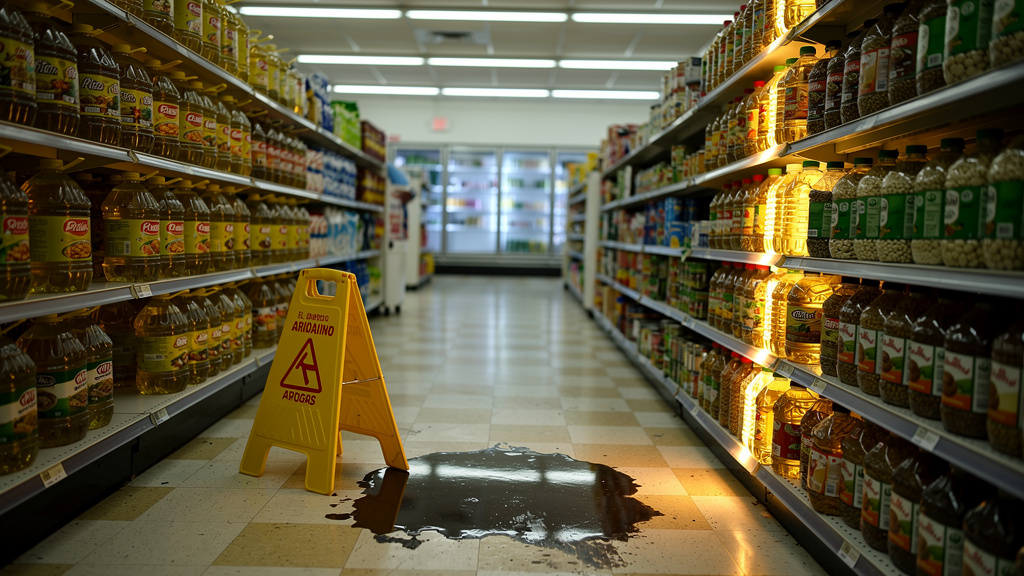
Slipping in a grocery store does not automatically mean the store is responsible under Florida law. Under Fla. Stat. § 768.0755, you must prove the store either knew about the dangerous substance on the floor or should have known about it and failed to clean it up. This means showing actual knowledge, an employee saw or created the hazard, or constructive knowledge, which can be shown in two ways: the spill sat there long enough that a reasonable store would have discovered it, or the same type of hazard happened so often that the store could have predicted it. Without one of those showings, the store generally owes you nothing even if you were seriously hurt.
What does ‘transitory foreign substance’ actually mean under § 768.0755?
Fla. Stat. § 768.0755 applies only to a “transitory foreign substance”, a temporary, movable hazard that does not belong on the floor. This includes things like water from produce misters, meltwater from seafood ice beds, leaking freezer cases, or rain tracked in during Miami-Dade’s summer thunderstorms. The key word is transitory: it must be something out of place and short-lived, not a permanent part of the building. Hazards such as broken tiles, loose floor mats, or fallen displays may fall outside this statute and be governed instead by common-law premises liability, depending on the facts. Section 768.0755(2) makes clear it adds a proof requirement but does not eliminate other duties the store may owe under general negligence law.
What is actual knowledge and how do you prove the store knew?
Actual knowledge means a store employee saw the spill, was told about it, or caused it through their own actions. In Hialeah grocery stores, this could include a produce clerk who runs misters and watches puddles form but places no warning sign, a seafood worker who knows meltwater pools daily under the ice bed, or a manager who received a customer complaint about a leaking freezer before someone fell. If you can show actual knowledge, you do not need to prove how long the substance was there. Many people assume a puddle alone proves negligence, but Florida law focuses on whether the store knew or should have known, not just that a spill existed.
How do you prove the store should have known, the ‘long enough’ test under § 768.0755(1)(a)?
Under Fla. Stat. § 768.0755(1)(a), constructive knowledge can be shown if the substance was on the floor long enough that a careful store should have found it. But courts require more than just the presence of liquid: you need “plus factors” showing it had been there awhile. Examples include shopping cart tracks through the spill, footprints, discoloration from dirt, dried edges with a wet center, or thawed food indicating time passed. In Hialeah stores, this might be meltwater with multiple boot prints, a freezer leak spread across several tiles with dry edges, or a mister puddle crossed by cart wheels. Surveillance video is critical here, but stores can overwrite footage within days, so acting fast to send a preservation letter matters. Sweep logs showing no inspections before your fall also help support this claim.
How do you prove the store should have known, the ‘regular and foreseeable’ test under § 768.0755(1)?
The second path to constructive knowledge under Fla. Stat. § 768.0755(1) does not require proving how long the specific spill sat on the day you fell. Instead, you show the same type of hazard occurred regularly and was therefore foreseeable. In Hialeah, this could mean puddles forming predictably under timed produce misters, rainwater tracked daily through entrances during summer storms, or a known leaking freezer seam. Evidence includes prior incident reports from the same spot, maintenance requests for the same equipment, or internal logs noting recurring problems. Once a lawsuit is filed in Miami-Dade Circuit Court, these records can often be obtained through discovery. This route shifts focus from timing on one day to patterns the store ignored over time.
How do comparative fault and the two-year deadline affect your grocery store claim?
Florida uses modified comparative negligence under Fla. Stat. § 768.81. If a jury finds you 30 percent at fault, for example, because you were looking at your phone, your recovery is reduced by 30 percent. But if you are found more than 50 percent at fault, you recover nothing. Insurers often argue you ignored a wet-floor sign or weren’t paying attention to push your fault above that threshold, especially after the 2023 tort reform. Separately, under Fla. Stat. § 95.11, you have two years from the date of injury (for incidents on or after March 24, 2023) to file a lawsuit in Miami-Dade Circuit Court. Waiting too long risks losing your claim forever, and waiting even a few days can mean losing surveillance video or other key evidence.
Where can I read the plain-English overview of suing a Florida supermarket?
This article explained what Fla. Stat. § 768.0755 requires you to prove, actual or constructive knowledge of a transitory foreign substance. For a broader look at whether your case has merit, including how injuries, evidence, and insurance play into a possible lawsuit, read our companion piece: Slipped in a Florida supermarket: can you sue the store?.
Frequently asked questions
Does a puddle on the grocery store floor automatically mean the store is negligent?
No. Under Florida law, a puddle alone is not enough. You must prove the store knew or should have known about the substance and failed to clean it up or warn customers.
What is a ‘plus factor’ and why do I need one to prove my slip-and-fall case?
A plus factor is circumstantial evidence, like footprints, discoloration, or dried edges, that shows the spill was not fresh. When you rely on how long the spill was there, courts generally require it because the mere presence of liquid does not prove the store had enough time to discover and fix the hazard.
Can I still recover if the grocery store says I should have watched where you were walking?
Yes, as long as a jury does not find you more than 50 percent at fault. Your recovery will be reduced by your share of fault, but you are not barred unless your responsibility exceeds half.
How long do I have to file a lawsuit after slipping in a Hialeah grocery store?
For injuries on or after March 24, 2023, you have two years from the date of the incident to file a lawsuit in Miami-Dade Circuit Court. Missing this deadline means losing your right to compensation permanently.
Does it matter that the grocery store put out a wet-floor sign near where I fell?
It can matter, but not always. A sign may show the store took reasonable steps, but if the sign was poorly placed, hidden, or unrelated to the actual spill, it may not protect them. The key is whether the store acted reasonably under the circumstances.
Related reading: The 14-day PIP rule in Florida: what happens if you wait to see a doctor after a Hialeah car accident · How long do I have to file an injury lawsuit in Florida? The two-year rule after HB 837 · The driver who hit me in Hialeah has no insurance. What now?
Hurt in an accident in Hialeah? Call Wolfson & Leon at (305) 285-7071 for a free consultation. We speak Spanish, and there is no fee unless we win.
Key facts
- Fla. Stat. § 768.0755 requires an injured person to prove the business had actual or constructive knowledge of a transitory foreign substance and should have remedied it. Source: Fla. Stat. § 768.0755
- Constructive knowledge through duration is codified in Fla. Stat. § 768.0755(1)(a): the condition must have existed long enough that, in the exercise of ordinary care, the business should have known of it. Source: Fla. Stat. § 768.0755(1)(a)
- A second path to constructive knowledge under Fla. Stat. § 768.0755(1) requires showing the condition occurred with regularity and was therefore foreseeable, no proof of exact dwell time is needed for this route. Source: Fla. Stat. § 768.0755(1)
- Under Fla. Stat. § 768.81, recovery is reduced by the injured person's share of fault and is barred only if they are found more than 50 percent at fault. Source: Fla. Stat. § 768.81
- For injuries on or after March 24, 2023, a negligence lawsuit must be filed within two years of the incident or the right to any compensation is permanently lost. Source: Fla. Stat. § 95.11
Frequently asked questions
Does a puddle on the grocery store floor automatically mean the store is negligent?
No. Under Fla. Stat. § 768.0755, the presence of a substance on the floor is not enough on its own. You must also show the store had actual or constructive knowledge of the hazard and failed to address it. A spill that occurred moments before your fall, with no prior notice to any employee, generally does not meet that standard without additional evidence of the store's awareness.
What is a 'plus factor' and why do I need one to prove my slip-and-fall case?
Florida courts require more than proof that a substance was present. A plus factor is circumstantial evidence showing the hazard was not freshly created, for example, shopping cart tracks through a puddle, footprints in the spill, discolored or drying liquid, or melted ice indicating time had passed. Without a plus factor, a court may dismiss the case before it reaches a jury because the injured person has not met the constructive-knowledge burden under Fla. Stat. § 768.0755(1)(a).
Can I still recover if the grocery store says I should have watched where you were walking?
Possibly, yes. Florida uses modified comparative fault under Fla. Stat. § 768.81, which reduces your compensation by your percentage of fault but does not bar recovery unless you are found more than 50 percent responsible. If a jury determines you were 25 percent at fault for not watching your step, your damages are reduced by 25 percent, but you can still collect the remaining 75 percent. Store insurers commonly argue distraction or failure to avoid a visible hazard to push your fault share higher.
How long do I have to file a lawsuit after slipping in a Hialeah grocery store?
For injuries on or after March 24, 2023, Fla. Stat. § 95.11 gives you two years from the date of the fall to file a negligence lawsuit. Missing that deadline permanently bars any recovery. As a practical matter, acting within days matters more than acting within months, because surveillance footage can be overwritten within days and is often the strongest evidence of how long a spill existed before your fall.
Does it matter that the grocery store put out a wet-floor sign near where I fell?
A wet-floor sign does not automatically end your claim. The sign may help the store argue it exercised reasonable care, but the key questions remain whether the hazard was visible and avoidable and whether the sign was properly placed. Under Fla. Stat. § 768.81's comparative fault framework, a jury could find the store still bears some responsibility even with a sign present, or could reduce your recovery if it finds you ignored an obvious warning. The placement, visibility, and adequacy of the sign are all facts in dispute.
This article is general information about Florida law, not legal advice, and reading it does not create an attorney-client relationship. Every case is different and past results do not guarantee a similar outcome. For advice about your situation, call Wolfson & Leon at (305) 285-7071 for a free consultation.
Also available in: Versión en español
 Slip and fall
 Slipped in a Florida Supermarket? You Can Sue If the Store Knew
Yes, you can sue a Florida supermarket if the store knew about the hazard or should have known about it and failed to clean it up or warn you.…
 Slip and fall
 Where to Find a Slip and Fall Lawyer Near You in Hialeah
Wolfson & Leon has a Hialeah office at 1840 W 49th St, Suite 734, where Spanish- and English-speaking attorneys offer free consultations with no fee…
 Slip and fall
 I Fell at Work in Hialeah: Do I Need a Workers' Comp or Personal Injury Lawyer?
Workers' comp almost always covers a fall at work in Florida, and it is usually your only claim against your own employer. But if someone other than…