
I Just Slipped in a Grocery Store: What to Do Before You Leave
The next 60 minutes inside that store will determine whether your case can be proven or lost. Before you walk out, you need to report the fall to a manager, photograph everything on the floor, collect witness information, and say nothing that sounds like an apology or a guess about fault. Under Florida law, the burden is on you to prove the store knew or should have known about the hazard, so the evidence you gather right now is the foundation of everything that follows.
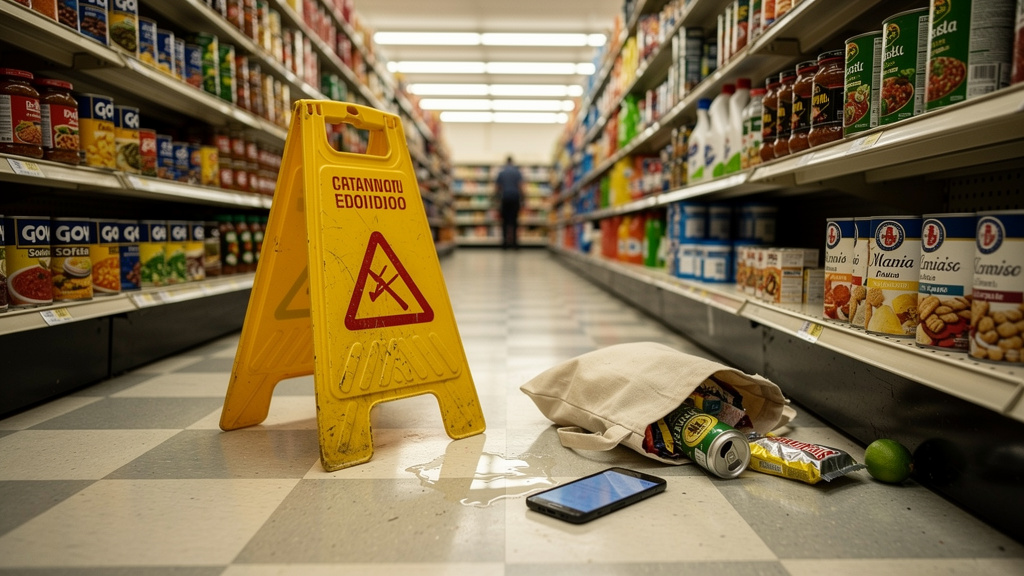
The next 60 minutes inside that store will determine whether your case can be proven or lost. Before you walk out, you need to report the fall to a manager, photograph everything on the floor, collect witness information, and say nothing that sounds like an apology or a guess about fault. Under Florida law, the burden is on you to prove the store knew or should have known about the hazard, so the evidence you gather right now is the foundation of everything that follows.
Are you hurt badly enough to call 911 right now?
If you hit your head, lost consciousness even for a few seconds, cannot stand or bear weight, feel dizzy or nauseated, see severe bleeding, or suspect a broken bone, ask someone to call 911 immediately. Adrenaline hides pain, and what feels like a simple bruise could be a fracture, torn ligament, or concussion. The CDC advises seeking urgent care for any suspected head injury, including dizziness, confusion, nausea, or brief loss of consciousness. If you can stand safely, stay at the scene and follow the steps below. Do not drive yourself if you feel unwell. The nearest emergency rooms are Hialeah Hospital and Palmetto General.
What photos do I need to take before anyone cleans up?
Take these five photos before it’s mopped. First, snap a close-up of the substance or hazard on the floor. Second, take a wide shot showing the entire aisle, lighting conditions, and the absence of wet-floor cones or warning signs. Third, photograph any track marks, footprints, cart wheels, or dried edges around the spill; these show the condition existed long enough for the store to have discovered it, which supports constructive knowledge under Florida Statute § 768.0755. Fourth, photograph your shoes exactly as worn, soles facing up; do not wash or change them. Fifth, capture every visible security camera in or near the aisle, note its angle, brand, and location. These details are critical for a later preservation request.
How do I report the fall to the store and what do I say?
Find an employee and ask to speak to a manager, not a cashier or stocker, and insist on a written incident report before you leave. Give only facts: your location (e.g., “aisle 7 near produce”), approximate time, what you saw on the floor, how you fell, and every symptom you feel now (even mild pain counts). Do not estimate how long the spill had been there unless you actually watched it happen. Do not say “I’m fine” or “It’s okay,” and do not apologize. Ask for a copy of the report. Stores are not always required to give you a copy on the spot. If they refuse, write down four things before leaving: the incident or reference number, the manager’s full name and title, the store address, and the exact time the report was filed. Remember, this report proves the store was notified, it does not prove who was at fault.
How do I get witness names and ask the store to save the video?
Ask every person who saw the fall or arrived right after, including employees, for their full name and phone number. Employees are especially valuable because they may know cleaning logs or prior incidents in that spot. Then tell the manager, clearly and aloud: “I am requesting that you preserve all surveillance footage covering this area, starting at least one hour before my fall and continuing through any cleanup.” Mention the specific cameras you photographed. Many stores overwrite footage automatically, sometimes within about 30 days, so a same-day request creates a record that the store was on notice. If they later delete the video, a Florida jury may be told to infer it would have helped your case.
What should I absolutely not say or sign before I walk out?
Do not:
- Give a recorded statement to a store representative or insurance adjuster.
- Sign any document without reading it fully, especially anything labeled “release,” “authorization,” or “waiver.”
- Say “I’m fine,” “It was my fault,” “I wasn’t looking,” or anything that sounds like you share blame.
Why. Under Florida Statute § 768.81, if a jury finds you more than 50 percent at fault, you recover nothing. Adjusters may ask questions that can lock in answers harming your claim under § 768.0755, like “How long do you think that spill was there?” You are not required to answer. And never sign a medical authorization or general release without an attorney’s review.
What do I do in the next hour after I leave the store?
First, get medical care the same day, even if pain seems minor. Delayed symptoms like swelling, stiffness, headache, or dizziness are common, and insurers argue gaps in treatment mean the injury wasn’t serious. Go to Hialeah Hospital or Palmetto General if needed, and keep every bill, receipt, and discharge paper. Second, call Wolfson & Leon at 305-965-3766. It is answered by a live person 24/7, and consultations are free at home or in the hospital. Third, before bedtime, write a dated note describing the floor, the fall, who responded, what was said, and when each symptom appeared. This becomes vital if memory fades.
Frequently asked questions
What if I already said “I’m fine” to the store manager, does that ruin my case?
No, but it makes your case harder. Later medical records and testimony can explain why you minimized your injuries at the time. Still, avoid saying it again.
Do I have to prove the store knew about the spill before I fell?
Yes, either through direct proof (someone saw it and told staff) or circumstantial proof (track marks, dried edges) showing it had been there long enough that the store should have found it. This is required by Florida Statute § 768.0755.
The store offered me a gift card or small payment on the spot. Should I take it?
Do not accept money, gift cards, or “goodwill” payments without legal advice. They may come with implied waivers or be used to argue your injury was minor.
What if there were no witnesses and the store says they have no record of my fall?
Your own evidence, photos, medical records, and a timely incident report, can still support your claim. That is why acting quickly matters.
How long do I have to file a lawsuit after a grocery store fall in Florida?
You generally have two years from the date of the fall to file a lawsuit, under Florida’s current statute of limitations for negligence claims.
Related reading: I fell in a store in Hialeah. Can I make a claim? · The 14-day PIP rule in Florida: what happens if you wait to see a doctor after a Hialeah car accident · How long do I have to file an injury lawsuit in Florida? The two-year rule after HB 837 · The driver who hit me in Hialeah has no insurance. What now?
Hurt in an accident in Hialeah? Call Wolfson & Leon at 305-965-3766 for a free consultation. We speak Spanish, and there is no fee unless we win.
Key facts
- Florida Statute § 768.0755 requires the injured person to prove the business had actual or constructive knowledge of the dangerous condition and should have taken action to remedy it. Source: Fla. Stat. § 768.0755
- Under Florida's modified comparative negligence rule, a claimant's recovery is reduced by their percentage of fault and is barred entirely only if they are found more than 50 percent at fault. Source: Fla. Stat. § 768.81
- Many stores overwrite surveillance footage automatically, sometimes within about 30 days, making a same-day or next-day preservation request important to keeping that evidence. Source: Wolfson & Leon
- Constructive knowledge of a hazard can be shown by circumstantial evidence, such as track marks through a spill, dried edges around liquid, or a recurring condition in the same area, proving the danger existed long enough that the store should have found it. Source: Fla. Stat. § 768.0755(1)
- Wolfson & Leon's phone number, 305-965-3766, is answered by a live person 24 hours a day, 7 days a week, and consultations are available at home or in the hospital at no charge. Source: Wolfson & Leon
Frequently asked questions
What if I already said 'I'm fine' to the store manager, does that ruin my case?
Not necessarily. A casual remark made immediately after a fall, while still in shock or running on adrenaline, is not the same as a signed statement or a recorded admission. What matters is that you seek medical care promptly, document your injuries, and do not repeat or expand on that comment in any later conversation with the store or its insurer. An attorney can advise you on how that statement fits into the full picture of your case.
Do I have to prove the store knew about the spill before I fell?
Yes. Under Florida Statute § 768.0755, you must show the store had actual or constructive knowledge of the dangerous condition. Actual knowledge means an employee saw or caused the spill. Constructive knowledge means the condition existed long enough, or happened regularly enough, that the store should have found and fixed it through reasonable inspection. Evidence like track marks through the spill, dried or dirty edges around the liquid, or a gap in the store's cleaning logs can all support constructive knowledge.
The store offered me a gift card or small payment on the spot. Should I take it?
Do not accept any payment or sign any document before consulting an attorney. A quick offer from a store employee or risk manager may come with a release that waives your right to pursue a claim for injuries that may not fully appear until hours or days later. Soft-tissue injuries, fractures, and head injuries frequently worsen after the initial adrenaline wears off. Call 305-965-3766 before agreeing to anything, Wolfson & Leon answers 24/7 at no charge.
What if there were no witnesses and the store says they have no record of my fall?
A fall can still be documented even without a contemporaneous store report. Your medical records from the same day, the photos you took at the scene, credit card or loyalty card records placing you in the store, and a written account you create that day are all forms of evidence. If the store later claims it has no incident report, that absence can itself become part of your case. An attorney can send a formal preservation letter and seek records through discovery.
How long do I have to file a lawsuit after a grocery store fall in Florida?
For incidents that occurred on or after March 24, 2023, Florida generally allows two years from the date of the fall to file a personal injury lawsuit under Fla. Stat. § 95.11. However, critical evidence, especially surveillance footage, disappears far sooner than that. Acting within days, not months, gives you the best chance of preserving what you need to prove your case.
This article is general information about Florida law, not legal advice, and reading it does not create an attorney-client relationship. Every case is different and past results do not guarantee a similar outcome. For advice about your situation, call Wolfson & Leon at 305-965-3766 for a free consultation.
Also available in: Versión en español
 Slip and fall
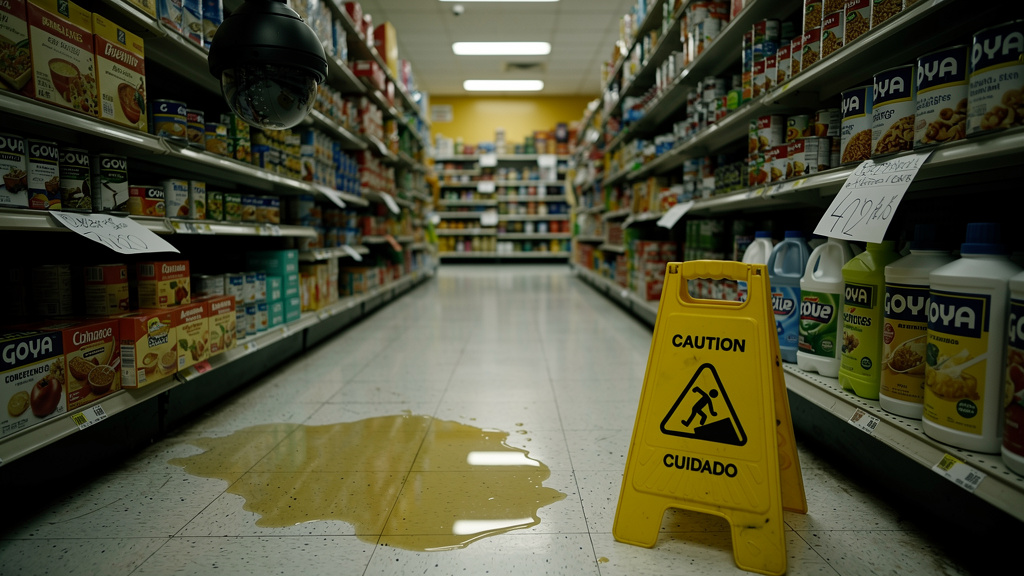
 How to Prove a Hialeah Grocery Store Should Have Known About the Spill
Under Fla. Stat. § 768.0755, you do not need proof that an employee saw the spill, you need circumstantial evidence that the hazard sat on the floor…
 Slip and fall
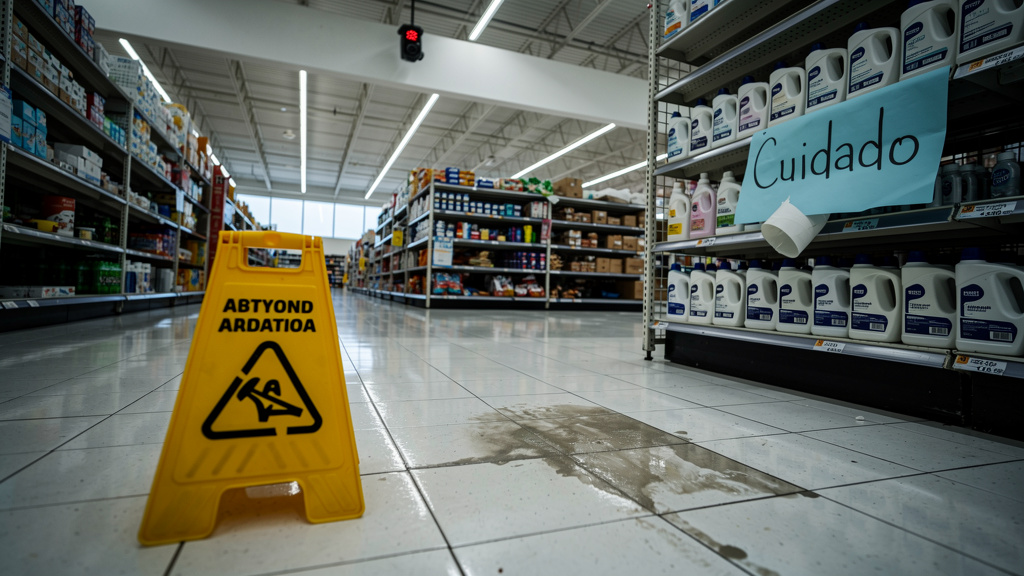
 Partly at Fault for Your Slip and Fall in Florida? You May Still Recover
Yes. Under Florida's modified comparative negligence rule, you can still recover damages from a property owner even if you were partly at fault for…
 Slip and fall
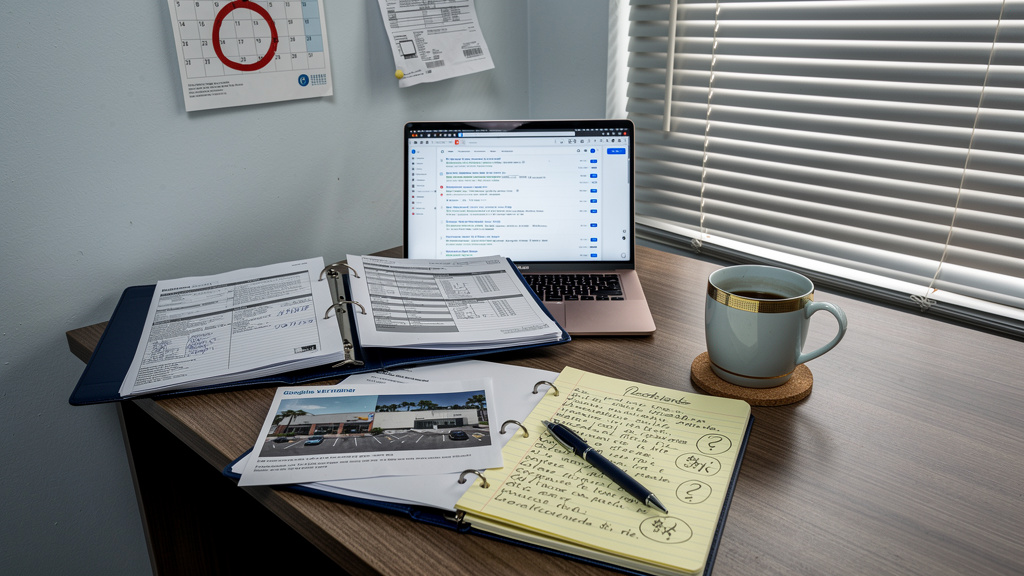
 Can You Trust the Slip-and-Fall Settlement Ranges You See Online?
No. The dollar ranges published on websites and quoted by AI assistants are directional benchmarks drawn from incomplete, mostly private data, they…