
How Much Uninsured Motorist Coverage Should a Florida Driver Carry?
Florida law does not require uninsured motorist coverage, but because many Florida drivers carry no bodily injury coverage, it is arguably the most important optional coverage you can add to your policy. The right amount depends on your income, assets, and how many vehicles you insure, questions worth working through with a licensed insurance agent before the next crash happens, not after.
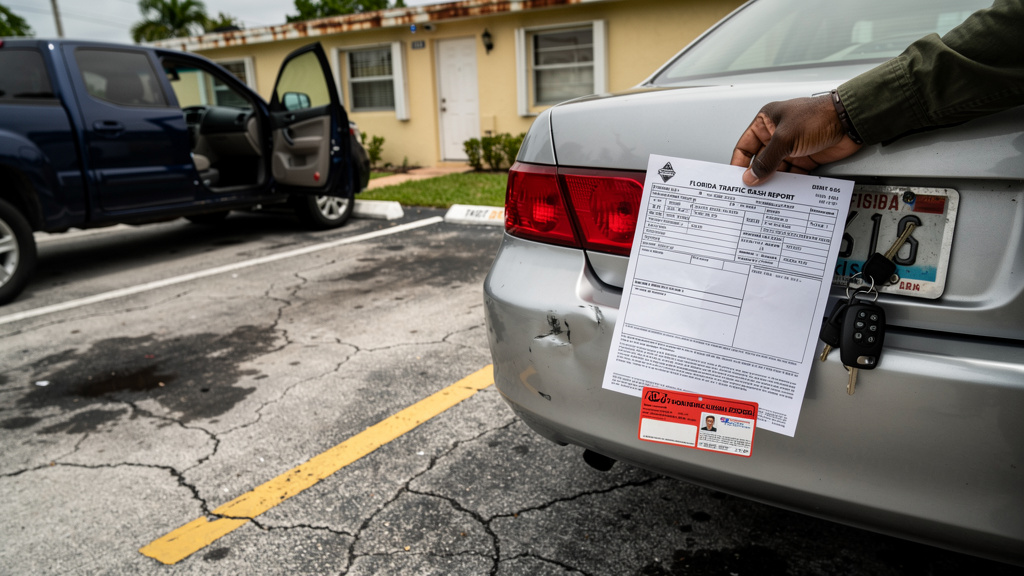
Florida does not require uninsured motorist coverage, but because many Florida drivers carry no bodily injury coverage, it may be the most important optional coverage you can add to your policy. The right amount depends on your income, your assets, and how many vehicles you insure. Work through those questions with a licensed insurance agent before the next crash happens, not after.
Why does uninsured motorist coverage matter so much in Florida specifically?
Florida’s insurance rules create a gap that most drivers do not realize exists until a crash closes it on them. Under FS 627.733 and FS 627.736, the only coverages Florida law requires for most private vehicles are $10,000 in personal injury protection (PIP) and $10,000 in property damage liability. Florida does not require any driver to carry bodily injury liability coverage, which means a driver who hits you and injures you seriously can be in full compliance with Florida law and still have zero coverage for the injuries they caused you.
PIP, your own coverage, pays 80 percent of reasonable medical bills and 60 percent of lost wages, up to $10,000 total when a doctor finds an emergency medical condition. That ceiling disappears fast. A single emergency room visit, an ambulance ride, and one surgery can consume it entirely.
Uninsured drivers are a real risk here: Hialeah has one of the higher uninsured motorist rates in Miami-Dade, and in a hit-and-run there is no at-fault driver to pursue at all.
The risk is not theoretical. A common situation: a driver is rear-ended by someone with no insurance and is left with medical bills PIP does not cover. That is what the gap looks like in real life.
Can I actually be made to buy UM coverage, or can I turn it down?
You can turn it down, but the process is specific. Under FS 627.727, every Florida auto insurer must offer uninsured motorist coverage in an amount equal to your bodily injury liability limits. That coverage is included in your policy by default unless you reject it in a signed written rejection form. If no valid written rejection exists, Florida law treats the policy as including UM coverage at the same limits as the bodily injury liability coverage on the policy.
Rejection forms are often signed quickly during a stack of paperwork at the time of purchase. Many drivers do not remember signing one. Pull out your declarations page, the summary page of your policy, and look for uninsured motorist or UM coverage listed with a dollar amount. If it does not appear there, ask your insurer whether a signed rejection form is on file.
One piece of bad advice circulates online: “Full coverage means you’re fully protected.” Full coverage is not a legal term. It has no standard definition. A policy marketed as full coverage may omit UM entirely. Do not assume. Check the page.
One more detail worth knowing: some UM policies contain a physical-contact requirement for hit-and-run claims. That means a hit-and-run driver who never touched your vehicle, say, a driver who forced you off the road and kept going, may not trigger the UM benefit depending on how your policy is written. Ask your agent specifically about this before you need the answer.
How do UM limits connect to my bodily injury liability limits?
Under FS 627.727, your insurer must offer UM at limits that match your bodily injury liability limits. If you carry $100,000 in bodily injury liability coverage, your insurer must offer you $100,000 in UM coverage. If you want UM limits higher than your bodily injury limits, you generally cannot get there without also raising your bodily injury limits.
Stacked versus non-stacked coverage is a separate decision with real financial consequences. Stacked coverage multiplies your per-vehicle UM limit by the number of insured vehicles on the policy. Two vehicles each carrying $100,000 in stacked UM coverage produce $200,000 in available UM coverage for a single accident. Non-stacked coverage fixes the limit at the single-vehicle amount regardless of how many vehicles you insure. For a single-vehicle household, the limits do not multiply, but the non-stacked form has other statutory limits, such as excluding UM coverage when you are hurt in a vehicle you own that is not insured for UM under the policy, so ask your agent how each form applies to you.
Florida law requires insurers to charge less for non-stacked coverage, at least 20 percent less than the stacked rate under FS 627.727. If you have multiple vehicles, the premium difference between stacked and non-stacked coverage is a specific question to put to your agent.
Underinsured motorist (UIM) coverage operates under the same statute. When the at-fault driver has some bodily injury liability coverage but not enough to cover your damages, your UIM coverage can pay damages above what the at-fault driver’s insurance pays, up to your UM limit, because Florida law does not reduce UM coverage by a setoff against the at-fault driver’s liability coverage. For example, with a hypothetical $25,000 bodily injury policy on the at-fault driver and a hypothetical $100,000 UM limit, your UM coverage can pay up to $100,000 of damages beyond the $25,000, subject to the facts of your case and your policy terms.
UM and UIM coverage also applies when you are a pedestrian, a cyclist, or a passenger in someone else’s vehicle, depending on how the policy is written. It is not limited to situations where you are the driver.
What does UM coverage actually pay after a crash?
UM coverage pays what PIP does not. PIP covers 80 percent of medical bills and 60 percent of lost wages up to the $10,000 ceiling. UM bodily injury coverage can pay the remaining 20 percent of medical bills PIP leaves unpaid, lost wages above what PIP covers, future medical costs, and compensation for pain and suffering.
Pain and suffering recovery from an at-fault driver, or from a UM claim, requires clearing the tort threshold under FS 627.737(2). That threshold requires proof of a permanent injury, significant permanent scarring or disfigurement, significant and permanent loss of an important bodily function, or death. Without clearing that threshold, pain and suffering damages are not available regardless of how much coverage exists.
When you file a UM claim, you file it with your own insurer, not the at-fault driver’s insurer. Your own insurer has a financial interest in paying as little as possible. That is not an opinion; it is how the business works. Many UM policies also contain arbitration provisions, meaning a dispute may be resolved outside of court under a process your policy defines. Read your policy or have an attorney review it.
One misconception worth correcting: “UM is a waste of money if you have health insurance.” Health insurance does not cover lost wages. It does not cover your deductible or copay. Your health insurer may have a right to be repaid from any injury recovery you receive. And health insurance pays nothing for pain, suffering, or permanent injury. UM covers categories of loss that health insurance does not.
For crashes on or after March 24, 2023, FS 95.11 gives two years to sue the at-fault driver for negligence; a lawsuit against your own insurer over a UM claim is generally treated as a contract claim with a different, generally longer, deadline, so ask a lawyer which deadline applies to you. UM disputes often move slowly. Starting the process early matters for documentation, evidence, and negotiating position.
What questions should I ask my insurance agent about UM limits?
This article does not recommend a specific dollar limit. The right amount depends on your health coverage, your assets, your household, and your situation. A licensed insurance agent can work through that with you. These are the questions to bring to that conversation:
- What UM limits do I currently have on my policy, and are they stacked or non-stacked?
- Do you have a signed UM rejection form on file for my policy, and if so, can I see it?
- What would it cost to raise my UM limits to match my bodily injury liability limits?
- If I have more than one vehicle, what is the premium difference between stacked and non-stacked coverage?
- Does my policy include a physical-contact requirement for hit-and-run claims?
- How does my existing health insurance interact with a UM claim, does it create a lien that must be repaid from any UM recovery?
These are not trick questions. They are the questions that tell you what you actually have and what it would cost to have more. Any agent who cannot answer them clearly is not the right agent for this conversation.
What happens if I already got hurt by an uninsured driver and I don’t know what to do next?
Two questions appear repeatedly from people in this situation: “What happens if the driver who hit me is uninsured but I have UM coverage?” and “I was rear-ended by an uninsured driver and have medical bills PIP did not cover. What are my options?” The fear behind both questions is real, and the answer starts with the same immediate steps.
Report the crash and get a police report. Under FS 316.066, the crash report is confidential for 60 days except to the parties, their insurers, and their lawyers. You or your attorney can obtain it promptly. Seek medical care within 14 days of the crash. Miss that window and PIP pays nothing, regardless of how serious your injuries are. That is the rule under FS 627.736, and there are no exceptions for people who felt fine at the scene and got worse later.
Notify your own insurer promptly after a crash involving an uninsured driver. Your insurer will investigate. They may dispute how the crash happened, the extent of your injuries, or the value of your claim. That investigation is not conducted in your favor.
One bad piece of advice circulates widely: “You can always get an attorney later.” Delay affects evidence. Surveillance footage gets overwritten. Witnesses become harder to locate. Medical records that could document the link between the crash and your injuries become harder to build if treatment was inconsistent or delayed. Negotiating position weakens when a case is not properly documented from the start.
A personal injury attorney experienced with UM disputes can help you understand your rights, deal with your insurer, and handle the documentation that supports your claim. The consultation is free at Wolfson & Leon, and there is no fee unless the case resolves in your favor.
The two-year filing deadline under FS 95.11 for crashes on or after March 24, 2023 is a hard cutoff for a negligence lawsuit against the at-fault driver, and a UM claim against your own insurer has its own deadline. But evidence problems and documentation gaps can harm a claim long before that deadline arrives. Do not treat two years as a reason to wait.
Frequently asked questions
What is the difference between uninsured and underinsured motorist coverage in Florida?
Uninsured motorist (UM) coverage applies when the at-fault driver has no bodily injury liability coverage at all. Underinsured motorist (UIM) coverage applies when the at-fault driver has some coverage, but not enough to cover the full extent of your damages. Under FS 627.727, both are part of the same coverage provision in Florida, and UIM can pay damages above the at-fault driver’s bodily injury coverage, up to your UM/UIM limit, because Florida law does not reduce UM coverage by a setoff against the at-fault driver’s liability coverage.
Can I stack UM coverage in Florida if I only have one car?
You can usually buy it, but stacking works by multiplying the per-vehicle UM limit by the number of insured vehicles on a policy, so with only one vehicle there is nothing to multiply. The non-stacked form still carries other statutory limits, such as excluding UM coverage when you are hurt in a vehicle you own that is not insured for UM under the policy, so ask your agent how each form applies to your household.
Does my health insurance make UM coverage unnecessary?
No. Health insurance covers some medical bills, but it does not cover lost wages, deductibles, copays, or pain and suffering. If your health insurer pays your medical bills, it may also assert a lien requiring repayment from any injury recovery you receive. UM coverage addresses categories of loss, including wage loss, future medical costs, and compensation for permanent injury, that health insurance does not pay at all.
How long do I have to file a UM claim in Florida?
For crashes that occurred on or after March 24, 2023, FS 95.11 gives you two years from the date of the crash to file a negligence lawsuit against the at-fault driver. A lawsuit against your own insurer over a UM claim is generally treated as a contract claim with a different deadline, so ask a lawyer which deadline applies. Those deadlines are firm. Evidence problems and documentation gaps, however, can weaken a claim well before the deadline arrives, which is why acting promptly after a crash matters.
What if I signed a form rejecting UM coverage and don’t remember doing it?
Contact your insurer and ask them to provide a copy of the signed rejection form. Under FS 627.727, the rejection must be in a specific signed written form to be valid. If the rejection was not properly executed, or if you cannot locate it, the policy may be treated as including UM coverage by default. An attorney can review the rejection form and your policy to assess whether the rejection was valid.
Complete guide: Hit by an Uninsured Driver in Florida: What You Can Actually Do
Hurt in an accident in Hialeah? Call Wolfson & Leon at 305-965-3766 for a free consultation. We speak Spanish, and there is no fee unless we win.
Key facts
- Florida does not require bodily injury liability coverage or uninsured motorist coverage for most private vehicles; the only mandatory coverages are $10,000 in PIP and $10,000 in property damage liability. Source: FS 627.733; FS 627.736
- Every Florida auto insurer must offer UM coverage in an amount equal to your bodily injury liability limits; the coverage is included by default unless you reject it in a signed writing. Source: FS 627.727
- PIP pays 80 percent of reasonable medical expenses and 60 percent of lost wages, up to $10,000 when a doctor finds an emergency medical condition, and pays nothing if you do not seek initial treatment within 14 days of the crash. Source: FS 627.736
- Florida does not require bodily injury liability coverage, so a driver who injures you may have no coverage to pay your injury claim. Source: FS 627.733; FS 627.736
- Injured Floridians have two years from the date of a crash that occurred on or after March 24, 2023, to file a negligence lawsuit against the at-fault driver; a UM claim against your own insurer is generally a contract claim with a different deadline. Source: FS 95.11
Frequently asked questions
What is the difference between uninsured and underinsured motorist coverage in Florida?
Uninsured motorist (UM) coverage applies when the at-fault driver carries no bodily injury liability insurance at all. Underinsured motorist (UIM) coverage applies when the at-fault driver has some bodily injury coverage but not enough to cover your actual damages. Under Florida law, both protections are typically combined in a single UM/UIM provision under your own policy. In Florida, UM/UIM coverage is not reduced by a setoff against the at-fault driver's liability coverage, so your UIM coverage can pay damages above what the at-fault driver's insurance pays, up to your UM/UIM policy limit.
Can I stack UM coverage in Florida if I only have one car?
Stacking multiplies your UM coverage limit by the number of vehicles on the policy, so for a single-vehicle household the limits do not multiply. The non-stacked form still has other statutory limits, such as excluding UM coverage when you are hurt in a vehicle you own that is not insured for UM under the policy. The gap between the two forms grows when you insure two or more vehicles under the same policy. If you add a second vehicle in the future, revisit your stacking election with your agent at that time.
Does my health insurance make UM coverage unnecessary?
No. Health insurance does not replace UM coverage, and conflating the two is one of the most common and costly mistakes Florida drivers make. Health insurance typically does not pay for lost wages, does not compensate for pain and suffering, and often creates a subrogation lien that must be repaid out of any injury recovery. UM coverage is specifically designed to address the damages, including non-economic harm, that health insurance does not touch.
How long do I have to file a UM claim in Florida?
For crashes that occurred on or after March 24, 2023, FS 95.11 gives injured people two years from the accident date to file a negligence lawsuit against the at-fault driver; a lawsuit against your own insurer over a UM claim is generally treated as a contract claim with a different deadline, so ask a lawyer which one applies. That deadline can arrive faster than it seems: UM claims often involve slow investigations, requests for medical records, independent medical examinations, and arbitration proceedings. Notifying your insurer promptly and consulting a personal injury attorney early gives you the most room to work before the deadline forces a rushed decision.
What if I signed a form rejecting UM coverage and don't remember doing it?
Florida law under FS 627.727 requires that any rejection of UM coverage be made in a signed writing. If your insurer cannot produce a valid rejection form, the policy may be treated as including UM coverage at the same limits as your bodily injury liability coverage. Call your insurer and ask whether a UM rejection is on file and whether you can review it. If you are unsure about your rights in that situation, a personal injury attorney can review the policy documents with you.
This article is general information about Florida law, not legal advice, and reading it does not create an attorney-client relationship. Every case is different and past results do not guarantee a similar outcome. For advice about your situation, call Wolfson & Leon at 305-965-3766 for a free consultation.
Also available in: Versión en español
 Personal injury
I Fell at Work in Hialeah: Do I Need Workers' Comp or a Personal Injury Lawyer?
Workers' compensation almost always covers a fall at work in Florida and is usually your only legal claim against your own employer. But if someone…
 Personal injury
Hit by a Driver With No Insurance in Florida: What Are Your Options?
Your own insurance is almost always the first place to look. Florida requires your PIP coverage to pay 80 percent of your reasonable medical bills…
 Personal injury
How Much Does an Accident Lawyer Charge in Hialeah, Florida?
Personal injury lawyers in Hialeah charge nothing upfront and no attorney fee at all unless they recover money for you. The fee is a percentage of…