
What Florida's Rideshare Law Says About Insurance and Medical Bills
Florida Statutes § 627.748 divides every rideshare trip into three coverage periods, app off, app on and waiting, and actively on a trip, and the insurance available to you depends entirely on which period the driver was in when the crash happened. Once the driver accepts a ride, and until the ride ends, the law requires at least $1,000,000 in primary liability coverage. Separately, Florida's no-fault law (§ 627.736) means your own PIP policy pays first for medical expenses, regardless of who caused the crash.
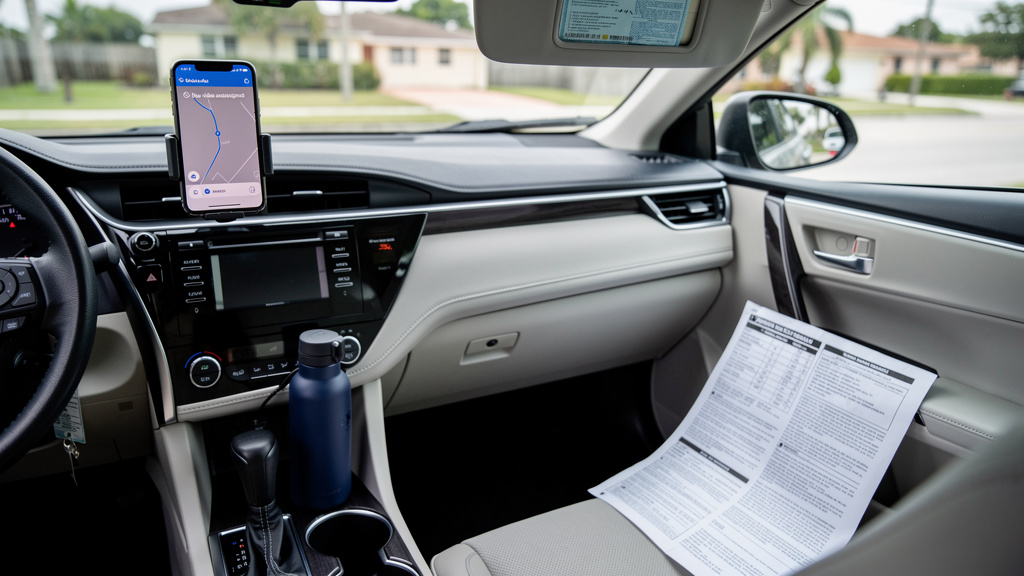
Florida Statutes § 627.748 divides every rideshare trip into three coverage periods, app off, app on and waiting, and actively on a trip, and the insurance available to you depends entirely on which period the driver was in when the crash happened. Once the driver accepts a ride, and until the ride ends, the law requires at least $1,000,000 in primary liability coverage. Separately, Florida’s no-fault law (§ 627.736) means your own PIP policy pays first for medical expenses, regardless of who caused the crash.
What is a ‘transportation network company’ under Florida law?
In general terms, Florida Statute § 627.748 describes a transportation network company (TNC) as an entity that uses a digital network or app to connect riders with drivers who provide prearranged rides in their personal vehicles. This definition applies specifically to app-based platforms like Uber and Lyft, not traditional taxis or limousine services regulated under different laws. The statute creates a distinct insurance framework for these companies because their drivers operate in a gray area between personal and commercial use.
Why does it matter whether the driver’s app was on or off?
Under Florida Statute § 627.748(7), rideshare insurance splits into three periods based on the driver’s app status:
- Period 1 (App Off): The driver is offline. Only their personal auto insurance applies.
- Period 2 (App On, No Ride Matched): The driver is logged in but has not accepted a trip yet. Lower TNC-mandated coverage kicks in.
- Period 3 (On a Prearranged Ride): From the moment the driver accepts a trip request until the passenger is dropped off. Full liability coverage of at least $1,000,000 applies.
For example, a driver cruising the Palmetto Expressway toward MIA with the app on but no ride accepted is in Period 2. The same driver after tapping “accept” on a pickup near West 49th Street enters Period 3.
App on but no ride yet: what coverage actually applies?
During Period 2, when the driver is logged into the TNC app but has not accepted a ride, Florida Statute § 627.748(7)(b) requires liability coverage of at least $50,000 for bodily injury per person, $100,000 per incident, and $25,000 for property damage, plus PIP and uninsured/underinsured motorist (UM/UIM) coverage. Personal auto insurers may exclude coverage during this time, leaving the TNC’s contingent policy as the only source. These minimums can change through legislation, so current figures should be confirmed in the statute. If your crash occurred during this window, verifying the driver’s actual app status becomes critical.
On a trip: where does the $1,000,000 requirement come from?
Once a driver accepts a prearranged ride, from acceptance through drop-off, Florida Statute § 627.748(7)(c) mandates at least $1,000,000 in primary liability coverage for death, bodily injury, and property damage. “Primary” means the TNC’s policy pays immediately, without waiting for the driver’s personal insurer to deny the claim first. For instance, if you booked an Uber near the Palmetto Expressway heading to MIA, the moment the driver accepted your request, that $1,000,000 coverage became active. PIP and UM/UIM coverage are also required during this period, ensuring additional layers of protection beyond basic liability.
Who pays your medical bills first, and how does PIP work in a rideshare crash?
Florida’s no-fault PIP law (§ 627.736) applies regardless of who caused the crash. Your own PIP policy pays first under strict priority rules in § 627.736(4)(e): (1) your policy, (2) a resident relative’s policy if you have none, (3) the vehicle or TNC’s PIP only if neither exists. You must see a doctor within 14 days of the crash or PIP pays nothing. If a doctor finds an emergency medical condition, PIP covers 80 percent of reasonable medical bills up to $10,000; otherwise, coverage caps at $2,500. It also pays 60 percent of lost income. Beyond PIP, you may pursue the at-fault driver’s liability coverage, which is the TNC’s policy if the rideshare driver was at fault during a trip; to recover pain and suffering, you must meet Florida’s tort threshold under § 627.737(2), meaning you suffered a permanent injury, significant scarring, or permanent loss of a bodily function. Being rear-ended as an Uber passenger does not change this priority order.
What the statute doesn’t settle, and why those gaps matter
The statute sets coverage floors but does not resolve two key facts: whether the driver’s app was truly on, and who was at fault. Insurers often dispute app status, because what the app showed at that moment can decide which coverage applies. Even with strong evidence, fault is determined by police reports, witness statements, and traffic camera footage, all subject to Florida’s modified comparative negligence rule (§ 768.81(6)). You can still recover damages if you were 50 percent or less at fault, but your award is reduced by your share. You have two years from the crash date (for incidents on or after March 24, 2023 per § 95.11) to file a lawsuit. Crash reports remain confidential for 60 days under § 316.066, though parties, their insurers, and attorneys can access them during that time. Disputed app status or serious injuries make early legal review essential.
How to read the statute yourself
You can read the full text of Florida’s rideshare and PIP laws at the official Florida Legislature website: leg.state.fl.us. Look up these specific sections cited in this article:
- § 627.748 (TNC definition and insurance framework)
- § 627.748(7) (three coverage periods)
- § 627.748(7)(b) (app-on, no-ride coverage)
- § 627.748(7)(c) ($1,000,000 prearranged-ride requirement)
- § 627.736 (PIP benefits and limits)
- § 627.736(4)(e) (PIP payment priority)
If you were hurt in a rideshare crash in Hialeah or Miami-Dade, our dedicated page explains how these rules apply locally: rideshare accident claims.
Frequently asked questions
I was a passenger in an Uber that got rear-ended. Whose insurance do I deal with first?
Your own PIP policy pays first under Florida law. If you don’t have auto insurance, check if a relative in your household does. Only if neither exists would the Uber vehicle’s PIP apply. The at-fault driver’s liability insurer comes into play for losses PIP does not cover; pain and suffering requires meeting the tort threshold.
What happens if the Uber driver says the app was off, does that affect my claim?
Yes. If the app was off, only the driver’s personal auto policy applies. The TNC’s higher coverage tiers require proof the app was on. Insurers often challenge this fact, so preserving app data or trip records becomes urgent.
Do I have to go to the doctor within a certain number of days to get my medical bills paid?
Yes. You must receive initial treatment within 14 days of the crash. Miss that deadline and your PIP insurer can deny all benefits, even if you paid premiums for years.
Can I recover for pain and suffering after an Uber accident in Florida?
Only if you meet Florida’s serious injury threshold under § 627.737(2): permanent injury, significant scarring, or permanent loss of a bodily function. Minor injuries typically do not qualify for pain-and-suffering damages from the at-fault party.
How long do I have to file a lawsuit after a rideshare accident in Florida?
Two years from the date of the crash, if the injury occurred on or after March 24, 2023, per Florida Statute § 95.11. Earlier crashes had a four-year limit.
Related reading: I was in a car accident in Hialeah. What do I do now? · I was a passenger in an Uber or Lyft that crashed in Hialeah. Who pays for my injuries? · The 14-day PIP rule in Florida: what happens if you wait to see a doctor after a Hialeah car accident
Hurt in an accident in Hialeah? Call Wolfson & Leon at 305-965-3766 for a free consultation. We speak Spanish, and there is no fee unless we win.
Key facts
- Florida Statutes § 627.748 establishes a tiered insurance framework for transportation network companies such as Uber and Lyft, with coverage obligations that shift based on whether the driver's app is off, on without a matched ride, or on with an accepted prearranged trip. Source: Fla. Stat. § 627.748
- During a prearranged ride, from the moment the driver accepts the request through drop-off, the law requires at least $1,000,000 in primary liability coverage for death, bodily injury, and property damage. Source: Fla. Stat. § 627.748(7)(c)
- When the driver is logged into the app but has not yet accepted a ride, the required coverage is lower: at least $50,000 for bodily injury per person, $100,000 per incident, and $25,000 for property damage, plus PIP. Source: Fla. Stat. § 627.748(7)(b)
- Florida's PIP law requires that an injured person receive initial medical treatment within 14 days of the crash or PIP pays nothing; PIP covers 80 percent of reasonable medical bills up to $10,000 when a doctor finds an emergency medical condition, and only up to $2,500 when no emergency medical condition is found. Source: Fla. Stat. § 627.736
- Under Florida's PIP priority rules, the injured person's own PIP policy pays first; if they have none, a resident relative's policy pays next; the vehicle owner's or TNC's PIP applies only if neither of those exists, the striking driver's PIP never comes first. Source: Fla. Stat. § 627.736(4)(e)
Frequently asked questions
I was a passenger in an Uber that got rear-ended. Whose insurance do I deal with first?
Your own PIP policy is the first source of payment for your medical bills under Fla. Stat. § 627.736(4)(e), regardless of who caused the crash, even though you were a passenger, not a driver. If you do not have your own PIP policy, a resident relative's policy comes next; only if neither exists does the vehicle's or TNC's PIP apply. Beyond PIP, you may pursue a claim against the at-fault driver's liability insurance (pain and suffering requires meeting Florida's tort threshold) and, if the Uber driver was at fault and had accepted your ride, the TNC's policy, which must provide at least $1,000,000 in primary liability coverage under § 627.748(7)(c).
What happens if the Uber driver says the app was off, does that affect my claim?
Yes, significantly. Florida's tiered coverage system under § 627.748(7) makes the driver's app status the single most important fact in a rideshare insurance claim. If the app was off, only the driver's personal auto policy applies. If the app was on and a ride had been accepted, the TNC's $1,000,000 primary liability coverage is required by § 627.748(7)(c). Insurers dispute app status regularly, which is why obtaining a copy of the crash report and preserving any trip records early is important.
Do I have to go to the doctor within a certain number of days to get my medical bills paid?
Yes. Florida Statutes § 627.736 requires that you receive initial medical treatment within 14 days of the crash or your PIP benefits are forfeited entirely, missing this deadline by even one day eliminates coverage. PIP then pays 80 percent of reasonable medical expenses up to $10,000 if a doctor determines you have an emergency medical condition, or only up to $2,500 if no emergency medical condition is found. This deadline applies whether the crash involved a rideshare vehicle or a regular car.
Can I recover for pain and suffering after an Uber accident in Florida?
Florida limits pain-and-suffering claims against an at-fault driver under § 627.737(2): you must have suffered a permanent injury, significant and permanent scarring, or permanent loss of a bodily function. PIP benefits, which pay regardless of fault, do not include pain and suffering, they cover only medical expenses and a portion of lost income. If your injuries meet the threshold, you can pursue a tort claim against the at-fault party; if the Uber driver was at fault and on a prearranged trip at the time, the TNC's liability policy, which must provide at least $1,000,000 in coverage under § 627.748(7)(c), may apply.
How long do I have to file a lawsuit after a rideshare accident in Florida?
For crashes that occurred on or after March 24, 2023, Florida Statutes § 95.11 gives you two years from the date of the crash to file a negligence lawsuit for personal injuries. Missing this deadline generally means losing the right to sue. Separately, crash reports are confidential for 60 days under § 316.066, though parties, their insurers, and their attorneys may access the report during that window, so acting quickly to preserve records is important.
This article is general information about Florida law, not legal advice, and reading it does not create an attorney-client relationship. Every case is different and past results do not guarantee a similar outcome. For advice about your situation, call Wolfson & Leon at 305-965-3766 for a free consultation.
Also available in: Versión en español
 Uber and Lyft accidents
 My Uber Crash Bills Are More Than PIP Covers, Who Pays the Rest?
Florida PIP covers 80 percent of your medical bills up to $10,000, or only $2,500 if no doctor finds an emergency medical condition, and that gap…
 Uber and Lyft accidents
 I Was Injured Driving for Uber in Hialeah, Who Pays My Medical Bills?
Uber's liability coverage is designed to protect other people, passengers, pedestrians, and other drivers, not you as the Uber driver. Personal…
 Uber and Lyft accidents
 What Your Lawyer Does First After an Uber or Lyft Crash in Florida
In the first weeks after an Uber or Lyft crash, your lawyer's job is to find every insurance policy that could pay, lock down the app data that…