
I was a passenger in an Uber or Lyft that crashed in Hialeah. Who pays for my injuries?
If you were a passenger in an Uber or Lyft that crashed in Hialeah, your injuries are covered first by PIP (your own auto policy if you have one, otherwise the rideshare vehicle's), and then by the $1,000,000 liability policy Florida requires rideshare companies to carry while a passenger is in the car (Fla. Stat. § 627.748(7)(c)) if the rideshare driver caused the crash, or by the other driver's insurance if they did. Because a passenger is almost never at fault, the main questions are which driver caused it and how badly you were hurt, not whether you can recover.
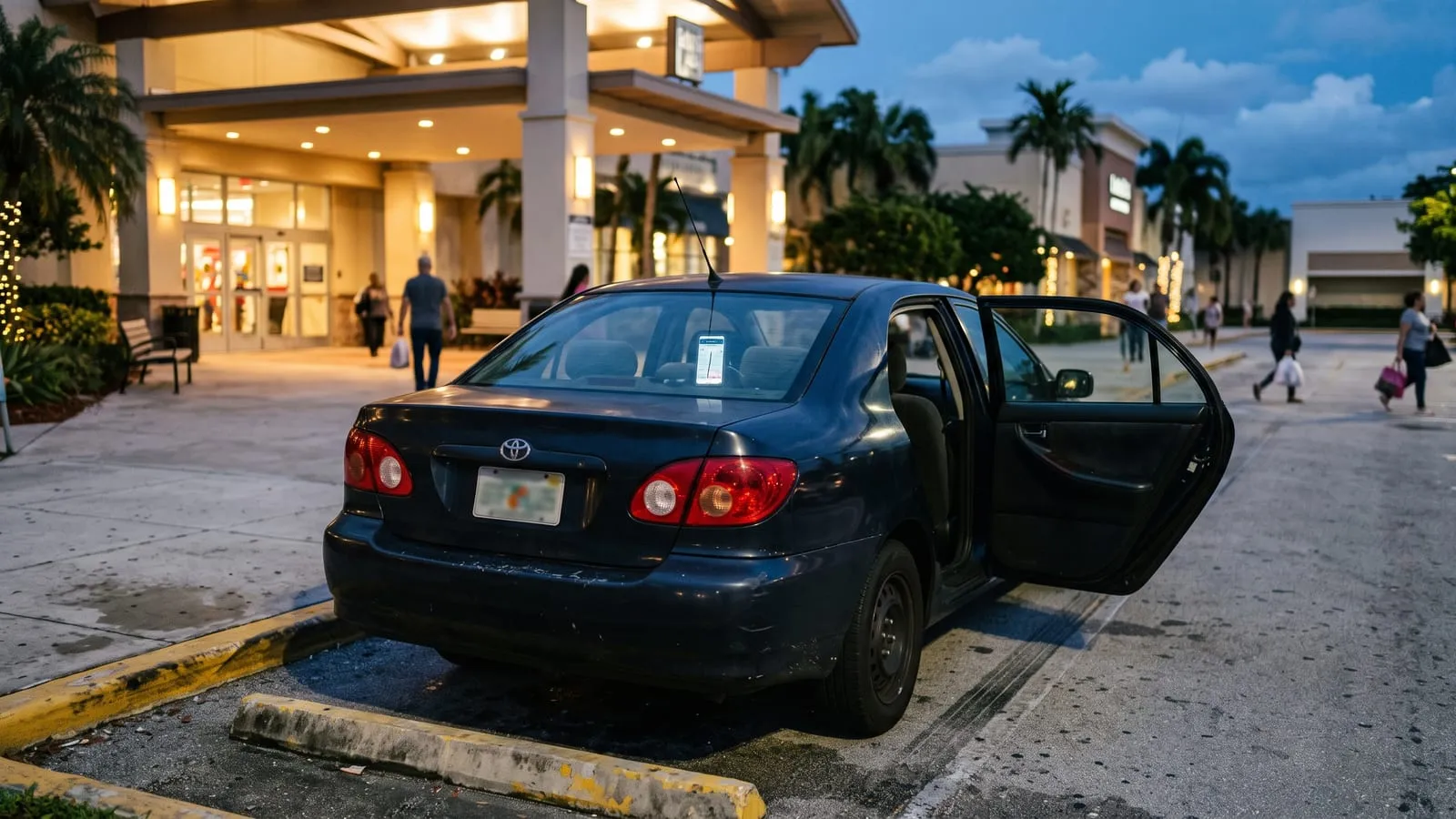
Rideshare crashes in Hialeah cluster where rides do: the Westland Mall lots on W 49th St, the Hialeah Metrorail and Tri-Rail stations, the restaurants along Palm Avenue, and the Palmetto Expressway ramps at night. When the car you are riding in gets hit, or hits someone, the first thing most passengers wonder is whether they are somehow stuck in the middle. You are not. Here is how it actually works.
Am I at fault as a passenger?
Almost never. You were not driving, you were not choosing the route, and you were not deciding when to change lanes. Under Florida’s comparative fault rule (Fla. Stat. § 768.81), fault is divided among the people whose negligence caused the crash, and a seated passenger rarely has any. The exceptions are rare and specific, such as grabbing the wheel or distracting the driver. For everyone else, the question is not whether you can recover but from whom.
Which insurance pays, in what order?
Three layers, in this order:
- PIP, first. Florida’s no-fault coverage pays 80% of your medical bills and 60% of lost wages up to $10,000, no matter who was at fault. If you own an insured car, your own PIP pays. If you do not, but you live with a relative who does, theirs may. If neither, the PIP on the rideshare vehicle covers you (Fla. Stat. § 627.736(4)(e)). The 14-day treatment rule applies to all of these.
- The at-fault driver’s liability coverage, second. If your rideshare driver caused the crash while you were in the car, Florida requires the rideshare company to have $1,000,000 in liability coverage available (Fla. Stat. § 627.748(7)(c)). If another driver caused it, that driver’s bodily injury insurance is primary. Both can apply when fault is shared.
- Uninsured motorist coverage, third. If the at-fault driver has no insurance or too little, which is common in Miami-Dade because Florida does not require bodily injury coverage, the rideshare company’s UM coverage during a ride, and any UM coverage in your own household, fill the gap.
For pain and suffering against a driver’s liability policy, Florida’s permanent-injury threshold applies (Fla. Stat. § 627.737). Herniated discs, fractures, and injuries needing surgery commonly meet it.
What should I do in the first week?
- Get medical care within 14 days, ideally the same day. Palmetto General, Hialeah Hospital, and the urgent cares along W 49th St all count.
- Screenshot the trip in the app: receipt, route, driver name, time. Save it outside the app.
- Report the crash to 911 if anyone is hurt, and to the app afterward. Get the police report number.
- Get the other driver’s information and any witness phone numbers.
- Do not give a recorded statement to Uber’s or Lyft’s claims administrator, or to any insurer, before you talk to a lawyer. Confirming that the ride happened is fine; describing your injuries or the crash is not.
Who do I actually make the claim against?
In practice, against the insurance carriers, not Uber or Lyft as companies. Florida law classifies rideshare drivers as independent contractors, and the companies satisfy their obligations through the insurance policies described above. The trip data the companies hold is what decides which policy applies, and they produce it when a lawyer asks formally, not before.
How Wolfson & Leon handles a rideshare passenger claim
At the first call we ask three things: were you on a ride at the moment of the crash, who caused it, and where were you treated. Then we send letters of representation to every insurer involved and a formal request to the rideshare company for the trip and insurance data. From there the case moves like any Miami-Dade injury claim: treatment, records, demand, negotiation, and suit if the insurer will not pay what the case is worth. Call (305) 285-7071. The consultation is free, in English or Spanish, and there is no fee unless we recover money for you.
Key facts
- During a ride, Uber and Lyft must carry $1,000,000 in liability coverage plus PIP and uninsured/underinsured motorist coverage. Source: Fla. Stat. § 627.748(7)(c)
- A passenger who does not own a car is covered by the PIP on the vehicle they were riding in. Source: Fla. Stat. § 627.736(4)(e)
- PIP requires treatment within 14 days of the crash. Source: Fla. Stat. § 627.736(1)(a)
- Two years to file a negligence lawsuit for crashes on or after March 24, 2023. Source: Fla. Stat. § 95.11
Frequently asked questions
The rideshare driver was not at fault; another car hit us. Does Uber's insurance still apply?
The other driver's bodily injury insurance is primary. If that driver is uninsured or underinsured, the rideshare company's uninsured motorist coverage, which Florida requires during a ride, steps in. Your own UM coverage, if you have any, may apply as well.
Do I need the trip receipt?
Yes. Screenshot the ride receipt and the trip map from the app right away. They prove you were on a ride at the moment of the crash, which is what triggers the $1,000,000 policy.
The driver asked me not to report it. What should I do?
Report it. Call 911 if anyone is hurt, and report the crash in the app afterward. A crash that is not reported becomes your word against the driver's later, and it can cost you the coverage.
Can I make a claim if I was not wearing a seatbelt?
Yes. Not wearing a seatbelt does not bar a claim in Florida, but the insurer can argue it made your injuries worse and ask for a reduction under comparative fault (Fla. Stat. § 768.81). It affects the amount, not your right to recover.
This article is general information about Florida law, not legal advice, and reading it does not create an attorney-client relationship with Wolfson & Leon. Every case is different and prior results do not guarantee a similar outcome. If you were hurt, talk to a lawyer about your own situation.
Also available in: Versión en español
 Uber and Lyft accidents
 Injured in an Uber Accident in Hialeah? Here Is How to Hire a Lawyer
Call a personal injury lawyer who handles Uber and Lyft claims before you speak to any insurance adjuster, the driver's app status at the moment of…
 Uber and Lyft accidents
 Uber Driver Had the App Off When They Hit You: Who Pays in Florida?
When an Uber driver's app is completely off at the moment of a crash, Uber's insurance policy does not apply at all, the driver is treated like any…
 Uber and Lyft accidents
 What Determines a Rideshare Accident Settlement in Miami-Dade?
There is no typical number for a rideshare accident settlement in Miami-Dade, the value is set by a specific combination of factors: how serious and…