
Who Pays Diminished Value After a Florida Car Crash That Wasn't Your Fault
Yes. If another driver caused the crash, Florida law lets you claim the drop in your car's market value that remains even after a proper repair, called diminished value, directly against that driver's liability insurer. Your own collision policy almost never pays it. You carry the burden of proving how much value was lost, and for crashes on or after March 24, 2023, you have two years to file suit under Florida's negligence statute of limitations.
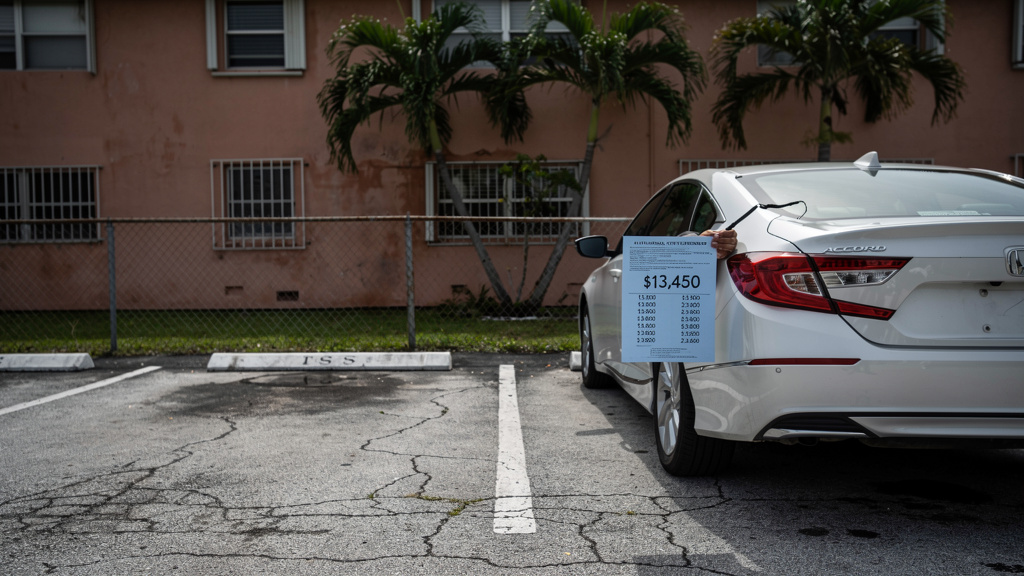
When another driver causes a crash in Florida, you can claim the drop in your car’s market value that survives a proper repair. That loss is called diminished value, and Florida law lets you pursue it directly against the at-fault driver’s liability insurer. Your own collision policy almost never covers it, and you carry the burden of proving how much value was lost. For crashes on or after March 24, 2023, you have two years from the date of the crash to file suit under Florida Statutes § 95.11.
What does diminished value actually mean for my repaired car?
Diminished value is not the same as your repair bill, and it has nothing to do with a total loss or PIP. It is the gap between what your car was worth before the crash and what it sells for after a complete, proper repair. That gap exists because a vehicle history report, a Carfax or equivalent, permanently records the accident. Buyers and dealers see that entry and discount the car, even when the body shop did everything right.
Practitioners commonly describe three types of diminished value: inherent, repair-related, and immediate. The one that matters most in a Florida third-party claim is inherent diminished value, which is the loss that remains after a competent repair simply because the car now has a crash history. The Florida Supreme Court addressed this concept directly in Siegle v. Progressive Consumers Insurance Co., 819 So. 2d 732 (Fla. 2002).
PIP, your personal injury protection coverage under Florida Statutes § 627.736, pays 80 percent of reasonable medical bills and 60 percent of lost income, up to $10,000 when a doctor finds an emergency medical condition, or up to $2,500 otherwise. PIP covers people. It never touches your car’s value.
A total loss produces no diminished value claim because there is no repaired vehicle to appraise. When the insurer declares a total loss, it pays actual cash value, and the analysis ends there.
Whose insurance pays a diminished value claim in Florida?
The reliable path is a third-party claim against the at-fault driver’s liability insurer. Florida courts confirmed this right in McHale v. Farm Bureau Mutual Insurance Co., 409 So. 2d 238 (Fla. 3d DCA 1982): the owner of a repaired vehicle can recover both repair costs and the proven loss in market value from the driver who caused the crash.
Your own collision carrier is a different story. The Florida Supreme Court held in Siegle that a standard collision policy allowing the insurer to repair or replace your vehicle with property of like kind and quality does not also require that insurer to pay inherent diminished value once a complete repair is done. First-party diminished value claims almost always fail on that basis.
Uninsured motorist coverage, UM, addresses bodily injury when the at-fault driver has no insurance, not property value loss. A separate UMPD endorsement exists but is less common and does not automatically fill the gap.
Florida Statutes § 324.022 requires drivers to carry at least $10,000 in property damage liability coverage per crash. That single limit must absorb repairs, towing, storage, rental reimbursement, and diminished value combined. On a seriously damaged newer car, repairs alone can consume most or all of that $10,000 before diminished value is even considered. The crash report identifies the at-fault driver’s carrier; under Florida Statutes § 316.066, that report is confidential to the public for 60 days but is available to the parties, their insurers, and their lawyers from the start. If your car is leased, the lessor may have independent rights in the diminished value claim, so check your lease before you proceed.
How is the loss in value measured and what do insurers actually offer?
Florida law does not prescribe a specific formula. The burden falls on you to prove both that a loss exists and how large it is, per the legal standard from McHale: the difference in market value immediately before and after the crash.
Many insurers use the 17c formula. It starts by capping the potential loss at 10 percent of the car’s pre-accident value, then applies multipliers for mileage and damage severity. That cap routinely produces lower figures than a market-based appraisal, and Florida statutes do not require any specific calculation method. The 17c formula is a tool insurers reach for because it is convenient for them, not because it is the law.
A credible independent appraisal does something different. It pulls recent comparable sales of similar vehicles, same year, make, model, trim, and mileage, both with and without accident history, in Florida markets such as Miami and Miami-Dade County. Local comparable sales carry more weight than national book values because buyers in this market set the actual price. The appraisal inspects the repair quality, documents what structural or mechanical work was done, and shows the working calculations, not just a bare conclusion.
Vehicle age, pre-crash value, mileage, trim level, and damage severity all affect the size of the recoverable loss. Structural or frame damage, airbag deployment, major mechanical repairs, and advanced driver-assistance system (ADAS) recalibrations signal serious damage to future buyers and produce larger inherent losses than cosmetic-only work.
What do I need to collect to prove my car lost value?
Start gathering documents immediately. Here is what you need and why each piece matters.
The crash report identifies the at-fault driver, their insurer, and the basic facts of the crash. Your lawyer can obtain it under § 316.066 even during the 60-day confidentiality window.
Pre-repair photographs document the extent and location of damage before any work begins. Take them yourself if you can.
Repair invoices and parts lists are critical, especially any line items showing frame straightening, structural repairs, airbag replacement, or ADAS sensor recalibration. Those entries tell future buyers, and appraisers, that the car suffered serious damage.
Post-repair photographs show the condition of the car after the shop finished. An appraiser will want them.
The vehicle history report shows the accident entry that will follow the car for the rest of its life. That entry is the foundation of your inherent diminished value claim.
Pre-accident market value evidence, meaning comparable listings of similar vehicles without crash history sold around the time of your crash, establishes the baseline the appraiser needs.
An independent appraisal, completed only after the car is fully repaired, measures the post-repair market value. Do not get the appraisal while the car is still in the shop; the number will not hold up.
A written demand letter to the at-fault driver’s insurer, with all documents attached, formally opens the claim.
One warning applies to every step: read any payment document the insurer sends you before you sign. Release language covering “all property damage claims” can wipe out your diminished value claim before it is resolved, even if the insurer only paid for repairs. Do not sign anything that broad until the diminished value piece is settled.
When is a diminished value claim actually worth pursuing?
The honest answer depends on several factors, and not every claim justifies the time and cost of an independent appraisal and a formal demand.
Newer, higher-value vehicles have more to lose because the dollar gap between a clean-history car and a crash-history car is larger. Severe damage, frame work, airbag deployment, major mechanical repairs, is worth pursuing more aggressively than a minor cosmetic repair on an older vehicle.
Available policy limits are a real constraint. If the at-fault driver carried Florida’s $10,000 minimum and repairs consumed most of it, the remaining headroom for diminished value may be small. If the limits are exhausted, you may need to pursue the at-fault driver personally, which is only practical if they have assets. That fear, that limits will cap everything, is legitimate and worth discussing before you spend money on an appraisal.
Your share of fault matters too. Under Florida Statutes § 768.81(6), modified comparative negligence reduces your recovery by your percentage of fault and bars it entirely if you are more than 50 percent at fault for the crash. A finding of 30 percent fault on your part means a 30 percent reduction in whatever the diminished value claim would otherwise produce.
For smaller amounts, Florida small claims court handles disputes up to $8,000; county court jurisdiction covers larger sums under Florida Statutes § 34.01. For crashes on or after March 24, 2023, the filing deadline is two years under § 95.11. For crashes before that date, the prior four-year period may still apply depending on when the crash occurred.
One more thing: if you were also injured in the crash, your vehicle claim and your personal injury claim arise from the same event. Florida does not allow you to split one cause of action into separate lawsuits filed at different times. Handle both together, or you risk losing the ability to bring the second claim later. You can read more about Florida car accident claims and how they are structured on our site.
Frequently asked questions
Can I file a diminished value claim against my own insurance in Florida?
Almost never successfully. The Florida Supreme Court held in Siegle v. Progressive Consumers Insurance Co., 819 So. 2d 732 (Fla. 2002) that a standard collision policy permitting repair or replacement with property of like kind and quality does not obligate the insurer to also pay inherent diminished value after a complete repair. Your reliable path is a third-party claim against the at-fault driver’s liability insurer, not your own carrier.
How long do I have to file a diminished value claim in Florida?
For crashes on or after March 24, 2023, Florida Statutes § 95.11 gives you two years from the date of the crash to file a negligence-based lawsuit. For crashes before that date, the prior four-year period may apply. Waiting to see how negotiations go is understandable, but the deadline runs from the crash date, not from the date negotiations break down.
What happens to my diminished value claim if I was partly at fault for the crash?
Under Florida’s modified comparative negligence rule, Florida Statutes § 768.81(6), your recovery is reduced by your percentage of fault. If you are found 20 percent at fault, the diminished value award is reduced by 20 percent. If you are found more than 50 percent at fault, you recover nothing on the claim. The at-fault determination is something an attorney can help you evaluate before you decide how to proceed.
Will Florida’s minimum property damage coverage be enough to pay my diminished value claim?
Possibly not. Florida Statutes § 324.022 requires only $10,000 in property damage liability coverage per crash. That single limit must cover repairs, towing, storage, rental reimbursement, and diminished value. On a newer or more expensive vehicle with significant structural damage, repairs alone may consume most or all of the $10,000 minimum before diminished value is addressed. If limits are exhausted, pursuing the at-fault driver personally may be the only remaining option.
Does it matter if my car had prior damage before this crash?
Yes. A credible appraisal accounts for the car’s actual pre-crash condition, including any prior damage, previous accident history, deferred maintenance, or existing wear. An appraiser who ignores prior damage will produce a number the insurer will challenge. The legal standard from McHale is the difference between the car’s actual market value immediately before this crash and its market value after repair, so prior damage reduces the baseline and therefore the recoverable loss. Disclose prior damage honestly; an insurer that discovers undisclosed history will use it against the entire claim.
Hurt in an accident in Hialeah? Call Wolfson & Leon at 305-965-3766 for a free consultation. We speak Spanish, and there is no fee unless we win.
Key facts
- Florida courts allow the owner of a repaired vehicle to recover both repair costs and the proven loss in market value from the at-fault driver, usually through that driver's liability insurer, but the owner must prove the amount. Source: McHale v. Farm Bureau Mutual Insurance Co., 409 So. 2d 238 (Fla. 3d DCA 1982)
- A standard Florida collision policy that lets the insurer repair or replace the vehicle with property of like kind and quality does not require that insurer to also pay diminished value after a complete repair. Source: Siegle v. Progressive Consumers Insurance Co., 819 So. 2d 732 (Fla. 2002)
- For crashes on or after March 24, 2023, a negligence-based diminished value claim must be filed within two years of the date of the crash. Source: Fla. Stat. § 95.11; HB 837 (2023)
- Florida requires drivers to carry at least $10,000 in property damage liability coverage per crash, and that single limit must cover repairs, towing, storage, and diminished value combined. Source: Fla. Stat. § 324.022
- Under Florida's modified comparative negligence rule, a claimant found more than 50 percent at fault for the crash recovers nothing; a smaller share of fault reduces the recovery by that same percentage. Source: Fla. Stat. § 768.81(6)
Frequently asked questions
Can I file a diminished value claim against my own insurance in Florida?
Almost never. The Florida Supreme Court held in Siegle v. Progressive Consumers Insurance Co. (2002) that a standard collision policy allowing the insurer to repair or replace the vehicle with property of like kind and quality does not also require the insurer to pay inherent diminished value after a proper repair. Most Florida collision policies use similar language. The reliable path is a third-party claim against the driver who caused the crash.
How long do I have to file a diminished value claim in Florida?
For crashes that happened on or after March 24, 2023, Florida's negligence statute of limitations gives you two years from the date of the crash to file suit, under Fla. Stat. § 95.11. Crashes before that date may still fall under the prior four-year period. Many older websites still cite four years, do not rely on them for recent crashes. Because evidence like repair records, comparable listings, and independent appraisals becomes harder to gather over time, it is best to start the process as soon as repairs are complete.
What happens to my diminished value claim if I was partly at fault for the crash?
Florida uses modified comparative negligence. Your share of fault reduces your recovery by the same percentage, so if you were 20 percent at fault, you recover 80 percent of the proven loss. Under Fla. Stat. § 768.81(6), if you are found more than 50 percent at fault, you recover nothing. The crash report and any witness statements matter for establishing fault, so gather that documentation early.
Will Florida's minimum property damage coverage be enough to pay my diminished value claim?
Florida requires drivers to carry at least $10,000 in property damage liability coverage per crash under Fla. Stat. § 324.022, and that single limit must cover repairs, towing, storage, rental, and diminished value combined. On a newer or higher-value vehicle, repairs alone can use up most or all of that amount. If the at-fault driver's limits are exhausted, you may need to pursue the driver personally for the remainder, which raises its own collection challenges.
Does it matter if my car had prior damage before this crash?
Yes, it affects the amount you can recover, not whether you can claim at all. A prior accident, branded title, high mileage, or existing damage reduces the market value that can be attributed to the new crash. An independent appraiser will account for the vehicle's pre-crash condition, and the at-fault insurer will raise prior damage as a reason to reduce the offer. Maintenance records and any pre-crash appraisal or listing help establish the baseline value.
This article is general information about Florida law, not legal advice, and reading it does not create an attorney-client relationship. Every case is different and past results do not guarantee a similar outcome. For advice about your situation, call Wolfson & Leon at 305-965-3766 for a free consultation.
Also available in: Versión en español
 Car accidents
Small Car Accident in Florida: Do You Actually Need a Lawyer?
Whether you need a lawyer after a small crash in Florida depends on whether anyone was hurt, not just how much metal was bent. If pain showed up…
 Car accidents
How Long Does a Car Accident Case Take in Florida?
Most Florida car accident cases settle in three to eighteen months, but serious injuries, disputed fault, or a lawsuit can push that to two years or…
 Car accidents
Minor Car Accident in Hialeah: When You Need a Lawyer and When You Don't
Not every minor crash in Hialeah requires a lawyer. If your accident caused property damage only, fault is not disputed, the other insurer has…