
Workers' Comp vs. Third-Party Claim After a Fall at Work in Florida
Workers' comp pays your medical bills and part of your lost wages no matter who caused your fall, but it will not pay for pain and suffering or your full income loss. If someone outside your employer, such as a cleaning contractor, a property owner, or a ladder manufacturer, caused or contributed to your fall, you may be able to pursue a separate third-party negligence claim at the same time, which can recover the losses workers' comp leaves behind.
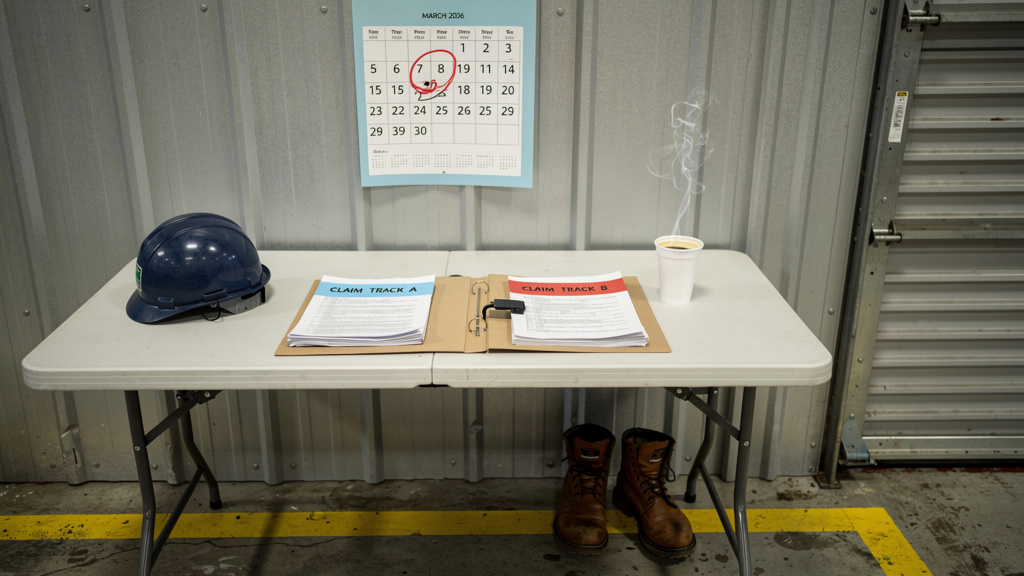
Workers’ comp pays your medical bills and part of your lost wages no matter who caused your fall, but it will not pay for pain and suffering or your full income loss. If someone outside your employer, such as a cleaning contractor, a property owner, or a ladder manufacturer, caused or contributed to your fall, you may be able to pursue a separate third-party negligence claim at the same time, which can recover the losses workers’ comp leaves behind.
Who are you actually making a claim against in each situation?
A workers’ compensation claim runs against your employer’s insurance carrier through Florida’s administrative system, not through a lawsuit. A third-party claim is a civil negligence claim, which can lead to a lawsuit in civil court, against an outside person or company whose actions led to your fall. Florida law shields your employer from being sued under the “exclusive remedy” rule, but that protection does not extend to others.
Take a warehouse worker in Hialeah who slips on a wet floor left by an outside cleaning crew. The workers’ comp claim goes to the employer’s insurer. The third-party claim targets the cleaning company for failing to warn or clean up properly.
If a delivery driver falls on a customer’s broken front steps in Medley, their workers’ comp claim still goes to their employer’s carrier. The third-party claim goes against the property owner who allowed the dangerous condition to exist.
If a stocker in a Hialeah distribution center is hurt when a defective ladder collapses, workers’ comp covers initial care through the employer’s policy. The third-party product liability claim aims at the ladder’s manufacturer or distributor. Filing workers’ comp does not block you from suing these outside parties.
Does fault matter, and what do you have to prove for each claim?
Workers’ compensation is no-fault. You only need to show your injury happened while you were doing your job. You do not have to prove your employer did anything wrong.
A third-party claim is different. You must prove four things: the outside party owed you a duty of care, they breached that duty, their breach caused your fall, and you suffered real losses as a result.
Using the warehouse example again, the worker gets comp benefits even if the employer never knew about the spill. But to recover from the cleaning company, the worker must show the contractor had a duty to keep floors safe, failed in that duty by leaving the area wet and unmarked, and that this directly caused the fall and injuries. Without proving all four elements, the third-party case will not succeed.
What does each claim actually pay, and what does it leave out?
Workers’ comp covers reasonable medical treatment related to your injury and replaces part of your lost wages, along with other statutory benefits. It does not pay for pain and suffering, full wage loss, or other non-economic harms, and its benefits for lost future earning capacity are partial and capped.
A third-party claim can recover all of those. That includes full past and future medical costs, all lost income (not just a portion), diminished ability to earn going forward, pain and suffering, and loss of enjoyment of life.
Consider the stocker injured by the defective ladder. Comp might pay for the surgery and two-thirds of missed paychecks. But if the injury ends their ability to work in physical roles, comp’s partial, capped wage benefits will not fully cover that long-term earning loss, and comp does not pay for daily chronic pain. Only a successful claim against the ladder maker could reach those damages.
| Benefit Type | Workers’ Comp | Third-Party Claim |
|---|---|---|
| Medical bills | Covered | Covered |
| Partial wage replacement | Covered | Full past/future wages covered |
| Pain and suffering | Not covered | Covered |
| Future earning capacity | Limited (partial, capped benefits) | Covered |
| Non-economic damages | Not covered | Covered |
Any money recovered from the third party may be subject to a lien from the workers’ comp carrier to repay what it already paid.
How does comparative fault affect the third-party claim but not workers’ comp?
Under Florida Statute § 768.81, modified comparative fault applies to third-party claims. A jury assigns fault percentages to everyone involved. Your damages are reduced by your share of fault. If you are found more than 50 percent at fault, you recover nothing from the third party.
This rule has no effect on workers’ comp. Those benefits are generally paid even if you were partly careless.
Imagine the delivery driver falling on broken steps while distracted by their phone. If a jury says the driver was 30 percent at fault, their third-party recovery drops by 30 percent. But their comp benefits remain untouched. If the jury finds the driver 51 percent at fault, the third-party claim fails entirely, yet comp coverage continues. For lawsuits filed before March 24, 2023, Florida used a different fault rule (pure comparative fault), so older cases may follow different standards.
Can you pursue both claims at the same time, and what happens to the lien?
Yes. Receiving workers’ comp does not stop you from suing a third party. For example, a third-party case can settle while the workers’ comp case stays open for future treatment.
If you settle or win the third-party case, the workers’ comp carrier may assert a lien against your recovery for the amounts it already paid. Florida’s workers’ compensation statute allows this subrogation right. The exact amount the carrier can recover depends on a formula in the comp statute (Fla. Stat. § 440.39), the settlement terms, and the facts of the case. The lien can sometimes be reduced, but you should expect the issue to arise.
What are the deadlines, and why do they run on different clocks?
For a third-party negligence claim stemming from an injury on or after March 24, 2023, you generally have two years from the date of injury to file a lawsuit under Florida Statute § 95.11. Injuries before that date may fall under older rules with longer deadlines, so confirm with an attorney.
Workers’ comp has its own strict administrative deadlines under Chapter 440, including early notice requirements and claim filing cutoffs. These are separate from the civil lawsuit clock.
For example, a Medley warehouse worker injured in January 2025 typically has until January 2027 to sue a third party. But they must report the injury to their employer much sooner under Chapter 440, and the comp claim has its own separate filing deadlines. Missing either deadline can permanently end that path. Evidence like security footage or maintenance logs at worksites also vanishes fast, often within weeks.
Frequently asked questions
Can workers’ comp stop me from suing the cleaning company that left the wet floor?
No. Workers’ comp protects your employer from lawsuits, not outside parties like cleaning contractors. You can pursue both claims at once.
If I was partly at fault for my fall, can I still recover anything from the third party?
Yes, as long as you are found 50 percent or less at fault. Your recovery will be reduced by your percentage of fault.
How long do I have to file a lawsuit against the third party who caused my fall at work?
Generally two years from the injury date if the fall happened on or after March 24, 2023. Earlier injuries may have different deadlines.
Will the workers’ comp carrier take money out of my third-party settlement?
Possibly. The carrier may assert a lien to recover what it paid for medical and wage benefits. The amount can sometimes be reduced.
Does pain and suffering get paid through workers’ comp?
No. Workers’ comp does not cover pain and suffering, emotional distress, or other non-economic damages under any circumstances.
Related reading: I fell in a store in Hialeah. Can I make a claim? · What happened to you? · The 14-day PIP rule in Florida: what happens if you wait to see a doctor after a Hialeah car accident · How long do I have to file an injury lawsuit in Florida? The two-year rule after HB 837
Hurt in an accident in Hialeah? Call Wolfson & Leon at 305-965-3766 for a free consultation. We speak Spanish, and there is no fee unless we win.
Key facts
- Workers' compensation is a no-fault system, meaning a Hialeah warehouse worker who slips on a spill does not have to prove the employer was negligent to receive medical and wage benefits. Source: Fla. Stat. § 440.015
- A third-party negligence claim in Florida must generally be filed within two years of the injury date for incidents occurring on or after March 24, 2023. Source: Fla. Stat. § 95.11
- Florida's modified comparative fault rule reduces a third-party negligence recovery by the injured person's share of fault and bars recovery entirely only if that person is found more than 50 percent at fault; this rule does not apply to the workers' comp claim. Source: Fla. Stat. § 768.81
- When a workers' comp carrier pays benefits and the injured worker later recovers money from a third party, the carrier may assert a lien, sometimes called a subrogation lien, against that third-party recovery to recoup what it paid. Source: Fla. Stat. § 440.39
- Workers' comp does not pay pain and suffering, full lost wages, or other non-economic damages, and its benefits for lost earning capacity are partial and capped; a successful third-party negligence claim may recover those losses. Source: Fla. Stat. §§ 440.13, 440.15
Frequently asked questions
Can workers' comp stop me from suing the cleaning company that left the wet floor?
No. Workers' comp's exclusive-remedy rule protects your direct employer from most negligence lawsuits, but it does not protect outside companies such as a cleaning contractor. If a cleaning company hired separately from your employer left the spill that caused your fall, you can pursue a workers' comp claim against your employer's carrier and a separate negligence lawsuit against the cleaning company at the same time. The two claims run on different tracks with different rules.
If I was partly at fault for my fall, can I still recover anything from the third party?
Under Florida's modified comparative fault rule in Fla. Stat. § 768.81, you can still recover from a third party as long as you are found 50 percent or less at fault, your damages are simply reduced by your fault percentage. Only if you are found more than 50 percent at fault does the third-party claim get barred entirely. Your workers' comp benefits are generally not reduced by a fault finding in the third-party case.
How long do I have to file a lawsuit against the third party who caused my fall at work?
For injuries that occurred on or after March 24, 2023, Florida generally gives you two years from the date of the fall to file a third-party negligence lawsuit under Fla. Stat. § 95.11. That clock runs independently from your workers' comp deadlines, which are governed by separate and strict administrative rules under Florida Chapter 440. Missing either deadline can permanently close that path to recovery, so time matters from the first day after the injury.
Will the workers' comp carrier take money out of my third-party settlement?
Possibly, yes. Florida law gives the workers' comp carrier a subrogation interest, meaning it may seek repayment from any money you recover in a third-party settlement or verdict for benefits it already paid on your behalf. The exact amount at issue and whether it can be reduced depends on the specific facts, the settlement structure, and how the claim is handled. This is one reason why tracking both claims carefully and getting experienced counsel matters before finalizing any third-party settlement.
Does pain and suffering get paid through workers' comp?
No. Florida's workers' compensation system does not include compensation for pain and suffering, loss of enjoyment of life, or other non-economic damages. Those categories of loss are only available through a third-party negligence claim against the outside party who caused the fall. For workers who suffer serious injuries, herniated discs, broken bones, or injuries requiring surgery, this gap between what comp pays and what a third-party claim can recover is often the most significant financial difference between the two paths.
This article is general information about Florida law, not legal advice, and reading it does not create an attorney-client relationship. Every case is different and past results do not guarantee a similar outcome. For advice about your situation, call Wolfson & Leon at 305-965-3766 for a free consultation.
Also available in: Versión en español
 Slip and fall
 How Do I Know If My Slip and Fall Is Serious Enough to Call a Lawyer?
If you needed medical treatment beyond basic first aid, missed work, or the store or property owner is denying fault, your slip and fall is serious…
 Slip and fall
 What to Bring to a Free Slip-and-Fall Consultation in Hialeah
You do not need every document before calling, bring what you have, and an attorney can identify what still needs to be gathered. The most useful…
 Slip and fall
 I Just Slipped in a Grocery Store: What to Do Before You Leave
The next 60 minutes inside that store will determine whether your case can be proven or lost. Before you walk out, you need to report the fall to a…