
How Do I Know If My Slip and Fall Is Serious Enough to Call a Lawyer?
If you needed medical treatment beyond basic first aid, missed work, or the store or property owner is denying fault, your slip and fall is serious enough to at least speak with a lawyer. The real risk is not calling too soon, it is waiting while evidence disappears and deadlines close in. A free consultation costs you nothing and tells you exactly where you stand.
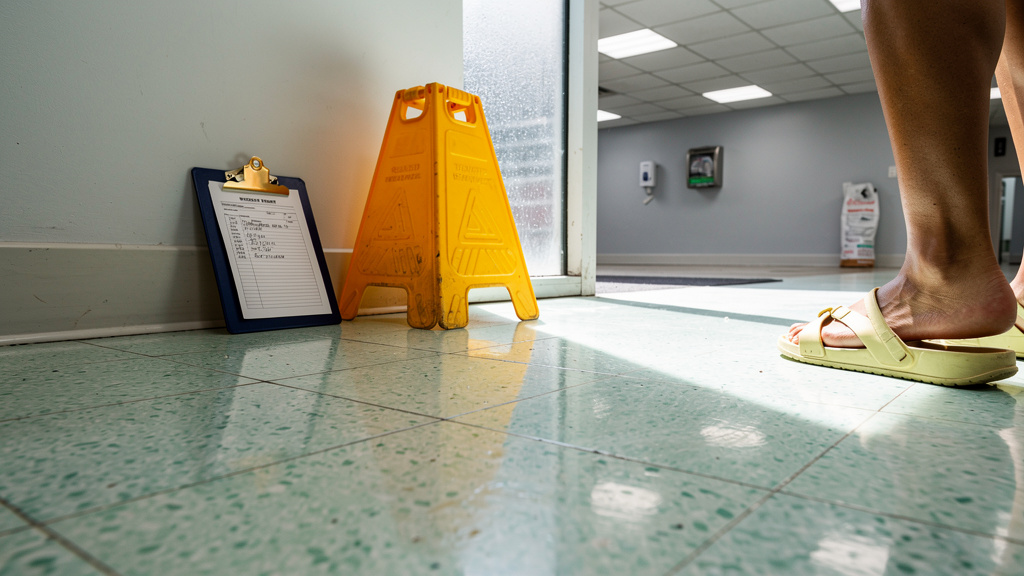
If you needed medical treatment beyond basic first aid, missed work, or the store or property owner is denying fault, your slip and fall is serious enough to at least speak with a lawyer. The real risk is not calling too soon, it is waiting while evidence disappears and deadlines close in. A free consultation costs you nothing and tells you exactly where you stand.
What injuries and losses tell you to call a lawyer right away?
You should consider contacting a lawyer if any of these apply: (1) You went to an emergency room, urgent care, or saw a specialist, not just a single routine doctor visit. (2) Your injury includes a broken bone, head strike, back or neck pain, concussion, herniated disc, or required imaging like an MRI or CT scan. (3) A doctor has recommended surgery, physical therapy, injections, or ongoing pain management. (4) You have missed work or expect to miss income due to the fall. (5) Your symptoms lasted more than a few days and you are still under care. Falls are the leading cause of traumatic brain injuries in the United States according to the CDC. Even without fractures, soft-tissue injuries can support a valid claim. Ignore online myths that say “no broken bones means no real case.” If your fall caused pain, limited movement, or a hard impact to your hip, back, shoulder, or knee, treat it as serious until a doctor confirms otherwise.
What should you do if the store denies fault or an insurer calls you?
If a manager, owner, or insurance representative says things like “it’s not that serious,” “you should have been watching where you were going,” or “there was a warning sign,” they are already building a defense. Their goal is often to minimize what they pay. Do not give a recorded statement to the property owner’s insurer before speaking with a lawyer, the statement can be used to lock in details before you fully understand the extent of your injuries. The business controls critical evidence: surveillance video, cleaning logs, inspection records, and prior incident reports. Footage can be overwritten, sometimes within days or weeks. A lawyer can send immediate preservation demands to stop that loss. Wolfson & Leon answers calls 24/7 and offers free consultations in Spanish and English to help you protect your rights from day one.
How does the age of the hazard affect your case, and why does it matter under Florida law?
Under Florida Statute § 768.0755, you must prove the business either knew about the dangerous condition (actual knowledge) or should have known because it existed long enough to be discovered through reasonable inspection (constructive knowledge). Actual knowledge might mean an employee saw the spill and walked away. Constructive knowledge could be shown by a spill with dried edges, footprints through it, a curled floor mat, a broken step with worn paint, or a puddle under a leaking fridge. Insurers often argue the hazard appeared seconds before your fall to avoid liability. Photos, witness statements, and fast requests for surveillance footage counter that defense. The three key types of evidence are video, inspection logs, and employee testimony. The longer the hazard was present, the stronger your case, so acting quickly matters.
What happens if they try to blame you for the fall?
Florida follows modified comparative negligence under Florida Statute § 768.81(6). If you are found 50 percent or less at fault, you can still recover damages, but your award is reduced by your percentage of blame. If you are more than 50 percent at fault, you recover nothing. For example, if your total losses are $100,000 and you are found 20 percent responsible, you would receive $80,000. Insurers commonly argue you were distracted by your phone, wore inappropriate shoes, ignored a visible hazard, or failed to heed a warning sign. But a warning sign does not automatically defeat your claim, if it was poorly placed, not visible from your approach, or the danger exceeded what the sign described, the property owner may still share responsibility. A lawyer works to ensure your share of fault is fairly assessed, not inflated to cut your recovery.
Are there situations where you may not need a lawyer?
It may be reasonable to handle a claim on your own only if all these are true: no medical treatment was needed beyond minimal first aid, symptoms resolved within a day or two without returning, you had no out-of-pocket costs, and the business is not disputing anything. Even then, this is not a guarantee, what feels minor can worsen. Injuries like whiplash or concussions sometimes show up days later. A bruised ego and one urgent care bill may not justify legal action, but fractures, surgery, missed work, or ongoing treatment usually change that calculation. Because a consultation is free and carries no obligation, there is little downside to asking a lawyer for an honest assessment of your situation. Wolfson & Leon offers those consultations in Spanish and English.
Why do deadlines make waiting dangerous, and what is different about government property in Hialeah or Miami-Dade?
For falls occurring on or after March 24, 2023, Florida Statute § 95.11 gives you two years to file a negligence lawsuit. Miss that deadline and your right to sue ends permanently. If your fall happened on City of Hialeah sidewalks, parks, public buildings, or other Miami-Dade County government property, Florida Statute § 768.28(6) adds another requirement: you must file written notice of your claim with the government entity before suing. That notice is a separate requirement from the two-year limit, and the agency gets time to review it before you can sue, so act immediately if government property is involved. Meanwhile, evidence vanishes fast. Surveillance systems may overwrite footage within days or weeks. Cleaning logs get tossed. Witnesses forget details. Waiting even a few weeks can destroy your case before the legal clock runs out. Wolfson & Leon is available 24/7 for free consultations in Spanish or English to help you meet every deadline and preserve critical proof.
Frequently asked questions
Does my slip and fall case have to involve a broken bone to be worth calling a lawyer about?
No. Fractures are not required. Valid claims often involve concussions, back injuries, herniated discs, or soft-tissue damage that requires ongoing treatment or causes missed work. The key factors are medical need and financial loss, not whether a bone was broken.
The insurer called and wants a recorded statement. Should I give one?
Do not give a recorded statement without first speaking to a lawyer. The insurer may use your words to limit or deny your claim, especially if your injuries worsen after the statement. A free consultation can help you understand your rights before you commit to anything.
I fell on a Hialeah city sidewalk. Is my case handled the same way as a fall in a store?
No. Falls on City of Hialeah or Miami-Dade County property require written notice to the government before you can file a lawsuit. This notice is a separate requirement from the standard two-year limit. Missing it can bar your claim entirely.
How long do I have to file a slip and fall lawsuit in Florida?
For injuries occurring on or after March 24, 2023, you have two years from the date of the fall to file a lawsuit under Florida Statute § 95.11. Prior to that date, the deadline was four years, but that no longer applies to new cases.
The wet floor sign was up. Does that mean I automatically lose my case?
Not necessarily. A warning sign does not guarantee the business is off the hook. If the sign was hidden, improperly placed, or the actual hazard was worse than warned, the owner may still be liable. A lawyer can assess whether the warning was adequate under the circumstances.
Related reading: I fell in a store in Hialeah. Can I make a claim? · The 14-day PIP rule in Florida: what happens if you wait to see a doctor after a Hialeah car accident · How long do I have to file an injury lawsuit in Florida? The two-year rule after HB 837 · The driver who hit me in Hialeah has no insurance. What now?
Hurt in an accident in Hialeah? Call Wolfson & Leon at 305-965-3766 for a free consultation. We speak Spanish, and there is no fee unless we win.
Key facts
- Florida gives you two years from the date of injury to file a negligence lawsuit for falls occurring on or after March 24, 2023. Miss that deadline and the right to sue is gone permanently, regardless of how serious the injury is. Source: Fla. Stat. § 95.11
- In a slip and fall involving a spill or wet floor, the injured person must prove the business had actual or constructive knowledge of the hazard, meaning it knew about it, or the condition existed long enough that it should have been discovered through reasonable inspection. Source: Fla. Stat. § 768.0755
- If you are found more than 50 percent at fault for your own fall, Florida law bars you from recovering any compensation. Being blamed even partially reduces what you can recover by your percentage of fault. Source: Fla. Stat. § 768.81(6)
- If you were injured on City of Hialeah or Miami-Dade County property, Florida law requires written notice of your claim to be filed with the government entity before you can sue. That notice requirement is separate from the two-year statute of limitations. Source: Fla. Stat. § 768.28(6)
- Surveillance footage at stores may be overwritten within days or weeks. Inspection logs and employee memories deteriorate quickly after an incident. Evidence that could prove the hazard existed long enough to trigger liability can vanish before the injured person realizes they need it. Source: Wolfson & Leon
Frequently asked questions
Does my slip and fall case have to involve a broken bone to be worth calling a lawyer about?
No. Soft-tissue injuries, sprains, herniated discs, torn ligaments, and concussions, can support a legitimate claim even without a fracture. The question is whether you have real, documentable losses: medical bills, missed work, ongoing treatment, or lasting limitations. A broken bone is easy to see on an X-ray, but that does not mean other injuries are not serious. An attorney can evaluate the full picture, including injuries that develop or worsen over days after the fall.
The insurer called and wants a recorded statement. Should I give one?
Do not give a recorded statement to the property owner's insurer before speaking with a lawyer. An insurer may want to lock in your version of events before you know the full extent of your injuries or before key evidence has been reviewed. Anything you say can be used to challenge your claim later. Declining to give a statement until you have legal advice is not dishonest, it is a reasonable precaution.
I fell on a Hialeah city sidewalk. Is my case handled the same way as a fall in a store?
Not exactly. Falls on City of Hialeah or Miami-Dade County government property require written notice to the government entity before you can file a lawsuit, under Fla. Stat. § 768.28(6). That notice is a separate requirement from the two-year statute of limitations for filing suit under Fla. Stat. § 95.11. If you fell on public property, talk to a lawyer about the notice immediately, missing it can bar your claim entirely, even if your injury is serious and clearly caused by a government-maintained hazard.
How long do I have to file a slip and fall lawsuit in Florida?
For falls occurring on or after March 24, 2023, you have two years from the date of injury to file a negligence lawsuit under Fla. Stat. § 95.11. Before that date the deadline was four years, but that longer period does not apply to recent falls. Missing the deadline means a court will dismiss the case regardless of how strong the facts are. Practical evidence deadlines, surveillance footage, inspection logs, witness memory, expire much sooner, so waiting even a few weeks can cost you more than you realize.
The wet floor sign was up. Does that mean I automatically lose my case?
Not necessarily. A warning sign is one factor, not an automatic defense. If the sign was poorly placed, not visible from the direction you were walking, put up after you fell, or the hazard was more dangerous than any reasonable sign could adequately warn about, the property owner may still share responsibility. The facts of where the sign was, whether you could reasonably have seen it, and whether it accurately described the hazard all matter. This is exactly the kind of dispute where an attorney's review of the evidence, including surveillance footage, makes a difference.
This article is general information about Florida law, not legal advice, and reading it does not create an attorney-client relationship. Every case is different and past results do not guarantee a similar outcome. For advice about your situation, call Wolfson & Leon at 305-965-3766 for a free consultation.
Also available in: Versión en español
 Slip and fall
 What to Bring to a Free Slip-and-Fall Consultation in Hialeah
You do not need every document before calling, bring what you have, and an attorney can identify what still needs to be gathered. The most useful…
 Slip and fall
 I Just Slipped in a Grocery Store: What to Do Before You Leave
The next 60 minutes inside that store will determine whether your case can be proven or lost. Before you walk out, you need to report the fall to a…
 Slip and fall
 How to Prove a Hialeah Grocery Store Should Have Known About the Spill
Under Fla. Stat. § 768.0755, you do not need proof that an employee saw the spill, you need circumstantial evidence that the hazard sat on the floor…