
What Happens After You File a UM Claim With Your Own Insurance Company
Once you file a UM claim, your own insurance company opens a file, assigns an adjuster, and immediately begins investigating the crash from the position of paying you as little as possible, even though you have been paying them premiums for years. The process moves through several predictable steps: confirming the other driver had no coverage, taking your statement, collecting your medical records, and eventually making an offer. Knowing what is coming at each stage, and what documents to hand over when, is the difference between a fair recovery and leaving money on the table.
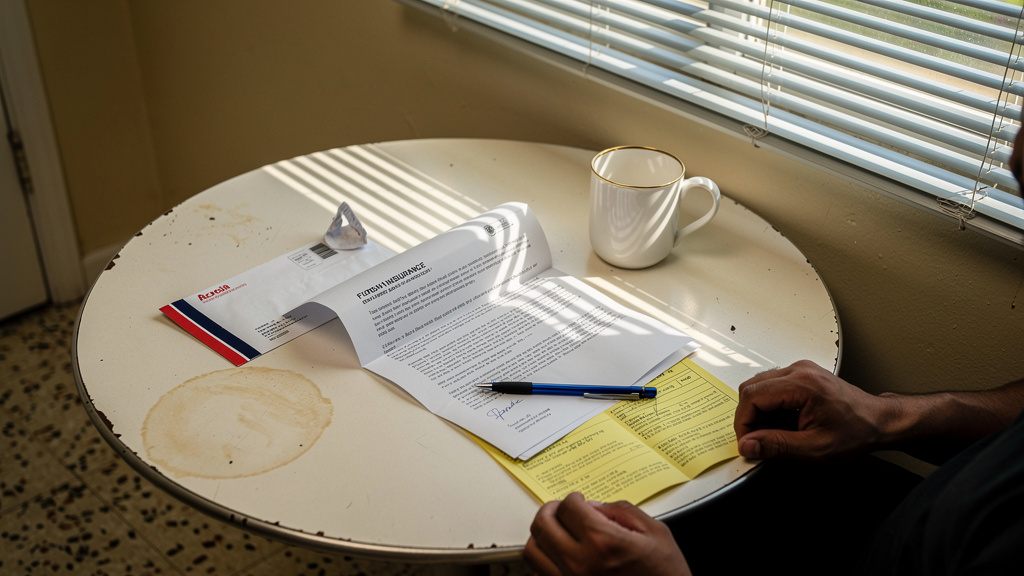
Once you file a UM claim, your own insurance company opens a file, assigns an adjuster, and immediately begins investigating the crash from the position of paying you as little as possible, even though you have been paying them premiums for years. The process moves through several predictable steps: confirming the other driver had no coverage, taking your statement, collecting your medical records, and eventually making an offer. Knowing what is coming at each stage, and what documents to hand over when, is the difference between a fair recovery and leaving money on the table.
Step 1: What do I get right after I call in the claim?
Usually soon after your call, your insurer opens a claim file, assigns an adjuster, and issues a claim number. That number becomes your lifeline for every future interaction, write it down and use it on every call, email, or document you send. The adjuster works for the insurance company, not for you, and their job is to protect the insurer’s interests. Most policies require you to report the crash “as soon as practicable.” Delaying notice gives the insurer a reason to deny or reduce your claim. During that first call, ask for the adjuster’s name, direct phone number, email, and a copy of your declarations page showing your uninsured motorist (UM) coverage limits. If you never signed a written rejection of UM coverage, you likely have it under [Fla. Stat. § 627.727], even if you did not know.
Step 2: How does the insurer confirm the other driver really had no insurance?
Your insurer must verify whether the other driver was uninsured (no policy at all) or underinsured (policy exists but limits are too low). This falls under [Fla. Stat. § 627.727], which defines both as qualifying for UM coverage. The insurer will check the other driver’s coverage status using insurance databases, contact the listed insurer, review the crash report, and may reach out to the Florida Department of Highway Safety and Motor Vehicles. In Hialeah, crash reports may come from the Hialeah Police Department, Miami-Dade Sheriff’s Office, or Florida Highway Patrol, depending on where the crash happened. Under [Fla. Stat. § 316.066], those reports are confidential for 60 days but are available immediately to you, your insurer, and your attorney. Do not assume your claim is approved until the insurer confirms the other driver’s coverage status.
Step 3: What if the adjuster asks for a recorded statement or an examination under oath?
Many UM policies include a cooperation clause that may require you to give a recorded statement or attend an Examination Under Oath (EUO). A recorded statement is usually done by phone and informally recorded. An EUO is more formal, it is sworn testimony, taken in person with a court reporter, and often attended by the insurer’s lawyer. If your policy requires it, refusing could put your claim at risk. However, giving a statement before you fully understand your injuries can hurt your case. Unlike a statement to the at-fault driver’s insurer, which you should not give without legal help, your own insurer may be able to require your cooperation under your policy. For serious injuries, speak with an attorney before agreeing to either type of statement. EUOs are common in high-value or disputed UM claims but not automatic in every case.
Step 4: What medical records does the insurer want, and what are my rights over my own records?
The insurer will request all medical records and bills related to your crash injuries. To get them directly, they will ask you to sign a HIPAA-compliant authorization. You have your own legal right to those records under [Fla. Stat. § 456.057]. At Wolfson & Leon, we obtain records directly from providers using your signed authorization so you do not have to manage paperwork. In Hialeah, that often means requesting files from Hialeah Hospital and Palmetto General Hospital. Be cautious about signing blanket authorizations that go back many years, they can expose unrelated pre-existing conditions. The insurer uses your records to look for treatment gaps, prior injuries, or inconsistencies to argue your damages are less than claimed. Ask that your authorization be limited to crash-related care.
Step 5: When does PIP run out and when does UM coverage kick in?
Personal Injury Protection (PIP) always pays first. It covers 80 percent of reasonable medical bills and 60 percent of lost wages, up to $10,000 if a doctor finds an emergency medical condition, or only $2,500 without that finding ([Fla. Stat. § 627.736(1)]). You must see a doctor within 14 days of the crash or PIP pays nothing. Once PIP is exhausted, or if your total damages exceed what PIP covers, UM coverage may step in to pay the difference. UM does not duplicate PIP; it covers what PIP leaves unpaid. Importantly, PIP does not pay for pain and suffering at all. UM can cover pain and suffering, but only if you meet the permanent injury threshold under [Fla. Stat. § 627.737(2)]: permanent injury, significant and permanent loss of bodily function, significant scarring, or death.
Step 6: What happens when the insurer makes an offer, and what if it is too low or denied?
After treatment ends or reaches maximum medical improvement, a demand package is sent with all medical records, bills, wage loss proof, and a damages calculation. The insurer reviews it and typically makes a lower counteroffer. Negotiations follow. If you settle, you sign a release and get paid, but that release ends all claims under your UM policy. Before settling with the at-fault driver’s insurer, you must notify your UM carrier by certified mail under [Fla. Stat. § 627.727(6)]. If the offer is too low or your claim is denied, your options include arbitration (if your policy requires it), filing a lawsuit against your insurer, or, in some cases, a bad-faith claim. Remember, deadlines keep running during negotiations: the two-year deadline to sue the at-fault driver under [Fla. Stat. § 95.11] does not pause, and a UM claim against your own insurer is a contract claim with its own deadline, so have a lawyer confirm your timing early. A denial or a lowball offer is not the end of the road, it is where the case often begins.
Frequently asked questions
How long does a UM claim take to settle in Florida?
Many UM claims take several months to over a year, depending on how quickly you finish treatment, how complex the injuries are, and whether the insurer disputes coverage or value. Cases that go to arbitration or trial take longer.
Do I have to give my own insurance company a recorded statement?
Often, yes. Many UM policies require you to cooperate, which can include giving a recorded statement or attending an Examination Under Oath. Refusing could put your claim at risk.
Can I settle with the other driver’s insurer and still file a UM claim?
Yes, but you must notify your UM carrier in writing before accepting the other driver’s settlement. Under [Fla. Stat. § 627.727(6)], your UM insurer then has 30 days to act to protect its rights.
Who has to prove the other driver was uninsured?
You do. Your insurer will help verify it, but the burden starts with you to show the other driver lacked sufficient coverage.
Does UM cover my car repairs?
No. UM coverage applies only to bodily injury, not property damage. For vehicle repairs, you would need collision coverage or pursue the at-fault driver directly if they have assets.
Related reading: The driver who hit me in Hialeah has no insurance. What now? · How long does a personal injury case take in Miami-Dade? · Stacked vs. non-stacked uninsured motorist coverage in Florida: what the checkbox on your policy actually means · The 14-day PIP rule in Florida: what happens if you wait to see a doctor after a Hialeah car accident
Hurt in an accident in Hialeah? Call Wolfson & Leon at 305-965-3766 for a free consultation. We speak Spanish, and there is no fee unless we win.
Key facts
- UM coverage is optional in Florida but must be rejected in writing; if you never signed a rejection form, you may have it without realizing it. Source: Fla. Stat. § 627.727
- PIP pays 80 percent of reasonable medical bills and 60 percent of lost wages up to $10,000 when a doctor finds an emergency medical condition, or only up to $2,500 without that finding, but you must seek treatment within 14 days of the crash or PIP pays nothing. Source: Fla. Stat. § 627.736
- Before accepting any settlement from the at-fault driver's insurer, you must send written notice to your UM carrier by certified or registered mail; the carrier then has 30 days to approve the settlement or protect its subrogation rights by advancing the amount itself. Source: Fla. Stat. § 627.727(6)
- UM coverage generally does not pay pain-and-suffering damages unless the injured person suffered a permanent injury, significant and permanent loss of an important bodily function, significant and permanent scarring or disfigurement, or death. Source: Fla. Stat. § 627.737(2)
- The statute of limitations for negligence claims against the at-fault driver arising from crashes on or after March 24, 2023 is two years from the date of the accident; ongoing settlement negotiations do not pause this clock. Source: Fla. Stat. § 95.11
Frequently asked questions
How long does a UM claim take to settle in Florida?
There is no fixed timeline, and individual claims vary widely based on the severity of injuries, how long treatment continues, and how aggressively the insurer disputes the claim. Simple claims with limited injuries and clear liability may resolve in a few months; serious injury cases involving ongoing treatment, disputed causation, or an examination under oath can take a year or longer. Deadlines do not pause for negotiations: the two-year deadline in Fla. Stat. § 95.11 applies to a negligence lawsuit against the at-fault driver, and a UM claim against your own insurer is a contract claim with its own deadline, so have a lawyer confirm your timing.
Do I have to give my own insurance company a recorded statement?
Many UM policies contain a cooperation clause that may require you to give a statement to your own insurer, and refusing to cooperate can give the insurer grounds to deny coverage. However, you have the right to consult an attorney before sitting for any recorded statement or examination under oath. Statements made before the full extent of your injuries is known can be used to minimize your claim, so getting legal advice first is strongly recommended in any case involving serious injury.
Can I settle with the other driver's insurer and still file a UM claim?
Yes, but only if you follow the required procedure first. Under Fla. Stat. § 627.727(6), you must send written notice to your UM carrier, by certified or registered mail, before finalizing any settlement with the at-fault driver's insurer. The UM carrier then has 30 days to approve the settlement or protect its subrogation rights by paying the settlement amount itself. Signing a release before completing this step can destroy your UM claim entirely, even if it would have been worth significantly more than the liability settlement.
Who has to prove the other driver was uninsured?
In practice, your insurer will investigate and confirm coverage status using the crash report and its own databases, but the burden ultimately rests on you as the claimant to show that the other driver qualifies as an 'uninsured' or 'underinsured' motorist under your policy and Fla. Stat. § 627.727. The crash report from Hialeah Police, the Miami-Dade Sheriff's Office, or Florida Highway Patrol is the starting point, but the insurer may require additional documentation, especially if the at-fault driver disputes having no coverage.
Does UM cover my car repairs?
Generally, no. UM coverage as governed by Fla. Stat. § 627.727 addresses bodily injury, medical expenses, lost wages, pain and suffering, and other personal injury damages. Vehicle repair costs are typically handled through collision coverage. Do not assume UM will pay for your car; check your declarations page for collision and property damage coverages.
This article is general information about Florida law, not legal advice, and reading it does not create an attorney-client relationship. Every case is different and past results do not guarantee a similar outcome. For advice about your situation, call Wolfson & Leon at 305-965-3766 for a free consultation.
Also available in: Versión en español
 Personal injury
 Your Bilingual Lawyer Usually Can't Interpret When You Testify Under Oath
Yes, even if your lawyer is fully bilingual, you will usually need a separate, qualified interpreter whenever you give sworn testimony. Your…
 Personal injury
 Who Do You Call First to File an Uninsured Motorist Claim in Florida?
Call your own insurance company, not the other driver's, because uninsured motorist coverage is part of your own policy under Fla. Stat. § 627.727.…
 Personal injury
 How to Describe Your Injuries at the ER When English Is Not Your First Language
The first medical record created after your crash, whether at Hialeah Hospital, Palmetto General, or an urgent-care clinic on West 68th Street,…