
How to Describe Your Injuries at the ER When English Is Not Your First Language
The first medical record created after your crash, whether at Hialeah Hospital, Palmetto General, or an urgent-care clinic on West 68th Street, becomes the foundation of your entire insurance claim. If that record is incomplete because you could not describe your pain clearly in English, your Florida PIP insurer may pay only $2,500 instead of the full $10,000, and a later claim for pain and suffering may have no medical anchor. You can ask for a qualified interpreter before the nurse or doctor documents a single symptom, and you should bring a written list of every pain in Spanish so nothing is lost in translation.
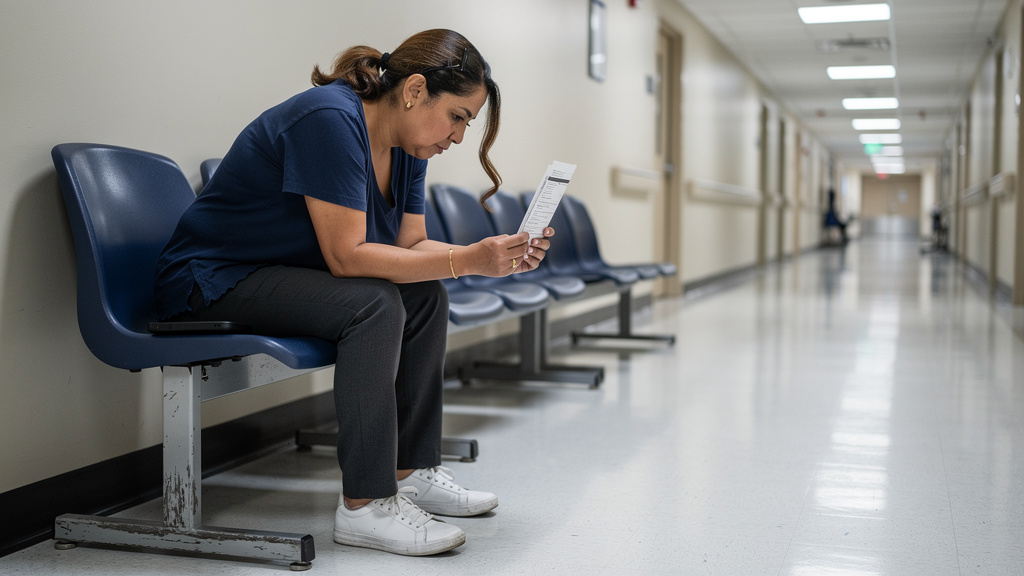
The first medical record created after your crash, whether at Hialeah Hospital, Palmetto General, or an urgent-care clinic on West 68th Street, becomes the foundation of your entire insurance claim. If that record is incomplete because you could not describe your pain clearly in English, your Florida PIP insurer may pay only $2,500 instead of the full $10,000, and a later claim for pain and suffering may have no medical anchor. You can ask for a qualified interpreter before the nurse or doctor documents a single symptom, and you should bring a written list of every pain in Spanish so nothing is lost in translation.
Why does the very first medical record matter so much for whether PIP pays $2,500 or $10,000?
Florida’s Personal Injury Protection (PIP) insurance pays up to $10,000 for medical bills and lost wages only if a physician, osteopathic physician, dentist, physician assistant, or advanced practice registered nurse, often at that first visit to Hialeah Hospital, Palmetto General, or a Hialeah urgent-care clinic, documents an emergency medical condition (EMC). Without that finding, PIP coverage drops to a $2,500 cap. This determination depends heavily on what you tell the provider and what they write down. If you cannot clearly explain radiating leg pain, blurred vision, or neck stiffness due to a language barrier, the provider may lack enough clinical information to document an EMC. Remember, PIP pays regardless of who caused the crash. The adjuster is likely to review this first record closely for gaps or inconsistencies when evaluating benefits under Fla. Stat. § 627.736(1)(a).
Can I ask for a Spanish interpreter at the Hialeah Hospital or Palmetto General ER before they document my symptoms?
Yes. Tell the triage staff immediately: “I need an interpreter in Spanish before you write anything down. Por favor, necesito un intérprete en español antes de que escriban nada.” Hospitals that receive federal funding are generally expected to provide language assistance under federal civil-rights guidance, though the specific mechanism may vary by facility. Hospitals serving large Spanish-speaking populations often use phone or video interpretation services when in-person interpreters are not available. Do not let a family member, friend, or child interpret during this visit. Untrained interpreters often miss or soften key details, which can hurt your claim later. An accurate emergency-room record (see Fla. Stat. § 395.002(8) on emergency medical conditions) starts with clear communication.
What should I write on my symptom list before I walk into the ER, and how do I use it?
Before or just after arriving at the ER, write down every symptom in Spanish using this format: body part, type of pain, when it started, and severity from 1 to 10. For example: “Cuello, dolor agudo, desde el impacto, 7/10”; “Cabeza, presión y mareo, 30 minutos después, 6/10”; “Espalda baja, ardor, al llegar a casa, 5/10.” Hand this list to the triage nurse and ask that it be included in your chart or translated by the interpreter. Do not use words like “fractura” or “hernia” unless a doctor has told you that, stick to “dolor” and location. This list is not a diagnosis; it is your honest report of what you feel. Many injuries like whiplash or herniated discs do not show up right away because adrenaline masks pain. Saying you felt “okay” at the scene does not legally block your claim, but documenting when symptoms actually began helps prove they came from the crash.
The 14-day PIP window runs even if you had trouble communicating, what does that mean for crashes on Okeechobee Road or the Palmetto?
The law gives you exactly 14 days to get any medical treatment after a crash on Okeechobee Road (US-27), the Palmetto Expressway (SR-826), or West 68th Street, no exceptions for language barriers. If you wait longer than 14 days, PIP pays nothing. Zero. Not $2,500, not $10,000. This rule comes from Fla. Stat. § 627.736(1). Acceptable first-treatment locations include Hialeah Hospital ER, Palmetto General ER, or any licensed urgent-care clinic in Hialeah. Your PIP coverage comes first from your own auto policy. If you don’t have one, it comes from a relative in your household who does. Only if neither exists can a Florida-resident pedestrian or cyclist turn to the striking vehicle’s PIP; a passenger with no PIP of their own or in the household generally looks to the PIP on the vehicle they were riding in. Even if you feel only mild pain, go within 14 days, soft-tissue injuries, concussions, and spinal damage often worsen over time.
How do I get a copy of my ER record and what should I check for?
Under Fla. Stat. § 456.057, you have the right to request copies of your medical records (hospital records are covered by Fla. Stat. § 395.3025). Ask at discharge: “Quiero solicitar una copia completa de mi expediente médico de hoy. ¿Cómo lo hago?” Many hospitals offer online patient portals, request access before you leave. Within days, review the record for: every symptom you reported, the crash date and note that it was a motor vehicle accident, and whether an emergency medical condition was documented. If something is missing or wrong, like neck pain left out, contact the provider in writing to request a correction or addendum before sending the record to your insurer. Insurers may point to omissions to dispute claims, so accuracy matters from day one. Share the record with your attorney early so they can spot gaps before it’s too late.
How does the first ER record support a later permanent-injury claim against the at-fault driver?
To recover pain and suffering damages from the at-fault driver, Florida law requires proof of a permanent injury, permanent loss of a bodily function, or significant scarring (Fla. Stat. § 627.737(2)). That conclusion, often made months later by a specialist, is stronger when it connects back to your first medical record. If the ER record never mentions arm numbness, but you later learn you have a pinched nerve from the crash, the insurer will argue the injury wasn’t caused by the collision. A detailed first record makes that argument harder. Also, under modified comparative negligence (Fla. Stat. § 768.81(6)), you can still recover if you are 50 percent or less at fault, but not if you are more than 50 percent. Wolfson & Leon serves Hialeah and Miami-Dade and can review your initial record to check whether it supports your full claim.
Frequently asked questions
What if the ER didn’t document all my symptoms because they couldn’t understand me, can I fix the record later?
Yes. You can request a correction or addendum in writing. Do this as soon as possible and before submitting the record to your insurer. A timely amendment helps preserve the link between your crash and your injuries.
Does my immigration status affect whether I can use PIP after a crash in Hialeah?
No. PIP eligibility depends on your auto insurance policy or a resident relative’s policy, not your immigration status. Florida law does not require legal residency to access PIP benefits.
If I told the police at the scene that I felt fine, does that mean I can’t claim injuries now?
No. Adrenaline commonly masks pain right after a crash. Symptoms like headaches, dizziness, or back stiffness often appear hours or days later. What matters is that you seek care within 14 days and report symptoms honestly at that time.
Can a chiropractor or urgent-care clinic in Hialeah make the emergency medical condition finding that unlocks the full $10,000 in PIP?
Yes, but only certain providers can make an EMC determination. Licensed physicians, osteopaths, dentists, physician assistants, and advanced practice registered nurses can. Chiropractors cannot. Urgent-care clinics staffed by qualifying providers can issue the finding if they see you within 14 days.
How long do I have to sue the at-fault driver if my injuries turn out to be permanent?
For crashes on or after March 24, 2023, you have two years from the date of the crash to file a lawsuit under Florida’s statute of limitations (Fla. Stat. § 95.11). This deadline is firm, so do not delay getting legal advice.
Hurt in an accident in Hialeah? Call Wolfson & Leon at 305-965-3766 for a free consultation. We speak Spanish, and there is no fee unless we win.
Key facts
- Florida PIP pays up to $10,000 for medical bills and lost wages only when a physician, osteopathic physician, dentist, physician assistant, or advanced practice registered nurse determines there is an emergency medical condition; without that finding, the cap drops to $2,500. Source: Fla. Stat. § 627.736(1)(a)
- An injured person must receive initial medical treatment within 14 days of a crash or PIP pays nothing, regardless of any language barrier that delayed the visit. Source: Fla. Stat. § 627.736(1)
- Federal civil-rights rules generally require health facilities that receive federal funding to take reasonable steps to provide meaningful language access, such as qualified interpreters, to patients with limited English proficiency. Source: Title VI of the Civil Rights Act of 1964; Section 1557 of the Affordable Care Act (45 C.F.R. § 92.201); U.S. Department of Health and Human Services, Office for Civil Rights
- Recovering money for pain and suffering from an at-fault driver requires proof of a permanent injury, permanent loss of a bodily function, or significant scarring, and medical records starting with the first visit can help support that proof. Source: Fla. Stat. § 627.737(2)
- A patient or their authorized representative has the right to request copies of their own medical records from a Florida healthcare provider. Source: Fla. Stat. § 456.057
Frequently asked questions
What if the ER didn't document all my symptoms because they couldn't understand me, can I fix the record later?
Yes. Under Fla. Stat. § 456.057 (and Fla. Stat. § 395.3025 for hospital records), you have the right to request copies of your medical records, and federal privacy rules (HIPAA) let you ask the provider to amend the record if something was omitted or inaccurate. You should make this request in writing as soon as you review your record, ideally within days of the visit. An attorney can help you identify exactly what is missing and draft the correction request before the record is sent to your insurer.
Does my immigration status affect whether I can use PIP after a crash in Hialeah?
No. Florida PIP benefits are tied to the insurance policy on the vehicle, not to the driver's immigration status or English proficiency. If you are insured, your own PIP policy pays first. Your language and immigration status do not determine whether you qualify. What does matter is that you seek treatment within 14 days of the crash under Fla. Stat. § 627.736(1), that deadline applies to everyone equally.
If I told the police at the scene that I felt fine, does that mean I can't claim injuries now?
No. Telling an officer you feel fine at the scene does not legally bar a personal injury claim. Crash adrenaline commonly masks pain, and injuries like herniated discs, whiplash, and mild traumatic brain injury often develop or worsen hours after impact. What matters is that you document your symptoms accurately at your first medical visit and that the record explains when each symptom appeared. Insurers may try to use the scene statement against you, which is why the first ER or clinic record is so important.
Can a chiropractor or urgent-care clinic in Hialeah make the emergency medical condition finding that unlocks the full $10,000 in PIP?
A licensed physician, osteopathic physician, dentist, physician assistant, or advanced registered nurse practitioner can make an emergency medical condition finding under Florida's PIP statute. Chiropractors can treat under PIP but face limitations regarding the EMC determination, without a qualifying provider documenting an EMC, PIP may be capped at $2,500 under Fla. Stat. § 627.736(1)(a). If you go to an urgent-care clinic in Hialeah first, confirm that a licensed physician will examine you and document your condition, not only a nurse or intake staff member.
How long do I have to sue the at-fault driver if my injuries turn out to be permanent?
For crashes on or after March 24, 2023, Florida law gives you two years from the date of the accident to file a personal injury lawsuit under Fla. Stat. § 95.11. Missing that deadline almost certainly eliminates your right to sue. Because building the permanent-injury evidence needed under Fla. Stat. § 627.737(2) takes time, specialist visits, imaging, treatment records, you should consult an attorney well before the two-year mark, not after it.
This article is general information about Florida law, not legal advice, and reading it does not create an attorney-client relationship. Every case is different and past results do not guarantee a similar outcome. For advice about your situation, call Wolfson & Leon at 305-965-3766 for a free consultation.
Also available in: Versión en español
 Personal injury
 My UM Claim Was Denied or Too Low: What Happens Next in Florida
A denial or a lowball offer on a UM claim is not the end, it is the start of a second negotiation, and if that fails, a lawsuit against your own…
 Personal injury
 When You Call a Hialeah Car Accident Lawyer Number, Who Actually Answers?
When you call a number labeled 'Hialeah car accident lawyer' in Google results, you may be reaching the law firm itself, a national attorney…
 Personal injury
 Where to Find a Bilingual Spanish-English Personal Injury Lawyer in Hialeah
Wolfson & Leon has an office at 1840 W 49th St, Suite 734, Hialeah, FL 33012, where most attorneys and staff work in both English and Spanish, and…