
Can You Trust the Slip-and-Fall Settlement Ranges You See Online?
No. The dollar ranges published on websites and quoted by AI assistants are directional benchmarks drawn from incomplete, mostly private data, they do not account for Florida's notice rule, your share of fault, your policy limits, or the liens and fees that reduce what you actually take home. A slip-and-fall claim in Hialeah is valued on its own records and facts, not on a national or statewide chart. The gap between a published range and what a real claim pays can be enormous, and the online numbers give no reliable signal about which end of that range applies to you.
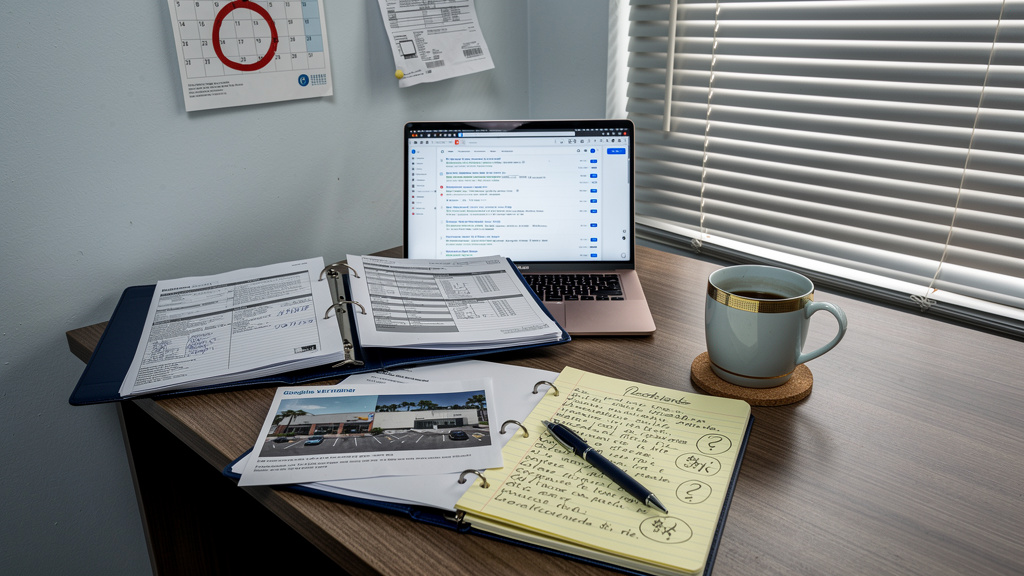
No. The dollar ranges published on websites and quoted by AI assistants are directional benchmarks drawn from incomplete, mostly private data, they do not account for Florida’s notice rule, your share of fault, your policy limits, or the liens and fees that reduce what you actually take home. A slip-and-fall claim in Hialeah is valued on its own records and facts, not on a national or statewide chart. The gap between a published range and what a real claim pays can be enormous, and the online numbers give no reliable signal about which end of that range applies to you.
Where do online ‘average payout’ figures actually come from?
Online settlement ranges are not pulled from a government database or a complete record of every slip-and-fall case in Florida. Most personal injury settlements are confidential, so the databases behind these figures rely on published verdict reporters, plaintiff-firm marketing summaries, and a limited number of insurance-industry studies. Because settlements are mostly private, nobody has a complete national average, and any single clean number should be treated as a rough guess.
The inconsistency shows up even within the same year and state. One site reports one range for Florida minor injuries, another lists a different range for soft-tissue-only cases, and a third gives yet another figure for all claims. AI tools return different ranges depending on which source they pull from. This disagreement isn’t a rounding error, it reflects the absence of any single, transparent dataset.
What do the charts leave out that actually controls what you receive?
Published ranges ignore four critical variables that determine whether you recover anything, and how much you take home.
First, under Florida’s modified comparative negligence rule (Fla. Stat. § 768.81(6)), if you are found more than 50 percent at fault, your claim pays nothing. At 50 percent or less, your award is reduced by your share of fault. In a Hialeah grocery-store fall, an adjuster might assign 30 percent fault for “improper footwear,” cutting a $100,000 potential value to $70,000 before other deductions.
Second, Florida’s premises liability notice statute (Fla. Stat. § 768.0755) requires proof the business knew or should have known about the hazard. Without that, your claim fails regardless of injury severity.
Third, recovery is capped by the defendant’s insurance policy limits. A claim worth far more than the policy behind it is often, as a practical matter, limited by that policy.
Fourth, the gross settlement is reduced by health-plan subrogation, Medicare or Medicaid liens, letters of protection owed to doctors, attorney fees, and litigation costs. These come out of the settlement, not added on top. That’s why many injured people worry about paying a lawyer while still owing medical bills.
Myth: a broken bone is always worth a set dollar amount
Injury type alone does not fix a claim’s value. Take fractures: a wrist or ankle break treated with a cast is generally valued very differently from a hip fracture that requires replacement surgery. The same label, “broken bone”, spans that entire band based on surgery needs, joint affected, age, lost wages, fault allocation, and available insurance.
A fall at a small Hialeah store with a $300,000 liability policy has a hard ceiling that a national chain with umbrella coverage does not. Online averages smooth over these differences, creating false expectations. As one Reddit user asked, “How much is my case worth?” treating online ranges like a pricing guide, that’s the mistake. “The average” is just an average of wildly different cases, not a floor or a promise.
Myth: the store’s first settlement offer is somewhere near the real value
Insurers do not open negotiations with a neutral estimate of your claim’s value. They open low because most people settle without filing suit. An early offer can be far from where a claim eventually resolves, in either direction, so initial offers predict very little.
The first number is a negotiating tactic, not a data point. If you compare it to an online range that already ignores your fault percentage, notice evidence, or policy limits, you have no reliable baseline. You’re measuring a guess against another guess.
Myth: settlement calculators account for Florida law, the notice rule and the fault bar
Generic calculators and AI tools do not model Florida’s two legal filters that can eliminate your claim before damages are even discussed.
Under Fla. Stat. § 768.0755, you must prove the business had actual or constructive knowledge of the hazard. No online tool asks whether there were prior spills, inspection logs, or customer complaints. If you can’t prove notice, your claim fails, no matter how serious your injury.
Under Fla. Stat. § 768.81(6), if you’re assigned more than 50 percent fault, you recover nothing. At 50 percent or less, your award is reduced. Adjusters in Miami-Dade routinely argue “open and obvious” conditions in supermarket falls. Fault percentages are often heavily negotiated, and even a ten-point swing can change a settlement significantly. AI cannot replicate that local negotiation reality.
What actually values a Hialeah slip-and-fall claim?
Real claim value comes from your file, not a chart. These are the documents that matter:
- Medical records showing diagnosis, treatment, causation, and any permanency opinion. A permanency opinion can strongly affect the value of future pain and suffering and future medical care.
- Itemized bills and the amounts actually paid by insurers, which now limit admissible damages in court.
- Wage records proving lost income and reduced earning capacity.
- The incident report and any surveillance footage. Stores may record over surveillance video quickly, so early action is essential.
- Proof of notice: maintenance logs, prior complaints, cleaning schedules, the evidence required by Fla. Stat. § 768.0755.
- The defendant’s insurance policy limits, including umbrella coverage.
- Letters of protection with treating providers, which will be repaid from your settlement.
A Hialeah fall isn’t priced against a Miami-Dade “premium” in a national table. It’s assessed on what your records show, what the insurer will pay, and what a jury in the Eleventh Judicial Circuit would likely award. If you’re asking, like that Reddit user, “Is this a decent settlement?”, no website can answer that. Only a review of your actual file can.
Frequently asked questions
Why do different websites give me completely different settlement ranges for the same Florida injury?
Because there is no single public database of settlements. Most are confidential. Websites use different mixtures of verdict reports, law firm summaries, and estimates, leading to wide discrepancies even in the same year and state.
Does Florida’s notice rule affect my slip-and-fall claim even if my injury is serious?
Yes. Under Fla. Stat. § 768.0755, you must prove the business knew or should have known about the hazard. Without that proof, your claim can fail regardless of how severe your injury is.
If I was partly at fault for my Hialeah fall, can I still recover anything?
You can recover only if your fault is 50 percent or less. Under Fla. Stat. § 768.81(6), your award is reduced by your percentage of fault. If you are found more than 50 percent at fault, you recover nothing.
Why does the store’s first settlement offer seem so low compared to the ranges I see online?
Because the initial offer is a negotiating position, not an estimate of true value. Insurers start low knowing many people accept early offers. Online ranges also omit key factors like fault, policy limits, and notice, making the comparison misleading.
What documents should I gather to understand what my Hialeah slip-and-fall claim is actually worth?
Gather your medical records and bills, wage documentation, the incident report, any video footage, proof of the store’s prior knowledge of the hazard (like maintenance logs), and details of the defendant’s insurance coverage. These form the real basis of your claim’s value.
Related reading: I fell in a store in Hialeah. Can I make a claim? · The 14-day PIP rule in Florida: what happens if you wait to see a doctor after a Hialeah car accident · How long do I have to file an injury lawsuit in Florida? The two-year rule after HB 837 · The driver who hit me in Hialeah has no insurance. What now?
Hurt in an accident in Hialeah? Call Wolfson & Leon at (305) 285-7071 for a free consultation. We speak Spanish, and there is no fee unless we win.
Key facts
- Florida's premises liability notice statute requires an injured person to prove that the business had actual or constructive knowledge of the dangerous condition before the fall, a threshold the online settlement charts completely ignore. Source: Fla. Stat. § 768.0755
- Under Florida's modified comparative negligence rule, a claimant who is found more than 50 percent at fault recovers nothing; at 50 percent or less, the award is reduced by that percentage, a swing that can cut any published range in half or eliminate it entirely. Source: Fla. Stat. § 768.81(6)
- Multiple websites and AI assistants publish different Miami-area ranges for the same injury tier in the same year, different sources list different Florida ranges for the same category of minor injury, confirming there is no single authoritative figure. Source: Wolfson & Leon
- Most personal injury settlements are confidential, so the databases behind online ranges are assembled from published verdict reporters, plaintiff-firm summaries, and a small number of public records, not from a government database of every check ever cut. Source: Wolfson & Leon
- The gross settlement an injured person is quoted is not what they take home: health-plan subrogation, Medicare or Medicaid liens, letter-of-protection balances owed to treating providers, attorney fees, and litigation costs are all deducted before the client receives anything. Source: Wolfson & Leon
Frequently asked questions
Why do different websites give me completely different settlement ranges for the same Florida injury?
Because there is no government database of private settlements. Every site assembles its figures from different combinations of verdict reporters, plaintiff-firm summaries, and insurance-industry studies, sources that vary in geography, injury mix, and time period. A national range, a Florida statewide range, and a Miami-Dade range for the same injury type will not match each other, and none of them reflects the fault allocation, notice evidence, or insurance limits in your specific case.
Does Florida's notice rule affect my slip-and-fall claim even if my injury is serious?
Yes. Under Fla. Stat. § 768.0755, a claimant who falls on a transitory foreign substance in a business must prove the business had actual or constructive knowledge of the hazard. If that proof is missing, no maintenance logs, no prior complaints, no surveillance showing how long the substance was there, the claim can fail regardless of injury severity. The online settlement ranges assume liability is established; they do not reflect the risk that a case never clears the notice threshold.
If I was partly at fault for my Hialeah fall, can I still recover anything?
Possibly. Under Fla. Stat. § 768.81(6), Florida uses modified comparative negligence: if you are 50 percent or less at fault, you can still recover damages, but your award is reduced by your share of fault. If you are found more than 50 percent at fault, recovery is barred entirely. Adjusters in Hialeah and Miami-Dade routinely argue 'open and obvious condition' or improper footwear to push the claimant's fault percentage up, a negotiation that no online calculator models.
Why does the store's first settlement offer seem so low compared to the ranges I see online?
Insurance adjusters open below the claim's realistic value because most claimants settle without filing a lawsuit, and closing early saves the insurer money. The first offer is a negotiating position, not a neutral estimate. An early offer may bear little relationship to what the claim is eventually worth.
What documents should I gather to understand what my Hialeah slip-and-fall claim is actually worth?
The records that actually drive value are: your complete medical file including any permanency or impairment opinion, itemized bills and the amounts actually paid or accepted by your insurer, pay stubs and employer records documenting lost wages, the incident report and any surveillance footage from the property, and maintenance or inspection logs that speak to the business's notice of the hazard under Fla. Stat. § 768.0755. The defendant's insurance policy limits, including any umbrella coverage, set the practical ceiling. A letter-of-protection balance owed to treating providers will reduce your net recovery from whatever gross amount is agreed upon.
This article is general information about Florida law, not legal advice, and reading it does not create an attorney-client relationship. Every case is different and past results do not guarantee a similar outcome. For advice about your situation, call Wolfson & Leon at (305) 285-7071 for a free consultation.
Also available in: Versión en español
 Slip and fall
 Hurt in a Supermarket Fall: Who Pays Your Medical Bills Right Now?
After a supermarket fall in Florida, no one automatically pays your medical bills while your claim is pending, the store's insurer will not cut you…
 Slip and fall
 The Store's Insurer Called After My Supermarket Fall: What Do I Say?
The person calling you works for the store's insurer or its claims administrator, not for you, their job is to close your file for as little money…
 Slip and fall
 6 Supermarket Fall Myths That Can Cost Hialeah Shoppers Their Case
A wet-floor sign does not automatically kill your claim, an apology is not a legal admission, and the store's video may be gone within days if you…