
Does a Different Second Opinion Mean You Can Sue for Misdiagnosis in Florida?
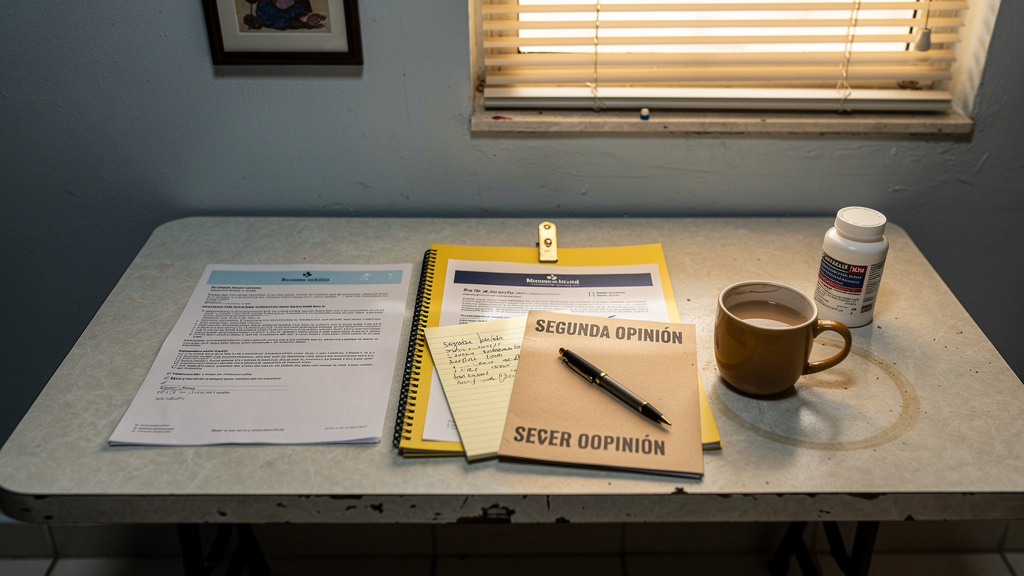
A different second opinion is not enough by itself to win a misdiagnosis case in Florida. You must also show that the first doctor's diagnostic process fell below the standard of care a reasonably competent physician in the same specialty would have met, and that the mistake caused you measurable harm beyond what the underlying illness would have caused anyway. Getting a second opinion is an important first step, but the law requires proof of negligence and injury, not just disagreement between doctors.
A different second opinion is not enough by itself to win a misdiagnosis case in Florida. You must also show that the first doctor’s diagnostic process fell below the standard of care a reasonably competent physician in the same specialty would have met, and that the mistake caused you measurable harm beyond what the underlying illness would have caused anyway. Getting a second opinion is an important first step, but the law requires proof of negligence and injury, not just disagreement between doctors.
Is a second doctor disagreeing with the first one proof of malpractice?
No. A second diagnosis that contradicts the first does not automatically mean the first doctor committed malpractice. Medicine involves judgment calls, and honest disagreements between qualified physicians are common, especially in Hialeah where patients often move between family clinics, urgent care centers, and specialists. Florida law defines the standard of care as what a reasonably prudent similar healthcare provider would have done under comparable circumstances [Fla. Stat. § 766.102]. To have a case, you must prove that the first doctor’s actions, such as skipping critical tests, ignoring red-flag symptoms, or failing to refer you, fell below that standard. Only a qualified medical expert in the same field can testify to that deviation. The second opinion is valuable evidence, but it is not legal proof of negligence on its own.
Does a bad outcome prove the doctor was negligent?
No. Florida law recognizes that bad results happen even when doctors follow accepted standards of care [Fla. Stat. § 766.102]. Negligence is not about the outcome, it is about the process. For example, if a patient presents with chest pain and shortness of breath and the doctor fails to order an EKG, troponin test, or basic imaging despite clear warning signs, that may be a breach. But if the doctor orders appropriate tests, interprets them correctly, and the condition still worsens, that is not malpractice. To succeed, you must prove three things: the doctor breached the standard of care, that breach caused your injury, and the injury resulted in damages beyond what the disease alone would have produced. A cancer misdiagnosis that lets the disease progress from Stage I to Stage IV might meet that test. One that causes only brief anxiety likely does not.
Does it help my case if the doctor apologized or said they were sorry?
An apology or expression of sympathy should not be treated as a confession of fault, nor should it be dismissed as meaningless. Florida law addresses how expressions of sympathy by healthcare providers are treated, though the precise effect depends on the specific words used and the context. Some statements might show awareness of error, while others are simply human reactions to a difficult situation. Do not assume guilt or innocence based on tone alone. Document exactly what was said, when it happened, and who else was present. Then let an attorney evaluate whether it has legal significance. This is especially important in Hialeah, where language barriers or cultural norms might shape how both patients and providers express concern.
Should I wait until I finish treatment before talking to a lawyer?
No. Waiting too long risks missing critical deadlines. Florida requires a pre-suit process before any medical malpractice lawsuit can be filed [Fla. Stat. § 766.106]. You must serve a Notice of Intent to Initiate Litigation on each potential defendant and allow 90 days for investigation. That period pauses the two-year statute of limitations [Fla. Stat. § 95.11], but only if the clock hasn’t already run out. If you delay consultation until six months remain, there may not be enough time to complete the required steps. Call early. Wolfson & Leon offers free consultations in Spanish and can start evaluating your case while you continue treatment.
Is there a cap on pain and suffering in a Florida misdiagnosis case?
Florida has had statutory limits on pain and suffering damages in medical malpractice cases, but those limits have been the subject of significant court rulings. The current state of the law is complex and depends on the specifics of your case and when the injury occurred. An attorney must evaluate whether any cap applies to you. Regardless, economic damages are fully recoverable and often form the bulk of a claim. These include extra medical bills from delayed treatment, costs of more aggressive therapies, lost wages, reduced future earning capacity, and wrongful death damages where applicable. Do not walk away from a valid claim because you assume recovery is limited.
Do I need a lawyer just to get my medical records?
No. Florida law gives you the right to obtain your own medical records directly from any provider without hiring an attorney [Fla. Stat. § 456.057]. Walk into your Hialeah clinic, hospital, or imaging center and submit a written request. Providers may charge a reasonable copying fee but must comply within a set timeframe. Request everything: doctor’s notes, lab reports, X-rays or MRIs, discharge instructions, and messages from patient portals. Also write down your own timeline, when symptoms started, when you sought care, and when you learned the correct diagnosis. Once you have the records, Wolfson & Leon can review them with you in a free consultation and, where appropriate, consult with medical experts. We offer free consultations in Spanish, making it easier for Hialeah families to take the next step.
Frequently asked questions
How long do I have to file a misdiagnosis lawsuit in Florida?
You generally have two years from the date you discovered, or reasonably should have discovered, the misdiagnosis, with a four-year outer limit and some exceptions [Fla. Stat. § 95.11]. The clock can be paused during the mandatory 90-day pre-suit investigation period.
What is the pre-suit process and why does it matter?
Before filing suit, you must serve a Notice of Intent to Initiate Litigation and provide a written expert opinion supporting your claim [Fla. Stat. § 766.106]. The 90-day waiting period allows both sides to investigate. Missing this step can result in dismissal, even if your claim is valid.
If the first doctor’s misdiagnosis was corrected quickly, do I still have a case?
Possibly not. Florida requires proof that the misdiagnosis caused actual, measurable harm beyond what the original illness would have caused. If treatment began promptly after correction and no lasting damage occurred, there may be no compensable injury.
Can I sue a clinic or hospital in addition to the individual doctor?
Yes, if the doctor was an employee or agent of the facility, or if the clinic itself failed in its duties, such as poor credentialing, inadequate staffing, or system errors that contributed to the misdiagnosis. Liability can extend beyond the individual provider.
What records should I gather right away if I think I was misdiagnosed?
Request all records from every visit: notes, test results, imaging studies, prescriptions, and discharge summaries. Include communications from patient portals and billing statements. Also keep a personal log of symptoms, dates, and conversations with providers.
Hurt in an accident in Hialeah? Call Wolfson & Leon at 305-965-3766 for a free consultation. We speak Spanish, and there is no fee unless we win.
Key facts
- Florida defines the medical standard of care as what a reasonably prudent similar healthcare provider would have done under comparable circumstances; a wrong diagnosis alone does not breach it. Source: Fla. Stat. § 766.102
- Before filing a misdiagnosis lawsuit in Florida, the claimant must serve a written Notice of Intent to Initiate Litigation on each defendant and then wait 90 days before filing; the statute of limitations is paused during that period. Source: Fla. Stat. § 766.106
- Florida patients have the right to obtain copies of their own medical records directly from any provider, without a lawyer's involvement. Source: Fla. Stat. § 456.057
- The statute of limitations for medical negligence in Florida is two years from the date the malpractice was discovered or reasonably should have been discovered, with a four-year outer limit and some exceptions. Source: Fla. Stat. § 95.11
- Before a Florida medical malpractice suit is filed, the claim must be supported by a reasonable investigation and a verified written opinion from a qualified medical expert corroborating the claim. Source: Fla. Stat. § 766.203
Frequently asked questions
How long do I have to file a misdiagnosis lawsuit in Florida?
Florida generally gives you two years from the date you knew or reasonably should have known that malpractice caused your harm. A four-year outer limit applies in most cases from the date of the negligent act, regardless of when you discovered it. Before filing, you must also complete a mandatory pre-suit process that includes serving a Notice of Intent and waiting 90 days, time that pauses the clock but still must fit within the overall deadline. Consulting a lawyer as soon as you suspect a misdiagnosis is critical.
What is the pre-suit process and why does it matter?
Florida law requires that before a medical malpractice lawsuit is filed, the claimant must conduct a reasonable investigation, obtain a written opinion from a qualified medical expert supporting the claim, and serve a formal Notice of Intent to Initiate Litigation on each defendant under Fla. Stat. § 766.106. Each defendant then has 90 days to investigate and respond, and the statute of limitations pauses during that period. Skipping or mishandling any step, such as failing to include a corroborating opinion for every defendant and every theory of negligence, can result in dismissal of part or all of the claim.
If the first doctor's misdiagnosis was corrected quickly, do I still have a case?
Possibly, but it depends on whether the error caused harm before it was corrected. If the misdiagnosis lasted only a short time and you suffered no lasting injury, additional medical costs, or disease progression, a claim may be difficult to support because Florida law requires proof of actual damages. If the delay, even a brief one, caused your condition to worsen, required more aggressive treatment, or cost you a better outcome, those harms may be compensable. A lawyer and medical expert would need to review your specific timeline and records.
Can I sue a clinic or hospital in addition to the individual doctor?
Yes, under Florida law a facility or medical group can be named as a defendant alongside the treating physician, but each defendant requires its own corroborating expert opinion covering the specific theory of negligence alleged against them. This means your legal team must build a separate factual and expert foundation for each party named in the lawsuit.
What records should I gather right away if I think I was misdiagnosed?
Under Fla. Stat. § 456.057, you have a direct right to request copies of your own medical records without a lawyer. Gather hospital records, imaging studies, lab results, referral notes, patient portal messages, and any discharge or follow-up instructions from every provider you saw. Also write down your own timeline: when symptoms started, every appointment, every test you were told about, and the exact date you received the corrected diagnosis. These documents form the factual backbone of any claim and should be preserved as early as possible.
This article is general information about Florida law, not legal advice, and reading it does not create an attorney-client relationship. Every case is different and past results do not guarantee a similar outcome. For advice about your situation, call Wolfson & Leon at 305-965-3766 for a free consultation.
Also available in: Versión en español
 Medical malpractice
My Cancer Was Found Late: Can I Sue the Doctor Who Missed It?
Yes, you may have a medical malpractice claim if a doctor's failure to follow up on abnormal results, order appropriate tests, or refer you to a…
 Medical malpractice
The ER Sent Me Home and It Was a Stroke: Do I Have a Case?
If an emergency room discharged you while you were actually having a stroke, heart attack, sepsis, or another life-threatening condition, you may…
 Medical malpractice
How Long Do You Have to File a Misdiagnosis Malpractice Claim in Florida?
In Florida, you generally have two years from the date you knew or reasonably should have known that a misdiagnosis harmed you to file a medical…