
Rear-Ended on Okeechobee Road With Little Damage: Can You Still Claim an Injury?
Yes. Visible damage to your car and injury to your body are two separate things, Florida law does not require a crumpled bumper to support a legitimate injury claim. What matters is whether a qualified medical provider documents your injury and connects it to the crash, not what the repair estimate says. Insurance adjusters will argue otherwise, but the medical record, not the body shop photo, is the real evidence.
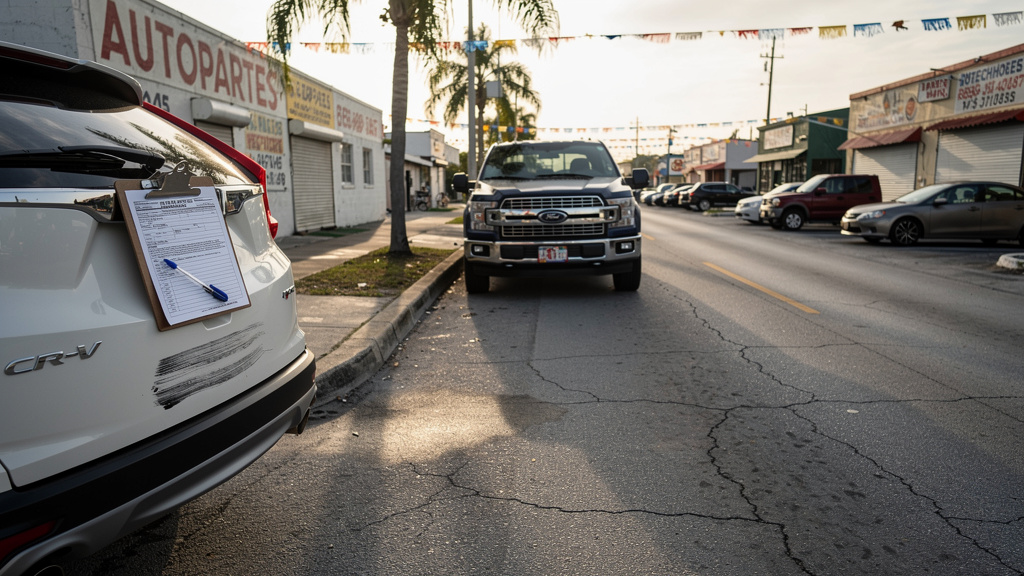
Yes. Visible damage to your car and injury to your body are two separate things, Florida law does not require a crumpled bumper to support a legitimate injury claim. What matters is whether a qualified medical provider documents your injury and connects it to the crash, not what the repair estimate says. Insurance adjusters will argue otherwise, but the medical record, not the body shop photo, is the real evidence.
What exactly happened, and why a scuffed bumper does not end the story?
Picture this on Okeechobee Road in Hialeah: you are stopped at a red light near Red Road, traffic begins moving, and suddenly you feel a tap from behind. You pull over. The rear bumper shows only a scuff or shallow crease. You exchange information, feel okay, and drive home. By morning, your neck is stiff, your head throbs, and your upper back feels tight. This is a common pattern along Okeechobee Road, where stop-and-go signals between Red Road and the Palmetto Expressway create frequent low-speed rear-end collisions. Many people describe it the same way: it didn’t seem major at the time, but then the bills started to pile up. Insurers know this pattern and will often pull the repair estimate, maybe just a few hundred dollars, and claim that low damage means no real crash. But Florida law has no category called a “minor accident.” The repair bill describes the car. It does not describe the occupant.
Why does little visible damage not prove you were not hurt?
Modern bumpers are built to absorb low-speed impacts with minimal visible damage. That design protects the vehicle’s structure, not necessarily the person inside. Force from even a light impact can jolt the head and spine, especially when you are stopped and not braced. Symptoms from soft-tissue injuries may not appear immediately and can develop hours or days after the crash, this is something your treating doctor will evaluate, not something an article can diagnose. What matters legally is what the medical record shows. A simple comparison helps: a bumper that barely moved does not mean your neck didn’t whip forward; driving away from the scene does not mean symptoms won’t develop later if documented properly; and a low repair bill does not override the actual medical findings. The key is consistent, timely care backed by documentation from a qualified provider.
What steps at the scene protect your claim before you even leave Okeechobee Road?
Florida law requires you to move vehicles out of travel lanes after a minor crash [Fla. Stat. § 316.061(1)], so act fast. Before moving, photograph everything: the point of contact, lane positions, any skid marks, and the traffic signal in the background to show your exact location on Okeechobee Road. Call Hialeah Police or Miami-Dade Police to file a crash report, note that under [Fla. Stat. § 316.066], the report stays confidential for 60 days except to the parties, their insurers, and their lawyers. Get the other driver’s name, license number, insurance carrier, and policy number. Ask nearby drivers or pedestrians if they saw the crash and take down their contact info. Most importantly, do not give a recorded statement to any insurance adjuster, not your own, not theirs, before talking to a lawyer. Saying “I’m fine” on the phone the day of the crash can be used to deny your claim later. Learn more about recorded statements and insurance adjusters.
Why does the 14-day rule matter so much in a low-damage crash, and where should you go?
Under [Fla. Stat. § 627.736(1)], you must get initial medical treatment within 14 days of the crash, counted from the date of impact, not when pain starts. Miss that deadline by one day and your PIP benefits are gone. If a qualified provider determines you have an emergency medical condition, PIP covers 80 percent of reasonable medical bills and 60 percent of lost wages up to $10,000. Without that finding, coverage drops to $2,500. Your own PIP policy pays first, regardless of who caused the crash [Fla. Stat. § 627.736(4)(e)]. In Hialeah, same-day options include Hialeah Hospital (651 E 25th St) and Palmetto General Hospital (2001 W 68th St). Urgent care centers may also work if you are seen by a provider PIP accepts for initial treatment, such as a licensed physician. At your visit, ask explicitly about the emergency medical condition determination and ensure it is documented. For more details, see our guide to Florida’s 14-day PIP rule.
What is the insurer’s ‘no damage, no injury’ defense and how does the evidence answer it?
Insurers often argue: “The bumper barely moved, so you can’t really be hurt.” This is a claims tactic, not a legal rule. It works because it sounds logical, but it ignores medical reality. Strong counter-evidence includes: clear photos showing impact location and vehicle height differences; the repair estimate itself (even if low) proving contact occurred; medical records documenting your first visit, diagnosis, and any emergency medical condition finding; and a consistent treatment timeline with no unexplained gaps. Under [Fla. Stat. § 627.736(6)(g)], your PIP insurer can require you to sit for an examination under oath as a condition of payment. You generally must comply, but consult a lawyer before attending. Finally, to seek pain and suffering from the at-fault driver beyond PIP, Florida law requires a permanent injury, significant scarring, or permanent loss of function [Fla. Stat. § 627.737(2)], a call only your doctor can make, not an adjuster.
Is a lawyer worth it when the crash looked minor, and when is it probably not?
A lawyer adds real value when: symptoms last more than a few weeks; your doctor orders imaging or refers you to a specialist; the insurer denies your claim or lowballs you using the “no damage” argument; your PIP carrier schedules an examination under oath; your injuries might meet Florida’s serious injury threshold; or the at-fault driver lacks bodily injury coverage, making your own uninsured motorist (UM) coverage, if you have it, an important path forward. In these cases, legal help ensures you do not forfeit benefits or settle too early. However, if you had no symptoms after 10, 14 days, your property damage claim is smooth, and the insurer isn’t disputing anything, you may not need a lawyer. Remember, you have two years from the crash date (for incidents on or after March 24, 2023) to file a lawsuit under [Fla. Stat. § 95.11]. Waiting to consult a lawyer is fine, waiting too long on a serious claim is not.
Frequently asked questions
What if my neck pain didn’t start until the day after the crash, does the 14-day rule still apply?
Yes. The 14-day clock starts on the date of the crash, not when symptoms appear. Even if you felt fine at first, you must see a qualified provider within 14 days to preserve your PIP benefits.
The adjuster wants to record my statement about the crash, should I do it?
Do not give a recorded statement to any insurance company before speaking with a lawyer. What you say can be used to deny or reduce your claim, especially if you minimize your symptoms.
My insurer is asking me to attend an examination under oath, what is that and do I have to go?
An examination under oath is a sworn interview your PIP insurer can require under Florida law. You generally must attend, but you should consult a lawyer beforehand to understand your rights and avoid missteps.
Can I still go after the other driver for pain and suffering if my injuries seem minor right now?
Only if your injury meets Florida’s serious injury threshold: permanent injury, significant scarring, or permanent loss of function. This determination comes from your doctor over time, not immediately after the crash.
Does the driver who rear-ended me pay my medical bills directly?
No. In Florida, your own PIP insurance pays your initial medical bills, regardless of fault. The at-fault driver’s liability coverage may come into play later for medical bills and lost wages PIP does not cover, and for pain and suffering only if your injury meets the serious injury threshold.
Related reading: I was in a car accident in Hialeah. What do I do now? · How long do I have to file an injury lawsuit in Florida? The two-year rule after HB 837
Hurt in an accident in Hialeah? Call Wolfson & Leon at (305) 285-7071 for a free consultation. We speak Spanish, and there is no fee unless we win.
Key facts
- PIP pays 80 percent of reasonable medical bills and 60 percent of lost wages up to $10,000, but only if a doctor finds an emergency medical condition; without that finding the cap drops to $2,500. Source: Fla. Stat. § 627.736(1)(a)
- You must receive initial medical treatment within 14 days of the crash or your PIP benefits are forfeited entirely, the clock starts on the day of the crash, not the day symptoms appear. Source: Fla. Stat. § 627.736(1)
- To pursue pain and suffering compensation from the at-fault driver beyond PIP, your injury must involve a permanent injury, significant permanent scarring or disfigurement, or significant and permanent loss of an important bodily function. Source: Fla. Stat. § 627.737(2)
- Florida law requires drivers to move vehicles out of travel lanes after a minor crash, which means photographing vehicle positions before moving is a critical step that must happen immediately at the scene. Source: Fla. Stat. § 316.061(1)
- A PIP insurer may require you to submit to an examination under oath as a condition of paying benefits; failing to comply without good cause can jeopardize your claim. Source: Fla. Stat. § 627.736(6)(g)
Frequently asked questions
What if my neck pain didn't start until the day after the crash, does the 14-day rule still apply?
Yes. The 14-day clock under Fla. Stat. § 627.736(1) starts on the date of the crash, not the date your symptoms appear. If you feel fine the evening of the crash and wake up stiff the next morning, you still need to see a qualified provider within 14 days of the original crash date to preserve your PIP benefits. Do not wait to see whether the pain resolves on its own, a same-day or next-day evaluation at a place like Hialeah Hospital or Palmetto General creates a medical record that connects your symptoms to the collision while keeping your claim options open.
The adjuster wants to record my statement about the crash, should I do it?
You should speak with a lawyer before giving any recorded statement to an insurance adjuster, whether it is your own insurer or the other driver's. Adjusters are trained to ask questions in ways that can produce answers used to minimize or deny your claim. Saying something like 'I feel okay' or 'it wasn't a big deal' in the hours after a crash, before symptoms fully develop, can become part of the file used against you. See our post on recorded statements before agreeing to anything.
My insurer is asking me to attend an examination under oath, what is that and do I have to go?
An examination under oath (EUO) is a formal proceeding, not a casual interview, and under Fla. Stat. § 627.736(6)(g) your PIP insurer may require it as a condition of paying benefits. Refusing to attend without a valid reason can jeopardize your claim. You have the right to have an attorney present. If you receive an EUO notice, contact a lawyer before the scheduled date, do not simply ignore the request or attend without understanding what is being asked of you.
Can I still go after the other driver for pain and suffering if my injuries seem minor right now?
To recover pain and suffering compensation from the at-fault driver beyond what PIP covers, your injury must meet the serious injury threshold under Fla. Stat. § 627.737(2), meaning a permanent injury, significant permanent scarring or disfigurement, or significant and permanent loss of an important bodily function. Whether your injury qualifies is a medical and legal determination, not something the initial crash photos resolve. If a treating physician's evaluation and imaging suggest ongoing or potentially permanent damage, consulting a personal injury attorney early preserves your options before the two-year filing deadline under Fla. Stat. § 95.11 runs.
Does the driver who rear-ended me pay my medical bills directly?
No, not first. Florida's no-fault system means your own PIP policy pays 80 percent of reasonable medical expenses and 60 percent of lost wages up to the applicable limit under Fla. Stat. § 627.736(1)(a), regardless of who caused the crash. The at-fault driver's insurance becomes directly relevant for losses PIP does not cover, for pain and suffering if your injuries meet the serious injury threshold, and for property damage. If the at-fault driver has no bodily injury liability coverage, your own uninsured motorist coverage under Fla. Stat. § 627.727 may be an additional source of recovery.
This article is general information about Florida law, not legal advice, and reading it does not create an attorney-client relationship. Every case is different and past results do not guarantee a similar outcome. For advice about your situation, call Wolfson & Leon at (305) 285-7071 for a free consultation.
Also available in: Versión en español
 Car accidents
 Is There an Average Settlement for a Rear-End Car Accident in Florida?
There is no meaningful average settlement for a rear-end car accident in Florida, published ranges vary widely because injury severity, available…
 Car accidents
 How Much Does an Accident Lawyer in Miami Charge? A Plain Answer
In Miami, accident lawyers work on a contingency fee, meaning you pay nothing upfront and owe no attorney fee at all unless money is recovered for…
 Car accidents
 Rear-Ended on Okeechobee Road: What Is My Claim Actually Worth?
There is no flat number: the value of a rear-end claim on Okeechobee Road is built from the injuries you sustained, the treatment you received, the…