
Is There an Average Settlement for a Rear-End Car Accident in Florida?
There is no meaningful average settlement for a rear-end car accident in Florida, published ranges vary widely because injury severity, available insurance coverage, and fault allocation determine each case individually. In Hialeah and across Miami-Dade, many drivers carry only the minimum PIP and property damage coverage, which can cap what you actually recover regardless of how serious your injuries are. Whether any specific offer is good depends on your documented damages, the at-fault driver's coverage limits, and whether your injuries meet Florida's legal threshold for pain and suffering under Fla. Stat. § 627.737(2).
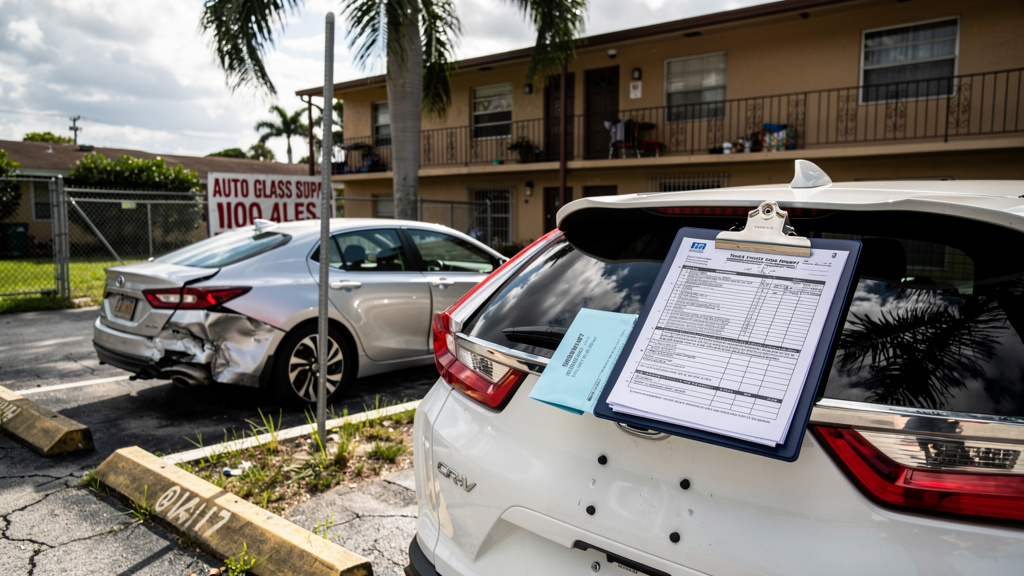
There is no meaningful average settlement for a rear-end car accident in Florida. Published ranges reflect wildly different injuries, insurance limits, and fault findings, not a reliable benchmark for your case. In Hialeah and across Miami-Dade, many drivers carry only the state-minimum PIP and property damage coverage, which means even serious injuries may hit a recovery wall if the at-fault driver has no bodily injury liability policy. Whether an offer like $50,000 is fair depends on your documented medical costs, lost wages, whether your injury meets Florida’s legal threshold for pain and suffering under Fla. Stat. § 627.737(2), and how much insurance is actually available to pay.
Why do websites publish settlement ranges, and why do those numbers not apply to your case?
You see published settlement ranges for rear-end crashes and soft-tissue injuries on law firm blogs and online estimators. These numbers come from unknown case samples with no verified methodology. They mix minor fender-benders with spinal cord injuries as if they belong on the same scale. A whiplash that heals in six weeks and a permanent disc herniation are governed by different facts, different laws, and different insurance policies. On Reddit, people ask “realistically, what kind of settlement are we looking at?” because they want certainty. But Florida law does not work that way. Your case value hinges on your specific injuries, treatment record, and available coverage, not an internet average.
Does the ‘multiply your medical bills by 1.5 to 3’ method actually work in Florida?
Some online guides suggest multiplying your economic damages (medical bills and lost wages) by a multiplier, often quoted as 1.5 to 3, to estimate pain and suffering. Others use a per diem method, assigning a daily dollar amount for each day you suffer. Neither is a legal formula. Florida courts do not require insurers or juries to use either approach. More importantly, pain and suffering damages from the at-fault driver are only available if your injury meets the threshold in Fla. Stat. § 627.737(2): permanent injury, significant scarring, or permanent loss of a bodily function. If you do not meet that standard, there is no pain and suffering to multiply, even if a calculator says otherwise. Also, since the 2023 tort reform, evidence of medical expenses is generally tied to amounts actually paid or owed rather than full billed charges.
Can an online calculator tell you what your rear-end accident claim is worth?
No. Tools like the conduit.law calculator take inputs like medical bills and lost wages but miss critical Florida-specific facts. They cannot tell you whether the at-fault driver carries bodily injury liability coverage, which many Hialeah drivers do not, because Florida does not require it. They cannot assess if your injury meets the permanency threshold under § 627.737(2). They ignore your comparative fault percentage under § 768.81(6), which directly reduces or eliminates your recovery. They do not account for liens from health insurers or other payers, nor do they distinguish between billed and paid medical amounts. At best, these calculators help you identify categories of damages. They cannot produce a reliable estimate of what your case will actually settle for.
What actually determines how much a Florida rear-end settlement is worth?
Five factors control your real recovery potential. First, your injury must meet the § 627.737(2) threshold, without a permanent injury finding, pain and suffering is off the table. Second, available coverage sets the ceiling: if the at-fault driver has no bodily injury policy (common in Hialeah), your only recourse may be your own uninsured/underinsured motorist (UM/UIM) coverage under § 627.727, which you must have rejected in writing to lose. Third, comparative fault matters: if you are assigned 20% fault, a $100,000 claim becomes $80,000; at more than 50%, it becomes $0 under § 768.81(6). Fourth, your medical record must show prompt treatment (within 14 days to preserve PIP under § 627.736), consistent care, objective findings like MRI results, and clear causation. Fifth, your economic damages must be documented, actual medical costs paid, verifiable lost wages, and projected future expenses.
Is the first offer from the insurance company close to what your case is actually worth?
Usually not. Initial offers arrive before your full diagnosis is known, before permanency is established, and before future treatment needs are documented. On Reddit, people ask “Should I argue for more?” or “Is this standard?” because they fear accepting too little before symptoms worsen. Once you sign a release, the claim is closed forever, even if you need surgery next month. A second offer may come within weeks for simple cases, but serious injuries or disputed liability often require months of negotiation or litigation pressure to move. Remember, you have two years from the crash date (for accidents on or after March 24, 2023) to file suit under § 95.11. That deadline gives you time to get proper medical evaluations, but not unlimited time.
What questions should you ask before accepting any rear-end accident settlement in Florida?
Before signing anything, make sure you can answer these:
- Has a doctor evaluated my injury for permanency under § 627.737(2)? Without that, pain and suffering damages are legally unavailable.
- What are the at-fault driver’s actual bodily injury policy limits? That number caps what their insurer can pay.
- Do I have UM/UIM coverage under § 627.727? If the other driver has no BI coverage, your own UM policy may be your only path to full recovery.
- Are all future medical costs documented? Once you sign a release, you cannot go back for more money later.
- Has my comparative fault percentage been assessed? If the insurer argues you are more than 50% at fault under § 768.81(6), you recover nothing.
- Is the two-year filing deadline under § 95.11 still open? Missing it ends your right to sue.
Wolfson & Leon handles rear-end accident claims throughout Hialeah and Miami-Dade. We review your medical records, pull the at-fault driver’s policy limits, check your UM coverage, and explain your options under Florida law. Consultations are free, and there is no fee unless we win.
Frequently asked questions
Is $50,000 a good settlement for a rear-end car accident in Florida?
It depends. If your injury is temporary, your medical bills total $8,000, and the at-fault driver has low coverage, $50,000 might exceed available policy limits. If you have a permanent spinal injury, future surgery needs, and high lost wages, it may be far too low. The number alone tells you nothing without context.
What happens if the driver who rear-ended me in Florida has no insurance?
Your own uninsured motorist (UM) coverage may apply if you did not reject it in writing. UM can pay for medical bills, lost wages, and, if your injury meets the permanency threshold under § 627.737(2), pain and suffering when the at-fault driver has no bodily injury policy. Learn more about uninsured motorist claims in Miami-Dade.
How long do I have to file a lawsuit after a rear-end accident in Florida?
For crashes on or after March 24, 2023, you have two years from the accident date under Fla. Stat. § 95.11. Missing that deadline almost always ends your case permanently.
Do I have to go to the doctor within 14 days of a rear-end crash in Florida?
Yes, to preserve your $10,000 in PIP benefits under § 627.736. If you wait longer, your own insurance will deny coverage entirely, even though you paid for it. That also weakens your injury claim because insurers argue delayed treatment means minor or unrelated injuries.
Can I still recover damages if I was partly at fault for a rear-end accident in Florida?
Yes, as long as you are 50% or less at fault under § 768.81(6). Your recovery is reduced by your fault percentage. If you are found more than 50% at fault, you recover nothing. Even in rear-end crashes, insurers may argue you stopped suddenly or had faulty brake lights.
Related reading: I was in a car accident in Hialeah. What do I do now? · The 14-day PIP rule in Florida: what happens if you wait to see a doctor after a Hialeah car accident · How long do I have to file an injury lawsuit in Florida? The two-year rule after HB 837
Hurt in an accident in Hialeah? Call Wolfson & Leon at (305) 285-7071 for a free consultation. We speak Spanish, and there is no fee unless we win.
Key facts
- Florida's PIP coverage pays 80% of reasonable medical bills and 60% of lost wages up to $10,000 when an emergency medical condition is found, and pays nothing if you do not seek treatment within 14 days of the crash. Source: Fla. Stat. § 627.736
- You can only recover pain and suffering damages from an at-fault driver in Florida if you have a permanent injury, significant permanent scarring, or permanent loss of an important bodily function. Source: Fla. Stat. § 627.737(2)
- If you are found more than 50% at fault, you recover nothing; at 50% or below, your award is reduced by your share of fault. Source: Fla. Stat. § 768.81(6)
- For crashes on or after March 24, 2023, you have two years from the date of the accident to file a personal injury lawsuit in Florida, missing that deadline almost certainly ends your case. Source: Fla. Stat. § 95.11
- Florida does not require drivers to carry bodily injury liability coverage, so many Hialeah drivers carry only PIP and property damage, meaning the at-fault driver may have no policy to pay your injury claim beyond your own PIP. Source: Florida minimum insurance requirements; Fla. Stat. § 627.736
Frequently asked questions
Is $50,000 a good settlement for a rear-end car accident in Florida?
$50,000 may be a full and fair recovery for a moderate soft-tissue injury with several months of documented treatment, or it may be a fraction of what a herniated disc requiring surgery is worth. The only way to evaluate any specific offer is to compare it against your documented medical costs, lost wages, future treatment needs, the at-fault driver's actual policy limits, and whether your injuries meet Florida's threshold for pain and suffering under Fla. Stat. § 627.737(2). An offer that equals the at-fault driver's policy limit may be the maximum available regardless of injury severity, in which case the question becomes whether your own UM/UIM coverage under Fla. Stat. § 627.727 can fill the gap.
What happens if the driver who rear-ended me in Florida has no insurance?
Florida does not require drivers to carry bodily injury liability coverage, so the driver who hit you may have only PIP and property damage, meaning there is no third-party bodily injury policy to pay your injury claim. In that situation, your own uninsured motorist coverage (UM), if you purchased it under Fla. Stat. § 627.727, becomes your primary source of recovery for injuries that meet the § 627.737(2) threshold. UM coverage must have been rejected in writing for it to be absent from your policy, so many drivers who think they have no UM coverage actually do. A lawyer can review your declarations page to confirm.
How long do I have to file a lawsuit after a rear-end accident in Florida?
For crashes that occurred on or after March 24, 2023, Fla. Stat. § 95.11 gives you two years from the date of the accident to file a personal injury lawsuit. Missing that deadline will almost certainly result in the court dismissing your case, eliminating your right to sue regardless of how serious your injuries are. The two-year clock does not pause while you are negotiating with an insurance company, so waiting to see how negotiations play out can cost you the ability to file entirely.
Do I have to go to the doctor within 14 days of a rear-end crash in Florida?
Yes. Under Fla. Stat. § 627.736, you must seek medical treatment within 14 days of the crash or your PIP insurer can deny your entire PIP claim, leaving you responsible for initial medical costs out of pocket. Beyond the insurance consequence, a treatment gap of 14 days or more also gives the at-fault driver's insurer an argument that your injuries were not caused by the crash or are not serious, which can reduce or eliminate the value of your third-party claim as well. Seeking care promptly, even if symptoms feel mild, protects both your PIP benefits and your injury claim.
Can I still recover damages if I was partly at fault for a rear-end accident in Florida?
Yes, as long as you were not more than 50% at fault. Under Fla. Stat. § 768.81(6), Florida uses a modified comparative negligence rule: your recovery is reduced by your percentage of fault, but you are only completely barred from recovering if you are found to be more than 50% responsible. For example, if your damages total $100,000 and you are found 25% at fault, you recover $75,000. Insurers commonly argue that the front driver stopped suddenly, had non-functioning brake lights, or made an unsafe lane change, so expect fault to be disputed even in a straightforward rear-end case.
This article is general information about Florida law, not legal advice, and reading it does not create an attorney-client relationship. Every case is different and past results do not guarantee a similar outcome. For advice about your situation, call Wolfson & Leon at (305) 285-7071 for a free consultation.
Also available in: Versión en español
 Car accidents
 How Much Does an Accident Lawyer in Miami Charge? A Plain Answer
In Miami, accident lawyers work on a contingency fee, meaning you pay nothing upfront and owe no attorney fee at all unless money is recovered for…
 Car accidents
 Rear-Ended on Okeechobee Road: What Is My Claim Actually Worth?
There is no flat number: the value of a rear-end claim on Okeechobee Road is built from the injuries you sustained, the treatment you received, the…
 Car accidents
 Partly at Fault for a Hialeah Crash? Here Is What You Can Still Recover
Yes, but only if your share of the fault is 50 percent or less. Under Florida's modified comparative negligence law (FL § 768.81), your compensation…