
Medical Liens: Who Gets Paid Back From Your Florida Injury Settlement
Yes. When health insurance, Medicare, or Medicaid pays your accident-related medical bills, those payers typically have a legal right to be repaid from any settlement or judgment you later receive. That right is called a lien or subrogation claim, and it must be resolved before the remaining money reaches you. The amount demanded is not always the amount legally owed, and skilled negotiation can reduce what each lienholder collects.
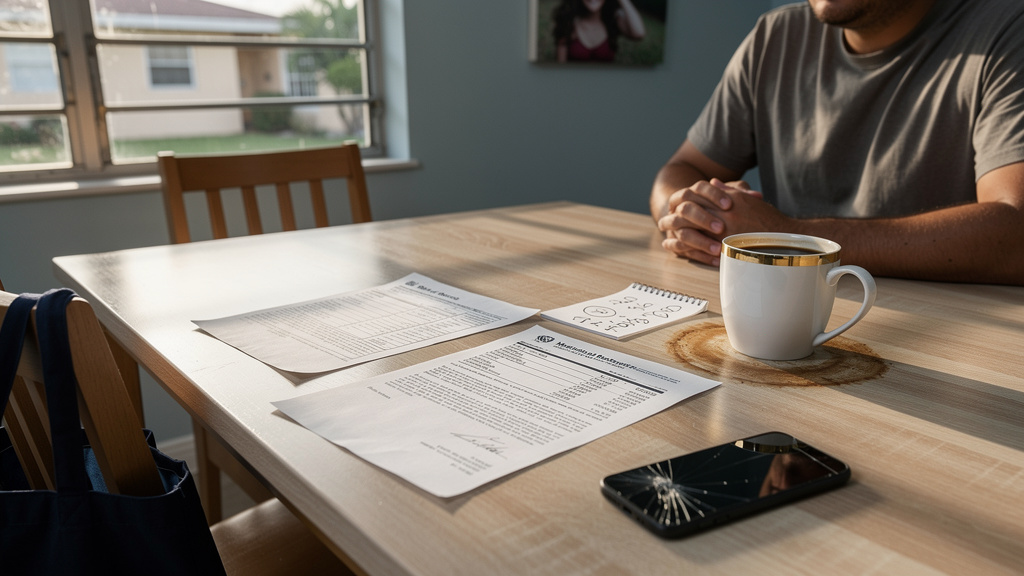
When health insurance, Medicare, or Medicaid pays your accident-related medical bills, those payers typically have a legal right to be repaid from your settlement. That right is called a lien or subrogation claim, and it must be resolved before you receive a dollar of your net recovery. The gross number on a release agreement is never what you take home. But the amount each lienholder demands is not always the amount legally owed, and reducing those claims through negotiation and legal challenge is one of the most important things your attorney does.
What exactly is a medical lien or reimbursement claim?
A lien is a legal claim against specific property, in this case your settlement proceeds, that gives the lienholder the right to be paid before the remaining money reaches you. A subrogation claim is slightly different: the insurer steps into your shoes and claims the right to recover what it already paid on your behalf. In practical terms, both accomplish the same thing. Money that would otherwise go to you is redirected to pay back whoever covered your care.
People sometimes ask: “What is the point of hiring an attorney if all the money goes to hospital bills and health insurance?” That fear is understandable, but it misses what lien resolution actually involves. Every asserted claim must be verified, reviewed for accuracy, and often challenged before it is paid. The gross settlement figure in a release is not your number.
The main categories of lienholders in a Florida injury case are private health insurers, Medicare, Florida Medicaid, and hospitals and other medical providers. PIP benefits are generally not a lien that is repaid from your settlement. Each operates under a different legal framework. Identifying all of them early and resolving each one is a distinct phase of your case that happens between the settlement agreement and the day funds are distributed to you.
Does my private health insurance get paid back from the settlement?
Yes, in most cases. But the amount your insurer can recover depends heavily on what kind of health plan you have, because that determines which law governs the claim.
The most important distinction is this: if your plan is a fully insured, Florida-regulated plan, Florida law applies. Florida law can limit what that insurer recovers, and your attorney should review how those rules apply to your plan.
If your plan is self-funded under ERISA, federal law preempts Florida’s rules. In that case, Florida’s rules may not apply. Recovery is governed by the plan document itself. Do not assume that an ERISA plan always recovers everything it paid. Plan language varies, and these claims can often be negotiated with the plan administrator or its vendor.
The first step is always to get the actual plan documents, not just the collection letter from a recovery vendor. Recovery vendors sometimes assert amounts the plan’s own language does not support.
How does Medicare get repaid, and what happens if I ignore it?
Medicare pays for accident-related care while your liability case is pending. These are called conditional payments, meaning Medicare pays on the condition that it is repaid once you settle or receive a judgment. Ignoring Medicare’s claim is not an option. Under the Medicare Secondary Payer Act, 42 U.S.C. section 1395y(b)(2), both you and your attorney can face personal federal liability if Medicare’s lien is not resolved. This is a federal enforcement mechanism with real consequences.
The process works in sequence. First, report your claim to the Benefits Coordination and Recovery Center, known as the BCRC, early in the case to receive a conditional payment letter. Review that letter line by line. If Medicare included payments for a diabetes prescription, a cardiology visit, or anything unrelated to the crash, dispute those items before the case closes. After you settle, report the gross settlement amount, your attorney’s fees, and your litigation costs. The Centers for Medicare and Medicaid Services will then issue a final demand.
The final demand is due within 60 days. Interest accrues after that deadline. In limited circumstances, Medicare can be asked to reduce or waive its claim, but that requires documentation and takes time.
One more point: if you are enrolled in a Medicare Advantage plan, that is Part C, the reimbursement rules are separate from Original Medicare and must be identified and resolved independently.
What about Florida Medicaid, does it always take the same amount?
Florida Medicaid does not wait for notice to establish its lien. Under Florida Statute section 409.910, the lien attaches automatically the moment Medicaid pays for your accident-related care. No letter, no formal assertion. The lien is already there.
The statute sets how Medicaid’s share of a settlement is calculated, and that amount is not always the final word.
In some cases, the amount Medicaid claims can be challenged through a process set by Florida law, and strict deadlines apply. Ask your lawyer early whether that is possible in your case.
The U.S. Supreme Court’s decision in Gallardo v. Marstiller, 596 U.S. 420 (2022), established that Florida Medicaid may reach not only the portion of your settlement representing past medical expenses but also the portion allocated to future medical expenses. How these rules apply to your settlement is a question to ask your lawyer.
Can hospitals and doctors file their own liens on my settlement?
Yes. A hospital that treated you may be able to assert its own lien on your tort recovery under a local hospital lien law, where one applies, separate from anything your health insurance or Medicare paid. A doctor or specialist who treated you may do the same through a contractual arrangement called a letter of protection.
A letter of protection is an agreement between you and a medical provider in which the provider agrees to treat you now and wait for payment from your settlement proceeds. The provider is not paid by your health insurance. When your case resolves, that provider has a contractual right to be paid from the settlement before you receive the balance.
The problem that frustrates a lot of people is double-payment demands. If your health insurance already paid a provider, and that provider also signed a letter of protection, you may face claims from both for the same treatment. That is exactly the kind of conflict your attorney needs to identify and resolve. Paying both for the same service is not required, and it is preventable.
Every provider lien and letter of protection must be identified, listed, reviewed, and either paid, negotiated down, or legally challenged before funds are distributed. The amounts are often negotiable, particularly when the available insurance is limited and there is not enough money to satisfy every claim at face value.
How are liens negotiated before you actually receive your money?
Lien resolution is an active, negotiated process. It is not a passive waterfall where money flows automatically to each lienholder before you receive what is left. How carefully this phase is handled can make a real difference in what you actually keep, particularly on a serious injury case.
The process runs in sequence. First, identify every potential lienholder early, before the case settles. That means reviewing health insurance explanation-of-benefits statements, registering with the BCRC for Medicare conditional payments, pulling Medicaid payment records through the Agency for Health Care Administration, reviewing provider billing records, and listing every letter of protection.
Second, get itemized payment records from each lienholder and review them for care that has nothing to do with your accident. Dispute unrelated items before the case closes.
Third, review whether the law limits each claim and negotiate. The rules differ for private health plans, Medicare, Medicaid, and providers, and your attorney should apply the ones that fit your case. For provider liens and letters of protection, negotiate directly with the provider or their billing representative.
Finally, before any funds move, your attorney must prepare a closing statement that shows the gross settlement, the attorney’s fee, each litigation cost, and every lien paid or negotiated amount. You must see and approve that statement before the money is disbursed. That document is how you know what happened to every dollar.
Frequently asked questions
Since my health insurance covered everything, can I just keep the whole settlement?
No. When your health insurer pays your accident-related medical bills, it typically has a subrogation or reimbursement right that allows it to recover what it paid from your settlement. The fact that you paid premiums does not eliminate that right. The amount your insurer can recover depends on the type of plan you have and how the claim is negotiated, but pocketing the full settlement without addressing the insurer’s claim creates legal exposure.
Will Medicaid take my entire settlement?
No, but Florida Medicaid’s lien under section 409.910 can be substantial. Florida law sets how Medicaid’s share is calculated, and in some cases that amount can be challenged. Ask your lawyer early, because deadlines apply.
What happens if I don’t tell Medicare about my settlement?
Both you and your attorney can face personal federal liability under the Medicare Secondary Payer Act if Medicare’s conditional payment claim is not reported and resolved. Medicare’s right to repayment is a federal enforcement matter, not a paperwork formality. Failing to report the settlement, or distributing funds without satisfying Medicare’s final demand, can trigger collection actions and interest charges.
Can the hospital bill me separately after my health insurance already paid?
Whether a hospital can pursue you or your settlement after your insurer paid depends on its contract with your insurer and the law that applies. If the hospital treated you under a letter of protection or asserts a lien, a separate claim may exist. Your attorney needs to reconcile what each provider actually received and ensure you are not paying twice for the same treatment.
What is a letter of protection, and does it become a lien on my settlement?
A letter of protection is a written agreement between you and a medical provider in which the provider treats you in exchange for a promise to be paid from your settlement proceeds. It creates a contractual obligation. When your case resolves, the provider has a right to be paid from the settlement before you receive your net funds. The amount owed under a letter of protection is often negotiable, particularly when available insurance is limited, but it cannot simply be ignored.
Hurt in an accident in Hialeah? Call Wolfson & Leon at 305-965-3766 for a free consultation. We speak Spanish, and there is no fee unless we win.
Key facts
- Florida Medicaid has an automatic statutory lien on any injury recovery by a recipient, created the moment Medicaid pays for accident-related care, with no notice required for the lien to be enforceable. Source: Fla. Stat. § 409.910
- Medicare's payments for injury-related care are 'conditional,' meaning Medicare expects full repayment from any settlement, judgment, or award; ignoring Medicare's claim can expose both the injured person and their attorney to personal federal liability. Source: 42 U.S.C. § 1395y(b)(2) — Medicare Secondary Payer Act
- Health insurers that paid accident-related bills may have a right to be repaid from a settlement; the rules depend on the type of plan, such as a Florida-regulated policy or a self-funded ERISA plan. Source: Fla. Stat. § 768.76
- Florida Medicaid may seek reimbursement not only from the portion of a settlement representing past medical expenses but also from the portion representing future medical expenses. Source: Gallardo v. Marstiller, 596 U.S. 420 (2022)
- Florida law sets how Medicaid is repaid from an injury settlement, and in some cases the amount can be challenged; ask a lawyer early because deadlines apply. Source: Fla. Stat. § 409.910
Frequently asked questions
Since my health insurance covered everything, can I just keep the whole settlement?
No. Paying your premiums does not waive your insurer's right to reimbursement. Most health insurance policies contain subrogation language that gives the insurer a legal claim to the portion of your settlement that compensates for the medical bills it paid. If you settle without resolving that claim, the insurer can still pursue collection against you. The amount they can legally recover depends on whether the plan is a Florida-regulated policy or a self-funded ERISA plan, and these amounts can often be negotiated.
Will Medicaid take my entire settlement?
Not necessarily. Florida law (section 409.910) sets how much Medicaid can collect from a settlement, but that amount is not always the final word. In some cases, the Medicaid lien amount can be challenged through a process set by Florida law. There is a deadline for that, so ask your lawyer promptly.
What happens if I don't tell Medicare about my settlement?
Failing to report a settlement to Medicare when Medicare paid injury-related care can expose both you and your attorney to serious federal liability. Under the Medicare Secondary Payer Act, Medicare has the right to collect directly from any party, including your lawyer, who received or distributed settlement funds without satisfying Medicare's conditional payment claim. This is a federal enforcement mechanism with real financial consequences, not a technicality that can be ignored.
Can the hospital bill me separately after my health insurance already paid?
In some cases a hospital may assert its own lien on your tort recovery for services rendered, even when your health insurance has paid part of the bill. This can create a situation where both the hospital and your insurer assert claims against the same settlement dollars. Your attorney must identify whether both claims are legally valid, because you should not have to pay twice for the same treatment. Resolving this overlap is part of the lien-negotiation process before your settlement is distributed.
What is a letter of protection, and does it become a lien on my settlement?
A letter of protection is an agreement between your attorney and a medical provider in which the provider agrees to treat you now and wait to be paid from your settlement proceeds. It is a contractual obligation, not a statutory lien, but it functions like one: the provider has a right to be paid from your recovery before you receive your net share. In cases where the settlement is limited by available insurance coverage, those balances are often negotiable.
This article is general information about Florida law, not legal advice, and reading it does not create an attorney-client relationship. Every case is different and past results do not guarantee a similar outcome. For advice about your situation, call Wolfson & Leon at 305-965-3766 for a free consultation.
Also available in: Versión en español
 Personal injury
I Fell at Work in Hialeah: Do I Need Workers' Comp or a Personal Injury Lawyer?
Workers' compensation almost always covers a fall at work in Florida and is usually your only legal claim against your own employer. But if someone…
 Personal injury
Hit by a Driver With No Insurance in Florida: What Are Your Options?
Your own insurance is almost always the first place to look. Florida requires your PIP coverage to pay 80 percent of your reasonable medical bills…
 Personal injury
How Much Does an Accident Lawyer Charge in Hialeah, Florida?
Personal injury lawyers in Hialeah charge nothing upfront and no attorney fee at all unless they recover money for you. The fee is a percentage of…