
How a Florida Accident Settlement Is Split: Fees, Costs, Bills, and You
When a Florida personal injury settlement is paid, the money does not go straight to you. It flows through your attorney's trust account and is distributed in a specific order: attorney's fee first, then case costs, then medical bills and liens (including any PIP reimbursement), and finally the remaining balance reaches you. Understanding every step of that order, before you sign the closing statement, is how you verify the number on your check is correct.

When a Florida personal injury settlement is paid, the money does not go straight to you. It flows through your attorney’s trust account and is distributed in a specific order: attorney’s fee first, then case costs, then medical bills and liens (including any PIP reimbursement), and finally the remaining balance reaches you. Understanding every step of that order, before you sign the closing statement, is how you verify the number on your check is correct.
What is the exact order the money leaves the settlement before it reaches me?
After your car accident claim settles, the gross amount is deposited into your law firm’s Florida Bar-regulated trust account. From there, disbursement usually follows this sequence. First, the attorney’s contingency fee is deducted. Under Florida Bar Rule 4-1.5(f)(4)(B), the cap is generally 33⅓ percent of the recovery (up to $1 million) if the case resolves before an answer is filed or arbitration is demanded, and 40 percent after that through trial. Second, the firm is reimbursed for case costs it advanced on your behalf, such as medical records, police report fees, or deposition transcripts. Third, valid medical liens and bills are paid, including hospital charges, private health insurance subrogation claims, Medicare or Medicaid liens, and any PIP reimbursement owed. Whatever remains is your net proceeds. This sequence generally reflects your fee agreement, Florida ethics rules, and applicable liens. Your fee agreement may define whether costs are deducted before or after the percentage fee is calculated, a detail you should confirm in your signed contract. You will review and sign a document called a closing statement before any funds are released to you.
Can you show me an example with actual numbers?
Below is an illustrative example only, not a guaranteed or typical result for any specific case:
| Description | Amount |
|---|---|
| Gross settlement | $100,000 |
| Attorney’s fee (33⅓%, before an answer is filed) | −$33,333 |
| Case costs (records, reports, postage) | −$2,000 |
| Medical liens and bills (negotiated) | −$18,000 |
| Net to client | $46,667 |
In this scenario, the injured person received treatment at Palmetto General’s emergency room. The original hospital bill was $30,000, but their attorney negotiated it down to $18,000. Florida PIP had already paid $8,000 of that emergency bill under Fla. Stat. § 627.736, so the hospital’s remaining claim against the settlement was reduced accordingly. Two people with identical $100,000 settlements can end up with very different take-home amounts based on their medical bills, how much their attorney negotiated down liens, and whether a lawsuit was ever filed.
Does the attorney’s percentage come out of the full settlement or after costs are subtracted?
This depends entirely on your written fee agreement. Some agreements calculate the attorney’s percentage on the gross settlement amount before costs are deducted. Others deduct costs first, then apply the percentage to the remaining sum. Using the $100,000 example:
- Method A (fee on gross): Fee = 33⅓% × $100,000 = $33,333. Costs = $2,000. Total deductions before liens = $35,333.
- Method B (fee on net after costs): Settlement after costs = $98,000. Fee = 33⅓% × $98,000 = $32,667. Total deductions before liens = $34,667.
The difference is $666 in this case, small here, but larger when case costs run higher. Calculating the fee after costs are deducted generally yields a slightly larger net amount for the client. However, do not assume which method applies to you. Check your signed fee agreement or ask your attorney directly.
What happens to my hospital bill, my health insurance, and my Medicare or Medicaid?
Three types of medical claims commonly appear on your closing statement. First, direct bills from providers like Hialeah Hospital or Palmetto General ER. Hospitals may claim their full billed charges from the settlement, sometimes through a lien, and attorneys often try to negotiate these down, as in the example where a $30,000 bill became $18,000. Second, if your private health insurer paid part of your care, it may have a subrogation right to be repaid from your settlement. These rights vary by plan type; ERISA self-funded plans, for instance, typically assert stronger recovery rights. Third, government programs like Medicare and Medicaid may place enforceable liens on your recovery. Florida Medicaid liens are governed by Fla. Stat. § 409.910 and may be subject to reduction under certain conditions. These claims cannot be ignored, they must be resolved before you receive your net funds. Your attorney handles confirmation and payoff as part of the disbursement process.
PIP already paid some of my bills, does that money come out of my settlement too?
Yes, but not as a separate deduction, it reduces what others can claim from your settlement. PIP (Personal Injury Protection) is your own no-fault coverage. Under Fla. Stat. § 627.736, it pays 80 percent of reasonable medical expenses and 60 percent of lost wages, up to $10,000 if a doctor documents an emergency medical condition (or only $2,500 if not), provided you saw a doctor within 14 days of the crash. Whose PIP applies follows a strict order: first your own policy, then a resident relative’s, and only for Florida-resident pedestrians or cyclists without either, the PIP of the vehicle that struck them. In our example, PIP paid $8,000 toward the Palmetto General ER bill. That amount is credited against the hospital’s claim, so the hospital could only seek the remaining balance from your settlement. While PIP itself rarely demands direct repayment from your settlement, its prior payment limits what providers can still collect. Your closing statement should clearly show this offset so you are not double-charged.
What is the closing statement and what should I check before I sign it?
The closing statement (also called a settlement disbursement statement) is a detailed ledger showing exactly how your gross settlement is split. Florida Bar ethics rules require your attorney to provide this document and obtain your signature before releasing any funds. At Wolfson & Leon’s Hialeah office, we review it with you in Spanish if needed. Before signing, verify these six items:
- The gross settlement matches the amount you agreed to.
- The attorney’s fee percentage matches your signed agreement and is applied to the correct base (gross or net of costs).
- All case costs are itemized individually, not lumped into one vague line.
- Each medical lien shows both the original billed amount and the negotiated amount so you see the reduction.
- The PIP amount already paid is listed and accounted for to avoid duplicate billing.
- The net-to-client total equals the gross minus all listed deductions, with no unexplained remainder.
Ask questions about any unclear line. Nothing is disbursed until you sign and all lienholders confirm payment.
Frequently asked questions
If you get in a car accident and health insurance covers your treatment, do they take the full billed amount or just what insurance actually paid from your settlement?
Your health insurer typically seeks repayment for what it actually paid, not the provider’s full billed charge. However, some plans (especially ERISA self-funded plans) may assert rights to recover more. Your attorney reviews the plan terms and negotiates the final amount.
Does the lawyer take their percentage before or after medical bills are paid?
The attorney’s fee is typically taken before medical bills and liens. The disbursement order is: fee, costs, then medical claims. The fee percentage is calculated either on the gross settlement or on the amount after costs, depending on your agreement.
How long does it take to receive my money after the settlement is agreed?
Timing varies from case to case after you sign the release. Delays can occur if lienholders take time to provide final payoff amounts or if multiple insurers are involved. Your attorney coordinates all payoffs to minimize wait time.
What if my PIP already paid my Palmetto General ER bill, will I be charged for that again at settlement?
No. Because PIP already covered part of the bill, the hospital’s remaining claim against your settlement is reduced by that amount. Your closing statement should reflect this so you are not paying twice for the same treatment.
Can my attorney negotiate my hospital lien or medical bills before I get my check?
Yes. One key role of your attorney is to negotiate medical liens downward before disbursement. Hospitals, insurers, and even government programs often accept less than their initial demand. The negotiated amount, not the original bill, appears on your closing statement.
Related reading: The driver who hit me in Hialeah has no insurance. What now? · How long do I have to file an injury lawsuit in Florida? The two-year rule after HB 837 · The 14-day PIP rule in Florida: what happens if you wait to see a doctor after a Hialeah car accident
Hurt in an accident in Hialeah? Call Wolfson & Leon at 305-965-3766 for a free consultation. We speak Spanish, and there is no fee unless we win.
Key facts
- Florida PIP pays 80 percent of reasonable medical bills and 60 percent of lost income, up to $10,000 when a doctor documents an emergency medical condition, and only up to $2,500 when no emergency medical condition is found. Treatment must begin within 14 days of the crash or PIP pays nothing. Source: Fla. Stat. § 627.736
- Florida Bar Rule 4-1.5(f)(4)(B) sets the maximum contingency fee at 33⅓ percent of the recovery up to $1 million before an answer is filed or arbitration is demanded, and 40 percent after that through trial, with other tiers above $1 million. Source: Florida Bar Rule 4-1.5(f)(4)(B)
- Attorney's fees and case costs are separate deductions. Fees compensate the law firm for its legal work; costs reimburse out-of-pocket expenses the firm advanced, medical records, filing fees, deposition transcripts, expert witnesses; they are expense reimbursements, not profit to the firm. Source: Florida Bar Rule 4-1.5
- Medicare, Medicaid, and health insurance subrogation claims are enforceable liens against a settlement. They must be resolved before the client receives net proceeds. Florida Medicaid's lien is governed by Fla. Stat. § 409.910 and may be subject to a reduction challenge. Source: Fla. Stat. § 409.910; Gallardo v. Marstiller (2022)
- Before receiving any funds, the client reviews and signs a closing statement, sometimes called a settlement disbursement statement, that itemizes every deduction: gross settlement, attorney's fee, case costs, liens, and net amount to client. Source: Florida Bar Rule 4-1.5(f)
Frequently asked questions
If you get in a car accident and health insurance covers your treatment, do they take the full billed amount or just what insurance actually paid from your settlement?
This depends on the type of health insurance plan and how the lien or subrogation claim is structured. In many cases the insurer's claim is based on what it actually paid, not the original billed amount, but ERISA self-funded employer plans may assert stronger rights than individual or state-regulated plans. Your attorney should request an itemized lien statement from the insurer and, in many cases, can negotiate the reimbursement amount down before the final disbursement. Confirm the specific amount in writing before you accept or sign anything.
Does the lawyer take their percentage before or after medical bills are paid?
The attorney's fee is typically calculated first, on the gross settlement or on the settlement net of costs, depending on the fee agreement, and then case costs and medical liens are paid from what remains. Medical bills and liens are generally not subtracted before the fee percentage is applied. This means the attorney is paid on the full recovery before the medical bills reduce the pool, which is why aggressive lien negotiation by your attorney directly increases what you take home.
How long does it take to receive my money after the settlement is agreed?
After the settlement agreement is signed, the insurance company issues the settlement check; timing varies by insurer. The check is deposited into the attorney's trust account, and banks generally hold funds for several business days before they clear. Additional time may be needed to verify and resolve all medical liens and obtain final billing statements from providers. The total time from signed agreement to check in hand varies, and cases with complex liens, including Medicare or Medicaid, can take longer.
What if my PIP already paid my Palmetto General ER bill, will I be charged for that again at settlement?
No. Because PIP already paid a portion of your medical bills, the remaining amount owed to the hospital or provider from the settlement is reduced accordingly, you should not be paying the same bill twice. However, the way PIP interacts with the settlement and whether any reimbursement claim arises should be confirmed with your attorney. Your closing statement should clearly show the original bill, what PIP paid, and the negotiated balance actually deducted from the settlement.
Can my attorney negotiate my hospital lien or medical bills before I get my check?
Yes, and this negotiation is one of the most important things your attorney can do to increase your net recovery. Hospital bills, health insurance subrogation claims, and in some circumstances government program liens can often be reduced below the original claimed amount, particularly when the settlement does not fully cover all damages. In the hypothetical example used in this article, a $30,000 hospital bill was negotiated to $18,000, a $12,000 difference that went directly to the client's net check. Ask your attorney specifically what lien negotiation they performed and what the original versus final amounts are on your closing statement.
This article is general information about Florida law, not legal advice, and reading it does not create an attorney-client relationship. Every case is different and past results do not guarantee a similar outcome. For advice about your situation, call Wolfson & Leon at 305-965-3766 for a free consultation.
Also available in: Versión en español
 Personal injury
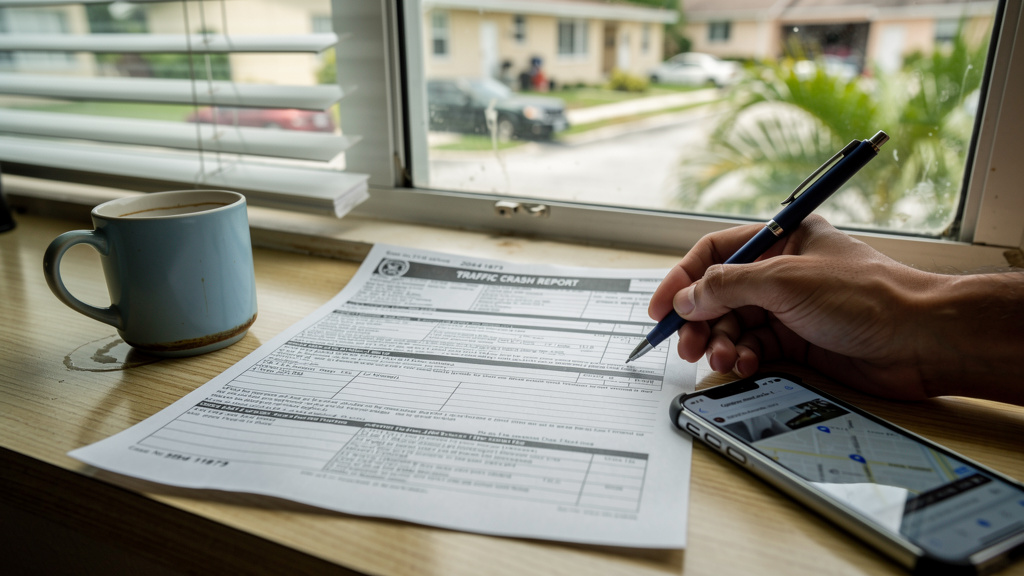
 How to Get Your Hialeah Police Department Crash Report After a Car Accident
Ask the responding officer for the report number at the scene, then retrieve the report through the Florida Crash Portal (FLHSMV) once it is…
 Personal injury
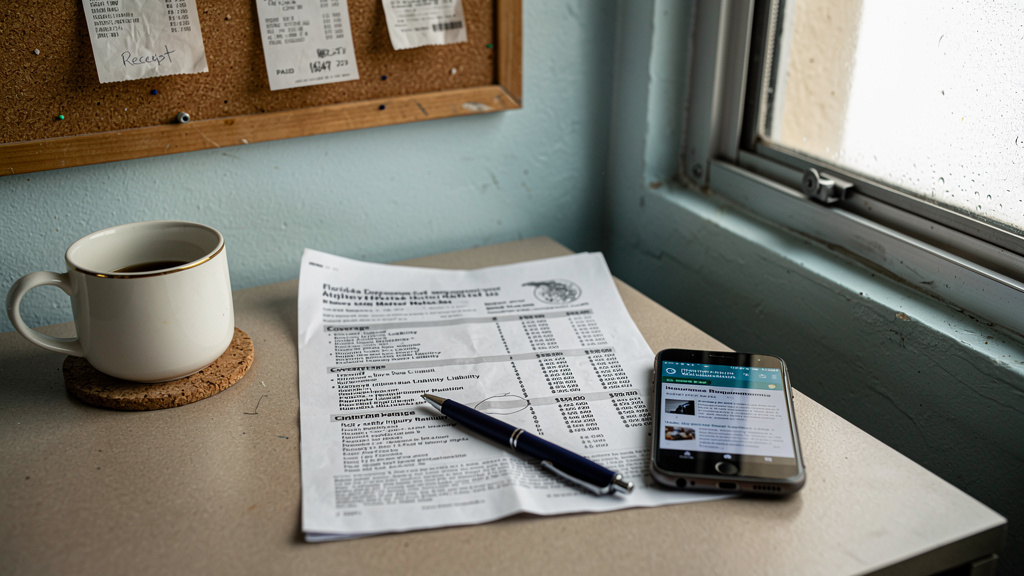
 Do I Have Uninsured Motorist Coverage? How to Check Your Policy
The fastest way to find out is to pull your declarations page, the one- or two-page summary your insurer sent when you bought or renewed your…
 Personal injury
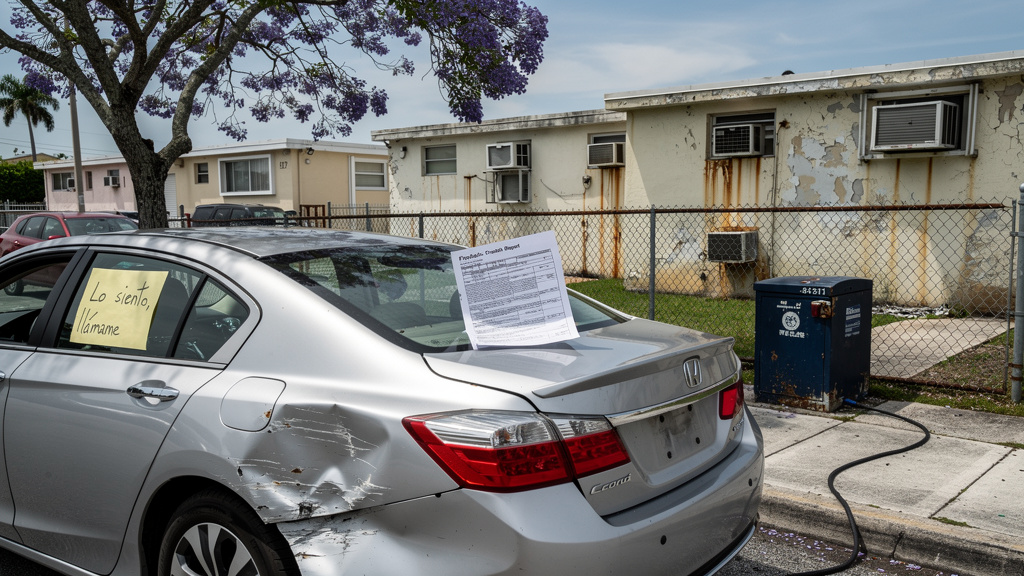
 Hit by an Uninsured Driver in Florida With No UM Coverage: What's Left?
Even without uninsured motorist coverage, you are not completely out of options: your own PIP coverage still pays first, a relative's UM policy may…