
Hit by an Uninsured Driver in Florida With No UM Coverage: What's Left?
Even without uninsured motorist coverage, you are not completely out of options: your own PIP coverage still pays first, a relative's UM policy may cover you, and the owner of the vehicle the driver was operating may be liable under Florida's dangerous instrumentality doctrine. Beyond that, your health insurance, a lawsuit against the driver personally, and claims against an employer or a bar that served the driver can all be explored, but the options narrow fast, and a signed UM rejection form is the first thing to verify.
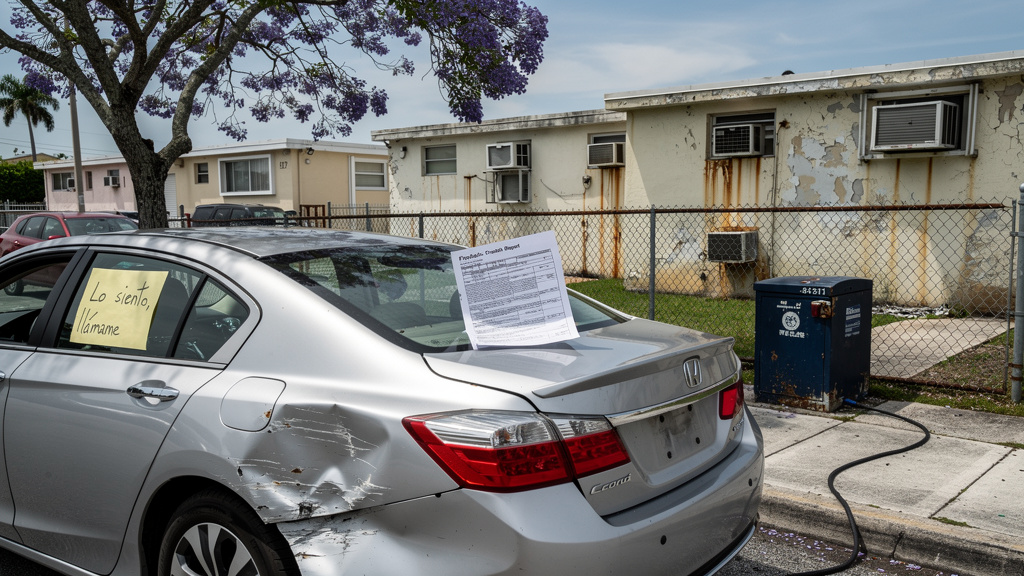
Even without uninsured motorist (UM) coverage, you are not completely out of options after a crash with an uninsured driver in Florida. Your own PIP coverage still pays first, a relative’s UM policy may cover you, and the owner of the vehicle the driver was operating could be liable under Florida law. Beyond that, your health insurance, a lawsuit against the driver personally, or claims against an employer or bar that served the driver can all be explored, but your options narrow fast. The first step is to verify whether you actually signed a valid UM rejection form.
Wait, are you sure you actually rejected UM coverage?
Many people believe they have no UM coverage but never signed a valid rejection. Under Florida law [Fla. Stat. § 627.727], a rejection is only enforceable if a named insured signed it in writing on a form approved by the Office of Insurance Regulation. The form must carry a heading in 12-point bold type warning that you are giving up valuable coverage. A verbal statement to an agent or a summary on a quote sheet does not count. If your policy includes bodily injury liability coverage and no properly signed form exists, UM coverage may be part of your policy by operation of law. Many people assume that if UM is not listed on their policy, they cannot recover anything through their own insurance. That assumption may be wrong if they never signed the required form. Request your complete policy file and declarations page, do not rely on what an agent tells you over the phone. Wolfson & Leon reviews the actual documents, in Spanish, with anyone in the Hialeah area who is unsure.
Your PIP coverage still pays, here is exactly what it covers and what it does not
Your personal injury protection (PIP) coverage pays regardless of who caused the crash. It covers 80 percent of reasonable and necessary medical expenses and 60 percent of lost income, up to a maximum of $10,000 if a treating provider finds an emergency medical condition. Without that finding, the limit drops to $2,500. Treatment must begin within 14 days of the crash, this deadline is not optional if you want PIP medical benefits. Miss it, and PIP pays nothing at all. PIP also does not cover pain and suffering. To recover for those damages from the at-fault driver, your injury must meet Florida’s permanent-injury threshold [Fla. Stat. § 627.737(2)]: permanent loss of a bodily function, permanent injury confirmed by medical probability, significant scarring or disfigurement, or death. Remember, PIP pays first from your own policy, then from a household relative’s policy, and only last from the vehicle owner’s policy for qualifying pedestrians or cyclists [Fla. Stat. § 627.736(4)(e)].
Does a relative’s UM policy cover you, even if it is not on your car?
Possibly. Florida UM policies typically extend to “resident relatives”, people who live in the same household as the named insured. If a parent, sibling, spouse, or other relative under your roof carries UM coverage, that policy may protect you even if you were driving your own car or walking at the time of the crash. The exact scope depends on the policy language and is not the same across all insurance companies. Do not assume you are excluded just because your name is not on the policy. You may be covered under a policy you did not know existed. Wolfson & Leon reviews all household policies, in Spanish, for clients in the Hialeah area to identify every possible source of recovery.
Was the driver in someone else’s car, a work van, or a borrowed vehicle? The owner may owe you money.
Florida’s dangerous instrumentality doctrine holds vehicle owners responsible when they let someone else drive their car, even if they were not present during the crash. If the uninsured driver was operating a borrowed vehicle, a family car, or a company van, the owner could be liable. However, if the owner is an individual who lent the car to a friend or family member, their liability may be capped by statute [Fla. Stat. § 324.021(9)(b)]. The limits and exceptions depend on the facts, so an attorney must review them to determine the potential recovery. If the driver was using a work vehicle during a job-related task, not just commuting, their employer may also be liable under the legal principle of respondeat superior. Driving to pick up parts, make deliveries, or run a work errand generally counts; driving to or from a regular workplace usually does not.
What about the bar or restaurant that served the driver, and what about suing the driver directly?
Under Florida’s dram shop law [Fla. Stat. § 768.125], a bar or restaurant can be held liable only if it knowingly served alcohol to someone under 21 or to someone habitually addicted to alcohol. Serving a visibly intoxicated adult alone is not enough. If the facts fit one of those two narrow exceptions, preserve receipts, video footage, and witness names immediately, surveillance footage may not be kept for long. As for suing the driver directly, no insurance does not automatically erase liability. You can obtain a judgment, but collecting it is another matter. Many uninsured drivers have no assets, protected wages, or homestead-exempt homes. Still, a judgment can lead to license suspension and future wage garnishment. Remember, your own fault matters: under Florida’s modified comparative negligence rule [Fla. Stat. § 768.81(6)], your recovery is reduced by your share of fault and barred only if you are more than 50 percent at fault.
Health insurance, the statute of limitations, and how to protect yourself next time
Once PIP is exhausted, your health insurance can pay additional medical bills. Be aware that your health insurer may seek repayment from any future settlement or judgment, this is called subrogation. An experienced attorney can often reduce that amount. If you have medical payments (MedPay) coverage, it may help too; check your policy for its terms and limits. For injuries on or after March 24, 2023, you have two years from the date of the crash to file a lawsuit [Fla. Stat. § 95.11]. That clock starts on day one, not when treatment ends. Going forward, UM coverage is the single most important optional protection you can buy. Many Florida drivers carry no bodily injury liability insurance. If you never signed a valid rejection form, you may already have UM coverage without knowing it. Wolfson & Leon, based in Hialeah, reviews every policy in your household in Spanish, checks for valid UM rejections, and pursues all available paths, including uninsured-motorist, car-accidents, and claims against vehicle owners or employers.
Frequently asked questions
Is it even worth suing an uninsured driver in Florida?
Legally, yes, you can obtain a judgment. Practically, collection is difficult if the driver has no assets or income. However, a judgment can stay enforceable for years and may lead to wage garnishment or license suspension.
I missed the 14-day window to see a doctor, does that mean I get nothing?
It means your PIP coverage will pay nothing for medical bills or lost wages. You may still pursue a claim against the at-fault driver if your injury meets Florida’s permanent-injury threshold, but PIP benefits are forfeited.
Can a relative’s UM policy cover me even if I was driving my own car?
Possibly, if you live in the same household as the policyholder. Resident-relative coverage often extends regardless of which vehicle you were using at the time of the crash.
The driver who hit me was in a company van, can I go after their employer?
Possibly. If the driver was performing a work-related task, not just commuting, the employer may be liable under Florida’s respondeat superior doctrine.
Will my health insurance cover my injuries if I have no PIP and no UM?
Yes, your health insurance can cover treatment after a crash, even without PIP or UM. However, it may seek reimbursement later if you recover money from another source.
Related reading: The 14-day PIP rule in Florida: what happens if you wait to see a doctor after a Hialeah car accident · How long do I have to file an injury lawsuit in Florida? The two-year rule after HB 837
Hurt in an accident in Hialeah? Call Wolfson & Leon at (305) 285-7071 for a free consultation. We speak Spanish, and there is no fee unless we win.
Key facts
- A UM rejection is only valid if a named insured signed it in writing on a form approved by the Office of Insurance Regulation; a verbal rejection or an unsigned form does not count under Florida law. Source: Fla. Stat. § 627.727
- PIP pays 80 percent of reasonable and necessary medical expenses and 60 percent of lost income, up to $10,000 if a treating provider finds an emergency medical condition, or only up to $2,500 without that finding, and only if initial treatment happens within 14 days of the crash. Source: Fla. Stat. § 627.736(1)
- PIP pays in a specific order: first from the injured person's own policy, then from a household relative's policy if the injured person has none, and only last from the vehicle owner's policy for qualifying pedestrians or cyclists with no household coverage. Source: Fla. Stat. § 627.736(4)(e)
- Under Florida's dangerous instrumentality doctrine, the owner of a vehicle may bear liability when someone else drives it with permission, but if the owner is an individual (not a business), liability for a driver they lent the car to may be capped by statute. Source: Fla. Stat. § 324.021(9)(b)
- A bar or restaurant that willfully and unlawfully serves alcohol to someone under 21, or knowingly serves a person habitually addicted to alcohol, may be liable for damages that person causes while driving; serving a visibly intoxicated adult alone is generally not enough. Source: Fla. Stat. § 768.125
Frequently asked questions
Is it even worth suing an uninsured driver in Florida?
It can be, but the practical challenge is collection, not liability. A Florida court can enter a judgment against an uninsured driver, and that judgment can support wage garnishment, bank levies, and liens on non-homestead property, and it may also trigger a license suspension until the judgment is satisfied. The honest reality is that many uninsured drivers have limited assets. An attorney can help evaluate whether the specific driver has reachable assets before you invest in litigation.
I missed the 14-day window to see a doctor, does that mean I get nothing?
Missing the 14-day treatment deadline under Fla. Stat. § 627.736(1) means your PIP benefits pay nothing for medical care. It does not eliminate every other option: you may still pursue a direct lawsuit against the driver, explore a household relative's UM policy, or use your own health insurance. However, the gap in treatment may also complicate proving the extent of your injuries, so it is important to get legal advice quickly even if the PIP window has closed.
Can a relative's UM policy cover me even if I was driving my own car?
Possibly. Florida UM policies typically extend coverage to resident relatives, people living in the same household as the named insured. If a parent, spouse, or other household member carries UM coverage, their policy may cover you regardless of which vehicle was involved. The exact scope depends on the specific policy language, so every policy in the household must be reviewed. Do not assume you are excluded without reading the documents.
The driver who hit me was in a company van, can I go after their employer?
You may be able to. Under Florida's dangerous instrumentality doctrine, a vehicle owner who allows someone else to drive can be held liable for that driver's negligence. If the driver was operating a work vehicle in the course of their employment, making deliveries, running a job-related errand, or otherwise acting within the scope of their job, the employer may share liability. Commuting to and from work alone generally does not create employer liability; the specific facts of what the driver was doing at the moment of the crash determine this.
Will my health insurance cover my injuries if I have no PIP and no UM?
Yes, health insurance can pay medical bills after PIP is exhausted or if PIP does not apply. The important caveat is subrogation: your health insurer may have the contractual right to be repaid from any settlement or judgment you later receive from the at-fault driver. An attorney can often negotiate that reimbursement obligation down, which increases what you actually keep. Health insurance does not compensate for lost wages, pain and suffering, or other non-medical losses, it only covers treatment costs.
This article is general information about Florida law, not legal advice, and reading it does not create an attorney-client relationship. Every case is different and past results do not guarantee a similar outcome. For advice about your situation, call Wolfson & Leon at (305) 285-7071 for a free consultation.
Also available in: Versión en español
 Personal injury
 How to Get Your Miami-Dade Crash Report When the Other Driver Had No Insurance
After a crash in Miami-Dade, the agency that responded, Hialeah Police, the Miami-Dade Sheriff's Office, or FHP, files a crash report that you can…
 Personal injury
 Florida's Serious Injury Threshold: When Can You Sue for Pain and Suffering?
Florida law bars you from suing the at-fault driver for pain and suffering unless your injury falls into one of four categories defined in Fla.…
 Personal injury
 How Soon After an Accident Should You Talk to a Lawyer in Florida?
Call before you talk to any insurance adjuster, ideally within the first few days after getting medical care. Multiple legal clocks start on the day…