
Which Insurance Pays After a Rear-End Crash in Florida, and in What Order?
In Florida, your own PIP coverage pays first, 80 percent of medical bills and 60 percent of lost wages, up to $10,000, regardless of who caused the crash. Once PIP is exhausted or your injuries are serious enough, you can pursue the at-fault driver's bodily injury liability coverage, but Florida does not require drivers to carry it, so in many Hialeah rear-end cases that policy simply does not exist. When the at-fault driver has little or no bodily injury coverage, your own uninsured/underinsured motorist (UM/UIM) policy becomes your real source of recovery.
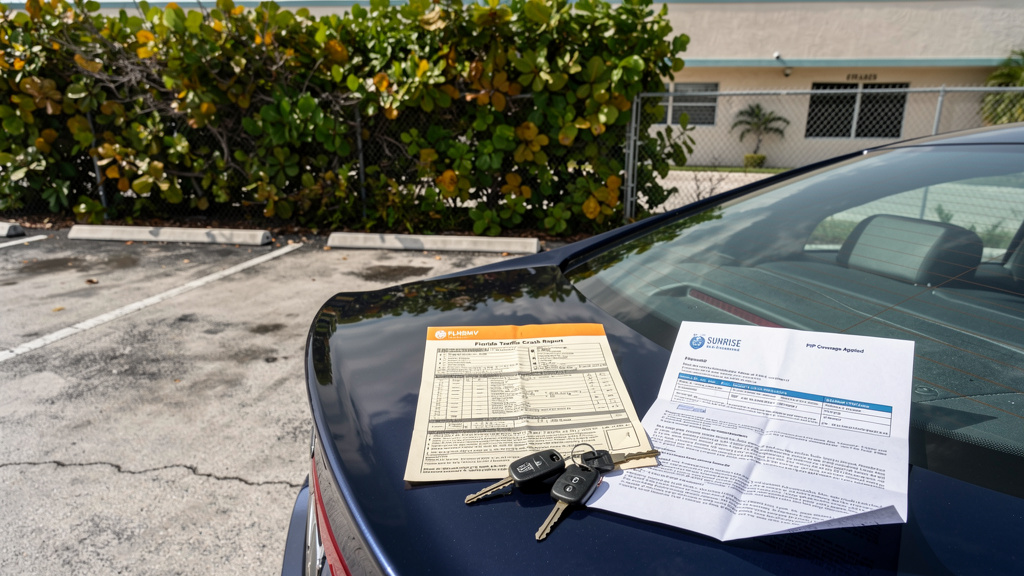
In Florida, your own PIP coverage pays first, 80 percent of medical bills and 60 percent of lost wages, up to $10,000, regardless of who caused the crash. Once PIP is exhausted or your injuries are serious enough, you can pursue the at-fault driver’s bodily injury liability coverage, but Florida does not require drivers to carry it, so in many Hialeah rear-end cases that policy simply does not exist. When the at-fault driver has little or no bodily injury coverage, your own uninsured/underinsured motorist (UM/UIM) policy becomes your real source of recovery.
Can I see the whole picture in one place, PIP, the other driver’s coverage, and UM side by side?
| Coverage | What It Pays | Maximum Limit | Fault Required? | Order of Payment | Property Damage |
|---|---|---|---|---|---|
| Your Own PIP | 80% of reasonable medical expenses, 60% of lost wages | $10,000 if a licensed provider diagnoses an emergency medical condition; $2,500 if not | No | FIRST | No |
| At-Fault Driver’s Bodily Injury Liability | Medical costs above PIP, future care, full lost wages, pain and suffering (if verbal threshold met) | Varies by policy; often $0 because it is not required in Florida | Yes | SECOND (if available) | No |
| Your Own UM/UIM | Same as bodily injury liability would have paid, but for at-fault driver’s lack of coverage | Equals your own BI limit unless waived in writing | Technically yes, but presumed in rear-end crashes | THIRD / last resort | No |
Property damage is handled separately: the at-fault driver’s property damage liability (PDL), which Florida requires at a minimum of $10,000 [Fla. Stat. § 324.022], pays for vehicle repairs. PIP and UM do not cover car damage. For a deeper look at how UM limits stack across policies, see our post on stacked vs non-stacked uninsured motorist coverage in Florida.
How does PIP actually work when I have medical bills piling up right now?
You have 14 days from the crash to get medical treatment or your PIP pays nothing, no exceptions [Fla. Stat. § 627.736(1)]. If you miss that window, you lose the $10,000 in benefits you already paid for through your premium. A single ER visit can use up thousands fast, especially if imaging or specialists are involved. PIP covers 80 percent of reasonable medical bills and 60 percent of documented lost wages, but only up to $10,000 if a doctor diagnoses an emergency medical condition. Without that diagnosis, the cap drops to $2,500. Your own policy pays first. If you don’t have one, your spouse’s or another relative’s PIP in your household may apply. Only pedestrians or cyclists without any household coverage can access the striking driver’s PIP. That is why understanding the 14-day rule and your PIP source matters immediately. Remember, Florida is no-fault for PIP, but that does not mean the other driver’s PIP pays your medical bills. It doesn’t.
What does the at-fault driver’s insurance actually cover, and what if they have none?
The at-fault driver’s bodily injury (BI) liability coverage pays what PIP leaves uncovered: the remaining 20% of medical bills, costs beyond the $10,000 PIP cap, future treatment, all lost wages, and pain and suffering, but only if you meet Florida’s “verbal threshold” [Fla. Stat. § 627.737(2)]. That means proving a permanent injury, significant and permanent scarring, or significant and permanent loss of an important bodily function. Crucially, Florida does not require drivers to carry BI coverage at all [Fla. Stat. § 324.022]. Many Hialeah drivers carry only the mandatory $10,000 in property damage liability and $10,000 in PIP. So even if the other driver clearly caused the crash, their BI policy may not exist. Vehicle repairs are covered by their property damage liability (minimum $10,000), but if your car costs $15,000 to fix, you’ll need your own collision coverage or pursue the driver personally. The answer to a low or denied offer starts with checking whether BI coverage exists, and if not, turning to your own UM policy.
In Hialeah, why is UM coverage often the only real source of recovery?
In Miami-Dade County, a high number of drivers carry no bodily injury liability coverage. That makes your own uninsured/underinsured motorist (UM) policy the primary path to full recovery after a rear-end crash. UM coverage is optional but must be rejected in writing [Fla. Stat. § 627.727]. It mirrors what the at-fault driver’s BI would have paid, if they had any. Before your UM coverage pays, you generally must first exhaust whatever BI limits the at-fault driver has, or show there are none [Fla. Stat. § 627.727(6)]. You must also check every auto policy in your household, a parent’s or spouse’s policy may provide additional UM layers. Pain and suffering via UM still requires meeting the same verbal threshold [Fla. Stat. § 627.737(2)]. And despite fears, filing a UM claim as a not-at-fault victim generally cannot trigger a rate hike. Under Florida law, doing so may constitute an unfair trade practice [Fla. Stat. § 626.9541(1)(o)]. Knowing your UM rights matters.
Which policy pays which bill, and in what order? A worked example.
A Hialeah driver is rear-ended on West 49th Street. She goes to a clinic within 14 days, and a physician diagnoses an emergency medical condition. Her own PIP activates first [Fla. Stat. § 627.736(1)], paying 80% of her initial treatments and 60% of wages she missed while recovering, up to $10,000. That limit is reached quickly due to MRI and specialist visits. She then looks to the at-fault driver’s BI liability, but discovers he carries none, only the state-required $10,000 in property damage liability [Fla. Stat. § 324.022], which covers her car repairs. With no BI available, she turns to her own UM policy [Fla. Stat. § 627.727]. Her attorney confirms the at-fault driver has no BI coverage, so there are no liability limits to exhaust first [Fla. Stat. § 627.727(6)]. She submits her UM claim for ongoing medical costs, full lost wages, and pain and suffering, if her injuries meet the statutory threshold [Fla. Stat. § 627.737(2)]. During this time, her health insurance or optional MedPay may cover interim gaps. For more on how multiple UM policies interact, see stacked vs non-stacked uninsured motorist coverage in Florida.
Will filing a UM claim raise my insurance rates in Florida?
Florida law protects not-at-fault victims who use their UM coverage. Specifically, an insurer generally cannot raise your premium or refuse to renew your policy solely because you filed a UM claim after being rear-ended [Fla. Stat. § 626.9541(1)(o)]. Doing so may be an unfair or deceptive insurance practice. That said, review your renewal notice carefully. If you see an unexplained surcharge tied to your UM claim, consult an attorney. The law is meant to protect you from a penalty just for using coverage you paid for.
Frequently asked questions
Do I have to use my own insurance after a rear-end crash even if the other driver caused it?
Yes. Florida law requires your own PIP to pay first, regardless of fault. The at-fault driver’s insurance only comes into play later for costs beyond PIP and for pain and suffering, if they carry bodily injury coverage.
What happens if the driver who rear-ended me has no insurance at all?
If they have no bodily injury coverage, your own UM policy becomes your main source for medical costs above PIP, lost wages, and pain and suffering (if you meet the injury threshold). Their property damage liability may still cover car repairs if they have even minimal insurance.
Will my rates go up if I file a UM claim after being rear-ended?
Generally, no. Florida law prohibits insurers from raising your premium solely because you filed a UM claim as a not-at-fault victim [Fla. Stat. § 626.9541(1)(o)].
Can I recover money for pain and suffering from the driver who rear-ended me?
Only if you prove a permanent injury, significant and permanent scarring, or significant and permanent loss of an important bodily function [Fla. Stat. § 627.737(2)]. Without meeting this threshold, pain and suffering is not recoverable, even if the other driver was 100% at fault.
Who pays to fix my car after a rear-end crash in Florida?
The at-fault driver’s property damage liability insurance pays, up to their policy limit (minimum $10,000 in Florida). If repair costs exceed that, you may need your own collision coverage or pursue the driver directly.
Related reading: The driver who hit me in Hialeah has no insurance. What now? · I was in a car accident in Hialeah. What do I do now? · The 14-day PIP rule in Florida: what happens if you wait to see a doctor after a Hialeah car accident
Hurt in an accident in Hialeah? Call Wolfson & Leon at (305) 285-7071 for a free consultation. We speak Spanish, and there is no fee unless we win.
Key facts
- PIP pays 80 percent of reasonable medical expenses and 60 percent of lost wages, up to $10,000 if a licensed provider diagnoses an emergency medical condition; the cap drops to $2,500 if no emergency medical condition is found. Source: Fla. Stat. § 627.736(1)
- Florida does not require private-passenger drivers to carry bodily injury liability coverage as a condition of vehicle registration; only $10,000 in PIP and $10,000 in property-damage liability are mandatory. Source: Fla. Stat. § 324.022
- Pain and suffering damages from the at-fault driver require proof of a permanent injury, significant and permanent scarring or disfigurement, or significant and permanent loss of an important bodily function. Source: Fla. Stat. § 627.737(2)
- UM/UIM coverage is optional but must be rejected in writing; it steps in when the at-fault driver has no or insufficient bodily injury coverage. Source: Fla. Stat. § 627.727
- An insurer generally cannot raise your premium solely because you filed a UM claim as a not-at-fault victim; doing so may constitute an unfair trade practice. Source: Fla. Stat. § 626.9541(1)(o)
Frequently asked questions
Do I have to use my own insurance after a rear-end crash even if the other driver caused it?
Yes. Florida's no-fault law requires you to file with your own PIP carrier first, regardless of who caused the crash, under Fla. Stat. § 627.736(1). PIP pays 80 percent of covered medical bills and 60 percent of lost wages up to the policy limit. Only after PIP is exhausted, or your injuries cross the serious-injury threshold, do you pursue the at-fault driver's bodily injury coverage or your own UM coverage.
What happens if the driver who rear-ended me has no insurance at all?
If the at-fault driver carries no bodily injury coverage, your own uninsured motorist (UM) policy is typically the primary source of recovery for damages above PIP, including pain and suffering if your injuries meet the verbal threshold under Fla. Stat. § 627.737(2). Florida does not require bodily injury liability coverage, so this situation is common in Miami-Dade County. Check every auto policy in your household, because a resident relative's policy may also provide UM benefits under Fla. Stat. § 627.727.
Will my rates go up if I file a UM claim after being rear-ended?
Florida law provides protection against premium increases imposed solely because you filed a UM claim as a not-at-fault victim; doing so may constitute an unfair insurance trade practice under Fla. Stat. § 626.9541(1)(o). Review your renewal notice carefully after any claim. If you see an unexpected surcharge, speak with an attorney before assuming it is lawful.
Can I recover money for pain and suffering from the driver who rear-ended me?
Only if your injuries meet Florida's verbal threshold under Fla. Stat. § 627.737(2), which requires a permanent injury within a reasonable degree of medical probability, significant and permanent scarring or disfigurement, or significant and permanent loss of an important bodily function. PIP does not pay for pain and suffering at all. If your injuries qualify, you can pursue pain and suffering from the at-fault driver's bodily injury policy, or from your own UM policy if the at-fault driver has no such coverage.
Who pays to fix my car after a rear-end crash in Florida?
Vehicle damage is handled separately from injury claims. The at-fault driver's property damage liability (PDL) coverage, required at a minimum of $10,000 under Fla. Stat. § 324.022, is the first source for repair costs. PIP does not cover property damage. If repair costs exceed the at-fault driver's PDL limit, your own collision coverage (if you carry it) would cover the remainder after your deductible; UM coverage does not pay for vehicle damage.
This article is general information about Florida law, not legal advice, and reading it does not create an attorney-client relationship. Every case is different and past results do not guarantee a similar outcome. For advice about your situation, call Wolfson & Leon at (305) 285-7071 for a free consultation.
Also available in: Versión en español
 Personal injury
 How Soon After an Accident Should You Talk to a Lawyer in Florida?
Call before you talk to any insurance adjuster, ideally within the first few days after getting medical care. Multiple legal clocks start on the day…
 Personal injury
 Hurt and Can't Leave Home? How to Get a Lawyer to You
You do not have to go anywhere. A personal injury lawyer can come to your hospital room or your home, and a family member can make the first call on…
 Personal injury
 What Actually Happens at a Free Personal Injury Consultation in Hialeah
A free personal injury consultation is a private conversation, not a courtroom, not a deposition, where you describe what happened and a lawyer…