
Other Driver Has No Insurance? You Still Have Real Options in Florida
Yes. The other driver's lack of insurance does not end your claim. Your own PIP coverage pays first regardless of fault, your UM coverage can pay for injuries and lost wages beyond PIP, and you may still sue the uninsured driver personally, the real problem is collecting from someone with no assets, not the right to pursue them. Miami-Dade roads carry a disproportionately high share of drivers with no bodily injury coverage, which makes knowing your own policy's UM limits one of the most important things you can do before a crash, not after.
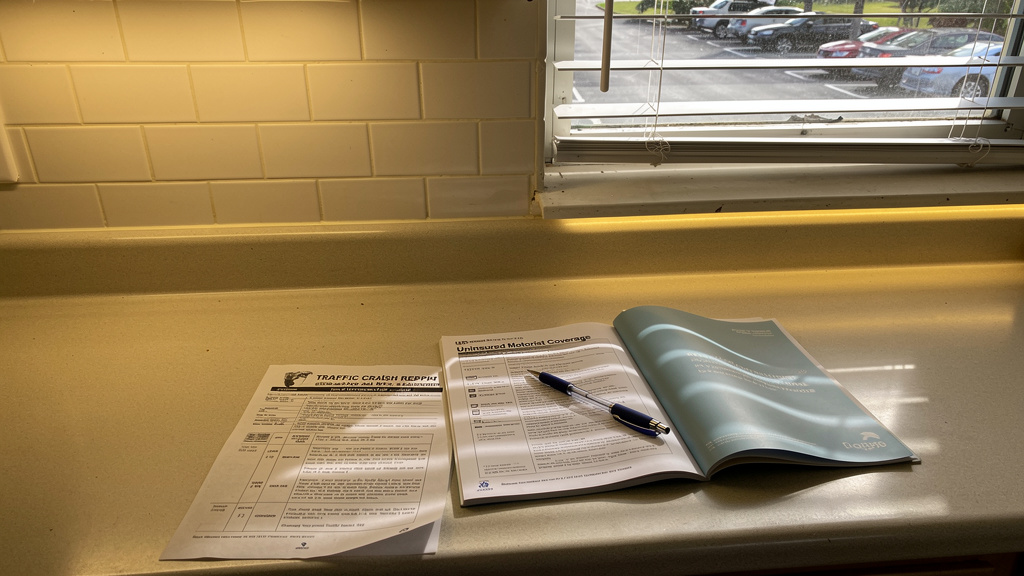
Yes. The other driver’s lack of insurance does not end your claim. Your own PIP coverage pays first regardless of fault, your UM coverage can pay for injuries and lost wages beyond PIP, and you may still sue the uninsured driver personally. The real problem is collecting from someone with no assets, not the right to pursue them. Miami-Dade roads carry a disproportionately high share of drivers with no bodily injury coverage, which makes knowing your own policy’s UM limits one of the most important things you can do before a crash, not after.
Myth 1: No insurance on their side means no claim, or I’ll just sue the driver and collect
Many people wonder whether it is even worth pursuing a claim against an uninsured driver. That question rests on two misunderstandings. First, Florida law does not require most drivers to carry bodily injury liability insurance when they register a vehicle. That means the at-fault driver may legally have zero coverage for your injuries. Second, your claim does not disappear. Your own PIP coverage pays first under [Fla. Stat. § 627.736(4)(e)], then your uninsured motorist (UM) coverage can step in for additional damages. You always have the legal right to sue the driver who hurt you, but a court judgment only has value if the defendant owns something you can collect. Many uninsured drivers have few assets, so while the lawsuit option exists, it often does not result in payment.
Myth 2: Filing a UM claim will get my policy cancelled or my premium raised
Many people fear that using their own UM coverage will punish them. That worry is understandable but misplaced. Florida law generally restricts insurers from surcharging your premium or refusing to renew your policy solely because of a crash in which you were not substantially at fault [Fla. Stat. § 626.9541(1)(o)]. Separately, an insurer that handles a valid UM claim unreasonably may face a bad faith claim under Florida law. The challenge is that insurance companies, even your own, may still try to minimize what they pay. A bad faith judgment can exceed your original policy limits, but only if the insurer acted unreasonably.
Myth 3: I never bought UM coverage, so I’m out of luck
Do not assume you have no UM coverage just because you do not remember buying it. Florida law requires insurers to offer UM coverage with every policy that includes bodily injury liability. You can only waive it by signing a written rejection form approved by the Florida Office of Insurance Regulation under [Fla. Stat. § 627.727]. If your insurer cannot produce that signed form, the law presumes you have UM coverage equal to your bodily injury limits. Also, check every auto policy in your household. For example, a young adult living with parents in Hialeah may be covered under the parents’ policy as a resident relative, even if driving a friend’s car and owning no policy themselves. If the household has multiple insured vehicles and stacked UM coverage, the available limits multiply. Pull all declarations pages before concluding you have nothing.
Myth 4: UM only covers me when I’m inside my own car
UM coverage often follows the person, not the vehicle. Florida law may extend your UM protection when you are a pedestrian, cyclist, passenger in another car, or even in a rental. This is governed by [Fla. Stat. § 627.727], but the exact scope depends on your policy language and endorsements. Do not assume you are covered just because you have UM. Conversely, do not assume you are excluded simply because you were not in your own car. An attorney can review your full policy and the facts of your crash to determine whether UM applies. Always verify against your actual contract before making decisions based on this rule.
Myth 5: I have plenty of time to figure this out
Delaying can destroy your claim. You must seek initial medical treatment within 14 days of the crash to preserve your PIP benefits under [Fla. Stat. § 627.736] (up to $10,000 with an emergency medical condition, otherwise up to $2,500). Miss that window and your own PIP pays nothing, even though you paid premiums for years. Separately, you have two years from the crash date to file a personal injury lawsuit for crashes on or after March 24, 2023, per [Fla. Stat. § 95.11]. The deadline to sue your own UM insurer is governed by different rules than the general negligence deadline, so ask a lawyer about it early. Hit-and-run claims often include strict notice requirements in the UM policy itself. Acting quickly protects every possible path to recovery.
Myth 6: I had no insurance either, so I can’t recover anything
Being uninsured yourself does not automatically kill your claim. Florida law imposes a specific order for PIP payment: first your own policy, then a resident relative’s policy, and only if neither exists, the striking vehicle’s PIP, if you are a Florida-resident pedestrian or cyclist, under [Fla. Stat. § 627.736(4)(e)]. You may still bring a negligence claim against the at-fault driver under Florida’s modified comparative fault rule ([Fla. Stat. § 768.81(6)]), which bars recovery only if you are more than 50 percent at fault. Your lack of insurance is not the same as being mostly at fault. While being uninsured may limit certain damages, it does not erase all rights. Consult an attorney before walking away from a valid claim.
Frequently asked questions
Does my PIP pay even if the other driver caused the crash and had no insurance?
Yes. PIP pays regardless of fault. Your own PIP policy pays first under Florida law, up to $10,000 if an emergency medical condition is diagnosed, provided you see a doctor within 14 days. The other driver’s lack of insurance does not affect your PIP benefits.
What is the resident-relative rule and why does it matter after a crash with an uninsured driver?
The resident-relative rule allows someone living in the same household as a policyholder to qualify for that policy’s UM or PIP coverage, even if they do not own a car. This is often the only source of UM coverage for young adults or others without their own policy. Check all household auto policies after a crash.
Can my insurance company raise my rates or cancel my policy because I filed a UM claim?
Generally, no. Florida law restricts insurers from raising your rates or refusing to renew your policy solely because of a crash in which you were not substantially at fault. Such conduct could violate Florida’s unfair trade practices law.
How long do I have to file a lawsuit after a crash with an uninsured driver in Florida?
For crashes on or after March 24, 2023, you have two years from the crash date to file a negligence lawsuit under [Fla. Stat. § 95.11]. The deadline to sue your own UM insurer is governed by different rules, so ask a lawyer about it early.
Can I still recover anything if I was uninsured when the crash happened?
Possibly. Even if you had no insurance, you may still recover under a household relative’s PIP or UM policy. You can also sue the at-fault driver as long as you were not more than 50 percent responsible for the crash. Your uninsured status alone does not bar all recovery, though it may affect available damages.
Related reading: The driver who hit me in Hialeah has no insurance. What now? · How long do I have to file an injury lawsuit in Florida? The two-year rule after HB 837 · Stacked vs. non-stacked uninsured motorist coverage in Florida: what the checkbox on your policy actually means · A car hit me while I was walking or biking in Hialeah. What are my rights?
Hurt in an accident in Hialeah? Call Wolfson & Leon at 305-965-3766 for a free consultation. We speak Spanish, and there is no fee unless we win.
Key facts
- PIP pays 80 percent of reasonable medical expenses and 60 percent of lost wages, up to $10,000 if an emergency medical condition is found, but only if you seek initial treatment within 14 days of the crash, not the striking driver's PIP, yours. Source: Fla. Stat. § 627.736
- Florida does not require most drivers to carry bodily injury liability insurance at the time of vehicle registration, meaning a driver with a perfectly valid policy may have zero coverage for the injuries they cause others. Source: Fla. Stat. §§ 627.733, 627.736(1)
- UM coverage must be offered with every auto policy that includes bodily injury liability; a named insured can only waive it by signing a written rejection form approved by the Florida Office of Insurance Regulation. Source: Fla. Stat. § 627.727
- The deadline to file a personal injury lawsuit in Florida for crashes on or after March 24, 2023, is two years from the date of the crash. Source: Fla. Stat. § 95.11
- An insurer that uses unfair or deceptive methods to settle claims, including lowballing a UM claimant, may be subject to a bad faith action under Florida law. Source: Fla. Stat. § 624.155
Frequently asked questions
Does my PIP pay even if the other driver caused the crash and had no insurance?
Yes. Florida PIP pays regardless of fault under Fla. Stat. § 627.736. Your own PIP policy pays first, not the other driver's, covering 80 percent of reasonable medical expenses and 60 percent of lost wages up to the applicable limit. The critical requirement is that you seek initial medical treatment within 14 days of the crash. Miss that window and the entire PIP benefit is forfeited, no matter how serious your injuries.
What is the resident-relative rule and why does it matter after a crash with an uninsured driver?
The resident-relative rule means that UM coverage on any auto policy in your household may extend to you, even if you were not driving that car, or any car, at the time of the crash. For example, if you live in a Hialeah home with family members who insure two vehicles under a single policy, you may qualify as a covered resident relative under that policy's UM coverage. This is the most common place that injured people discover hidden UM coverage they did not know they had. Check every auto policy in your household before assuming you are unprotected.
Can my insurance company raise my rates or cancel my policy because I filed a UM claim?
Florida law restricts insurers from using a not-at-fault UM claim as a basis for surcharging your premium or cancelling your policy. Fla. Stat. § 626.9541(1)(o) governs unfair and deceptive insurer conduct. That said, your own insurer functions as the adverse party in a UM dispute and may still try to minimize what it pays, so document everything and consider having an attorney review any settlement offer before you accept it.
How long do I have to file a lawsuit after a crash with an uninsured driver in Florida?
For crashes that occurred on or after March 24, 2023, Florida's statute of limitations for personal injury claims is two years under Fla. Stat. § 95.11. Missing that deadline generally bars your claim permanently. The deadline to file suit specifically against your own UM insurer is governed by different rules than the general negligence statute, so ask an attorney about that timeline early. Do not wait to act.
Can I still recover anything if I was uninsured when the crash happened?
Possibly, but the answer depends on your specific facts. Under Fla. Stat. § 627.736(4)(e), if you have no PIP policy of your own, the PIP of a resident relative in your household may pay first; after that, other sources may be available depending on the circumstances. Being uninsured is not the same as being at fault, and Florida's modified comparative negligence rule under Fla. Stat. § 768.81(6) only bars recovery if you are found more than 50 percent responsible for the crash. Consult an attorney before concluding your claim is worthless.
This article is general information about Florida law, not legal advice, and reading it does not create an attorney-client relationship. Every case is different and past results do not guarantee a similar outcome. For advice about your situation, call Wolfson & Leon at 305-965-3766 for a free consultation.
Also available in: Versión en español
 Personal injury
 How to Tell Which Hialeah Car Accident Lawyers Have the Best Reviews
Stop counting stars and start reading what reviewers actually describe: the type of crash they had, whether an attorney or a case manager handled…
 Personal injury
 My Parent Spoke to the Insurance Adjuster in English and Didn't Understand: Now What?
One conversation with an adjuster, even one your parent barely understood, does not end the claim, but it does create a recorded version of events…
 Personal injury
 Hurt on a Job as a 1099 Contractor in Hialeah: Who Do You Claim Against?
If you were injured on a job as a 1099 contractor in Hialeah and have no workers' compensation coverage, a claim against the property owner, the…