
My Parent Spoke to the Insurance Adjuster in English and Didn't Understand: Now What?
One conversation with an adjuster, even one your parent barely understood, does not end the claim, but it does create a recorded version of events that the insurer will use. Stop all contact with every insurance company right now, get an attorney before anyone speaks to an adjuster again, and know that what was said can often be clarified or contextualized by a lawyer before it causes permanent damage.
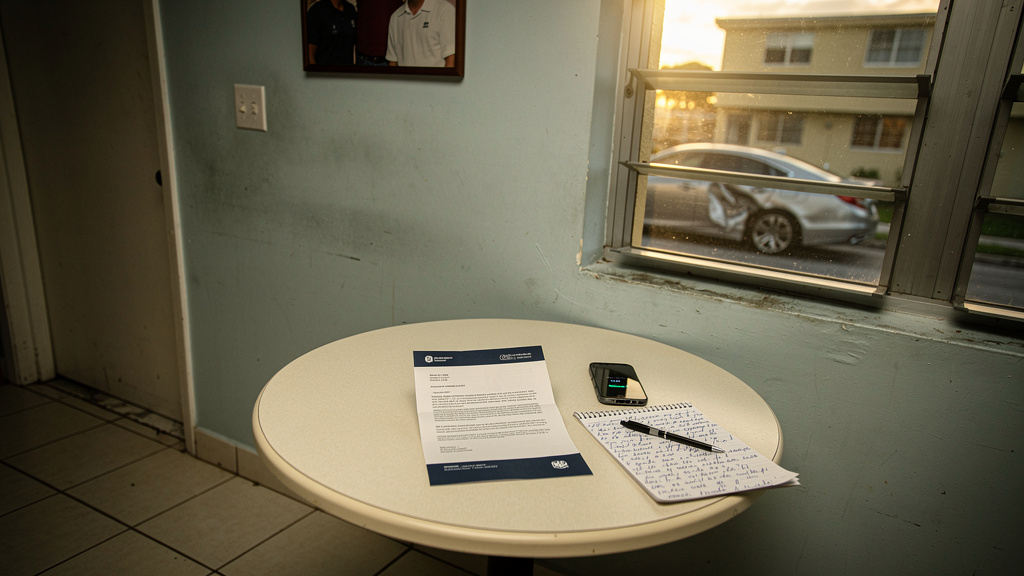
One conversation with an insurance adjuster, even if your parent barely understood the English questions, does not end the claim. But it does create a recorded statement that the insurer will use to limit or deny compensation. Stop all contact with every insurance company right now. Get an attorney before anyone in the family speaks to an adjuster again. What was said can often be clarified or placed in context by a lawyer before it causes permanent harm.
Is it too late to protect the claim after that call?
No, it is not too late, but you must act fast. A single unclear statement during an adjuster call rarely kills a claim outright under Florida law. Under the state’s modified comparative negligence rule, your parent’s recovery is only barred if they are found more than 50 percent at fault [Fla. Stat. § 768.81(6)]. An ambiguous answer might shift the percentage of fault, but it does not erase the claim entirely. You still have up to two years from the crash date to file a lawsuit if the injury happened on or after March 24, 2023 [Fla. Stat. § 95.11]. In Hialeah, adjusters often call within days of crashes on Okeechobee Road, W 49th Street, or the Palmetto Expressway, sometimes before the injured person has even seen a doctor. If your family feels lost and unsure who to call, know this: you do not need to navigate this alone. An attorney can step in immediately to shield your parent from further contact and begin repairing any damage from that first conversation.
Was that call with your own PIP insurer or the other driver’s insurer, and why does it matter?
This matters because your legal obligations are completely different. Your own PIP insurer (the one that covers your parent’s car or household) can require cooperation under the policy terms, but “cooperation” does not mean answering every question without a lawyer present. The other driver’s insurance company has no contractual relationship with your family. You owe them nothing. They called because they want to limit their payout, not help your parent.
If your parent was hit as a pedestrian or cyclist, Florida law says PIP benefits come first from your parent’s own policy; if they don’t have one, then from a resident relative’s policy; only if neither exists does the striking vehicle’s PIP apply, for a Florida resident [Fla. Stat. § 627.736(4)(e)]. PIP pays regardless of fault but only if treatment began within 14 days of the crash [Fla. Stat. § 627.736]. If that window is still open, getting medical care now is urgent. And remember: you never have to give a recorded statement to the other driver’s insurer. For more on this, see our guide on giving a recorded statement to an insurance adjuster.
What was the adjuster actually listening for on that call?
The adjuster was listening for words that could reduce or eliminate your claim. Phrases like “I’m okay,” “just a little sore,” “I didn’t see them,” or “maybe I was going fast” are red flags for insurers. These statements can be used to argue your parent was partly at fault, or that injuries aren’t serious enough to meet Florida’s threshold for pain and suffering, which requires a permanent injury [Fla. Stat. § 627.737(2)].
Under Florida’s modified comparative negligence rule, if your parent is assigned more than 50 percent fault, recovery is barred entirely [Fla. Stat. § 768.81(6)]. An English-limited speaker is especially vulnerable because everyday words like “fine” or “okay” can be read as a sign that the injury is minor. For example, a parent rear-ended near the Okeechobee Road and Palmetto interchange who says “I was maybe going fast” in uncertain English just gave the adjuster grounds to increase their share of fault. That single phrase won’t end the case, but it can hurt unless corrected early.
How do you get a copy of the recording or transcript of that call?
Write down everything you remember about the call right now: date, time, adjuster’s name, claim number, questions asked, and answers given. Then, call the insurer back only to ask three things: the adjuster’s full name, the claim number, and whether the call was recorded. Say nothing else. Hang up and write it all down.
You cannot assume the insurer must hand over the recording just because you ask. But once an attorney is hired, they can formally request the statement, demand the claim file, and later compel its production through court discovery if needed. Florida law also allows parties and their attorneys to obtain the official crash report even during the 60-day confidentiality window [Fla. Stat. § 316.066]. Your lawyer will use that report alongside medical records to challenge any misleading narrative from the recorded call.
What if your own insurer demands a recorded statement or an Examination Under Oath (EUO)?
An Examination Under Oath (EUO) is a formal, sworn proceeding your PIP insurer can require under the policy’s cooperation clause [Fla. Stat. § 627.736(6)(g)]. It is far more serious than a phone call. Your parent can ask for a professional interpreter, not a family member or bilingual friend. Answering under oath through a language barrier without proper interpretation creates extreme risk: the transcript becomes a sworn record that can be used against the claim.
In Hialeah households where children have long served as translators, insurers may assume a family member can interpret. Do not accept that. An attorney should be present at the EUO to protect your parent’s rights and ensure accurate communication. While Florida law does not explicitly guarantee a free interpreter in all cases, you can, and should, demand one. Never attend an EUO alone if English is not fully understood.
What should your attorney do, and what should you refuse to sign, right now?
Your attorney will take over all communication with insurers, submit corrections to any misunderstood statements, and use medical records and the police report to build an accurate picture of the crash. Most importantly, they will stop you from signing documents that could end your claim too soon.
Do not sign anything in English unless it is fully explained. This includes broad medical authorizations (which can pull decades of unrelated health records), settlement checks, or any document labeled “release,” “authorization,” or “agreement.” Accepting even a small check with a release can permanently close your parent’s right to future compensation, especially dangerous when the full injury isn’t yet diagnosed. Florida requires a permanent injury for pain and suffering claims [Fla. Stat. § 627.737(2)], and many conditions worsen over weeks. Quick, low offers after crashes on W 49th Street or Okeechobee Road can come while families are still overwhelmed and unsure. Let your lawyer review everything first.
Frequently asked questions
Can the insurance company use what my mom said in English against her even if she didn’t fully understand the questions?
Yes. Insurers treat recorded statements as evidence, regardless of language barriers. But an attorney can provide context, correct misunderstandings, and show how limited English affected the responses.
My parent’s own insurer called first, not the other driver’s insurer. Do they have to answer?
They must cooperate under their PIP policy, but they do not have to answer every question without a lawyer. An attorney can handle all future communication while protecting coverage.
The adjuster who called sounded Hispanic and spoke some Spanish, does that mean they’re on our side?
No. Every adjuster works for the insurance company, not for your family. Their goal is to minimize or deny the claim, even if they speak Spanish.
What is the 14-day rule and did the crash already trigger it?
Florida requires medical treatment within 14 days of a crash to qualify for PIP benefits [Fla. Stat. § 627.736]. If your parent hasn’t seen a doctor yet and the crash was fewer than 14 days ago, go now, even to an urgent care or Hialeah Hospital.
How long does the family have to file a lawsuit if the claim is not resolved?
For crashes on or after March 24, 2023, the deadline is two years from the crash date [Fla. Stat. § 95.11]. That window gives time to negotiate, but waiting too long reduces leverage.
Hurt in an accident in Hialeah? Call Wolfson & Leon at 305-965-3766 for a free consultation. We speak Spanish, and there is no fee unless we win.
Key facts
- Under Florida's modified comparative negligence rule, a claimant's recovery is reduced by their share of fault and is barred entirely only if they are found MORE THAN 50 percent at fault, so a single ambiguous statement rarely kills a claim outright, but it can shift the percentage. Source: Fla. Stat. § 768.81(6)
- PIP pays 80 percent of reasonable medical expenses and 60 percent of lost income, up to $10,000 when a physician finds an emergency medical condition, and up to $2,500 otherwise, but only if the injured person sought medical treatment within 14 days of the crash. Source: Fla. Stat. § 627.736
- PIP benefits come first from the injured person's own policy; if they have none, from a resident relative's policy; only if neither exists does the striking vehicle's PIP apply to a Florida-resident pedestrian or cyclist. Source: Fla. Stat. § 627.736(4)(e)
- Florida crash reports are confidential for 60 days after the crash except to the parties, their insurers, and their attorneys, meaning the family can request the report. Source: Fla. Stat. § 316.066
- The deadline to file a personal injury lawsuit for crashes on or after March 24, 2023 is two years from the date of the crash. Source: Fla. Stat. § 95.11
Frequently asked questions
Can the insurance company use what my mom said in English against her even if she didn't fully understand the questions?
Yes. A recorded statement is a permanent record regardless of whether the speaker fully understood the questions. Insurers are not required to flag misunderstandings or re-ask questions in the speaker's preferred language. An attorney can submit written clarifications and use later medical records and the crash report to provide context, but the original recording stays in the file. This is exactly why no further calls should happen without a lawyer.
My parent's own insurer called first, not the other driver's insurer. Do they have to answer?
Your parent's own policy almost certainly contains a cooperation clause, which means they have a contractual duty to report the crash and respond to reasonable insurer requests, ignoring it entirely can jeopardize PIP benefits. However, 'cooperating' is not the same as answering every question immediately without counsel. An attorney can help distinguish what the policy actually requires from what the adjuster is asking for. The safest move is to retain counsel before any detailed statement, recorded or otherwise.
The adjuster who called sounded Hispanic and spoke some Spanish, does that mean they're on our side?
No. A Spanish-speaking adjuster who works for the insurer, whether your own or the other driver's, is employed to protect the insurer's financial interests, not yours. Rapport and shared language can actually lower a claimant's guard, leading to more candid and potentially damaging statements. Regardless of the adjuster's background or the language of the call, their notes and any recording go into a file that will be used to evaluate and potentially minimize the claim.
What is the 14-day rule and did the crash already trigger it?
Under Fla. Stat. § 627.736, an injured person must seek medical treatment within 14 calendar days of the crash or lose the right to PIP benefits entirely. PIP is the first layer of coverage, it pays 80 percent of reasonable medical expenses and 60 percent of lost wages up to the policy limit, regardless of who caused the crash. If that 14-day window has not yet closed, getting medical evaluation right now is the single most urgent step, even before retaining an attorney.
How long does the family have to file a lawsuit if the claim is not resolved?
For crashes that happened on or after March 24, 2023, Florida law gives injured people two years from the date of the crash to file a personal injury lawsuit under Fla. Stat. § 95.11. Missing that deadline almost always means the right to sue is gone permanently, regardless of how clear the other driver's fault was. Retaining an attorney early preserves options and ensures no deadline is missed while the claim is still being negotiated.
This article is general information about Florida law, not legal advice, and reading it does not create an attorney-client relationship. Every case is different and past results do not guarantee a similar outcome. For advice about your situation, call Wolfson & Leon at 305-965-3766 for a free consultation.
Also available in: Versión en español
 Personal injury
 How to Tell Which Hialeah Car Accident Lawyers Have the Best Reviews
Stop counting stars and start reading what reviewers actually describe: the type of crash they had, whether an attorney or a case manager handled…
 Personal injury
 Hurt on a Job as a 1099 Contractor in Hialeah: Who Do You Claim Against?
If you were injured on a job as a 1099 contractor in Hialeah and have no workers' compensation coverage, a claim against the property owner, the…
 Personal injury
 The Other Driver Only Has $10,000 in Coverage, Can I Get the Rest?
Yes, if you carry uninsured/underinsured motorist (UM) coverage on your own policy, you can claim the gap between the at-fault driver's limit and…