
Undocumented Victim Died: Can the Family Still Sue in Florida?
Immigration status alone does not bar a wrongful death claim under Florida law. Florida's Wrongful Death Act does not make the immigration status of the person who died, or of the family members left behind, a requirement for bringing a claim. A free, confidential consultation in Spanish can tell you what your specific family may be able to recover.
Immigration status alone does not bar a wrongful death claim under Florida law. Florida’s Wrongful Death Act does not make the immigration status of the person who died, or of the family members left behind, a requirement for bringing a claim. A free, confidential consultation in Spanish can tell you what your specific family may be able to recover.
Does immigration status actually stop a wrongful death claim in Florida?
No. Florida’s Wrongful Death Act contains no language that takes away the right to sue based on immigration status. Nothing in the text of Fla. Stat. § 768.21 or the rest of the Act makes legal papers a requirement, although each case depends on its facts.
Some people online claim that undocumented families cannot sue, but immigration status alone does not block the legal path forward. A civil lawsuit for wrongful death is about holding a negligent party accountable, not about immigration enforcement.
What can the family actually recover under Florida’s Wrongful Death Act?
Florida law allows certain family members to recover specific types of damages when someone dies due to another person’s negligence. These include lost financial support the deceased provided, like wages, childcare, or help with household tasks, as well as loss of companionship and parental guidance for children and spouses. Survivors may also recover for their own mental pain and suffering, medical bills paid between the injury and death, and funeral and burial costs. All of this is outlined in Fla. Stat. § 768.21.
Only certain people qualify as legal “survivors” under Fla. Stat. § 768.18: a spouse, children (with special rules for children under 25), parents, and in some cases dependent blood relatives or adoptive siblings. The amount depends on the facts, what was lost, who depended on the deceased, and what evidence shows.
The deceased worked informal or cash jobs, how do we prove lost income?
Many workers in Hialeah and Medley are paid in cash for construction, roadside, or day labor. While this makes proving income harder, it does not mean the loss has no value. Florida law allows recovery for the support the deceased provided, even if it came from informal work. Evidence can include bank deposits, remittance records, cellphone payment apps like Zelle or Cash App, testimony from co-workers or employers, and records of regular expenses the deceased covered for the family.
Insurance companies may argue that undocumented workers had “no provable earnings.” Defense lawyers may challenge every dollar. An experienced attorney helps gather and present this evidence properly, but results always depend on the specific facts.
Will immigration status come up during the case?
Many families in Miami-Dade avoid calling lawyers because they fear immigration consequences. Filing a wrongful death lawsuit does not automatically alert immigration authorities. Civil courts are not immigration enforcement agencies. Bringing up immigration status can unfairly prejudice a case, and judges may limit how much the defense can discuss it.
However, in narrow situations, especially when calculating future lost earnings, an opposing lawyer might try to raise it. Whether it can be raised depends on the facts and the court, and the issue requires careful handling. That is why speaking with an attorney first matters, you can ask your questions in confidence, in Spanish, before deciding anything.
What if the surviving family members are also undocumented?
Florida law does not require survivors to be U.S. citizens or legal residents to benefit from a wrongful death claim. Who qualifies depends on family relationship and dependency, not immigration papers. Spouses, children, and parents may share in any recovery as long as they meet the definitions in Fla. Stat. § 768.18.
But there is a procedural step: only a personal representative appointed by a Florida probate court can file the lawsuit (Fla. Stat. § 768.20). That representative does not need to be a citizen. Probate takes time, and the clock is ticking, the deadline to file is two years from the date of death under Fla. Stat. § 95.11. Waiting too long can mean missing that window forever, especially for families of pedestrians killed on W 49th Street or Okeechobee Road, or workers lost at Medley job sites.
How do we start if we are afraid to come forward?
Call Wolfson & Leon in Hialeah for a free, confidential consultation in Spanish. Talking to a lawyer is private, it does not file a lawsuit, create a public record, or notify any government agency. You can ask your questions without committing to anything.
Do not wait. Surveillance video from crashes on Okeechobee Road can be erased quickly. Witnesses move. Memories fade. And the two-year deadline under Fla. Stat. § 95.11 is strict, once it passes, the right to sue is usually gone for good. For families of construction and roadside workers in Hialeah and Medley, early action protects your options.
Frequently asked questions
Can the family of an undocumented person sue for wrongful death in Florida?
Yes. Florida’s wrongful death law does not exclude claims based on the deceased’s or family’s immigration status. The statute focuses on the wrongful act and the surviving family’s losses, not legal residency.
Will filing a wrongful death lawsuit get my family reported to immigration authorities?
Filing a civil lawsuit does not automatically involve immigration officials. Courts treat these cases as civil disputes, not immigration matters. However, speak with an attorney first to understand risks and protections.
The person who died worked cash jobs with no pay stubs. Can we still claim lost income?
Yes, but you will need alternate proof, such as bank records, witness statements, or payment app history. Florida law allows recovery for actual support provided, even without formal payroll documentation.
Who is allowed to file the wrongful death lawsuit if the family is undocumented?
Only a court-appointed personal representative can file, and that person does not need to be a U.S. citizen. The representative acts on behalf of eligible survivors defined by Florida law.
How long does the family have to file a wrongful death claim in Florida?
Two years from the date of death. This deadline is set by Fla. Stat. § 95.11 and cannot be extended in most cases.
Hurt in an accident in Hialeah? Call Wolfson & Leon at 305-965-3766 for a free consultation. We speak Spanish, and there is no fee unless we win.
Key facts
- Florida's Wrongful Death Act contains no provision stripping undocumented individuals or their families of the right to bring a claim; each case should be reviewed with an attorney. Source: Fla. Stat. § 768.18; Fla. Stat. § 768.21
- Only the court-appointed personal representative of the estate may file the wrongful death lawsuit; individual family members do not file separately. That representative does not need to be a U.S. citizen. Source: Fla. Stat. § 768.20
- Eligible survivors who may share in a wrongful death recovery include the surviving spouse, children, and parents of the deceased, and in certain situations blood relatives or adoptive siblings who depended on the deceased for support. Source: Fla. Stat. § 768.18
- Recoverable damages can include lost financial support the deceased provided, loss of companionship and guidance, mental pain and suffering, medical expenses incurred before death, and funeral and burial costs. Source: Fla. Stat. § 768.21
- The deadline to file a wrongful death claim in Florida is two years from the date of death. Missing this deadline generally ends the right to sue permanently. Source: Fla. Stat. § 95.11
Frequently asked questions
Can the family of an undocumented person sue for wrongful death in Florida?
Florida's Wrongful Death Act does not contain language barring claims because the deceased or the survivors were undocumented. The statute does not include such a limitation, although each case depends on its facts. The claim must be filed by a court-appointed personal representative, but that representative does not need to be a U.S. citizen. Immigration status alone should not stop a family from at least consulting an attorney about their rights.
Will filing a wrongful death lawsuit get my family reported to immigration authorities?
A civil wrongful death lawsuit is not an immigration enforcement action, and filing one does not automatically notify immigration authorities or trigger deportation proceedings. Judges may limit how the defense can use immigration status, depending on the case. That said, no attorney can guarantee that immigration issues will never arise elsewhere in a person's life, so families with active immigration cases may also want to consult an immigration lawyer. A confidential consultation with a wrongful death attorney is the right first step.
The person who died worked cash jobs with no pay stubs. Can we still claim lost income?
Informal or cash income is harder to document but Florida law does not automatically exclude it. Evidence such as remittance records, bank deposits, testimony from coworkers or employers, and records of what the family actually received may be used to establish what the deceased contributed. Insurance companies and defense lawyers often challenge informal income claims aggressively, which is why having an attorney who understands this strategy matters. Results depend on the specific facts and evidence available.
Who is allowed to file the wrongful death lawsuit if the family is undocumented?
Under Fla. Stat. § 768.20, only the court-appointed personal representative of the deceased's estate may file the wrongful death lawsuit, individual family members cannot file separately. That representative does not need to be a U.S. citizen. Eligible survivors, defined under Fla. Stat. § 768.18 as the spouse, children, and parents of the deceased, and in some cases dependent blood relatives, may still benefit from the recovery even if they are undocumented, as long as they meet the statute's criteria.
How long does the family have to file a wrongful death claim in Florida?
The deadline is two years from the date of death under Fla. Stat. § 95.11. Missing that deadline generally ends the right to sue, permanently. Because a probate court must appoint a personal representative before the lawsuit can even be filed, that process takes additional time out of the same two-year window. Families should consult an attorney as soon as possible, evidence like surveillance footage and accident records degrades or disappears quickly, and the legal deadline does not wait.
This article is general information about Florida law, not legal advice, and reading it does not create an attorney-client relationship. Every case is different and past results do not guarantee a similar outcome. For advice about your situation, call Wolfson & Leon at 305-965-3766 for a free consultation.
Also available in: Versión en español
 Wrongful death
Who Files the Wrongful Death Claim When a Family Member Dies in Florida?
In Florida, a single court-appointed person called the personal representative files one wrongful death lawsuit on behalf of every eligible family…
 Wrongful death
Family Living Abroad Can Still Recover in a Florida Wrongful Death Case
Under Florida's Wrongful Death Act, who qualifies as a survivor is determined by family relationship and financial dependence, not by where the…
 Wrongful death
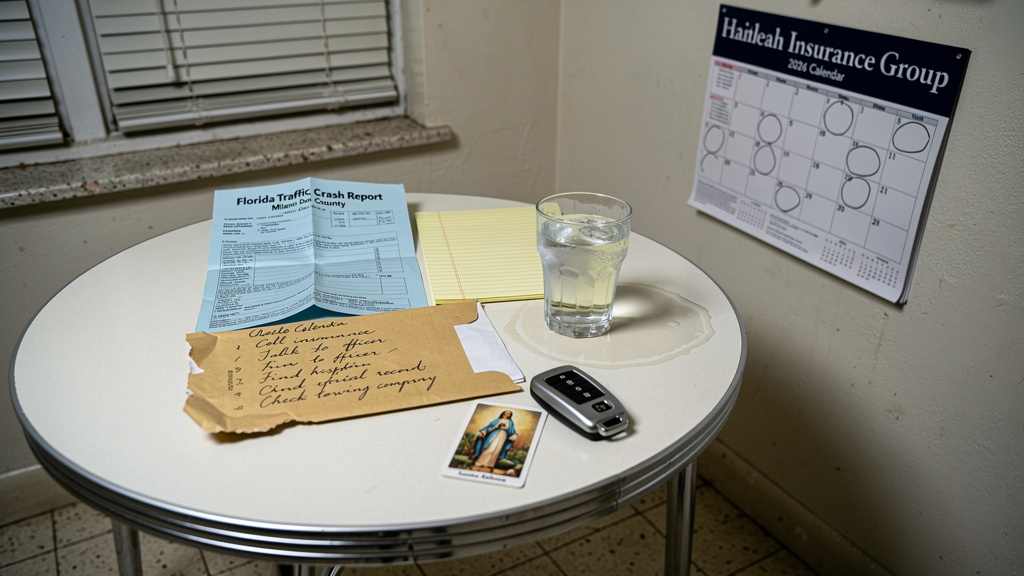
A Relative Died in a Hialeah Crash: What to Do in the First Weeks
In the first weeks after a fatal crash in Hialeah, your family must secure the official crash report, avoid giving recorded statements to any…