
My UM Claim Was Denied or Too Low: What Happens Next in Florida
A denial or a lowball offer on a UM claim is not the end, it is the start of a second negotiation, and if that fails, a lawsuit against your own insurer or, if your policy allows it, arbitration. The lawyer's contingency fee percentage can increase once the insurer answers a lawsuit or arbitration is demanded, which is why understanding the path and the fee schedule before any deadline passes matters as much as the claim itself.
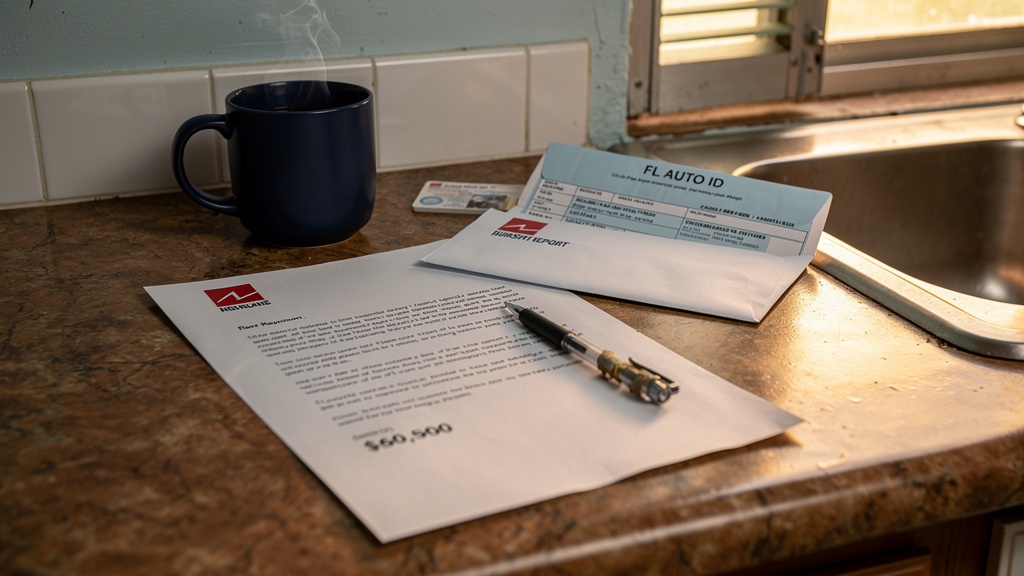
A denial or a lowball offer on your uninsured motorist (UM) claim is not the end of your case. It is often the beginning of a second phase: formal demand negotiations, and if those fail, a lawsuit against your own insurance company or, depending on your policy, arbitration. The lawyer’s contingency fee percentage may increase once the insurer answers a lawsuit or arbitration is demanded, so understanding both the legal path and the fee structure before any deadline passes is just as important as proving your injuries.
Why did my UM insurer deny my claim or offer so little?
Insurers commonly deny or underpay UM claims for three reasons, none of which are final unless you accept them. First, they argue your injury does not meet Florida’s permanent-injury threshold under Fla. Stat. § 627.737(2). That law requires a permanent injury, significant scarring, or permanent loss of a bodily function to recover pain-and-suffering damages, even if the other driver was clearly at fault. Second, they claim you were partly or mostly at fault. Under Florida’s modified comparative negligence rule, Fla. Stat. § 768.81, your recovery is reduced by your share of fault but is only barred if you are found MORE than 50 percent responsible. Third, the adjuster blames pre-existing conditions to downplay your medical costs. These are negotiation positions, not legal conclusions.
What are the first two things I should do after a denial or low offer?
First, demand a written explanation. Ask the adjuster for a letter that details exactly why the claim was denied or how the low offer was calculated. You also have the right to request your full insurance policy, including the declarations page, which shows your UM coverage limits and whether you selected stacked or non-stacked coverage. This step matters because Fla. Stat. § 626.9541(1)(i) prohibits insurers from misrepresenting policy terms, and a written record can expose such violations. Second, respond with a documented counter-demand. Gather complete medical records, future treatment plans, diagnostic imaging, official wage-loss documentation, and a journal describing your daily limitations. Real financial evidence can push the insurer toward a real evaluation of your losses.
If negotiation fails, can I sue my own insurance company, or does my policy require arbitration?
Yes, you can sue your own insurer. A UM claim is not against the uninsured at-fault driver, it is a legal action against your own insurance company for breach of contract and, potentially, bad faith. For Hialeah residents, these cases are typically filed in Miami-Dade County civil court, though you should verify the correct division based on your claim amount. Some UM policies include a binding arbitration clause, which replaces a public lawsuit with a private proceeding. Check your policy language carefully, whether arbitration is mandatory or optional depends entirely on what your contract says. Arbitration is available only if your policy provides for it; otherwise a lawsuit is the path if your insurer refuses a fair settlement. In egregious cases involving clear misconduct, a separate bad-faith claim may also be possible. Wolfson & Leon advances all case costs, so you pay nothing out of pocket during litigation.
Will the lawyer’s fee percentage increase once a lawsuit has to be filed?
Yes, the contingency fee percentage may increase once a lawsuit is under way. Florida Bar Rule 4-1.5(f)(4)(B) caps contingency fees in personal injury cases at 33 1/3% of any recovery up to $1 million before an answer is filed or arbitration is demanded, and 40% after that through trial, with different tiers above $1 million. Within those limits, the exact percentage depends on your signed fee agreement, which your attorney must review with you before any work starts. Represented claimants may recover a larger gross amount than those who negotiate alone, but that depends on the case. In smaller claims, however, fees and costs can significantly reduce net recovery, which is why your first free consultation should include a clear discussion of both potential outcomes and expenses.
What litigation costs get added once a lawsuit is filed, and who pays them upfront?
Once a UM lawsuit is filed, common costs include court filing fees, deposition transcripts for you, your doctors, and any defense medical examiner, expert witness fees (for medical, accident reconstruction, or vocational experts), and charges to obtain complete medical records. Wolfson & Leon advances all these costs on your behalf, you do not write checks as the case moves forward. If there is a recovery, costs are reimbursed from the settlement or verdict. If there is no recovery, you owe no attorney fee; how costs are handled in that case is set out in your fee agreement. This removes the financial pressure that leads many injured people to accept unreasonably low offers just to avoid mounting bills. Costs are separate from attorney fees, and both are fully explained before you sign a retainer.
How long do I have to file a UM lawsuit in Florida, and what can my insurer NOT do while my claim is pending?
For crashes on or after March 24, 2023, negligence claims against an at-fault driver must be filed within two years under Fla. Stat. § 95.11. A UM claim against your own insurer arises from your insurance contract and is not governed by that negligence deadline, so ask an attorney early which deadline applies, as waiting risks losing your right to sue. Meanwhile, insurers are prohibited under Fla. Stat. §§ 626.9541(1)(i) and 626.9541(1)(o) from misrepresenting policy terms, making deceptive statements about coverage, ignoring communications, or failing to promptly explain in writing the basis for a denial or a compromise offer. If an adjuster misrepresented your coverage, you may file a Civil Remedy Notice with the Florida Department of Financial Services. This gives the insurer 60 days to fix the violation before you can pursue a bad-faith lawsuit.
Frequently asked questions
My UM insurer says my injury isn’t permanent, does that mean I get nothing?
No. You may still recover economic damages like medical bills and lost wages through your PIP coverage or UM policy, even without meeting the permanent-injury threshold. But to recover pain-and-suffering damages under UM, Florida law requires proof of a permanent injury, significant scarring, or permanent loss of function.
The insurer says I was partly at fault for the crash. Does that kill my UM claim?
Not necessarily. Under Florida’s modified comparative negligence rule, your recovery is reduced by your percentage of fault, but you are only barred from recovering if you are found MORE than 50 percent at fault. Partial fault does not eliminate your claim.
Can I still pursue a UM claim if I already settled with the at-fault driver’s insurance company?
Usually yes, as long as the at-fault driver’s coverage was insufficient to cover your full damages. Your UM coverage kicks in when the other driver’s bodily injury limits are too low. However, Florida law (Fla. Stat. § 627.727(6)) and your policy may require you to notify your UM carrier in writing before settling with the at-fault party.
What is a Civil Remedy Notice and when should I file one?
A Civil Remedy Notice is a formal complaint filed with the Florida Department of Financial Services alleging unfair claims practices. You file it when your insurer violates laws like misrepresenting coverage or delaying payment unreasonably. It triggers a 60-day window for the insurer to cure the violation before you can sue for bad faith.
If my UM policy has an arbitration clause, is arbitration better or worse than going to court?
It depends. Arbitration is usually faster and less formal than court, but you give up the right to a jury trial and appeals are very limited. Court allows full discovery and jury determination but takes longer. The best path depends on your injuries, the strength of your evidence, and your policy language.
Related reading: The driver who hit me in Hialeah has no insurance. What now? · How long does a personal injury case take in Miami-Dade? · The 14-day PIP rule in Florida: what happens if you wait to see a doctor after a Hialeah car accident · How long do I have to file an injury lawsuit in Florida? The two-year rule after HB 837
Hurt in an accident in Hialeah? Call Wolfson & Leon at 305-965-3766 for a free consultation. We speak Spanish, and there is no fee unless we win.
Key facts
- Florida UM coverage is governed by Fla. Stat. § 627.727; it is optional but must be rejected in writing, and it pays when the at-fault driver has no insurance or not enough to cover your damages. Source: Fla. Stat. § 627.727
- To recover pain-and-suffering damages in a UM claim, the injured person must meet the permanent-injury threshold, a permanent injury, significant scarring, or permanent loss of a bodily function, because UM coverage stands in the shoes of the at-fault driver, who faces the same threshold under Florida tort law. Source: Fla. Stat. § 627.737(2)
- Florida's modified comparative negligence rule reduces a UM recovery by the injured person's share of fault and bars recovery entirely only if they are found MORE than 50 percent at fault. Source: Fla. Stat. § 768.81
- Insurers are prohibited from misrepresenting policy provisions, failing to acknowledge and act promptly on claims, and failing to promptly explain in writing the basis for denying a claim or offering a compromise settlement. Source: Fla. Stat. § 626.9541(1)(i) and § 626.9541(1)(o)
- Florida Bar Rule 4-1.5(f)(4)(B) caps personal injury contingency fees at 33 1/3% of any recovery up to $1 million before an answer is filed or arbitration is demanded, and 40% after that through trial, with different tiers above $1 million. Source: Florida Bar Rule 4-1.5(f)(4)(B)
Frequently asked questions
My UM insurer says my injury isn't permanent, does that mean I get nothing?
Not necessarily. Under Fla. Stat. § 627.737(2), the permanent-injury threshold applies to pain-and-suffering damages, the insurer is arguing it owes nothing beyond economic losses like medical bills and lost wages. If your treating doctor documents a permanent condition, significant scarring, or permanent loss of a bodily function, that threshold can be met and the insurer's position can be challenged. A lawyer who reviews your medical records can tell you whether the evidence supports crossing that line.
The insurer says I was partly at fault for the crash. Does that kill my UM claim?
Florida's modified comparative negligence rule under Fla. Stat. § 768.81 reduces your recovery by your percentage of fault, it does not automatically eliminate it. Your claim is only completely barred if you are found MORE THAN 50 percent at fault. An insurer raising comparative fault is trying to reduce what it pays; it does not mean the claim is over.
Can I still pursue a UM claim if I already settled with the at-fault driver's insurance company?
Possibly, but the sequence of steps matters enormously. Under Fla. Stat. § 627.727(6), you are required to notify your UM insurer in writing by certified or registered mail before finalizing any settlement with the at-fault driver's liability insurer. If you signed a full release without sending that notice first, your UM claim may be in jeopardy. Bring the release, all correspondence, and your policy to a lawyer as soon as possible so the specific facts can be evaluated.
What is a Civil Remedy Notice and when should I file one?
A Civil Remedy Notice is a formal document filed with the Florida Department of Financial Services that puts your insurer on notice that it has engaged in conduct prohibited under Florida's unfair insurance practices statutes, including §§ 626.9541(1)(i) and 626.9541(1)(o). After the insurer receives it, the insurer has 60 days to cure the violation by paying what is owed. If the insurer does not cure within that window, additional legal remedies may become available. An attorney should evaluate whether your insurer's conduct meets the threshold before you file one.
If my UM policy has an arbitration clause, is arbitration better or worse than going to court?
It depends on the specific facts of the case, the policy language, and the arbitration rules that apply. Arbitration can resolve disputes faster and without some of the expense of full litigation, but it may limit discovery and the ability to appeal an unfavorable decision. Not every UM policy includes a mandatory arbitration clause, check your policy. A Florida UM attorney can review the clause and advise whether arbitration or a lawsuit is the better path for your specific situation.
This article is general information about Florida law, not legal advice, and reading it does not create an attorney-client relationship. Every case is different and past results do not guarantee a similar outcome. For advice about your situation, call Wolfson & Leon at 305-965-3766 for a free consultation.
Also available in: Versión en español
 Personal injury
 How to Describe Your Injuries at the ER When English Is Not Your First Language
The first medical record created after your crash, whether at Hialeah Hospital, Palmetto General, or an urgent-care clinic on West 68th Street,…
 Personal injury
 When You Call a Hialeah Car Accident Lawyer Number, Who Actually Answers?
When you call a number labeled 'Hialeah car accident lawyer' in Google results, you may be reaching the law firm itself, a national attorney…
 Personal injury
 Where to Find a Bilingual Spanish-English Personal Injury Lawyer in Hialeah
Wolfson & Leon has an office at 1840 W 49th St, Suite 734, Hialeah, FL 33012, where most attorneys and staff work in both English and Spanish, and…