
Uber Driver Had the App Off When They Hit You: Who Pays in Florida?
When an Uber driver's app is completely off at the moment of a crash, Uber's insurance policy does not apply at all, the driver is treated like any other private motorist and only their personal auto policy is in play. In Miami-Dade, that personal policy often carries no bodily injury liability coverage, because Florida does not require it, which means your own uninsured motorist coverage frequently becomes the only realistic path to compensation for your injuries. The recovery picture also depends on whose car the driver was using, whether you have stacked UM coverage, and what your own PIP policy pays first.
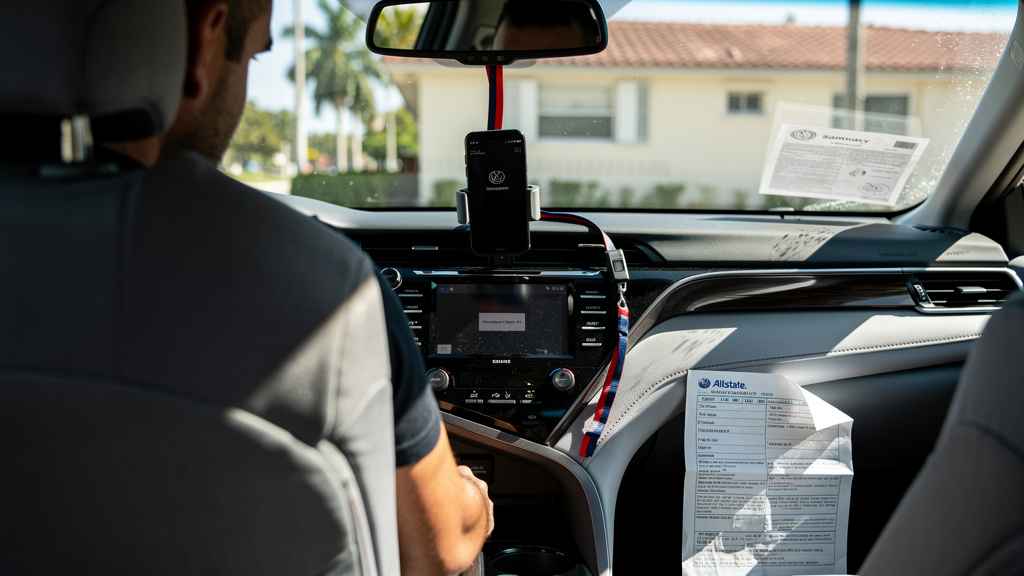
When an Uber driver’s app was completely off at the moment of your crash, Uber’s insurance does not cover your injuries at all. Florida law treats that driver like any private motorist, meaning only their personal auto policy applies, and in Miami-Dade, that policy often includes zero bodily injury liability coverage because Florida does not require it. Your own uninsured motorist (UM) coverage is usually the only realistic path to compensation for serious injuries. The recovery picture also depends on whose car the driver was using, whether you have stacked UM coverage, and what your PIP policy pays first.
If the app was off, does Uber’s insurance cover my injuries at all?
No. Under Florida Statute § 627.748(7), Uber and other transportation network companies (TNCs) owe no insurance coverage when a driver’s app is fully off at the time of a crash. Florida law defines TNC coverage in three phases: app off, app on but waiting for a ride request, and ride accepted through passenger drop-off. Only in the last two phases does Uber’s commercial insurance kick in, starting with a minimum contingent policy when the app is on but idle, and rising to a substantially higher commercial liability policy once a ride is accepted. When the app is off, none of that applies. You are left dealing with the driver as if they were just another person in a private car, which often means chasing coverage that barely exists.
The driver has personal insurance, but does it actually cover my injuries?
Having personal auto insurance does not mean the driver has coverage for your injuries. Florida law requires only property damage liability and PIP coverage to legally register a car, bodily injury liability is optional. So a driver can be fully compliant with state law yet carry $0 in coverage for the harm they cause others. In Miami-Dade, this is common. Even if the driver has a policy, some personal auto insurers include rideshare or commercial-use exclusions and may dispute the claim if they believe the car was being used for gig work. These disputes delay payment while your medical bills mount. That is why your own uninsured motorist coverage often becomes the critical source of recovery.
Your PIP pays first no matter who was at fault, here is what it does and does not do
Your own PIP (personal injury protection) coverage pays first, regardless of fault and regardless of the Uber driver’s insurance status. Under Florida Statute § 627.736, PIP covers 80 percent of reasonable medical bills and 60 percent of lost wages, up to $10,000 if a doctor diagnoses an emergency medical condition or up to $2,500 otherwise. But you must seek initial treatment within 14 days of the crash, or PIP pays nothing, period. Whose PIP applies? Yours first. If you do not have a car, then a resident relative’s policy. Only if you are a Florida-resident pedestrian or cyclist with neither your own nor a resident relative’s PIP does the striking vehicle’s PIP come into play. PIP is a starting point, not full compensation, it does not cover pain and suffering, and it rarely covers the full cost of a permanent injury or full wage loss. This is why people ask, “Do I just go through my own insurance?” Yes, at first, but that is not the end of the story.
What if the Uber driver was using someone else’s car, does the owner owe you anything?
In many Hialeah households, Uber drivers use a parent’s, sibling’s, or spouse’s car. Florida’s dangerous instrumentality doctrine holds vehicle owners liable for harm caused by anyone they knowingly allow to drive their car. However, Florida Statute § 324.021(9)(b) contains exceptions and limits for certain owners, such as some lessors and rental companies, and it can cap how much an individual owner who lends a car may owe. Simply letting a family member borrow the car for daily errands, and occasional Uber trips, does not remove the owner’s potential liability. If the owner gave permission, their insurance policy could be another source of coverage. Identifying the vehicle owner early is essential, especially in shared-car households common across Miami-Dade.
No bodily injury coverage on the other side, is your own UM policy where recovery actually comes from?
Yes, frequently. When the app-off Uber driver has no bodily injury liability coverage, which is legal under Florida law, your uninsured motorist (UM) coverage steps in. UM pays for bodily injury damages the at-fault driver legally owes but cannot cover. Florida Statute § 627.727 makes UM optional, but it must be rejected in writing; if you did not reject it, you likely have it. Stacking, governed by Florida Statute § 627.727(9), allows you to multiply your UM limits across multiple vehicles or policies unless you signed a written waiver of stacking. In Hialeah, where so many drivers carry no bodily injury insurance, UM is often the only meaningful source of compensation beyond PIP. Note: UM covers injuries, not car repairs. If the at-fault driver has some coverage but not enough, your underinsured motorist coverage may also apply.
What if the driver claims the app was off but the evidence says otherwise?
Whether the app was on is often disputed, because the answer decides whether Uber’s commercial policy applies. But Uber retains internal data, trip logs, GPS timestamps, app-activity records, that can prove whether the driver was logged in, had just completed a ride, or was waiting for a request. This data is not public and can be deleted or restricted if not preserved quickly. A single minute’s difference in app status can shift coverage from a minimal personal policy to a much larger commercial one. Florida Statute § 316.066 makes crash reports confidential for 60 days except to parties, their insurers, and their lawyers, another reason to act fast. Remember, you have two years from the crash date to file a lawsuit if needed, per Florida Statute § 95.11 (for injuries on or after March 24, 2023). Do not let the adjuster stall while you wait for answers.
Frequently asked questions
If the Uber driver had the app off, can I still sue Uber for my injuries?
Generally, no. When the driver’s app is off, Uber’s required rideshare insurance does not apply, and your claim is usually against the driver and possibly the vehicle owner, not Uber itself.
I don’t own a car so I have no PIP policy, what covers my medical bills after an app-off Uber crash?
If you live with a relative who owns a car, their PIP policy covers you first. If not, and you are a Florida resident who was a pedestrian or cyclist, the Uber driver’s PIP may apply, but only if they have a policy with PIP benefits.
The Uber driver who hit me was using their parent’s car, can I make a claim against the parent’s insurance?
Possibly. Florida’s dangerous instrumentality doctrine can hold the vehicle owner liable if they permitted the driver to use the car. The rental exemption under state law has strict requirements and may not apply in family situations.
How long do I have to file a lawsuit if the app-off driver has no insurance?
You have two years from the date of the crash to file a negligence lawsuit, under Florida Statute § 95.11, for injuries occurring on or after March 24, 2023.
My own UM coverage is non-stacked, does that mean I get less money if the Uber driver had no bodily injury insurance?
Yes. Non-stacked UM limits apply per incident, not multiplied across your vehicles or policies. Stacked UM would increase your total available coverage, but only if you did not reject stacking in writing.
Related reading: I was in an Uber or Lyft accident in Hialeah. Whose insurance pays? · The driver who hit me in Hialeah has no insurance. What now? · Stacked vs. non-stacked uninsured motorist coverage in Florida: what the checkbox on your policy actually means · The 14-day PIP rule in Florida: what happens if you wait to see a doctor after a Hialeah car accident
Hurt in an accident in Hialeah? Call Wolfson & Leon at (305) 285-7071 for a free consultation. We speak Spanish, and there is no fee unless we win.
Key facts
- When the Uber app is off, Florida law imposes no coverage obligation on Uber or any other transportation network company; only the driver's personal auto policy applies. Source: Fla. Stat. § 627.748(7)
- Florida does not require passenger-vehicle owners to carry bodily injury liability insurance, so an at-fault driver can be fully registered and legally insured while carrying zero coverage for injuries they cause to others. Source: Florida financial responsibility law (Fla. Stat. ch. 324) and Fla. Stat. § 627.736
- PIP pays 80 percent of reasonable medical bills and 60 percent of lost income up to $10,000 when a physician finds an emergency medical condition, or up to $2,500 otherwise, and pays nothing if the injured person does not seek initial treatment within 14 days of the crash. Source: Fla. Stat. § 627.736
- Uninsured and underinsured motorist (UM/UIM) coverage is optional in Florida and must be rejected in writing; when the at-fault driver carries no bodily injury coverage, UM on the injured person's own policy can pay for injuries the at-fault driver cannot. Source: Fla. Stat. § 627.727
- A vehicle owner who lends their car to a driver can be liable for that driver's negligence under Florida's dangerous instrumentality doctrine, subject to the limits and exceptions in Florida law. Source: Fla. Stat. § 324.021(9)(b)
Frequently asked questions
If the Uber driver had the app off, can I still sue Uber for my injuries?
Generally, no, when the app is completely off, Florida law under Fla. Stat. § 627.748(7) imposes no insurance or coverage obligation on Uber, and the company is not in the insurance picture at all. The claim runs against the driver personally and their personal auto policy. The exception would be a separate theory of direct corporate negligence unrelated to the driver's app status, which requires specific facts and is a more complex argument than a standard injury claim.
I don't own a car so I have no PIP policy, what covers my medical bills after an app-off Uber crash?
Under Fla. Stat. § 627.736(4)(e), the priority order is your own PIP first, then a resident relative's PIP if you live with someone who has a policy. If neither exists and you are a Florida-resident pedestrian or cyclist, the striking vehicle's PIP may apply. If you were a passenger in another vehicle, that vehicle's PIP may be in play. Because PIP gaps create immediate financial pressure, getting legal advice quickly about which policy applies to your specific situation is important, the 14-day treatment deadline does not pause while you figure it out.
The Uber driver who hit me was using their parent's car, can I make a claim against the parent's insurance?
Possibly yes. Florida's dangerous instrumentality doctrine holds that a vehicle owner who entrusts their car to another driver can bear liability for that driver's negligent operation. In Hialeah and across Miami-Dade, it is common for family members to share a vehicle, and the owner's auto policy may be an additional source of coverage worth investigating. Whether the owner's policy actually covers the accident depends on the specific policy language and the facts of the loan, this is one of the first things an attorney should review.
How long do I have to file a lawsuit if the app-off driver has no insurance?
For crashes that occurred on or after March 24, 2023, Florida's statute of limitations for personal injury negligence claims is two years from the date of the crash, under Fla. Stat. § 95.11. The clock starts on the crash date, not when the coverage dispute is resolved or when negotiations end. Filing an insurance claim does not stop the clock; only filing a lawsuit in court does. Coverage disputes with a UM insurer can stretch for months, so consulting an attorney well before the two-year mark is essential.
My own UM coverage is non-stacked, does that mean I get less money if the Uber driver had no bodily injury insurance?
Non-stacked UM means your coverage limit is fixed at the amount shown on your policy for a single vehicle and cannot be multiplied across multiple vehicles or policies. Stacked UM under Fla. Stat. § 627.727(9) allows limits to be added together across vehicles on the same policy or across multiple policies in some circumstances, which can significantly increase the available coverage. Whether you have stacked or non-stacked UM depends on what you signed when you bought the policy, a non-stacking election must be made in writing. Reviewing your declarations page and the election document is the starting point.
This article is general information about Florida law, not legal advice, and reading it does not create an attorney-client relationship. Every case is different and past results do not guarantee a similar outcome. For advice about your situation, call Wolfson & Leon at (305) 285-7071 for a free consultation.
Also available in: Versión en español
 Uber and Lyft accidents
 Injured in an Uber Accident in Hialeah? Here Is How to Hire a Lawyer
Call a personal injury lawyer who handles Uber and Lyft claims before you speak to any insurance adjuster, the driver's app status at the moment of…
 Uber and Lyft accidents
 What Determines a Rideshare Accident Settlement in Miami-Dade?
There is no typical number for a rideshare accident settlement in Miami-Dade, the value is set by a specific combination of factors: how serious and…
 Uber and Lyft accidents
 Injured in an Uber Accident in Florida: Who Pays My Medical Bills?
In Florida, your own PIP insurance pays first, covering 80 percent of reasonable medical bills up to $10,000, regardless of who caused the crash,…