
Was the Uber Driver on the App When They Hit You? How to Find Out
Whether the Uber or Lyft driver was logged into the app at the moment they hit you is the single fact that decides which insurance policy pays and how much coverage is available, the difference can be $50,000 versus $1 million under Florida law. As a person hit from outside the car, you cannot see the driver's screen, but you can preserve evidence at the scene and the next day that locks down that answer before it is disputed. This guide gives you a concrete checklist to follow in the first 24 hours.
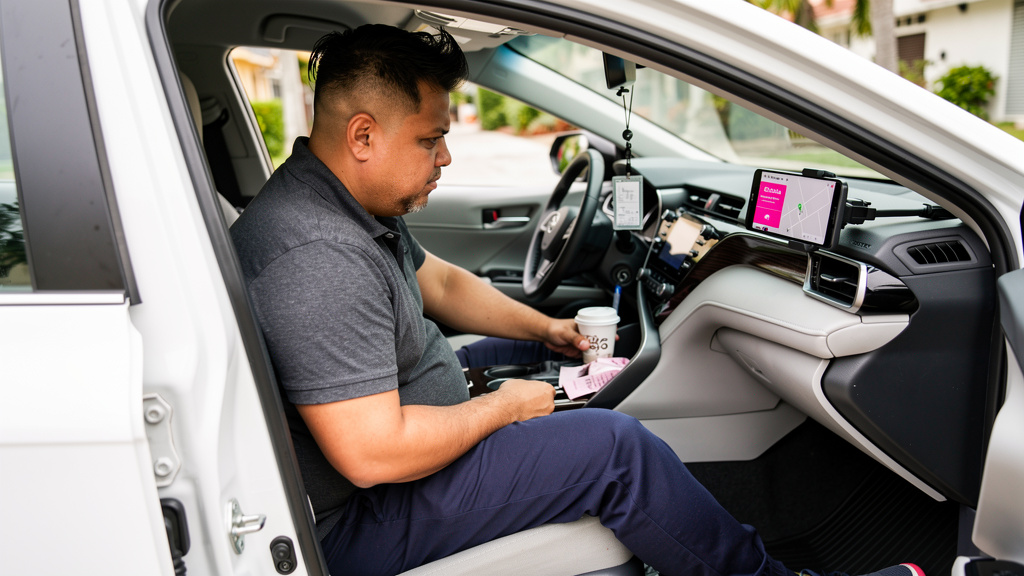
Whether the Uber or Lyft driver was logged into the app when they hit you decides which insurance policy pays your claim and how much money is available. Under Florida law, that single fact can mean the difference between a $50,000 limit and $1 million in coverage. You cannot see the driver’s phone screen from outside the car, but you can lock down proof within the first 24 hours before insurers dispute it.
Why does the driver’s app status change everything about your claim?
Florida law sets three rideshare coverage periods based on whether the driver was using the app. If the app was off, only the driver’s personal auto insurance applies, and in Florida, that policy may carry zero bodily injury liability coverage. If the app was on but no ride had been accepted yet, the law requires minimum primary coverage of $50,000 per person, $100,000 per crash for injuries, and $25,000 for property damage. Once a ride is accepted and until the last passenger exits, at least $1 million in primary liability insurance must be in place. These rules come from Fla. Stat. § 627.748(7). Getting this wrong can sharply reduce the coverage available for your claim.
What should I photograph and document at the scene right now?
Take these actions before you leave the crash site:
- Photograph any Uber or Lyft branding, the glowing windshield sign, pink mustache, or rear-window sticker.
- Capture the phone mount on the dashboard; if you can see the screen without entering the car, photograph that too.
- Take pictures of any passenger inside the vehicle.
- Record the license plate from front, back, and side angles.
- Document the full scene: both vehicles, their positions, skid marks, traffic signals, and weather.
Ask the driver directly: “Were you logged into the Uber or Lyft app when this happened? Did you have a passenger or were you on your way to pick someone up?” Write down their exact words. Under Fla. Stat. § 316.062, the driver must give you their name, address, and vehicle registration number and, on request, show their driver’s license; also ask for their insurance information and photograph the insurance card. Note the exact time and intersection.
What do I ask the responding officer to put in the crash report?
Tell the officer clearly: “The driver told me they were working for Uber/Lyft” or “I see the Uber/Lyft sign in the windshield, please note that.” Ask them to record any rideshare markings and the driver’s statement about app status. A report that identifies the vehicle as a transportation network company (TNC) car makes it harder for insurers to later claim the driver wasn’t logged in.
Hialeah Police crash reports are confidential to the public for 60 days under Fla. Stat. § 316.066, but as a crash victim, you can get yours immediately. Request it through the Florida Crash Portal (flhsmv.gov/florida-crash-portal); a fee may apply. When you receive it, verify your name is listed, witnesses are included, and the rideshare connection is noted.
How do I find witnesses and nearby camera footage before it disappears?
At the scene, look for businesses with exterior cameras facing the road, especially along W 49th Street and Okeechobee Road in Hialeah. Those cameras might show the driver’s phone screen, rideshare decals, or a passenger inside. Get names and numbers from any bystanders who saw the crash.
The next morning, not next week, visit or call each business. Ask to speak to a manager and request they preserve and provide footage from the crash date and time. Many businesses overwrite video automatically, sometimes within days. Witnesses who saw a passenger, noticed the phone mount, or heard the driver mention Uber or Lyft are critical. A formal preservation letter from an attorney carries more legal weight than a verbal request.
What data does Uber or Lyft have that I can’t get on my own, and how does a lawyer request it?
Uber and Lyft keep precise records: when the driver logged in, when a ride request arrived, when it was accepted, pickup and drop-off times, and log-off time. Under Fla. Stat. § 627.748(7), you have the right to request the driver’s log-on and log-off times for the 12 hours around the crash, and the company must provide that during a coverage investigation.
Requesting this early turns a “he said/she said” dispute into a verifiable record. Full trip data, including GPS coordinates and activity logs, usually requires a formal preservation letter to the company’s legal department and often a subpoena once a lawsuit begins. An attorney may send a preservation letter demanding Uber or Lyft retain all relevant data; consult a lawyer promptly, as the process and available records can vary by case. The longer you wait, the harder it becomes to obtain this evidence.
What should I never do when the insurance company calls?
Do not sign any document from any adjuster. Do not give a recorded statement to Uber’s insurer, Lyft’s insurer, or the driver’s personal insurer. These companies aim to reduce payouts, and one unclear answer, like “I’m not sure if the app was on”, can push your claim into a lower coverage tier or get it denied.
Your own PIP insurance pays first for medical bills, regardless of fault. It covers 80 percent of reasonable medical costs and 60 percent of lost wages, up to $10,000 if a doctor diagnoses an emergency medical condition, or $2,500 otherwise, but only if you see a doctor within 14 days. Don’t miss that deadline waiting for the rideshare insurer. For guidance on recorded statements in Spanish, see our post on recorded statements to insurance adjusters. You have two years from the crash date to file a lawsuit if the crash happened on or after March 24, 2023, per Fla. Stat. § 95.11.
Frequently asked questions
The Uber driver told me the app was off. Can I just take their word for it?
No. Drivers may mistakenly or intentionally misstate their app status. Their personal insurer may deny coverage if they were logged in, so the driver has incentive to say the app was off. Independent proof, like camera footage or company records, is essential.
I was a pedestrian hit by an Uber car near Okeechobee Road. Which insurance covers me?
If the driver was logged in and had accepted a ride, Uber’s $1 million policy applies. If logged in but no ride accepted, the $50,000/$100,000 policy applies. If the app was off, only the driver’s personal policy covers you, which may offer little or nothing. Your own PIP also pays first for medical bills.
How fast do I need to act to preserve camera footage from businesses near the crash?
As soon as possible, ideally within 24 hours. Many security systems overwrite footage automatically, sometimes within days. Visit or call businesses the morning after the crash to request preservation.
Will my own PIP insurance pay anything even though an Uber driver hit me?
Yes. Florida’s no-fault PIP system means your own policy (or a resident relative’s) pays your initial medical bills, regardless of who caused the crash, up to $10,000 or $2,500 depending on your diagnosis, if you get treatment within 14 days.
Can I get pain and suffering damages from Uber’s insurance if I was hit as a pedestrian?
Only if you meet Florida’s serious injury threshold: permanent injury, significant scarring, or permanent loss of an important bodily function. PIP covers basic medical costs, but pain and suffering compensation comes from the at-fault driver’s liability policy, if sufficient coverage applies based on app status.
Related reading: I was in an Uber or Lyft accident in Hialeah. Whose insurance pays? · The 14-day PIP rule in Florida: what happens if you wait to see a doctor after a Hialeah car accident · How long do I have to file an injury lawsuit in Florida? The two-year rule after HB 837 · The driver who hit me in Hialeah has no insurance. What now?
Hurt in an accident in Hialeah? Call Wolfson & Leon at 305-965-3766 for a free consultation. We speak Spanish, and there is no fee unless we win.
Key facts
- Florida law divides Uber and Lyft driving into three coverage periods tied to app status: app off (driver's personal policy only), app on but no ride accepted (minimum $50,000 per person / $100,000 per incident bodily injury and $25,000 property damage), and ride accepted through drop-off (at least $1 million in primary liability coverage). Source: Fla. Stat. § 627.748(7)
- Any person directly involved in a crash may request the exact times the driver logged on and off the app in the 12 hours surrounding the accident, and the rideshare company must provide that information during a claims coverage investigation. Source: Fla. Stat. § 627.748(7)
- The Uber or Lyft driver is required by Florida law to give their name, address, and vehicle registration number, and on request show their driver's license, to anyone injured or whose property was damaged in the crash, and to any investigating police officer. Source: Fla. Stat. § 316.062
- Hialeah Police crash reports are confidential for 60 days after filing, but the parties to the crash, their insurers, and their attorneys can obtain the report immediately, you do not wait out that window. Source: Fla. Stat. § 316.066
- You have two years from the date of the crash to file a personal injury lawsuit in Florida if the crash occurred on or after March 24, 2023. Source: Fla. Stat. § 95.11
Frequently asked questions
The Uber driver told me the app was off. Can I just take their word for it?
No. A driver who was on the app and wants to avoid Uber or Lyft's involvement has a financial incentive to say the app was off. What the driver says at the scene is one data point, but it is not the record. Uber and Lyft maintain internal logs showing the exact times the driver logged in, accepted rides, and logged off. Under Fla. Stat. § 627.748(7), you or your attorney can request those log-on and log-off records for the 12 hours surrounding the crash. Photograph everything at the scene that suggests rideshare activity, trade dress, phone in the mount, any passenger, so there is independent evidence before the company's records are even requested.
I was a pedestrian hit by an Uber car near Okeechobee Road. Which insurance covers me?
It depends entirely on the driver's app status at the moment of impact. If the driver was off the app, only their personal auto policy applies, and Florida does not require drivers to carry bodily injury liability coverage, so that policy may provide nothing for your injuries. If the driver was logged in and waiting for a ride, minimum coverage of $50,000 per person applies under Fla. Stat. § 627.748(7). If the driver had accepted a ride or was carrying a passenger, at least $1 million in primary liability coverage is required. As a pedestrian who is a Florida resident without your own PIP policy, a household relative's PIP would pay first; if neither exists, the striking vehicle's PIP may apply, but the rideshare liability coverage is separate from and additional to PIP.
How fast do I need to act to preserve camera footage from businesses near the crash?
Immediately, ideally the same day as the crash, and no later than the morning after. Many commercial surveillance systems overwrite footage automatically on a rolling basis, sometimes within days. Once that footage is gone, it is gone. Go to or call each business with a camera that faced the crash location, ask to speak to a manager, and request in writing that they preserve footage from the exact date and time. A formal preservation letter from an attorney carries more legal weight than a verbal request and may be sent more quickly than you can act on your own.
Will my own PIP insurance pay anything even though an Uber driver hit me?
Yes. Florida's PIP system pays regardless of who caused the crash. Your own PIP policy pays first, up to $10,000 if a doctor diagnoses an emergency medical condition, or up to $2,500 otherwise, covering 80 percent of reasonable medical expenses and 60 percent of lost income under Fla. Stat. § 627.736. The critical condition is that you must receive initial medical treatment within 14 days of the crash or PIP pays nothing at all. Do not wait to see a doctor while sorting out which rideshare policy applies.
Can I get pain and suffering damages from Uber's insurance if I was hit as a pedestrian?
Possibly, but Florida law requires a threshold to be met. Under Fla. Stat. § 627.737(2), recovering pain and suffering damages from an at-fault driver requires that you suffered a permanent injury, significant and permanent scarring or disfigurement, or permanent loss of an important bodily function. If your injuries meet that threshold and the driver was on an active Uber or Lyft trip, the $1 million policy that Florida law requires under Fla. Stat. § 627.748(7) would be the primary source for those damages. An attorney can evaluate whether your specific injuries meet the permanency threshold.
This article is general information about Florida law, not legal advice, and reading it does not create an attorney-client relationship. Every case is different and past results do not guarantee a similar outcome. For advice about your situation, call Wolfson & Leon at 305-965-3766 for a free consultation.
Also available in: Versión en español
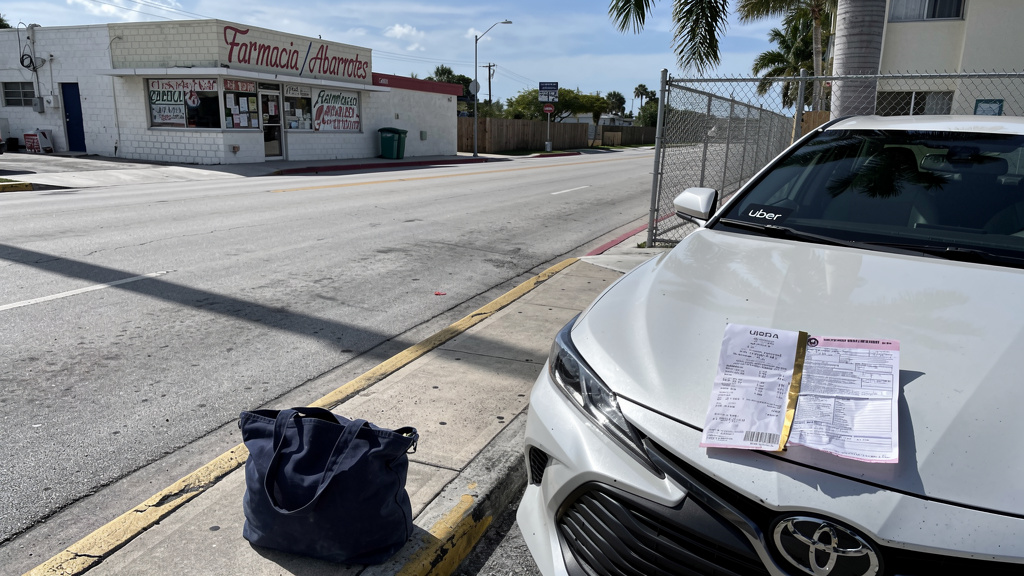 Uber and Lyft accidents
 No Car, No Insurance: Who Pays Your Medical Bills When an Uber Hits You in Florida
Not owning a car does not leave you without coverage after an Uber crash in Florida. Depending on your household situation, a relative's PIP policy…
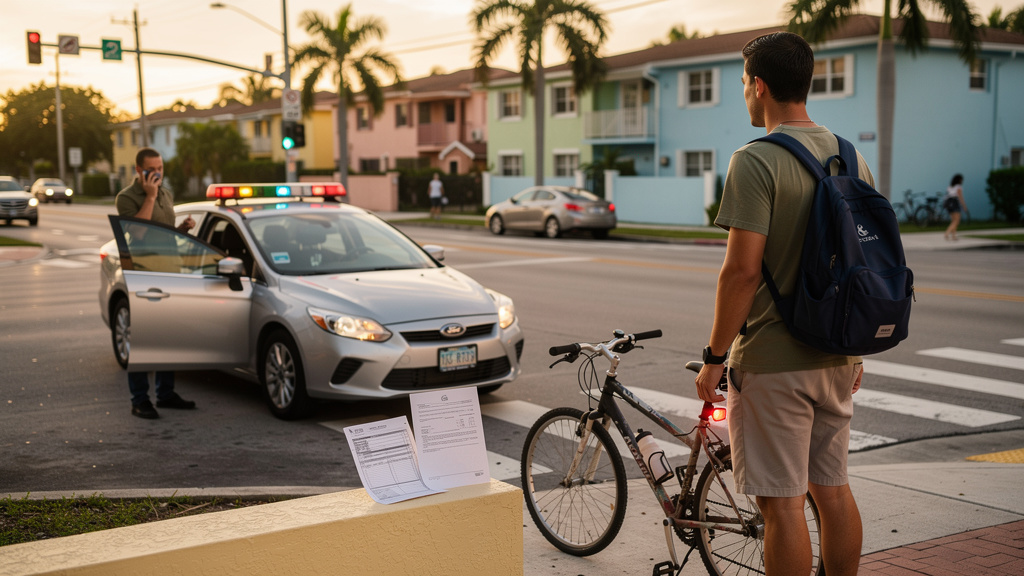 Uber and Lyft accidents
 Hit by an Uber While Walking or Biking in Hialeah: Who Pays?
Your own PIP policy pays your medical bills first, not Uber's, up to $10,000, but only if you see a doctor within 14 days of the crash. After PIP is…
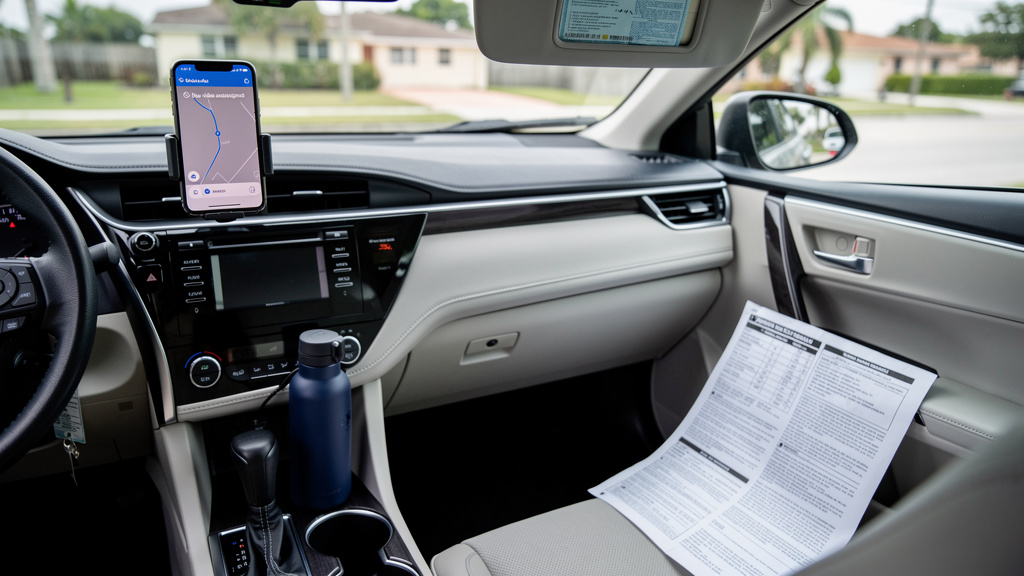 Uber and Lyft accidents
 What Florida's Rideshare Law Says About Insurance and Medical Bills
Florida Statutes § 627.748 divides every rideshare trip into three coverage periods, app off, app on and waiting, and actively on a trip, and the…