
Does It Matter Whether the Uber Driver Had a Ride When the Crash Happened?
Yes, the Uber driver's app status at the exact moment of impact controls which insurance policy responds and how much coverage is available. Florida law creates three distinct periods under Fla. Stat. § 627.748, and the difference between waiting for a ride and actively carrying a passenger can mean the gap between roughly $50,000 per person and $1,000,000 in liability coverage. Two people with nearly identical injuries can face dramatically different collectible limits simply because of what the driver had done in the app seconds before the crash.
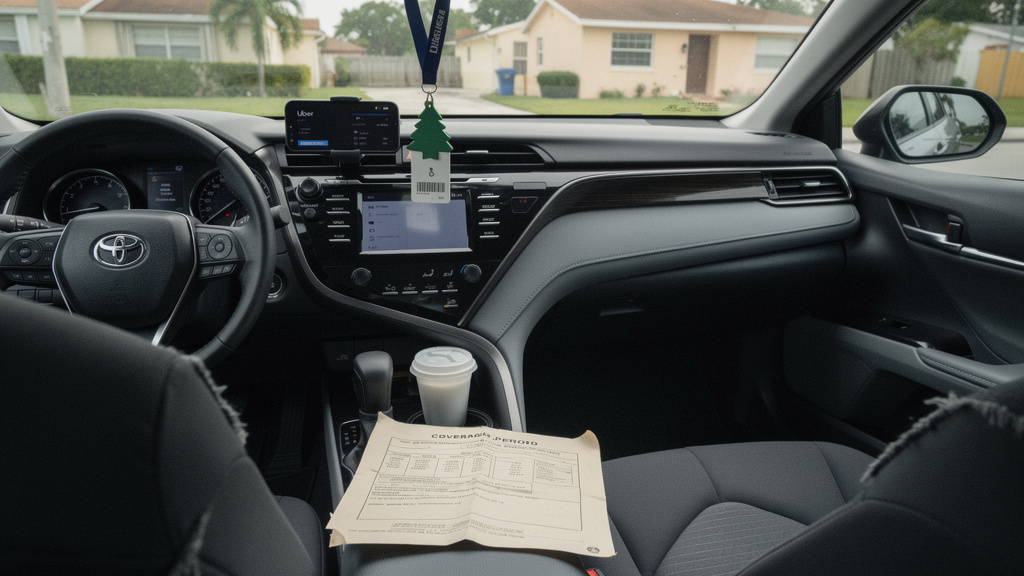
Yes, the Uber driver’s app status at the exact moment of impact controls which insurance policy responds and how much coverage is available. Florida law creates three distinct periods under Fla. Stat. § 627.748, and the difference between waiting for a ride and actively carrying a passenger can mean the gap between roughly $50,000 per person and $1,000,000 in liability coverage. Two people with nearly identical injuries can face dramatically different collectible limits simply because of what the driver had done in the app seconds before the crash.
What happens when the Uber driver’s app was completely off?
Whose insurance am I supposed to deal with? That is the fear many feel when they learn the Uber driver’s app was off at the time of the crash. Under Fla. Stat. § 627.748, the transportation network company (TNC) like Uber owes no coverage obligation if the driver’s app was completely off. The only possible source of recovery is the driver’s personal auto policy. But many personal policies contain an exclusion for rideshare use, and the driver’s insurer may dispute coverage if it believes the car was being used for rideshare at the time. In Miami-Dade, it is common for drivers to carry no bodily injury liability coverage at all. That means you could be severely injured through no fault of your own and have nothing to collect. This is where uninsured motorist (UM) coverage becomes critical. Crash reports in these cases typically list the vehicle as a private car with no mention of a trip, so early evidence gathering matters. Learn more about uninsured motorist coverage in Florida.
What coverage applies if the driver was logged in but hadn’t accepted a ride yet?
When the Uber driver is logged into the app but has not yet accepted a ride request, Florida law requires the TNC to provide at least $50,000 per person and $100,000 per incident in bodily injury liability coverage, plus $25,000 for property damage (Fla. Stat. § 627.748(7)(b)). But this is contingent coverage, meaning it only kicks in if the driver’s personal policy denies the claim or the limits are exhausted, often due to that same commercial-use exclusion. You may hear conflicting answers from two adjusters in the same week: one from the driver’s insurer and one from Uber’s TNC insurer. Same driver, same intersection, twentyfold difference in what is available per injured person. These limits may not be enough for serious injuries like broken bones, surgeries, or long-term disability. PIP coverage is also required during this period, and your own UM coverage can be an important backstop if the available liability coverage falls short.
What about when a passenger is actually in the car or the driver was on the way to pick someone up?
Once the Uber driver accepts a trip request, and through the moment the passenger exits the vehicle, Florida law requires at least $1,000,000 in primary liability coverage for death, bodily injury, and property damage (Fla. Stat. § 627.748(7)(c)). This is primary coverage, meaning it applies first regardless of what the driver’s personal policy says. Passengers are almost always in this period, which is why their claims typically have strong coverage backing. One practical wrinkle: insurers sometimes argue the crash happened before the driver accepted the ride request, trying to push the claim back into the lower-limit Period 2. That dispute is resolved by trip data from Uber’s system. A passenger who is on the way to a destination when the driver crashes is almost certainly in Period 3, and if the Uber driver was at fault, the full $1 million in coverage is available.
Side-by-side: what are the actual coverage limits in each period?
| Period | App Status | Bodily Injury Liability Minimum | Property Damage Minimum | Coverage Type |
|---|---|---|---|---|
| 0 | App completely off | None from TNC; depends on driver’s personal policy (may be zero) | None from TNC | Personal policy only |
| 1/2 | Logged in, no ride accepted | $50,000 per person / $100,000 per incident | $25,000 | Contingent (TNC steps in only if personal policy denies or exhausts) |
| 3 | Ride accepted through passenger drop-off | $1,000,000 | Included in $1M limit | Primary (applies first) |
Note: PIP coverage is also required during Periods 1/2 and 3, and UM/UIM coverage once a ride is accepted; both are addressed separately.
Two people hurt in crashes with an Uber driver on the same street can face limits that differ by as much as twentyfold depending solely on what the driver had done in the app.
What if the Uber driver wasn’t the one who caused the crash?
If a third-party driver, not the Uber driver, caused the collision while you were a passenger, you can pursue that at-fault driver’s liability insurance. But in Miami-Dade, many drivers carry no bodily injury coverage at all. In that case, during an active trip (Period 3), the Uber TNC must provide uninsured/underinsured motorist (UM/UIM) coverage under Fla. Stat. § 627.748. This acts as your backstop. UM coverage is optional in Florida, but it can be left off a policy only by a written rejection (Fla. Stat. § 627.727). If the at-fault driver has little or no coverage, your recovery may depend on your own UM policy or the TNC’s UM during Period 3. Florida’s modified comparative negligence rule (Fla. Stat. § 768.81(6)) still applies: your recovery is reduced by your share of fault and barred only if you are more than 50 percent at fault. As a pure passenger, you likely have zero fault assigned.
How do you prove which period was active, and why does the crash report matter?
App status is controlled by the driver and Uber, not the police. The crash report usually lists the vehicle as a private car with no trip notation unless someone at the scene volunteered that detail. To prove which period applied, you need Uber’s internal data: exact log-on time, trip acceptance timestamp, and drop-off confirmation. Your own ride receipt, in-app trip history, GPS logs, and witness statements help too. Florida law requires TNCs to disclose precise app status times during coverage investigations. But data can be overwritten, and closing the app at the scene can make the trip details harder to retrieve later. Crash reports are confidential for 60 days under Fla. Stat. § 316.066, accessible only to involved parties, insurers, and lawyers, which is why involving counsel early matters. In Hialeah, where many at-fault drivers lack bodily injury coverage, stacked UM (which multiplies limits by the number of insured vehicles) can make a major difference over non-stacked. See our guide to Florida UM coverage options.
Frequently asked questions
I was a passenger in an Uber that got rear-ended in Miami. Whose insurance do I deal with first?
PIP pays your initial medical bills first, regardless of fault. Beyond PIP, you pursue the at-fault driver’s liability insurance. If that driver has no or insufficient coverage, the UM coverage the TNC must carry during an active trip, or your own UM coverage, may apply.
What if the Uber driver’s app was on but they hadn’t accepted a ride when they hit me?
Then Uber’s contingent coverage applies: up to $50,000 per person in bodily injury liability. But that only pays after the driver’s personal policy denies or exhausts its limits, which often happens due to commercial-use exclusions.
What if the Uber driver had no bodily injury coverage on their personal policy?
If the app was off, you may have no liability coverage to collect from them. If the app was on (even without a trip), Uber’s contingent coverage may step in. In either case, your own UM coverage, if you bought it, is likely your best recourse.
Can Uber just say it’s not responsible because the driver is an independent contractor?
No. Florida law (Fla. Stat. § 627.748) requires Uber to provide specific insurance coverage based on app status, regardless of the driver’s contractor classification.
How do I prove the Uber driver was on an active trip when the crash happened?
Preserve your ride receipt, do not close the app at the scene, and screenshot the trip details. Uber must later provide exact log-on and trip timestamps during a coverage investigation, but early preservation avoids delays.
Related reading: I was in an Uber or Lyft accident in Hialeah. Whose insurance pays? · Stacked vs. non-stacked uninsured motorist coverage in Florida: what the checkbox on your policy actually means · The 14-day PIP rule in Florida: what happens if you wait to see a doctor after a Hialeah car accident
Hurt in an accident in Hialeah? Call Wolfson & Leon at 305-965-3766 for a free consultation. We speak Spanish, and there is no fee unless we win.
Key facts
- When a rideshare driver's app is completely off, the TNC owes no coverage; only the driver's personal auto policy applies, which may contain a commercial-use exclusion or carry no bodily injury coverage at all. Source: Fla. Stat. § 627.748
- While the driver is logged into the app and waiting for a ride request but has not yet accepted one, Florida law requires at least $50,000 per person and $100,000 per incident in bodily injury liability coverage. Source: Fla. Stat. § 627.748(7)(b)
- Once the driver has accepted a trip request and through the moment the passenger exits the vehicle, Florida law requires at least $1,000,000 in primary liability coverage for death, bodily injury, and property damage. Source: Fla. Stat. § 627.748(7)(c)
- Uninsured/underinsured motorist coverage is optional in Florida, but it can be left off a policy only by a written rejection; it is a critical backstop when the at-fault driver has no bodily injury policy. Source: Fla. Stat. § 627.727
- A negligence lawsuit for injuries from a crash on or after March 24, 2023, must be filed within two years of the crash date. Source: Fla. Stat. § 95.11
Frequently asked questions
I was a passenger in an Uber that got rear-ended in Miami. Whose insurance do I deal with first?
Your own PIP policy pays first for your medical bills, up to $10,000 if a doctor finds an emergency medical condition, or $2,500 otherwise, regardless of who caused the crash, and only if you sought initial treatment within 14 days of the collision. Once PIP is exhausted, you pursue the at-fault driver's liability coverage. If the Uber driver shares fault and you were on an active trip, the TNC's commercial policy (at least $1,000,000 under Fla. Stat. § 627.748(7)(c)) is the primary source for the Uber driver's liability. If the rear-ending driver was uninsured, Uber's UM coverage may also apply during an active trip.
What if the Uber driver's app was on but they hadn't accepted a ride when they hit me?
Florida law requires at least $50,000 per person and $100,000 per incident in bodily injury liability coverage during this period under Fla. Stat. § 627.748(7)(b). This coverage is contingent, meaning it applies only if the driver's personal policy denies the claim or the personal limits run out first, often because of a commercial-use exclusion. These limits can be inadequate for serious injuries, which is why your own UM/UIM coverage becomes an important additional source of recovery.
What if the Uber driver had no bodily injury coverage on their personal policy?
This is common in Miami-Dade, where many drivers carry only the state's minimum PIP and property damage coverage with no bodily injury liability at all. If the app was off, your practical options are limited to the driver's personal policy (which may pay nothing for bodily injury), your own UM coverage under Fla. Stat. § 627.727, or a relative's UM policy if you live in the same household. This is precisely why carrying UM coverage, and understanding whether it is stacked or non-stacked under Fla. Stat. § 627.727(9), matters so much for anyone in South Florida.
Can Uber just say it's not responsible because the driver is an independent contractor?
Uber classifies its drivers as independent contractors, and Florida's TNC law, Fla. Stat. § 627.748, generally treats rideshare drivers that way when certain conditions are met. However, the independent-contractor label does not eliminate the TNC's statutory insurance obligation. When the driver is on an active trip, Fla. Stat. § 627.748(7)(c) requires the TNC's policy to provide at least $1,000,000 in primary liability coverage regardless of employment status. The insurance obligation and the employment classification are separate questions.
How do I prove the Uber driver was on an active trip when the crash happened?
The most reliable evidence is the trip record itself: timestamps showing the driver accepted the ride request, the GPS route, and the in-app receipt. If you were the passenger, screenshot everything in the Uber app immediately and do not close the trip, because otherwise the trip log may have to be obtained later through formal legal requests. The crash report typically will not note app status, so the digital trip data held by Uber is the authoritative record. Florida law requires TNCs to provide log-on and log-off times during a coverage investigation, but preserving your own copy at the scene protects against any dispute.
This article is general information about Florida law, not legal advice, and reading it does not create an attorney-client relationship. Every case is different and past results do not guarantee a similar outcome. For advice about your situation, call Wolfson & Leon at 305-965-3766 for a free consultation.
Also available in: Versión en español
 Uber and Lyft accidents
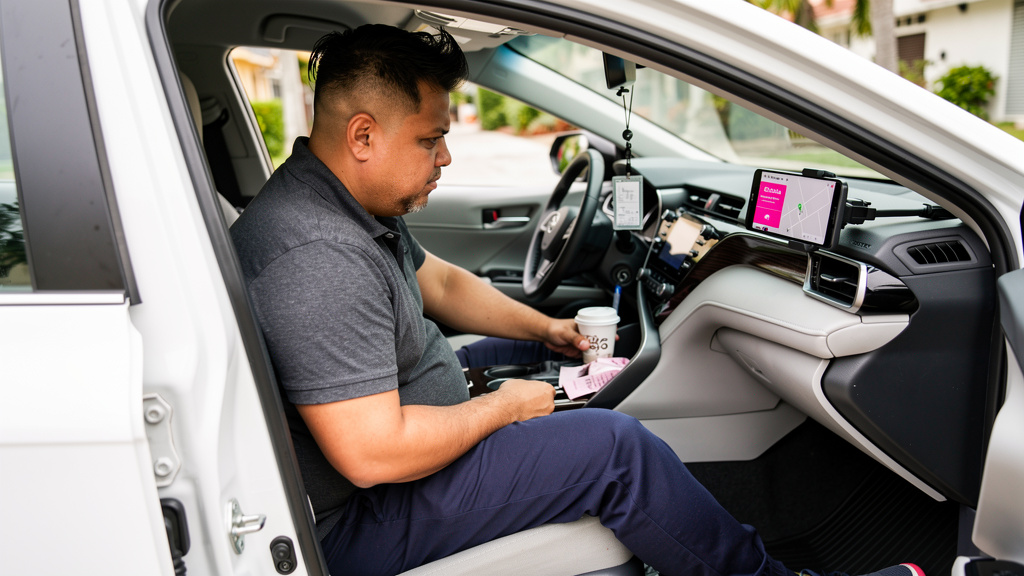
 Was the Uber Driver on the App When They Hit You? How to Find Out
Whether the Uber or Lyft driver was logged into the app at the moment they hit you is the single fact that decides which insurance policy pays and…
 Uber and Lyft accidents
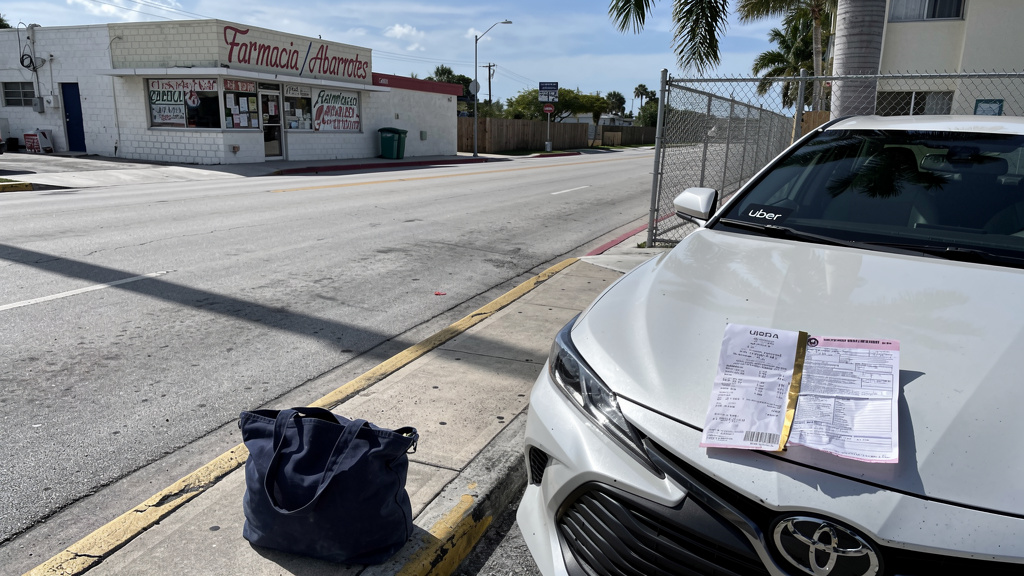
 No Car, No Insurance: Who Pays Your Medical Bills When an Uber Hits You in Florida
Not owning a car does not leave you without coverage after an Uber crash in Florida. Depending on your household situation, a relative's PIP policy…
 Uber and Lyft accidents
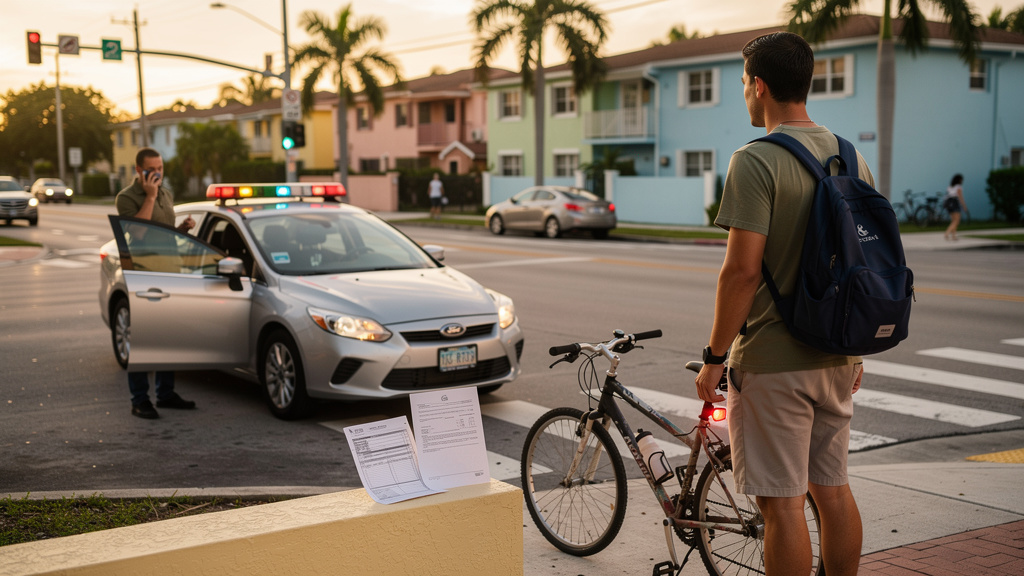
 Hit by an Uber While Walking or Biking in Hialeah: Who Pays?
Your own PIP policy pays your medical bills first, not Uber's, up to $10,000, but only if you see a doctor within 14 days of the crash. After PIP is…