
Spanish-Speaking Injury Lawyer vs. Interpreter: Which Setup Actually Protects You in Hialeah
It depends on the stage of your case. A certified interpreter can handle sworn testimony adequately, but for the daily conversations that shape your case, explaining your medical history, reviewing the fee agreement, negotiating with an adjuster, and signing a settlement release, having an attorney who speaks Spanish directly reduces the risk that a critical detail is missed or misunderstood. In a community where a large share of residents speak Spanish at home, the setup a firm actually has, not just the one it advertises, determines how well you are protected at every step.
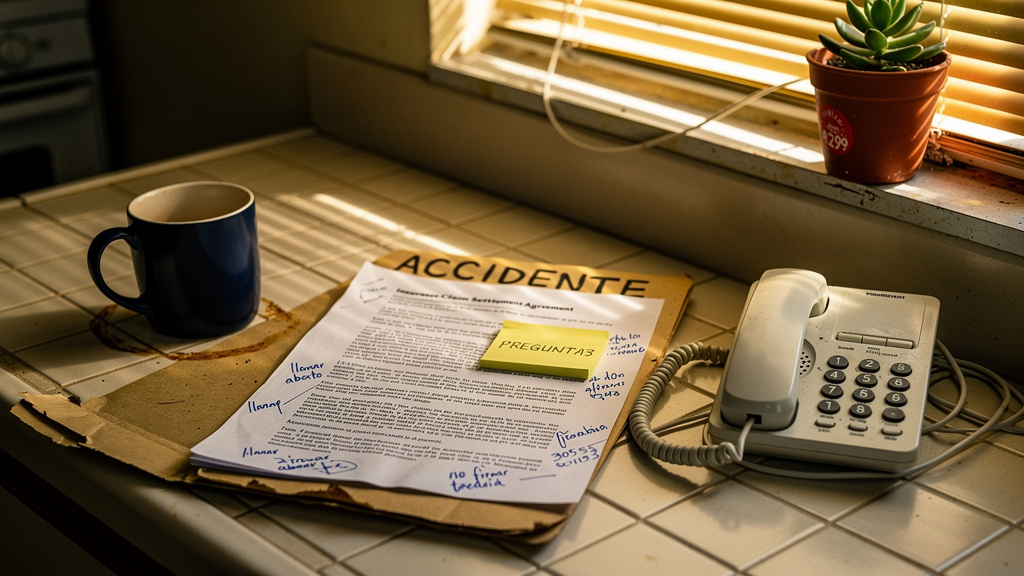
It depends on the stage of your case. A certified interpreter can handle sworn testimony adequately, but for the daily conversations that shape your case, explaining your medical history, reviewing the fee agreement, negotiating with an adjuster, and signing a settlement release, having an attorney who speaks Spanish directly reduces the risk that a critical detail is missed or misunderstood. In a community where a large share of residents speak Spanish at home, the setup a firm actually has, not just the one it advertises, determines how well you are protected at every step.
What are the three setups Hialeah injury firms actually use?
Many Hialeah personal injury firms advertise “hablamos español,” but that phrase does not tell you who will actually talk to you. There are three real arrangements:
Setup 1, Spanish-speaking attorney: The licensed lawyer handling your file is personally fluent in Spanish. That attorney conducts intake, explains your contingency fee agreement, fields medical questions, negotiates with the adjuster, preps you for deposition, and reviews the settlement release, all directly in Spanish, with no relay.
Setup 2, English-only attorney with Spanish-speaking staff: A bilingual paralegal, legal assistant, or intake coordinator handles client-facing conversations. The attorney receives a summary in English. Because staff cannot give legal advice under Florida Bar rules, the attorney’s judgment is built on a filtered account.
Setup 3, English-only attorney plus hired interpreter: A professional interpreter (often scheduled per event) sits between you and the attorney. This is the least integrated option and typically appears only at formal proceedings like depositions. Interpreters translate words, not legal strategy, and cannot advise you.
Only Setup 1 puts a Spanish-fluent attorney in every conversation that shapes your case.
At each stage of a case, who are you actually talking to under each setup?
| Stage | Setup 1: Spanish-speaking attorney | Setup 2: English-only attorney + Spanish staff | Setup 3: English-only attorney + interpreter |
|---|---|---|---|
| 1. Intake call / first meeting | Attorney speaks with you directly in Spanish. | Staff takes your story in Spanish, summarizes for attorney in English. Hand-off risk: key facts may be omitted or simplified. | Interpreter translates during a scheduled meeting. Unscheduled calls go unanswered or require rescheduling. |
| 2. Medical history & treatment timeline | Attorney asks detailed questions about symptoms, prior injuries, and timing, critical for PIP eligibility and permanency proof under FS 627.737(2). | Staff collects info, relays to attorney. Risk: nuances about pain levels or missed follow-ups may be lost, jeopardizing your PIP claim under the 14-day rule (FS 627.736). | Interpreter used only if appointment is pre-scheduled. Urgent questions about treatment gaps go unaddressed in real time. |
| 3. Fee agreement explanation | Attorney explains contingency percentage, cost deductions, and “no fee if no recovery” in Spanish. You ask questions and get direct answers. | Staff explains terms, but cannot give legal advice. You may not realize what happens if you switch lawyers or lose. | Interpreter translates the attorney’s script. Legal meaning depends on interpreter’s vocabulary and accuracy. |
| 4. Insurer / adjuster contact | Attorney negotiates directly. If you must answer insurer questions, attorney coaches you in Spanish beforehand. | Attorney negotiates based on staff’s summary. You may speak to adjuster through staff, risking inconsistent statements. | Interpreter joins only for formal calls. Adjuster’s sudden offer may arrive when no interpreter is available. |
| 5. Deposition preparation | Attorney practices Q&A with you in Spanish, ensuring consistent, accurate descriptions of your injuries and limitations. | Staff relays prep points. You may lack confidence describing daily pain or mechanism of injury under oath. | Interpreter assists only during scheduled session. No real-time rehearsal for tough questions. |
| 6. Settlement sign-off | Attorney reads and explains every clause of the binding release in Spanish. You understand you waive all future claims, even for later-diagnosed permanent injuries (FS 627.737(2)). | Staff explains release. You may not grasp that accepting payment ends your right to sue forever. | Interpreter translates the document once. No chance to discuss implications in your own words. |
Where does a professional interpreter work well, and where does it fall short?
Qualified interpreters are commonly used at formal proceedings like depositions, mediations, and court hearings. They help create an accurate record when both sides have counsel present. They also work well in scheduled medical exams when a certified medical interpreter is provided.
But interpreters fall short during the informal, urgent, or iterative moments that define most personal injury cases. An adjuster may call without notice. You might need to respond quickly to a PIP independent medical exam request. A settlement offer could expire before an interpreter is booked. And explaining the difference between the $10,000 emergency-medical-condition PIP limit and the $2,500 non-EMC limit (FS 627.736) requires real-time clarification, not a one-time translation.
Using a family member as interpreter creates additional problems. It can raise questions about attorney-client confidentiality and risks emotional bias. Never rely on friends or relatives to interpret legal or medical details.
Who actually explains the fee agreement and settlement release to you in Spanish?
The fee agreement and settlement release are two of the most legally significant documents in your case. The fee agreement sets how much you pay if you recover, what costs are deducted, and what happens if you change lawyers. The settlement release typically ends the claims it covers for good, even if you later discover a permanent injury that qualifies for pain-and-suffering damages under FS 627.737(2).
Only Setup 1 guarantees that a Spanish-fluent attorney explains both documents to you directly. In Setup 2, a paralegal typically reviews them, but under Florida Bar rules, staff cannot give legal advice, so you may not understand the consequences of signing. In Setup 3, an interpreter translates what the English-speaking attorney says, but you cannot ask follow-up questions in your own words without scheduling another session.
Challenging a signed release due to misunderstanding is possible in rare cases, but it is expensive, uncertain, and generally requires showing something like fraud, duress, or incapacity. The best protection is full comprehension before you sign.
What questions reveal the setup a firm actually has before you hire them?
Ask these during your free consultation. Vague answers may mean the firm uses Setup 2 or 3:
- “Is the attorney who will handle my file personally fluent in Spanish, or will I be speaking with staff?”
- “When I have a quick question between meetings, who answers me, the attorney or someone else?”
- “Will the attorney personally explain the contingency fee contract to me in Spanish before I sign?”
- “If the insurance company calls with a settlement offer, who walks me through the numbers in Spanish?”
- “For my deposition, will the attorney prep me in Spanish directly, or will there be an interpreter involved?”
- “At settlement, who reads and explains the release to me in Spanish before I sign?”
These questions are fair. You deserve to know who will actually represent you, not just who answers the phone.
How is the Wolfson & Leon Hialeah office actually set up?
Wolfson & Leon has Spanish-speaking attorneys and staff at its office at 1840 W 49th St #734, Hialeah, FL 33012. Consultations are free, and there is no fee unless the firm recovers for you.
Hurt in an accident in Hialeah? Call Wolfson & Leon at 305-965-3766 for a free consultation. We speak Spanish, and there is no fee unless we win.
Frequently asked questions
Can I use a family member to translate for me during my injury case?
It is not recommended. A family member’s involvement may raise questions about attorney-client confidentiality, and their emotional involvement may distort medical or legal details. Never rely on relatives for legal interpretation.
Does Florida law require injury firms to provide a Spanish interpreter?
No. Florida does not require private law firms to supply interpreters. Courts may provide them for formal proceedings, but your day-to-day case depends on your firm’s setup.
I have 14 days to do something after my crash, is that about hiring a lawyer?
No. The 14-day rule (FS 627.736) requires you to get initial treatment within 14 days to qualify for PIP benefits (up to $10,000 with an emergency medical condition, otherwise $2,500). Missing this deadline means PIP pays nothing, regardless of fault. There is no deadline to hire a lawyer, but for crashes on or after March 24, 2023 the two-year deadline to file a negligence lawsuit still runs, and evidence disappears fast.
If I sign a settlement release through an interpreter and later find out I misunderstood it, can I undo it?
Rarely. Releases are binding contracts. Undoing one requires proving fraud, duress, or incapacity, difficult and costly. Full understanding before signing is your best protection.
Does it matter if my witnesses only speak Spanish?
Yes. Their testimony must be preserved early. In depositions or trials, certified interpreters can translate their statements. But if their accounts aren’t gathered accurately from the start, due to language barriers, their value to your case may be lost.
Key facts
- Hialeah has one of the highest proportions of Spanish-speaking households of any large U.S. city. Source: Wolfson & Leon
- Court proceedings in the 11th Judicial Circuit (Miami-Dade) are conducted in English; witnesses who need Spanish can generally testify through a court interpreter. Source: Wolfson & Leon
- Under Florida Statute 627.736 (PIP), a crash victim must seek initial medical treatment within 14 days of the crash or PIP pays nothing, a deadline easily missed when discharge instructions and follow-up paperwork are not explained in the patient's primary language. Source: FS 627.736
- In a Florida personal injury case, a contingency fee agreement must be in writing and signed by the client, and at the end of the case the client receives a closing statement showing the recovery and fees. Source: Rule Regulating The Florida Bar 4-1.5(f)
- Florida Statute 627.737(2) generally requires a permanent injury (or significant scarring or disfigurement, or permanent loss of an important bodily function) before an injured person can recover pain-and-suffering damages from the at-fault driver; if a language barrier causes the client to under-report symptoms or skip follow-up visits, that permanency threshold may never be documented. Source: FS 627.737(2)
Frequently asked questions
Can I use a family member to translate for me during my injury case?
You can, but it carries real risk. Family members are not trained in legal or medical terminology, and their translations can introduce inaccuracies that affect your medical records, your statements to adjusters, or your understanding of documents you sign. More importantly, having a family member present during attorney-client conversations may raise questions about whether those conversations remain confidential. A professional interpreter or a Spanish-speaking attorney is a more reliable option for anything that will be written down or acted upon.
Does Florida law require injury firms to provide a Spanish interpreter?
Florida law does not generally require a private law firm to provide an interpreter as a condition of representation. Courts and certain government proceedings have language-access obligations, but those rules apply to judicial proceedings, not to the private attorney-client relationship. Whether a firm offers Spanish-language service, and at what level, is entirely up to the firm. That is why asking directly before you hire, using the questions listed above, is the only reliable way to know what you are getting.
I have 14 days to do something after my crash, is that about hiring a lawyer?
No. The 14-day rule under Florida Statute 627.736 is about medical treatment, not hiring an attorney. If you do not receive initial medical care within 14 days of the crash, your Personal Injury Protection (PIP) insurance pays nothing toward your medical bills. You can hire an attorney at any point, but you cannot recover that 14-day PIP window once it closes. If there is any language barrier preventing you from understanding your discharge paperwork or follow-up instructions, address it immediately, missing that deadline has permanent financial consequences.
If I sign a settlement release through an interpreter and later find out I misunderstood it, can I undo it?
Challenging a signed release is possible in very limited circumstances, such as fraud or duress, but it is difficult, expensive, and rarely successful. In general, a signed release is treated as a binding agreement that ends the claims it covers. The practical protection is to fully understand the document before you sign it, not to try to undo it afterward. If you are not certain you understand every term, ask for more time, ask for a written translation, and ask the attorney to explain it to you directly in your primary language.
Does it matter if my witnesses only speak Spanish?
Yes, and in two ways. First, a Spanish-speaking attorney can take a full, accurate statement from a witness immediately after the crash, before memories fade, without scheduling a separate interpreter. Second, if a witness testifies at deposition or trial in the 11th Judicial Circuit, an interpreter is generally used for the record, but preparation for that testimony, helping the witness understand what to expect and how to describe events clearly, is far easier when the attorney handling the case speaks Spanish directly.
This article is general information about Florida law, not legal advice, and reading it does not create an attorney-client relationship. Every case is different and past results do not guarantee a similar outcome. For advice about your situation, call Wolfson & Leon at 305-965-3766 for a free consultation.
Also available in: Versión en español
 Personal injury
 What Does an Uninsured Motorist Attorney Near Hialeah Actually Charge?
A UM attorney near Hialeah charges nothing upfront and collects no fee unless you recover money. The fee is a percentage of your recovery, typically…
 Personal injury
 Can a Family Member Interpret When Your Parent Talks to a Personal Injury Lawyer?
A family member can be there for emotional support, but having them serve as your interpreter when you speak with your personal injury lawyer…
 Personal injury
 I Already Signed a No-Win No-Fee Agreement: Will I Pay Twice If I Switch Lawyers?
In most cases, no, you do not pay twice. When you switch personal injury lawyers in Florida, the single contingency fee you already agreed to is…