
I Already Signed a No-Win No-Fee Agreement: Will I Pay Twice If I Switch Lawyers?
In most cases, no, you do not pay twice. When you switch personal injury lawyers in Florida, the single contingency fee you already agreed to is typically divided between your old and new attorney, not doubled. The total percentage taken from your recovery generally stays the same; the two firms work out the split between themselves, not with you.
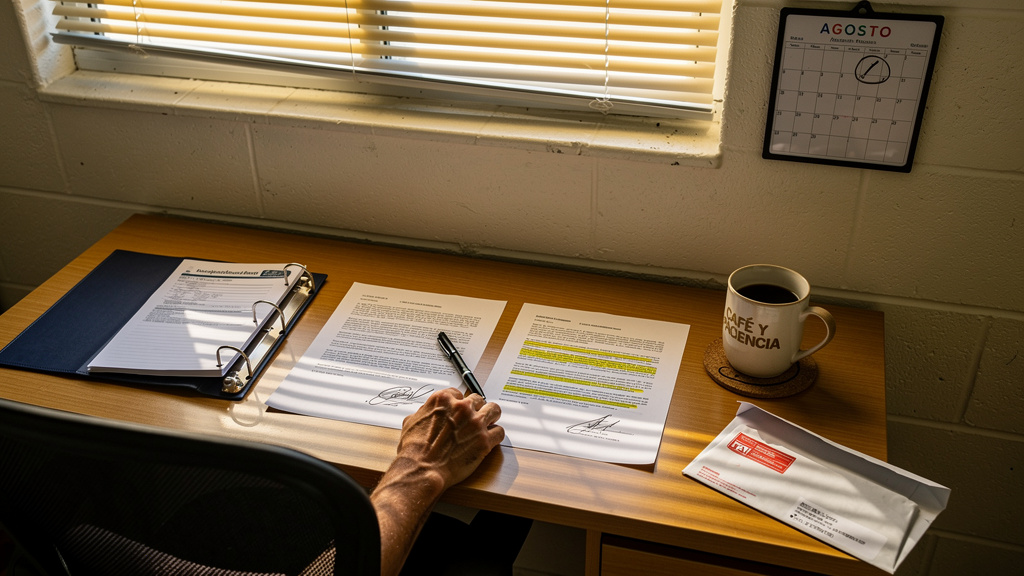
In most cases, no, you do not pay two separate fees if you switch personal injury lawyers in Florida. The single contingency fee you agreed to when you signed your original “no win no fee” contract is typically split between your old and new attorney, not doubled. In practice, the total percentage taken from your recovery usually stays the same, with the lawyers working out the division between themselves; make sure your new fee agreement says so. This is the general rule under Florida law established by the state Supreme Court in Rosenberg v. Levin, which holds that a discharged lawyer’s compensation is capped at the maximum fee stated in your original agreement.
So do I actually pay two fees if I change lawyers?
Usually not. In most cases you pay one fee, and the lawyers split it behind the scenes. The percentage you agreed to in your original contract sets the ceiling for what comes out of your settlement or verdict. That amount does not increase just because you hire a new attorney. Some people fear they will be charged “double fees” or “pay twice,” but that is not how contingency agreements work in Florida personal injury cases. The exact split depends on how much work each lawyer did, the reason for the switch, and the terms of your original contract. While outcomes can vary, Florida courts and ethics rules generally protect clients from paying multiple full contingency fees on the same case; confirm in your new agreement how the old lawyer’s share will be paid.
What can my old lawyer claim for the work they already did?
Your former attorney may be entitled to payment for the work they completed before you switched, but only if you recover money in your case. This is called quantum meruit, a Latin phrase meaning “as much as deserved.” It is not an automatic right to the full contingency fee, and it only applies if you receive a settlement or verdict. Under Rosenberg v. Levin, even a lawyer fired without cause can only claim the reasonable value of their services, and that amount cannot exceed the fee cap in your original agreement. To protect their right to payment, the old firm may assert a charging lien on your eventual recovery. This lien is usually handled between the lawyers, and you generally do not have to write a check or pay anything extra out of pocket. If your case ends with no recovery, neither lawyer collects a fee, though you may still owe case costs depending on your agreement.
What about the costs my old lawyer already spent on my case?
Attorney fees and case costs are not the same thing. Even under a “no win no fee” deal, law firms often pay upfront expenses like medical record retrieval, police reports, filing fees, expert witness fees, deposition costs, and investigator bills. These are separate from the contingency fee and usually must be repaid from your recovery, regardless of whether you switch lawyers. When you hire new counsel, the new firm typically reimburses the old firm for these advanced costs as part of the file transfer. Those costs then get added to the new firm’s ledger and deducted from your final settlement, just as if you had never changed attorneys. Check your current agreement, Florida law requires all contingency contracts to be in writing and to explain how costs are handled. Ask your old firm for an itemized list of advanced costs before finalizing any switch.
What should I read in my current agreement before I do anything?
Before making any move, open your signed retainer agreement and look for these five key points. First, find the fee percentage, many Florida personal injury contracts use a lower rate before the defendant files an answer and a higher one after. Switching mid-case could affect which rate applies. Second, check how the agreement defines “costs” and whether you owe them even if there is no recovery. Third, look for any clause stating what the firm is owed if you terminate the relationship early, some try to specify this, though enforceability varies. Fourth, see if there is a lien provision and whether you must give written notice to trigger certain rights. Fifth, confirm whether the agreement mentions your consent to a fee split with a new firm, Florida Bar rules require your approval for any fee division between attorneys. If you need help reading it, Wolfson & Leon offers a free consultation to review your agreement, in Spanish if preferred, at our Hialeah office at 1840 W 49th St #734 or at your home.
How does the actual switch work, files, notices, and court paperwork?
The process is straightforward and handled mostly by your new lawyer. First, you sign a new retainer agreement with the new firm, who will immediately review your old contract. Next, the new attorney sends written notice to your former lawyer. Florida Bar rules generally require the old firm to cooperate and turn over your file, which includes all correspondence, medical records, police reports, photos, witness statements, expert reports, settlement offers, and court filings. Then, your new lawyer notifies the insurance company, medical providers, and opposing parties that all communication should now go through their office. If a lawsuit has already been filed, the new attorney files a motion for substitution of counsel with the court where the case is pending. Judges usually approve these unless trial is close or switching would unfairly delay the case. Any conditions the judge imposes, such as security for unpaid fees or costs, are usually handled by the attorneys. You do not need to contact your old lawyer yourself.
Should I switch, or stay? And what about my deadline?
Good reasons to switch include your current lawyer not returning calls, pressuring you to accept a low settlement, lacking trial experience, or failing to communicate clearly, especially if you need Spanish-language service and they cannot provide it. Do not switch if you have already signed a settlement release; that ends your case permanently. Also avoid switching if trial is days away, a judge may deny the substitution, or if the statute of limitations has expired. That deadline is critical: Florida Statute § 95.11 gives you two years from the date of injury to file a negligence lawsuit for accidents on or after March 24, 2023. Switching lawyers does not pause or extend this clock. Every day you wait reduces the time your new attorney has to investigate, negotiate, or file suit. If your deadline is approaching, act now. Wolfson & Leon offers a free consultation, in Spanish if needed, at our Hialeah office (1840 W 49th St #734) or at your home, so we can review your agreement and confirm your deadline before you decide.
Frequently asked questions
Can I switch personal injury lawyers in Florida if I haven’t told my old lawyer yet?
Yes. You have the legal right to hire new counsel at any time. Your new attorney will formally notify your old lawyer and handle the transition. You do not need your former lawyer’s permission.
What happens to my case costs if I switch lawyers, do I owe the old firm money right now?
Usually not. Advanced costs are typically reimbursed by your new lawyer as part of the file transfer, so you generally do not pay the old firm directly. All costs come out of your final recovery, just as they would have without a switch.
My old lawyer says I owe them money if I leave. Is that true?
Not immediately, and not out of your pocket. They may file a lien to claim a portion of your future recovery based on work already done, but only if you win or settle. If there is no recovery, you generally owe no attorney fee.
Does switching lawyers affect the statute of limitations on my Florida injury case?
No. The two-year deadline under Florida Statute § 95.11 continues to run regardless of whether you switch attorneys. Delaying the switch could leave your new lawyer too little time to act before the deadline passes.
Can I switch lawyers after the insurance company has already made a settlement offer?
Yes. Receiving an offer does not lock you into your current attorney. A new lawyer can review the offer, negotiate further, or advise whether to file suit if the offer is too low.
Related reading: What happened to you? · The attorneys who answer the phone · How long does a personal injury case take in Miami-Dade? · How long do I have to file an injury lawsuit in Florida? The two-year rule after HB 837
Hurt in an accident in Hialeah? Call Wolfson & Leon at 305-965-3766 for a free consultation. We speak Spanish, and there is no fee unless we win.
Key facts
- Florida law gives every client the right to discharge their attorney at any time, with or without a reason. Source: Rules Regulating The Florida Bar, Rule 4-1.16; Rosenberg v. Levin, 409 So. 2d 1016 (Fla. 1982)
- A former attorney discharged before a case concludes may claim the reasonable value of services already performed, called quantum meruit, but that claim is generally paid out of the total contingency fee at the end, not as a separate charge to the client. Source: Wolfson & Leon
- Florida's statute of limitations for most personal injury negligence claims arising on or after March 24, 2023 is two years from the date of injury. Switching lawyers does not pause or reset this deadline. Source: Fla. Stat. § 95.11
- A former attorney may assert a charging lien on the eventual recovery to protect their right to be paid from it; this is usually resolved between the attorneys and generally does not require the client to pay anything additional out of pocket. Source: Wolfson & Leon
- Florida Bar rules limit how lawyers in different firms may divide a fee, and the client must consent to the arrangement in writing. Source: Rules Regulating The Florida Bar, Rule 4-1.5(g)
Frequently asked questions
Can I switch personal injury lawyers in Florida if I haven't told my old lawyer yet?
Yes. You do not need your old lawyer's permission, and you do not need to confront them directly. Once you hire a new attorney and sign a new retainer, your new lawyer sends written notice to the old firm and handles all communication from that point. Florida Bar rules generally require the old firm to cooperate with the file transfer.
What happens to my case costs if I switch lawyers, do I owe the old firm money right now?
In most situations, you do not write a check to your old firm when you switch. The new attorney typically reimburses the old firm for advanced case costs, such as medical records fees or filing fees, when the file transfers. Those costs are then tracked by the new firm and deducted from your settlement at the end of the case, exactly as they would have been if you had stayed. Check your current agreement for the specific language on costs, because contracts vary.
My old lawyer says I owe them money if I leave. Is that true?
Your former attorney may have a valid claim for the reasonable value of work already performed, a concept called quantum meruit, but that claim is generally paid out of the total contingency fee at the end of the case, not as an immediate bill to you. They cannot typically switch to hourly billing and demand payment just because you fired them, and their claim is usually capped at the maximum fee in the original contract. If your old firm is making specific demands, have a new attorney review your agreement before you respond.
Does switching lawyers affect the statute of limitations on my Florida injury case?
No, and this is critical. Florida Statute § 95.11 sets a two-year deadline to file a lawsuit for most personal injury claims arising on or after March 24, 2023. Switching lawyers does not pause or extend that deadline by a single day. If your accident was close to two years ago, you need to act immediately so your new attorney has enough time to evaluate the case and file suit before the window closes.
Can I switch lawyers after the insurance company has already made a settlement offer?
Yes, as long as you have not signed a settlement agreement and release. If you have received an offer but feel it is too low, or your current lawyer is pressuring you to accept it, you can switch attorneys before signing. Your new lawyer can review the offer and negotiate further. Once you sign the release, however, the case is legally closed and no new attorney can reopen it.
This article is general information about Florida law, not legal advice, and reading it does not create an attorney-client relationship. Every case is different and past results do not guarantee a similar outcome. For advice about your situation, call Wolfson & Leon at 305-965-3766 for a free consultation.
Also available in: Versión en español
 Personal injury
 How to Contact a Car Accident Attorney in Hialeah Right Now
The fastest way to reach a car accident attorney in Hialeah is to call Wolfson & Leon at 305-965-3766, a person answers 24 hours a day, seven days a…
 Personal injury
 My Parent Only Speaks Spanish and Was Hurt in Hialeah: What Do We Do?
Find a personal injury attorney who speaks Spanish directly with your parent, not through you as an interpreter, so nothing is lost in translation…
 Personal injury
 How to Check Any Hialeah Personal Injury Firm That Claims No Win No Fee
Virtually every personal injury firm serving Hialeah advertises contingency fees, so the phrase 'no win, no fee' alone tells you almost nothing. The…