
Can a Family Member Interpret When Your Parent Talks to a Personal Injury Lawyer?
A family member can be there for emotional support, but having them serve as your interpreter when you speak with your personal injury lawyer carries real risks: it may weaken the confidentiality of what you say, it can cause important medical and factual details to get lost, and if that relative was also in the car during the crash, it can create a direct conflict of interest. The safest path is a Spanish-speaking lawyer who talks with you directly, in Spanish, from the very first call.
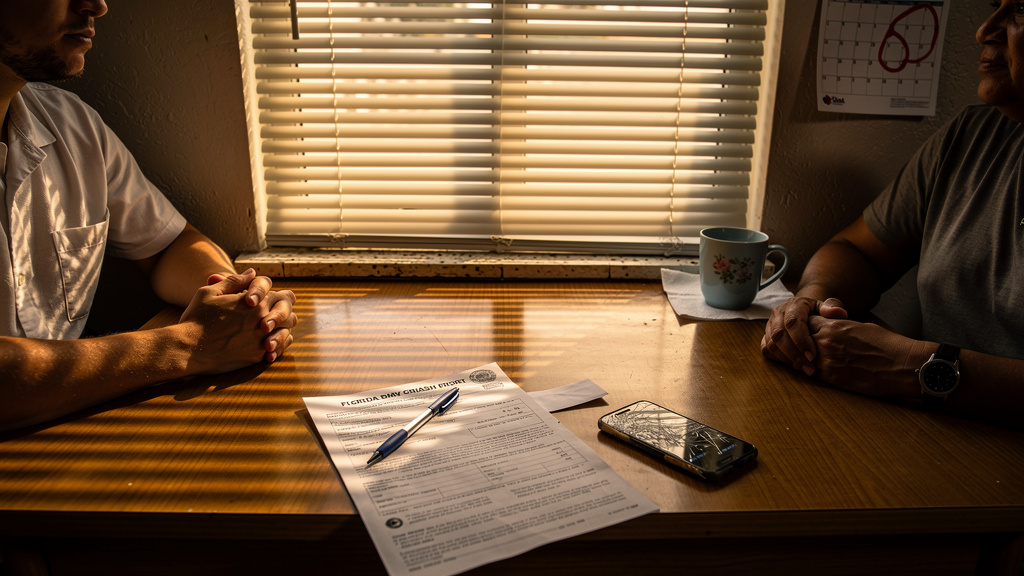
A family member can be there for emotional support, but having them serve as your interpreter when you speak with your personal injury lawyer carries real risks. It may weaken the confidentiality of what you say, often causes important medical and factual details to get lost, and if that relative was also in the car during the crash, it can create a direct conflict of interest. The safest path is a Spanish-speaking lawyer who talks with you directly, in Spanish, from the very first call.
So what exactly should my son or daughter do, and not do, when I call the lawyer?
Your child or grandchild can sit with you for comfort, but they should not act as your interpreter during legal conversations about the crash. In Hialeah, it is common for a 17-year-old grandchild or a 30-year-old adult child to take over calls and paperwork after their parent or abuela is hurt in a crash on Okeechobee Road or the Palmetto Expressway. This comes from love and responsibility. But translating legal and medical facts is not the same as helping with groceries or doctor appointments. When your case depends on precise details about pain, timing, and who did what at the scene, those details must come from you directly to your lawyer. Let your family support you emotionally. Leave the interpretation to someone trained to relay every word accurately.
Could having my child interpret actually hurt the confidentiality of what I tell my lawyer?
Attorney-client privilege protects what you tell your lawyer so the other side cannot force your lawyer to reveal it. That protection depends on keeping those conversations private. Bringing a third person into the room can affect whether the law still treats what you say as confidential. Florida’s court interpreter rule (Rule 2.560) extends the privilege to an interpreter who relays a privileged communication. Whether an untrained family member receives the same protection is less clear. Whether a relative who is only listening affects privilege can depend on the circumstances, and if they are translating your words about fault, injuries, or insurance, the protection may be harder to rely on.
What details actually get lost when a family member translates?
People who just lived through a crash do not want their worst day translated. Family members often soften or skip key facts without realizing it. They may say “a little back pain” when you described sharp, shooting pain down your leg. They might omit an old shoulder injury because they think it hurts your case, even though full disclosure helps your lawyer counter that argument early. At the scene, you may have heard the other driver say “I didn’t see you,” but your child recalls only “he said sorry.” And how your body moved on impact, bracing against the door, head snapping left, gets simplified to “we got hit.” Insurers compare your first statements to your medical records. If translation gaps create inconsistencies, an adjuster may use them to argue for a lower value. Ask whether you will have direct access to a Spanish-speaking lawyer.
What if the family member who translated was also in the car, a passenger or even the driver?
In Hialeah, families ride together everywhere, to work, to the clinic on West 49th Street, to Sedano’s, down Okeechobee Road, or on the Palmetto Expressway. When a crash happens, the person in the passenger seat is a witness. If that witness is also your interpreter, problems arise. Their memory of the crash may differ from yours, and after hearing your version, they may unconsciously change their own story. If they were driving, they may have legal exposure themselves. They are not neutral. They might leave out details that make them look bad, like running a yellow light or being on their phone. Neither a passenger-witness nor a potentially at-fault driver should be translating your account to your lawyer. Their role in the crash conflicts with their role as your interpreter.
What about at the doctor, should I bring my child to translate there too?
The same accuracy problems happen at medical visits. A family member might tell the doctor “she’s fine, just a little back pain” when you said the pain keeps you from sleeping. Those softened words go into your medical record and can limit your claim later. You can ask for a professional interpreter for medical appointments. Providers that receive federal funding may be required to offer language access services at no cost under federal civil rights law. Ask the clinic directly, do not assume your child should fill in. Remember, under Florida’s PIP rule, you must get initial treatment within 14 days of the crash or PIP may pay nothing. Accurate documentation from day one protects that benefit. For more on this critical deadline, see our guide to Florida’s 14-day PIP rule.
How does Wolfson & Leon handle this so the family does not have to worry about it?
At Wolfson & Leon, Spanish-speaking attorneys and staff can talk with you directly in Spanish. You speak. We listen. No child, grandchild, or cousin stands between you and your lawyer. Your family can still attend meetings for support, but they are not needed as translators, which avoids the interpreter risks described here. To the adult child reading this: you have been doing everything right by looking out for your parent or grandparent. Now let the lawyers handle the legal part. The firm’s Spanish-speaking attorneys, like Alfie Leon, work with Hialeah families.
Frequently asked questions
Does attorney-client privilege still apply if my child is in the room when I talk to the lawyer?
If your child is only there for emotional support and not translating or participating in the legal discussion, privilege may still apply. But if they are acting as your interpreter, that could affect confidentiality, especially if they are not a qualified interpreter.
What if my child was in the car with me during the crash, can they still help translate?
No. If they were in the car, they are a potential witness or even a possible party to the case. Their role as a witness creates a conflict that makes them unsuitable as your interpreter for legal conversations.
Should I bring my teenager to translate at the clinic after the crash?
It is better to ask the clinic for a professional interpreter. Teenagers often unintentionally minimize symptoms or omit details, which can hurt your medical documentation and your PIP claim. Ask the front desk what language services are available.
What if I already used my child to translate during an insurance call, did I do something wrong?
You did what felt natural at a stressful time. That call does not ruin your case, but going forward, speak directly with a Spanish-speaking lawyer to ensure accuracy and protect your rights.
Is there a deadline I need to worry about after a crash in Hialeah?
Yes. You must get initial treatment within 14 days or PIP may pay nothing. For crashes on or after March 24, 2023, you also generally have two years from the date of the crash to file a negligence lawsuit. Learn more about the two-year statute of limitations in Florida.
Hurt in an accident in Hialeah? Call Wolfson & Leon at 305-965-3766 for a free consultation. We speak Spanish, and there is no fee unless we win.
Key facts
- Introducing a third party into an attorney-client conversation may affect whether the communication stays privileged, depending on whether that person is considered necessary to the communication. Source: Fla. Stat. § 90.502
- Family members acting as informal interpreters are usually not trained in legal or medical terminology and may omit, soften, or rephrase what the person actually said, which can affect the accuracy of the record. Source: U.S. Department of Health and Human Services, Office for Civil Rights
- Florida has rules governing the use of qualified interpreters in court proceedings; a family member is generally not an appropriate interpreter in those settings. Source: Fla. R. Gen. Prac. & Jud. Admin. 2.560; Fla. Stat. § 90.606
- A passenger who witnessed the crash is a potential fact witness who should testify from personal knowledge; their account may differ from the injured person's, so acting as that person's interpreter can create a conflict. Source: Fla. Stat. § 90.604
- Under Florida's court interpreter rule, when a privileged communication is made through an interpreter, the privilege also applies to the interpreter; whether an informal family interpreter receives the same protection is less clear. Source: Wolfson & Leon
Frequently asked questions
Does attorney-client privilege still apply if my child is in the room when I talk to the lawyer?
It may depend on whether your child's presence is considered necessary to the communication or simply a voluntary addition of a third party. As a general matter, voluntarily including someone who is not part of the legal representation in a confidential conversation can affect whether the privilege protects what was said. The safest approach is to have a Spanish-speaking lawyer who can speak with you directly so no family member needs to be present as an interpreter.
What if my child was in the car with me during the crash, can they still help translate?
If your child was a passenger, they are a potential witness to how the crash happened. A witness and an interpreter are two conflicting roles that should not be held by the same person. Their own account of the crash may differ from yours, and having them interpret your version of events to the lawyer creates a structural problem regardless of anyone's intentions. Tell the lawyer your child was in the vehicle and let the lawyer advise on next steps.
Should I bring my teenager to translate at the clinic after the crash?
It is better to ask the clinic for its own interpreter. Many clinics and hospitals in Miami-Dade have Spanish-speaking staff or interpreter services available, and some federally funded providers are generally expected to offer language access at no cost, ask the front desk directly. Accurate medical documentation from your very first visit matters because under Florida's PIP law, treatment must begin within 14 days of the crash or PIP coverage may pay nothing.
What if I already used my child to translate during an insurance call, did I do something wrong?
You did not do anything wrong, families handle communication this way every day, and it comes from a place of care. The concern is what may have been lost or softened in translation, and that can often be addressed. Speak with a Spanish-speaking personal injury attorney as soon as possible so they can review what was said and advise you before anything is documented further. Do not give a recorded statement to any insurance adjuster before speaking with a lawyer.
Is there a deadline I need to worry about after a crash in Hialeah?
Yes. Under Florida's PIP law, you must seek medical treatment within 14 days of the crash or your PIP benefits, which can cover up to $10,000 in medical bills and lost wages, may pay nothing. Separately, under Florida Statutes section 95.11, you generally have two years from the date of a crash to file a personal injury lawsuit if your crash occurred on or after March 24, 2023. Do not wait on either deadline while sorting out a language or interpreter issue, call a Spanish-speaking lawyer today.
This article is general information about Florida law, not legal advice, and reading it does not create an attorney-client relationship. Every case is different and past results do not guarantee a similar outcome. For advice about your situation, call Wolfson & Leon at 305-965-3766 for a free consultation.
Also available in: Versión en español
 Personal injury
 I Already Signed a No-Win No-Fee Agreement: Will I Pay Twice If I Switch Lawyers?
In most cases, no, you do not pay twice. When you switch personal injury lawyers in Florida, the single contingency fee you already agreed to is…
 Personal injury
 How to Contact a Car Accident Attorney in Hialeah Right Now
The fastest way to reach a car accident attorney in Hialeah is to call Wolfson & Leon at 305-965-3766, a person answers 24 hours a day, seven days a…
 Personal injury
 My Parent Only Speaks Spanish and Was Hurt in Hialeah: What Do We Do?
Find a personal injury attorney who speaks Spanish directly with your parent, not through you as an interpreter, so nothing is lost in translation…