
They Handed Me an English Form to Sign After I Fell: What Now?
Do not sign a document you cannot read, ask for a copy first and take it with you before putting your name on anything. The incident report is a record the store creates for its own insurance company, not a neutral document, and what it says about you can be used against your claim later. If you already signed it, that is not necessarily fatal to your case, but you need an attorney to review exactly what it says before you speak to anyone else.
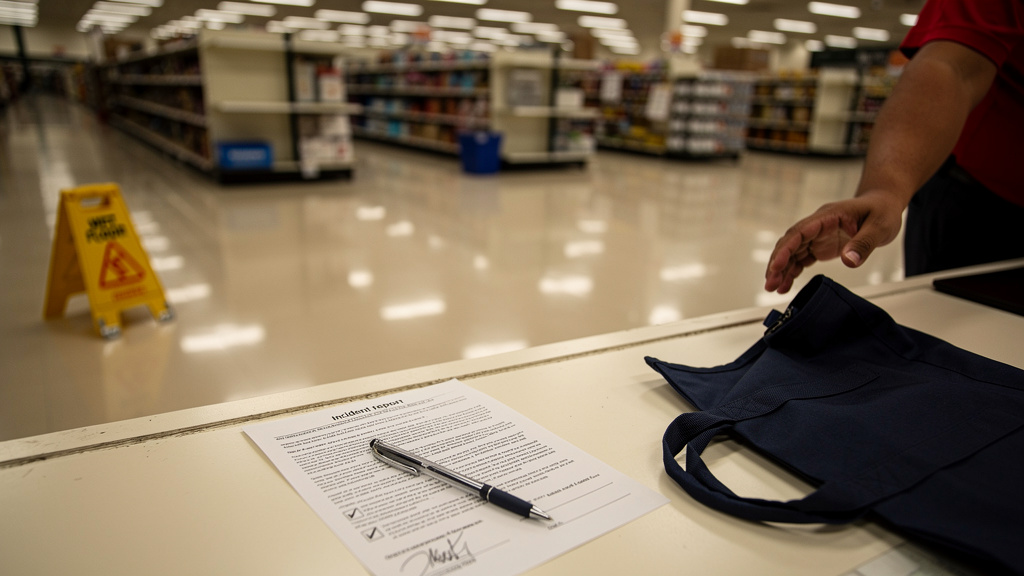
Do not sign a document you cannot read. Ask for a copy of the incident report before putting your name on anything. The form is created by the store for its own insurance company, not as a neutral record, and what it says about you can be used to weaken or deny your claim later. If you already signed it, that does not automatically end your case, but you need a lawyer to review exactly what the document says before speaking to anyone else.
Short answer: what should I do the moment they hand me that form?
Do not sign anything you cannot read and understand. Instead, ask for a copy of whatever has already been filled in. This is not a hostile act, it is a practical step to protect yourself. If the manager refuses to give you a copy, write down the incident number (if given), the manager’s full name and job title, the store address, and the exact time before you leave the building. Signing anything quickly, especially a release, generally works against you. An incident report is not the same as a release of claims. Stores along W 49th St, Palm Avenue, and Okeechobee Road serve many Spanish-speaking customers, but they may or may not offer Spanish versions of internal forms. Do not assume one will be provided, protect yourself first.
Why does the store want me to sign an incident report in the first place?
The incident report exists to serve the store’s insurance carrier, not you. Businesses have a strong interest in documenting the incident in a way that protects them. A report may describe the floor as dry when it was wet, say you declined medical help when you did not, blame your fall on your own inattention, or omit the hazard entirely. Signing the report does not waive your right to sue, it is not a release of claims, but the contents can be used as evidence to challenge your version of events later. Accident reports prepared in anticipation of litigation may not meet Florida’s trustworthiness standard for business records (see Stambor v. One Hundred Seventy-Second Collins Corp.), but that does not guarantee exclusion. A release of claims is different: once signed, it can permanently end your right to compensation. A third document, an overly broad medical authorization, can expose your entire health history to the insurer, not just records related to the fall.
What do I actually have to prove to win a slip-and-fall case in Florida?
To win, you must prove the store owed you a duty of care, breached that duty, and that the breach caused your injury and damages. Under Florida law (Fla. Stat. § 768.0755), the toughest hurdle is proving the store had actual or constructive knowledge of the dangerous condition, like a puddle from rainwater tracked inside. Actual knowledge means an employee saw or created the hazard. Constructive knowledge means it existed long enough that they should have found it ([§ 768.0755(1)(a)]), or the same hazard happened often enough to be foreseeable ([§ 768.0755(1)(b)]). Evidence can include track marks through a spill, dried edges around a puddle, or a large area of liquid that suggests it built up over time. Afternoon thunderstorms regularly soak entrances on W 49th St and Okeechobee Road, making pooled water a foreseeable risk. The mere presence of liquid is generally not enough, but evidence that employees were nearby and did not address the hazard can support your claim.
What should I do right now, at the scene, to protect my case?
- Photograph the exact spot, wide shot for context, close-up of the substance, before cleanup.
- Photograph any warning signs, or their absence.
- Capture wet entrance mats, propped-open doors, and footprints or track marks through the puddle.
- Get full names and phone numbers of witnesses, including other customers and responding employees.
- Note and photograph any store employee who was nearby before you fell.
- Keep your shoes, the soles may hold residue and become physical evidence.
- Seek medical care the same day. “I feel fine” is the most dangerous sentence after an accident. The longer you wait, the easier it is for insurers to argue your injury is minor or fake.
- Report the incident to the manager and get the incident report number, even if you refuse to sign.
Stores along W 49th St, Palm Avenue, and Okeechobee Road can clean floors or fix equipment within minutes. Your evidence window is short.
Why does the security video matter so much, and how fast does it disappear?
Surveillance footage is often the strongest evidence in slip-and-fall cases. It can show how long a hazard sat unattended, which employees walked past it, and whether warning signs were ever placed. Footage like that can help show the constructive knowledge Fla. Stat. § 768.0755 requires. Many stores overwrite footage on a set cycle, sometimes within days or weeks. Once gone, it is gone forever. That is why prompt action matters: before filing suit, your lawyer may send a preservation demand to secure the video. Learn why you may have only 30 days to secure the security footage.
I already signed it, and ‘weren’t you watching where you were going?’, what happens now?
If you signed an incident report, the signature itself is less important than what the report says. False or slanted details can still be challenged. If you signed a release of all claims, the situation is more serious. Florida courts treat releases as binding contracts, and generally will not void them just because you did not read them. In limited situations, such as fraud or duress, a release may be challenged; an attorney can review whether any ground applies to you. A broad medical authorization carries separate risks.
As for fault: under Fla. Stat. § 768.81, your recovery is reduced by your share of fault, but barred only if you are found more than 50 percent at fault. A customer walking normally through a store entrance during a South Florida afternoon storm is not automatically careless. The store still has a duty to place mats, post warnings, or assign staff. Their failure to act may outweigh any alleged inattention. Remember, for injuries on or after March 24, 2023, you have two years to file under Fla. Stat. § 95.11, but delays hurt your ability to preserve evidence and review documents.
Frequently asked questions
Can the store refuse to give me a copy of the incident report?
Yes, they can. There is no Florida law requiring them to hand over a copy on the spot. But you have a right to request it, and refusing to provide one should raise a red flag. Document everything, the manager’s name, time, location, and tell your lawyer.
Is the incident report the same thing as a release of my right to sue?
No. An incident report is an internal record for the store’s insurance. A release is a separate legal document that gives up your right to pursue compensation. Never sign a release without talking to a lawyer first.
How long do I have to file a lawsuit if I slipped and fell in a Hialeah store?
For injuries that happened on or after March 24, 2023, you have two years from the date of the fall to file a lawsuit under Florida law.
What if the store’s report says the floor was dry but it was clearly wet?
That kind of discrepancy can happen. The report is written for the store’s insurer. Your photos, witness statements, and surveillance footage can contradict it. Tell your lawyer right away.
The manager said it was my fault for not watching where I was walking, does that mean I can’t recover anything?
Not necessarily. Florida uses modified comparative negligence. You can still recover as long as you are found 50 percent or less at fault. A wet floor at a busy store during a rainstorm is often a foreseeable hazard the store should manage, not just your responsibility.
Hurt in an accident in Hialeah? Call Wolfson & Leon at 305-965-3766 for a free consultation. We speak Spanish, and there is no fee unless we win.
Key facts
- In a slip-and-fall on a transitory foreign substance, such as a puddle of rainwater tracked into a store entrance, Florida law requires the injured person to prove the business had actual or constructive knowledge of the dangerous condition and should have remedied it. Source: Fla. Stat. § 768.0755
- Constructive knowledge can be shown by circumstantial evidence that the dangerous condition existed long enough that the store should have discovered it, or that the same hazard occurred regularly enough to be foreseeable. Source: Fla. Stat. § 768.0755(1)(a)–(b)
- Under Florida's modified comparative negligence rule, a plaintiff's damages are reduced in proportion to their own share of fault and are completely barred only if they are found MORE THAN 50 percent at fault. Source: Fla. Stat. § 768.81
- The deadline to file a personal injury lawsuit in Florida for injuries that occurred on or after March 24, 2023 is two years from the date of the incident. Source: Fla. Stat. § 95.11
- Surveillance footage showing how long a hazard sat on the floor, and whether employees were nearby, can be evidence that the business should have known about the dangerous condition. Source: Fla. Stat. § 768.0755(1)(a)
Frequently asked questions
Can the store refuse to give me a copy of the incident report?
The store may decline to hand you a copy before you leave, and there is no statute that compels immediate disclosure to the injured customer at the scene. However, you should always ask, and if they refuse, write down the incident or reference number, the manager's full name, and the exact time the report was taken before you walk out. Once a claim or lawsuit is filed, your attorney can obtain the report through formal discovery. A store's refusal to provide any documentation of its own internal record is itself a detail worth noting.
Is the incident report the same thing as a release of my right to sue?
No, these are two different documents. An incident report is a record of what happened, created by the store for its insurance carrier. It does not waive your right to file a claim or lawsuit. A release of claims is a separate contract that, once signed, can permanently extinguish your right to seek further compensation for the injuries it covers. Read every document carefully before signing, and if you are not certain which type you are holding, do not sign it until you have spoken with an attorney.
How long do I have to file a lawsuit if I slipped and fell in a Hialeah store?
For injuries that occurred on or after March 24, 2023, Florida law gives you two years from the date of the incident to file a personal injury lawsuit under Fla. Stat. § 95.11. Missing that deadline almost always means permanently losing the right to seek compensation in court. Because building a slip-and-fall case, gathering evidence, preserving video, identifying witnesses, takes time, you should contact an attorney well before that deadline, not on the day it approaches.
What if the store's report says the floor was dry but it was clearly wet?
A store's incident report is not the final word on what actually happened. If the report contains inaccurate or self-serving descriptions, such as calling a wet floor dry or noting that you declined medical attention when you did not, those inaccuracies can be challenged with your photographs, witness statements, and medical records. Florida courts have recognized that accident reports prepared by a business in anticipation of litigation may not meet the trustworthiness standard required for business-record evidence. An attorney can assess how to address a misleading report in your specific case.
The manager said it was my fault for not watching where I was walking, does that mean I can't recover anything?
Not automatically. Under Fla. Stat. § 768.81, Florida's modified comparative negligence rule reduces your compensation by your percentage of fault, but you are completely barred from recovering only if you are found MORE THAN 50 percent responsible for the accident. A customer walking normally through a store entrance during a rainstorm is not automatically at fault because the floor was wet. The store's independent duty to maintain safe conditions, place warning signs, and inspect regularly does not disappear because a customer failed to notice the hazard first.
This article is general information about Florida law, not legal advice, and reading it does not create an attorney-client relationship. Every case is different and past results do not guarantee a similar outcome. For advice about your situation, call Wolfson & Leon at 305-965-3766 for a free consultation.
Also available in: Versión en español
 Slip and fall
 Slip-and-Fall Settlement: How Much Money Do You Actually Keep?
The settlement number your attorney announces is not the check you deposit. Before you see a dollar, the contingency fee, costs the firm advanced to…
 Slip and fall
 My Elderly Parent Fell at a Supermarket: How to Help With the Claim
When an elderly parent is hospitalized after a supermarket fall, the claim still belongs to her, but you may be able to act on her behalf with…
 Slip and fall
 Can I Sue My Employer Directly After I Fell at Work in Florida?
In Florida, workers' compensation is almost always your only remedy against your employer after a workplace fall, you cannot sue even if the…