
How Personal Injury Lawyer Fees Really Work in Hialeah, FL
Personal injury lawyers in Hialeah work on contingency, meaning you pay no attorney fee unless money is recovered for you. The percentage is capped by Florida Bar rules, and the cap can increase once an answer is filed in a lawsuit or arbitration is demanded, and case costs such as filing fees and expert witnesses are separate from the attorney fee and also come out of your recovery. Before you sign anything, you need to know exactly how the percentage is calculated, who advances costs, and what happens to your medical bills and liens at the end.
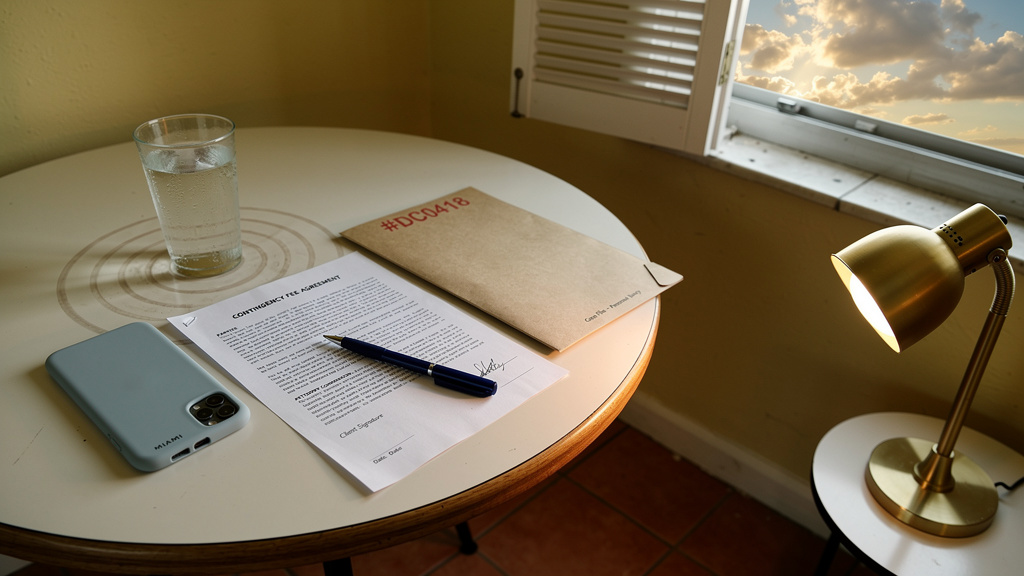
Personal injury lawyers in Hialeah work on contingency, meaning you pay no attorney fee unless money is recovered for you. The percentage is capped by Florida Bar rules, and the cap can increase once an answer is filed in a lawsuit or arbitration is demanded, and case costs such as filing fees and expert witnesses are separate from the attorney fee and also come out of your recovery. Before you sign anything, you need to know exactly how the percentage is calculated, who advances costs, and what happens to your medical bills and liens at the end.
What does ‘no fee unless we recover’ actually cover, and what doesn’t it cover?
The phrase “no fee unless we recover” means you owe no attorney fee if there is no settlement or verdict, but it does not mean you walk away with the full amount if there is a recovery. Medical liens, unpaid hospital bills, and case costs still reduce what you actually receive. A common question is, “Is it common to lose money as the client in these situations after court fees and medical fees?” The answer depends entirely on the details of your fee agreement and whether costs are waived if there’s no recovery. At Wolfson & Leon, we charge no attorney fee if there is no recovery, and we advance case costs. How costs are handled if there is no recovery is not automatic; it must be stated clearly in your written agreement. Always ask, and get the answer in writing.
What percentage will the lawyer take, and does it go up if you file a lawsuit or go to trial?
Under Florida Bar Rule 4-1.5, contingency fees are capped at 33⅓ percent of the first $1 million recovered before the defendant files an answer or the right to arbitrate is demanded. After that point, through trial, the cap increases to 40 percent. Most Hialeah car crash cases that settle early, before suit is filed, fall under the lower percentage. But if the insurance company refuses to offer a fair amount and you must sue, the fee percentage may rise. That’s why you must ask: Does the quoted percentage apply only if the case settles quickly? Contingency remains the standard model because most injured people cannot afford hourly rates. Always confirm the exact terms in your written agreement.
What are case costs, who pays them upfront, and when do you repay them?
Attorney fees and case costs are not the same. Fees are the percentage the lawyer earns; costs are actual out-of-pocket expenses needed to build your case. These include court filing fees, medical record requests, expert witness fees, accident reconstruction specialists, and deposition costs. Most Florida personal injury firms, including Wolfson & Leon, advance these costs so you pay nothing while your case is active. When there is a recovery, they are typically deducted from your settlement at closing; what happens to them if there is no recovery depends on the written agreement. Advancing costs is standard but not universal, so ask at every consultation: Who pays costs upfront, and what happens if there’s no recovery?
Does the percentage come out before or after costs are deducted, and why does it matter?
The same 33⅓ percent fee can leave you with thousands more, or less, depending on whether it’s calculated before or after costs are subtracted. Imagine a $100,000 settlement with $10,000 in case costs. If the fee is taken first, the lawyer gets $33,333, then $10,000 in costs are paid, leaving you $56,667. But if costs are deducted first, the fee is 33⅓ percent of $90,000 ($30,000), leaving you $60,000, a $3,333 difference. On larger cases, the gap grows. This detail is rarely highlighted in directory listings but directly impacts your net recovery. Always ask which method your attorney uses and confirm it in your written agreement.
What happens to your medical bills and liens when the settlement arrives?
You do not receive the full settlement amount and then decide what to pay. Medical providers, health insurers, Medicare, and Medicaid may have legal claims, called liens, on your recovery. Under Florida law (FS 627.736), PIP pays 80 percent of reasonable medical bills and 60 percent of lost wages, up to $10,000 with an emergency medical condition, otherwise $2,500. Pain and suffering damages from the at-fault driver are only available if you meet Florida’s permanent injury threshold (FS 627.737(2)). Liens are typically paid at closing, reducing your final check. Always request a line-by-line disbursement sheet before signing any release so you see exactly where every dollar goes.
Get the agreement in writing and in your language before you sign anything
Florida Bar rules require contingency fee agreements to be in writing and signed by the client and the lawyer. In Hialeah, where many residents speak Spanish as their first language, an English-only contract full of legal terms can hide critical details that affect your net recovery. Wolfson & Leon explains its fee agreement in Spanish to Spanish-speaking clients before they sign. Use this checklist at every consultation:
- What is the contingency percentage at the pre-suit stage?
- Does the percentage increase if a lawsuit is filed or the case goes to trial? At what trigger point exactly?
- Who advances case costs, the firm or the client?
- Are costs deducted before or after the attorney fee percentage is calculated?
- What happens to case costs if there is no recovery?
- Which medical liens will be paid from my settlement, and who handles negotiating them down?
- Is the full fee agreement in writing and can I have it explained in Spanish before I sign?
Frequently asked questions
If I lose my case, do I still owe the lawyer anything?
No, if there is no recovery, you owe no attorney fee. Whether you owe case costs depends on your agreement. Ask how your agreement handles costs if there is no recovery, and get the answer in writing.
Can the lawyer’s percentage change after I sign the agreement?
Only as the agreement already provides. The percentage and its conditions, including any increase at later stages of litigation, must be fixed in the written agreement you sign. Any other change would require a new signed agreement.
How long do I have to file a personal injury lawsuit in Florida?
For injuries occurring on or after March 24, 2023, you have two years from the date of the injury to file a lawsuit under Florida Statute 95.11. Missing this deadline usually ends your right to recover.
Will the insurance company’s settlement offer cover my medical bills and lost wages?
Not necessarily. Initial offers often undervalue future treatment, lost wages, or pain and suffering. Florida’s PIP covers some bills early, but full recovery may require proving the at-fault driver’s liability. See our guide on how much a Hialeah car accident claim is worth.
Does it help to have my fee agreement explained in Spanish?
Yes. Understanding every term, especially how fees and costs are calculated, protects you from surprises later. It is your right to have the agreement explained clearly in your primary language before signing.
Related reading: The attorneys who answer the phone · The 14-day PIP rule in Florida: what happens if you wait to see a doctor after a Hialeah car accident · How long do I have to file an injury lawsuit in Florida? The two-year rule after HB 837
Hurt in an accident in Hialeah? Call Wolfson & Leon at 305-965-3766 for a free consultation. We speak Spanish, and there is no fee unless we win.
Key facts
- Florida Bar Rule 4-1.5 caps contingency fees at 33⅓ percent of the recovery before an answer is filed or the right to arbitrate is demanded, and at 40 percent once litigation advances past that point, on the first one million dollars recovered. Source: Rule Regulating The Florida Bar 4-1.5(f)(4)(B)
- Case costs, court filing fees, medical records, expert witnesses, depositions, are separate from the attorney fee and are typically advanced by the firm, then deducted from the settlement in addition to the contingency percentage. Source: Rule Regulating The Florida Bar 4-1.5(f)
- Whether costs are deducted before or after the attorney percentage is calculated can meaningfully change the net amount the client receives, even when the stated percentage is identical. Source: Rule Regulating The Florida Bar 4-1.5(f)(1)
- Florida's two-year statute of limitations for personal injury lawsuits applies to injuries on or after March 24, 2023; missing it generally eliminates the right to recover. Source: FS 95.11
- Under Florida's modified comparative negligence rule, a client's recovery is reduced by their share of fault and barred entirely only if they are found more than 50 percent at fault. Source: FS 768.81(6)
Frequently asked questions
If I lose my case, do I still owe the lawyer anything?
Under a contingency fee agreement, you owe no attorney fee if there is no recovery. Whether you owe case costs such as filing fees and medical records depends on the specific agreement, some firms absorb those costs if the case is lost, others do not. Wolfson & Leon charges no attorney fee if there is no recovery and advances case costs. Ask about costs explicitly and get the answer in writing before you sign.
Can the lawyer's percentage change after I sign the agreement?
The percentage can change based on events specified in your written agreement, most commonly when a lawsuit is filed and the opposing party files an answer. Florida Bar Rule 4-1.5 sets caps that rise at that litigation milestone. Your agreement must spell out each trigger and the percentage that applies at each stage. If the agreement is vague on this point, ask for a revised version before signing.
How long do I have to file a personal injury lawsuit in Florida?
For injuries that occurred on or after March 24, 2023, Florida law gives you two years from the date of the injury to file a personal injury lawsuit under FS 95.11. Missing that deadline generally means losing the right to recover compensation entirely, regardless of how strong the case is. Do not wait to consult an attorney, because building a case, gathering records, and negotiating with insurers all take time within that window.
Will the insurance company's settlement offer cover my medical bills and lost wages?
Initial settlement offers from insurance companies frequently fall far below the actual value of a claim. Florida PIP coverage pays 80 percent of reasonable medical bills and 60 percent of lost income up to $10,000 when an emergency medical condition is found, but serious injuries routinely exceed that limit under FS 627.736. Once you accept a settlement and sign a release, you generally cannot go back for more money even if injuries turn out to be worse than they appeared. An attorney can evaluate whether an offer reflects the full value of your claim before you sign anything.
Does it help to have my fee agreement explained in Spanish?
Yes, and it is your right to understand every term before you sign. Fee agreements contain specific language about when percentages increase, how costs are handled, and what happens to your recovery if medical liens must be paid. Missing those details in translation can cost thousands of dollars. Wolfson & Leon explains its fee agreement in Spanish to Spanish-speaking clients in Hialeah before any document is signed.
This article is general information about Florida law, not legal advice, and reading it does not create an attorney-client relationship. Every case is different and past results do not guarantee a similar outcome. For advice about your situation, call Wolfson & Leon at 305-965-3766 for a free consultation.
Also available in: Versión en español
 Personal injury
 How to Check a Personal Injury Lawyer's Florida Bar Record Before You Hire
Go to floridabar.org and use the Find a Lawyer search tool, no account required. Enter the attorney's name or bar number and you will see their…
 Personal injury
 How to Compare Personal Injury Lawyers in Hialeah Before You Hire One
Not every firm that lists 'Hialeah' on its website has an office there, and fee percentage, trial experience, case type focus, language access, and…
 Personal injury
 My Own Insurance Company Wants a Recorded Statement for My UM Claim, Do I Have To?
Unlike a recorded statement request from the at-fault driver's insurer, which you can refuse, your own insurance company's request is different:…