
Mistakes That Cost Pedestrians Money After Being Hit by a Car in Hialeah
The mistakes that cost pedestrians the most money after a crash are not the dramatic ones, they are quiet errors made in the first hours and days: skipping the ER because you could walk away, saying 'I'm fine' at the scene, giving the insurer a recorded statement, or simply letting the clock run. Each of those missteps triggers a specific legal rule that can shrink or erase your claim before you ever speak to a lawyer.
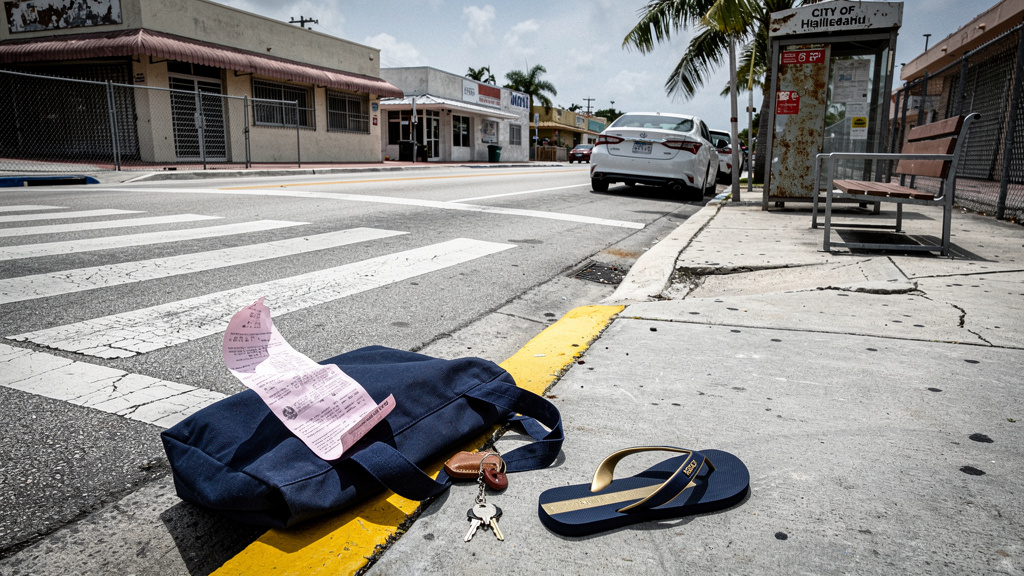
The mistakes that cost pedestrians the most money after a crash are not dramatic errors, but quiet ones made in the first hours and days. Skipping the ER because you could walk away, saying “I’m fine” at the scene, giving a recorded statement to an insurer, or simply letting the clock run, each of these triggers a specific legal rule that can shrink or erase your claim before you ever speak to a lawyer.
Why does skipping the ER cost me money even if I could walk away?
Florida law gives you 14 days to get a medical evaluation after a crash or lose access to your own PIP benefits entirely [Fla. Stat. § 627.736(1)(a)]. If a qualified provider such as a doctor, physician assistant, nurse practitioner, or ER physician determines you have an emergency medical condition, your PIP covers up to $10,000 for 80 percent of reasonable medical bills and 60 percent of lost income. Without that determination, the cap drops to $2,500. Missing the 14-day window means PIP pays nothing, even if you later need surgery. That matters especially in Hialeah, where someone hit while crossing W 49th Street or walking along Okeechobee Road might feel okay enough to sit on a curb, but internal bleeding, concussions, or soft-tissue injuries often show no immediate signs. Insurers use any gap in treatment to argue your injuries were not caused by the crash. Remember: as a pedestrian, your own auto policy (or a household relative’s) provides your PIP coverage first, not the driver’s.
What happens if I said ‘I’m fine’ or ‘I didn’t see it’ at the scene?
Phrases like “I’m fine,” “I didn’t see you,” or “I’m sorry” are often spoken out of shock or politeness, but insurance adjusters treat them as admissions of minimal injury or partial fault. At the scene, stick only to observable facts: where you were, which direction you were walking, whether the light was green, and where the impact occurred. Do not guess about speed, visibility, or who was at fault. The Hialeah Police crash report, available to you, your insurer, and your attorney under [Fla. Stat. § 316.066], will include what the officer wrote down in those first minutes. Once recorded, it’s hard to correct. Ask the officer for their name and the crash report number, then say nothing more about liability until you talk to a lawyer. Adjusters also review bystander statements and dashcam audio, so even offhand remarks matter.
Do I have to give the driver’s insurance company a recorded statement?
No. You have no legal obligation to give a recorded statement to the at-fault driver’s insurer. Adjusters may ask leading questions that can lower your claim value, like “Were you in a hurry?” or “Could you have avoided this?”, before you even know the full extent of your injuries. A recorded statement locks in your version of events before imaging results come back, before you’ve seen specialists, and before an attorney reviews the facts. Under [Fla. Stat. § 627.737(2)], you can only recover pain and suffering from the at-fault driver if you prove a permanent injury, significant and permanent scarring or disfigurement, or permanent loss of an important bodily function, a standard that often cannot be established in the first days after a crash. Politely decline the request. Provide only your name and contact information if asked, and refer all further communication to your attorney.
Does jaywalking end my case, or just reduce what I can recover?
Jaywalking does not automatically end your claim. Florida uses modified comparative negligence [Fla. Stat. § 768.81(6)]: your damages are reduced by your percentage of fault, and you recover nothing only if you are found more than 50 percent at fault. Even if you crossed mid-block on Okeechobee Road, the driver still had a duty to watch for pedestrians and avoid a collision. The burden is on the defense to prove your fault, it is not assumed. But unguarded statements (“I wasn’t looking”) can be used to argue that you deserve a larger share of the fault. Example: if your total damages are $100,000 and you’re found 40 percent at fault, you recover $60,000. If you’re found 51 percent at fault, you recover nothing. Fault is decided by evidence, not just where you crossed.
What if the driver left, or didn’t exchange information?
Florida law requires every driver involved in a crash causing injury to stop, remain at the scene, give you their name, address, and vehicle registration number, and show their driver’s license if asked [Fla. Stat. § 316.062]. Leaving without doing so is a statutory violation, and if the driver knew or should have known someone was hurt, it’s a criminal hit-and-run under [Fla. Stat. § 316.027]. Even if you let the driver leave because you felt fine, act immediately: call Hialeah Police to file a report, get witness names and numbers, note the vehicle’s make, color, and any part of the license plate, and check for surveillance cameras at businesses along W 49th Street or Okeechobee Road. Footage is often erased within days. You may still recover through your own uninsured motorist (UM) coverage, which is optional under [Fla. Stat. § 627.727] but must be rejected in writing to be excluded. Check your auto policy and any household relative’s policy, UM can cover pedestrians hit by unidentified or uninsured drivers.
How do gaps in treatment and the two-year deadline destroy otherwise strong claims?
Two time traps can kill a valid claim. First, inconsistent medical care: missing appointments or stopping treatment before reaching maximum medical improvement lets insurers argue your injuries weren’t serious or that you worsened them yourself. Second, the statute of limitations: for crashes on or after March 24, 2023, you have exactly two years from the crash date to file a lawsuit [Fla. Stat. § 95.11]. Negotiating with an insurer does not pause this clock. Talks can drag on until the deadline is close. If you realize months later that your injury is permanent but your medical record shows gaps, your case weakens just as time runs short. Document everything: keep a daily symptom log, save all medical records, track missed work with pay stubs, and tell your provider in writing if you must reschedule. Consistent, documented care is essential to prove a permanent injury under [Fla. Stat. § 627.737(2)], because the medical record is your proof.
Frequently asked questions
What if I don’t have car insurance, can I still get PIP benefits after being hit as a pedestrian in Florida?
Yes. If you don’t have your own auto policy, PIP coverage may still be available through a resident relative’s policy. Only if neither exists would you look to the striking vehicle’s PIP, but that is rare and applies only to Florida-resident pedestrians.
I was hit on Okeechobee Road outside the crosswalk. Does that mean I can’t sue?
No. Crossing outside a marked crosswalk does not bar your claim. Under Florida’s modified comparative negligence rule, you can still recover damages as long as you are not found more than 50 percent at fault.
The driver’s insurance adjuster called me the same day and wants a recorded statement. What should I say?
Say only your name and that you will be referring all communications to your attorney. You are not required to give a recorded statement, and doing so early can harm your claim. Learn more about handling recorded statements to other drivers’ insurers.
Does my two-year deadline pause while I’m negotiating a settlement with the insurer?
No. The two-year statute of limitations runs continuously from the crash date. Settlement talks do not extend it. If you haven’t filed a lawsuit by the deadline, your claim is permanently barred, even if negotiations are ongoing.
The driver hit me and drove off before I could get their information. Is my claim over?
Not necessarily. Report the crash immediately to Hialeah Police, gather witness info, and check for nearby security cameras. You may still recover through your own uninsured motorist coverage. Read more about hit-and-run options in Miami-Dade.
Related reading: A car hit me while I was walking or biking in Hialeah. What are my rights? · Partly at Fault for a Hialeah Crash? Here Is What You Can Still Recover
Hurt in an accident in Hialeah? Call Wolfson & Leon at 305-965-3766 for a free consultation. We speak Spanish, and there is no fee unless we win.
Key facts
- Florida's PIP law requires a pedestrian to receive an initial medical evaluation within 14 days of the crash or lose access to PIP benefits entirely, up to $10,000 if a qualifying provider finds an emergency medical condition, or $2,500 if no such finding is made. Source: Fla. Stat. § 627.736(1)(a)
- Florida's modified comparative negligence rule bars recovery completely if a pedestrian is found MORE THAN 50 percent at fault; if 50 percent or less at fault, recovery is reduced by that exact percentage, meaning a jaywalking pedestrian can still win damages. Source: Fla. Stat. § 768.81(6)
- A driver involved in a crash that causes injury or death must give their name, address, and vehicle registration number to the injured party and to any responding officer, and show their license on request; leaving without doing so is a separate statutory violation. Source: Fla. Stat. § 316.062
- A driver who knows or should know they caused injury or death and leaves the scene without stopping commits a hit-and-run, a criminal offense under Florida law. Source: Fla. Stat. § 316.027
- For personal injury claims arising on or after March 24, 2023, Florida's statute of limitations is two years from the date of the crash; missing that deadline permanently bars the claim regardless of how strong the evidence is. Source: Fla. Stat. § 95.11
Frequently asked questions
What if I don't have car insurance, can I still get PIP benefits after being hit as a pedestrian in Florida?
PIP follows the injured person, not the vehicle. If you have your own Florida auto policy, your PIP pays first. If you have no policy, Florida law looks next to a PIP policy held by a relative who lives in your household. Only if neither exists does the striking driver's PIP potentially cover you as a Florida resident pedestrian. If you have no household policy, do not assume you are covered, verify before the 14-day window closes.
I was hit on Okeechobee Road outside the crosswalk. Does that mean I can't sue?
No. Florida's modified comparative negligence law means crossing outside a marked crosswalk reduces your recovery by your assigned fault percentage but bars it entirely only if you are found more than 50 percent at fault. The driver still had a legal duty to exercise due care and avoid hitting you. Document the scene immediately, say nothing about fault, and let the evidence, not a reflexive admission, determine what percentage, if any, applies to you.
The driver's insurance adjuster called me the same day and wants a recorded statement. What should I say?
Decline politely and say nothing further about the facts of the crash. You have no legal obligation to give the at-fault driver's insurer a recorded statement. Adjusters may ask questions whose answers can reduce claim value, and your statement is taken before you have imaging results, a full diagnosis, or any idea whether your injuries are permanent. Tell the adjuster you will have your attorney contact them, then call one.
Does my two-year deadline pause while I'm negotiating a settlement with the insurer?
No. Florida's two-year statute of limitations under Fla. Stat. § 95.11 runs from the date of the crash regardless of any ongoing settlement discussions. Negotiations can continue past the deadline. If two years pass without a lawsuit filed, the claim is permanently barred, no exceptions for good-faith negotiations. Consult an attorney early enough to file suit before that date even if a settlement is still possible.
The driver hit me and drove off before I could get their information. Is my claim over?
Not necessarily. Report the crash to Hialeah Police immediately to create an official record. Note every detail about the vehicle you can recall. Ask nearby businesses, especially along W 49th St or Okeechobee Road, whether they have surveillance cameras, and understand that footage is often overwritten within days. Check whether your own auto policy or a household relative's policy includes uninsured motorist coverage, which can pay when the at-fault driver cannot be identified or has no bodily injury coverage.
This article is general information about Florida law, not legal advice, and reading it does not create an attorney-client relationship. Every case is different and past results do not guarantee a similar outcome. For advice about your situation, call Wolfson & Leon at 305-965-3766 for a free consultation.
Also available in: Versión en español
 Pedestrian and bicycle accidents
 As a Pedestrian Hit by a Car in Florida, Which Insurance Pays for What?
When a car hits you on foot in Florida, the first insurance that pays is usually your own PIP, or a household relative's PIP, regardless of who…
 Pedestrian and bicycle accidents
 Every Deadline a Florida Pedestrian Faces After a Crash
Florida pedestrian accident victims face multiple separate deadlines that stack on top of each other: you must see a doctor within 14 days to…
 Pedestrian and bicycle accidents
 Hit by a Car in a Hialeah Parking Lot: Who Pays and What to Do
Being hit by a car in a Hialeah parking lot, whether at Westland Mall, a supermarket plaza, or any shopping center along W 49th Street, is a real…